
Es Castell, Menorca: Harbours, Food and Who It Suits
Es Castell is a former military town on Menorca's east coast, founded in 1771 and arranged around two small fishing harbours, Cales Fonts and Cales Corb, rather than a beach. That layout gives it the character of a working residential town with a waterfront: narrow side streets, a central square, a weekly market and a string of waterside restaurants and bars. It's the kind of place where evenings matter more than sunbathing, and where you walk to dinner rather than drive. The town sits within easy reach of Mahón (written Maó on timetables and signs), making it a practical base for exploring the south-east of the island.
What Es Castell is like
Es Castell is best understood as a residential town with a harbour attached, not a resort. The two inlets, Cales Fonts and Cales Corb, give it waterside promenades for daytime and evening strolls, and the architecture still carries the imprint of its Georgian-era military founding. Because people live here year-round, there are two supermarkets, bakers, a pharmacy, banks with ATMs and a tabac on Carrer Victori, all within a few minutes' walk. That everyday infrastructure is what makes it feel different from a purpose-built beach resort.
The town has no beach of its own, which shapes what kind of stay you get. Instead, there are access points into the sea and sunbathing platforms at Cala Padera, a five-minute walk from Cales Fonts harbour. Sandy beaches are a short taxi or bus ride away, usually via Mahón, and the south coast beaches are roughly 15 minutes by taxi. If your holiday picture involves stepping from your apartment straight onto sand, weigh that against the beaches and coves covered in our guide to things to do in Menorca before settling on Es Castell.
Who Es Castell suits, and who it does not
Couples and solo travellers looking for a genuine base tend to get the most out of Es Castell. The harbour-side restaurants and bars give evenings a relaxed focus without the loud music and binge-drinking feel of some beach resorts, and the town square is a meeting point for local families. It's also a practical spring or autumn base for walking, cycling and sightseeing, with the south-east corner of the island within easy reach. For a wider look at how this area fits alongside other bases on the island, see the guide to Menorca Neighborhoods: 3 Area Guides.
Families and beach-first travellers should weigh the trade-off carefully. There's no house beach, so swimming means Cala Padera's platforms or a taxi or bus to the south coast; that is fine for older children but adds logistics with toddlers and all the gear. The town itself is compact and walkable, with shops, cafés and restaurants close together, which helps. If sand on the doorstep is non-negotiable, look instead at somewhere like Sant Lluís, which sits closer to the island's southern beaches.
Cales Fonts and Cales Corb: where to walk
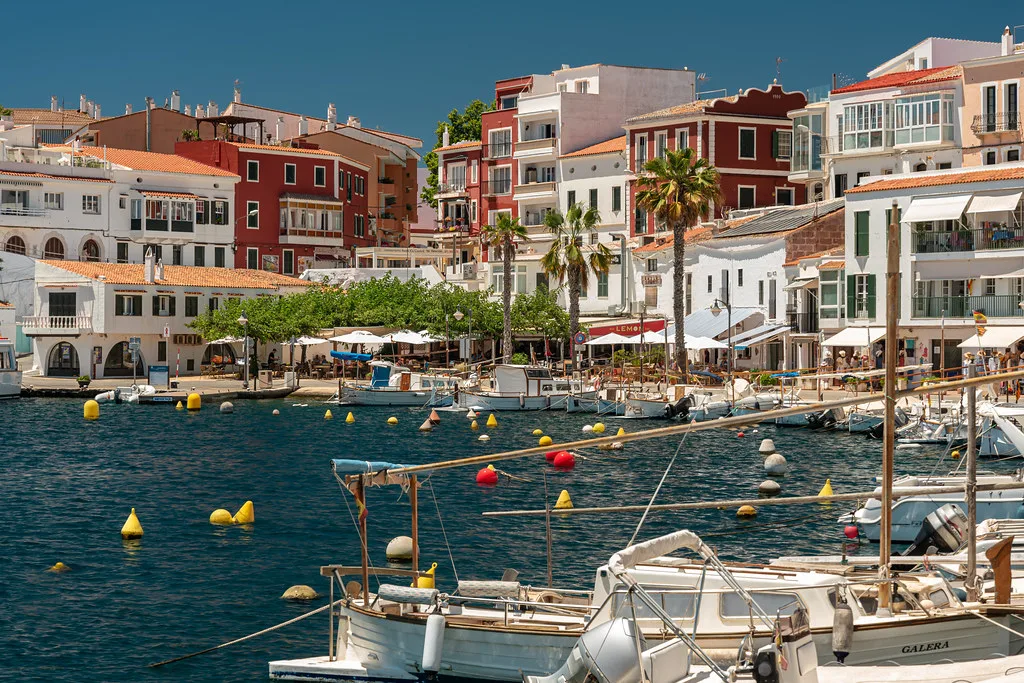
The two harbours are the reason to stay in Es Castell. Cales Fonts, the fishing harbour, has become a small haven of restaurants and bars along the waterside, favoured by locals and visitors alike, and the promenades are at their best in the evening when they're lit for strolling. A good route starts at the Hotel Hamilton, follows the waterfront around to Cales Fonts and continues beyond to the Santa Ana steps; work has been progressing to link the two harbours. In summer, between 4pm and 5pm, the harbour mouth fills with boats heading back into their berths in Mahón harbour, which makes a good excuse to sit still for an hour.
Cales Corb gives the town its second waterfront and a quieter counterpoint to Cales Fonts. The two inlets together define Es Castell's character, and the promenades between them are the town's main evening theatre. Boat envy is a local pastime: watching the returning flotilla from the harbour mouth is free entertainment. For a change of scene, the pretty camis, the island's little country roads, lead out to villages and hamlets on foot or by bicycle.
Swimming without a beach
Swimming in Es Castell means choosing an access point rather than a beach. Cala Padera has sunbathing platforms and sea access five minutes' walk from Cales Fonts, and an evening dip there is part of the local routine. Cala Sant Esteve, a charming inlet, is the other obvious option for a swim away from the harbour bustle. Neither has sand in the way a resort beach does; what you get instead is clear water without the crowd, and a short walk back to town.
If you want sand, plan it as a day trip rather than a default. The south-coast beaches are about 15 minutes by taxi, and buses run via Mahón rather than directly. Taxis to Punta Prima beach cost around 11 to 13 euros, which makes a family outing possible but not cheap if you do it daily. For a wider menu of island excursions beyond the harbour, including Ciutadella de Menorca, see the guide to things to do in Menorca.
Where to eat in Es Castell
Eating out in Es Castell divides into two zones with different economics. Down at the harbours, Cales Fonts and Cales Corb have the waterside restaurants and bars, with the atmosphere to match; the trade-off is that you pay for the view. Inland, along Carrer Gran, the main shopping street, bar-restaurants serve good-value set menus at lunch and in the evening, and prices are lower than on the waterfront. The same pattern holds for simple bar-cafeterias along the main street, which the town's restaurant guide flags for good food at reasonable prices.
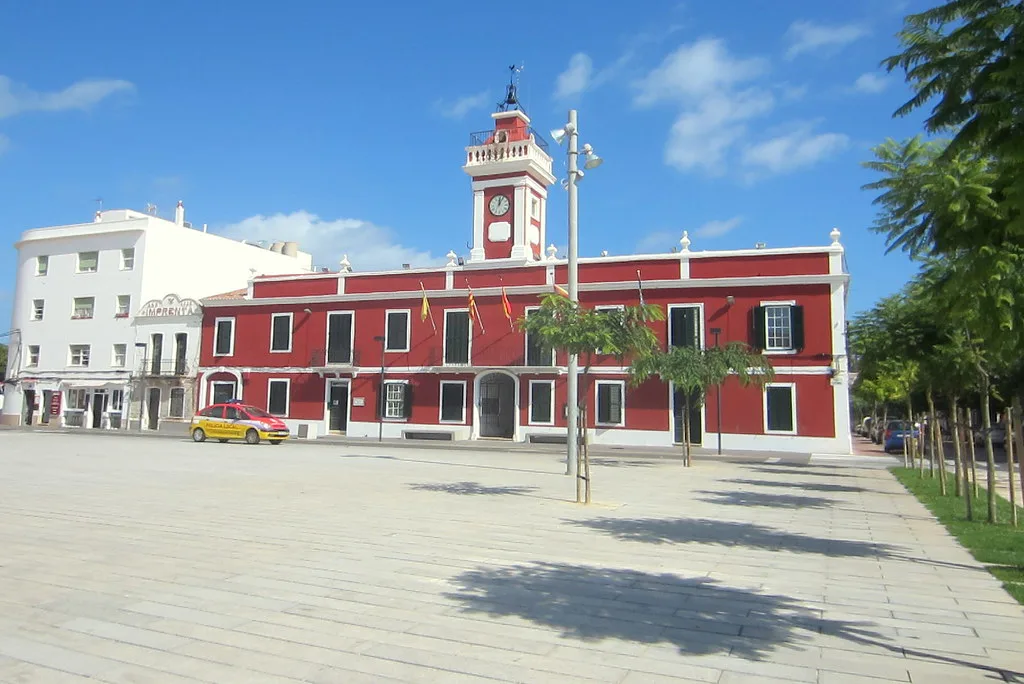
The choice is really about what you want from the evening. A set menu on Carrer Gran leaves money for a nightcap by the harbour; a table at Cales Fonts buys you the water, the boats and the promenade crowd. Most bars serve some form of homemade tapas, from traditional plates to simple hot and cold snacks, and the range runs from residents' favourites to rooftop bars. Because the town is residential, the cafés in the town hall square fill up as locals meet after siesta.
Evening routine and the walk to Mahón
Es Castell runs on Spanish time, which means the evening starts late. After siesta, children come out and stay up late, the town square cafés become a meeting point and people-watching takes over. Dinner at the harbour or on Carrer Gran fits naturally into that rhythm. The point of the town is the stroll between courses and after them, not a rushed early meal.
Mahón is close enough to be part of the evening rather than a separate trip. The walk takes about 25 minutes on foot, or you can take the regular bus or a taxi for roughly 8 to 10 euros one way. Mahón has more nightlife, shopping and dining than Es Castell, so it's worth using as an extension of the town rather than a rival to it. The bus is the most frequent service on the island, running half-hourly including Sundays, which makes the connection genuinely useful.
Getting there and around
Es Castell has no direct public bus link to Menorca airport, so the last leg goes via Mahón. A taxi from the airport takes about 20 minutes and costs around 20 euros for up to four passengers; licensed taxis carry a maximum of four, and every child counts as one. Shared shuttles start from about 14 euros per person, and private transfers start from around 35 euros for up to three people. Airport taxis do not provide child seats, which are required by law, so book a transfer with seats if you need them.
Within town, everything is walkable: the harbours, the square, Carrer Gran and the shops sit within a few minutes of each other. For Mahón, the bus is the default, while taxis are a faster alternative and fares vary with the route, so check the meter or agree the price before you set off. In summer, a water taxi runs around Mahón harbour between Cala Llonga, Es Castell and sights such as Fortalesa de la Mola, carrying up to 10 passengers; check current fares locally, as it is moored at the bottom of the Cales Fonts harbour steps. Menorca has no private cab firms or ride-hailing apps in the Uber mould, so use licensed taxis or pre-booked transfers.
Where to stay in Es Castell
Es Castell's accommodation is smaller in scale than the beach resorts: a boutique option or two, modern adults-only hotels with rooftop hot tubs, aparthotels and villas, plus rural hotels nearby. The town's own advice is blunt: don't book all-inclusive here, because the surrounding restaurants are too good to miss. That is sound reasoning given the two eating zones and the evening harbour life; a half-board or room-only booking leaves you free to eat on Carrer Gran one night and at Cales Fonts the next. The hotel stock is limited, so book early for summer.
Location within the town matters less than you might think, because the whole place is compact. A room near the harbours puts you in the middle of the evening action; a room nearer Carrer Gran is quieter and closer to the everyday shops and set-menu restaurants. Sea views are a real feature of many hotels along the Bay of Mahón, but they come at a premium. For comparison with a different kind of Menorca base, Fornells is the island's watersports centre, about 20 minutes away by road from Es Castell.
Practical points: market, fiesta and siesta
Es Castell has a weekly morning market on Tuesdays from 8am to midday, held in the central square, with additional stalls in summer. In the warmer months, clothes, trinkets and souvenir stalls appear along the harbour side in converted fishermen's caves, and night markets with artisan foods and handicrafts pop up in various locations, including a weekly summer night market on Mondays. The town's summer fiesta takes place every July around the old town and harbours. The local tabac is on the corner opposite the supermarket on Carrer Victori.
Shop hours split around siesta, so plan your errands accordingly. Shops often close from roughly 1pm to 5pm, and they are busiest in the evening when locals also meet in the café-bars. That rhythm explains why the town can feel quiet at 3pm and lively at 8pm. Parking restrictions apply in parts of town from 15 June to 15 September, so check signs if you're driving in summer.
Plan Your Visit
Es Castell rewards travellers who want a real Menorcan town with a harbour, not a resort with a beach. Base yourself here for the evenings, eat on Carrer Gran for value and at Cales Fonts for atmosphere, swim at Cala Padera or Cala Sant Esteve, and use the half-hourly bus to Mahón to reach the rest of the island. Check current opening days and bus times before you rely on them, especially outside summer.
Frequently Asked Questions
What is Es Castell like in Menorca?
Es Castell is a residential former military town on Menorca's east coast, built around two fishing harbours, Cales Fonts and Cales Corb. It has a central square, a weekly Tuesday morning market, a good spread of cafés, bars and restaurants, and no beach of its own. The atmosphere is local rather than resort-like, with evenings centred on the harbour promenades and the town square.
Does Es Castell have a beach?
No. Es Castell has no beach, but there are sea access points and sunbathing platforms at Cala Padera, about five minutes' walk from Cales Fonts, and a charming inlet at Cala Sant Esteve. Sandy beaches on the south coast are roughly 15 minutes away by taxi, with bus services running via Mahón.
How far is Es Castell from Mahón?
Es Castell is about a 25-minute walk from Mahón, and the bus between the two runs half-hourly, including Sundays. A taxi is quicker; the licensed taxi office and the town's bus timetables set the current fare and schedule, so confirm both before you travel. Mahón is written as Maó on local timetables and signs.
Is Es Castell lively?
Es Castell is lively in a local, low-key way rather than a party way. The harbour-side restaurants and bars at Cales Fonts and Cales Corb fill up in the evening, and the town square cafés are a meeting point for families after siesta. There is no loud music on the waterfront and the town does not cater to binge-drinking groups.
Where do you eat in Es Castell?
The two main eating zones are the harbour front at Cales Fonts and Cales Corb, and the inland streets around Carrer Gran. Harbour-side tables come with the view and a higher price; Carrer Gran's bar-restaurants serve good-value set menus at lunch and in the evening. Bars across town generally offer some form of homemade tapas.
Is Es Castell a good place to stay in Menorca?
It suits couples and solo travellers who want a genuine base with evening atmosphere and easy access to Mahón. Families and beach-first travellers should note there is no beach in town, so swimming means platforms at Cala Padera or a taxi or bus to the south coast. The hotel stock is small, with boutique, adults-only and aparthotel options.
How do you get to Es Castell from Menorca airport?
There is no direct public bus from the airport to Es Castell; the last leg goes via Mahón. Taxis, shared shuttles and private transfers are the options, and fares and journey times are set by the operators, so request a quote when you book. Airport taxis do not supply child seats, so book a private transfer if you need them.