Things to Do in Girona: Old Town, Sights and Where to Eat
Plan things to do in Girona around one uphill loop through the old town: cathedral, Arab Baths, city walls and El Call, with meal times and where to eat.
On this page
Girona makes sense as one continuous uphill loop rather than a checklist of sights. Start at the river by Pont de Sant Feliu, climb through the Basilica, the cathedral and the Arab Baths to the medieval walls, then drop back down through El Call to the bridges and Plaça de la Independència.
The historic core is compact and almost entirely walkable, so an afternoon covers the headline monuments. Give it a full day and you get the museums, the Mercat del Lleó and a proper late dinner once the day-trippers have gone.
Why Girona Rewards a Full Day Rather Than a Rushed Stop
Girona packs an old town, six museums worth your time and a cathedral with the widest Gothic nave in the world into a small medieval centre. Seen in a few hours it is pleasant; seen over a day it becomes a place you want to come back to.
The city also works as a base for the Costa Brava coast and the Catalan Pyrenees, and it is under an hour by train from Barcelona. If you are weighing up a day trip against an overnight stay, staying puts you in the lanes after dark, when the old town turns quiet and lamplit. A coastal alternative to weigh against Girona is things to do in Sitges, with its own beaches and old town.
How the Old Town Fits Together: The Uphill Loop from the Onyar to the Walls
Most day trippers are dropped by the river next to Pont de Sant Feliu, which makes a natural start. From there the route climbs gently through the old town to the cathedral and the walls, then loops back down through the Jewish Quarter to the river without much backtracking.
Girona's centre sits partly on a hill, and two rivers, the Ter and the Onyar, run through the city, so the streets are narrow and often steep and stepped. Wear shoes you can climb stairs in and carry water in summer.
Start at Pont de Sant Feliu for the Coloured Houses and the Basilica
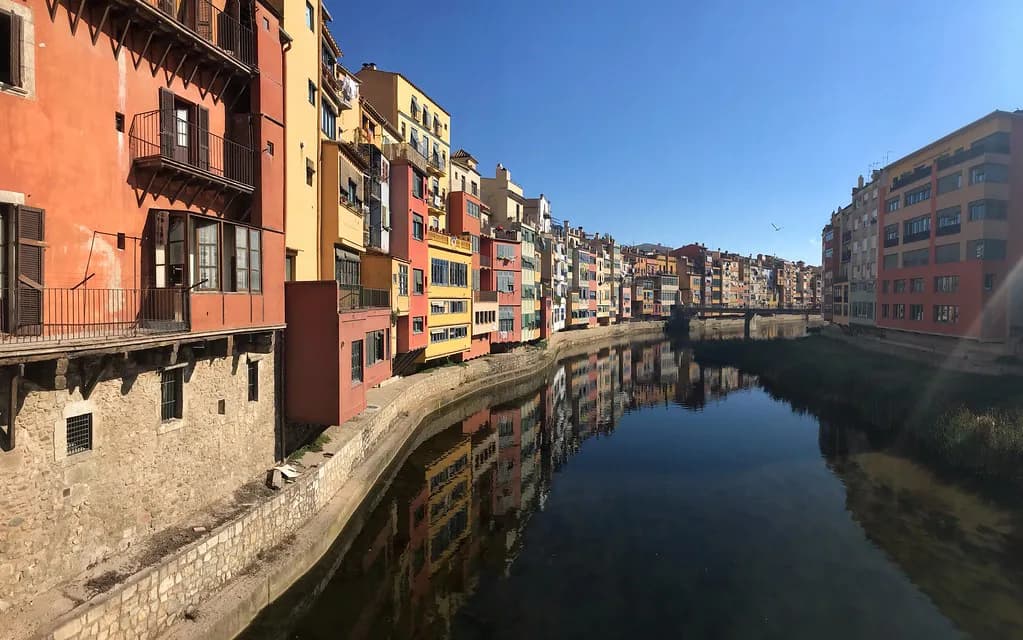
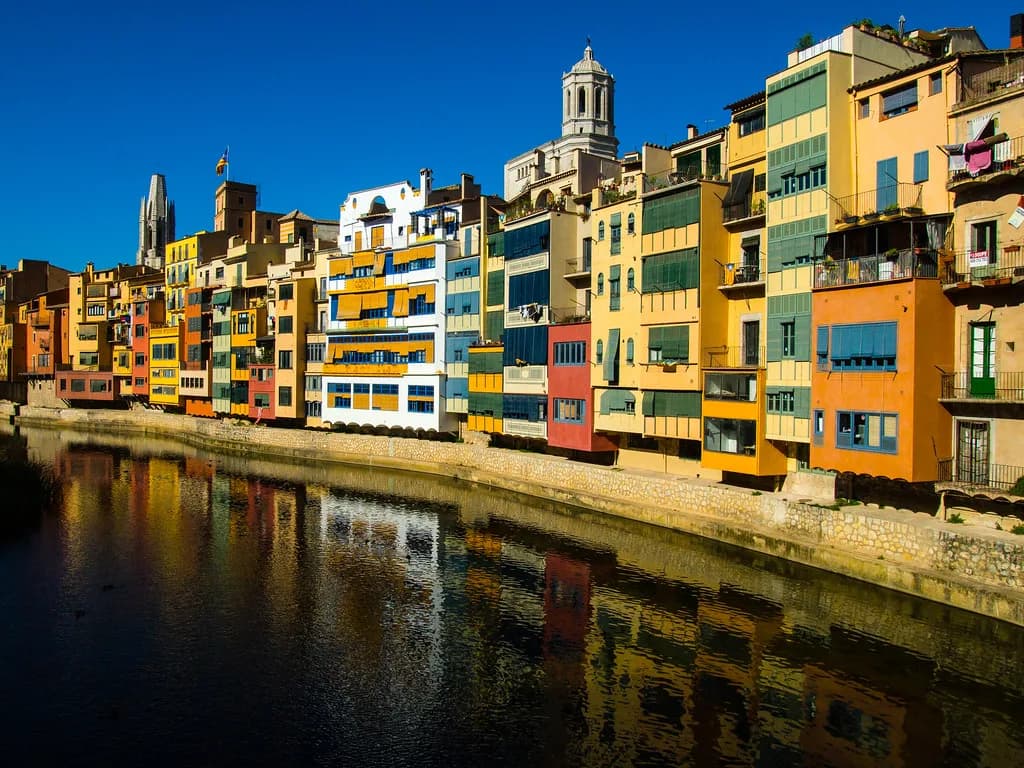
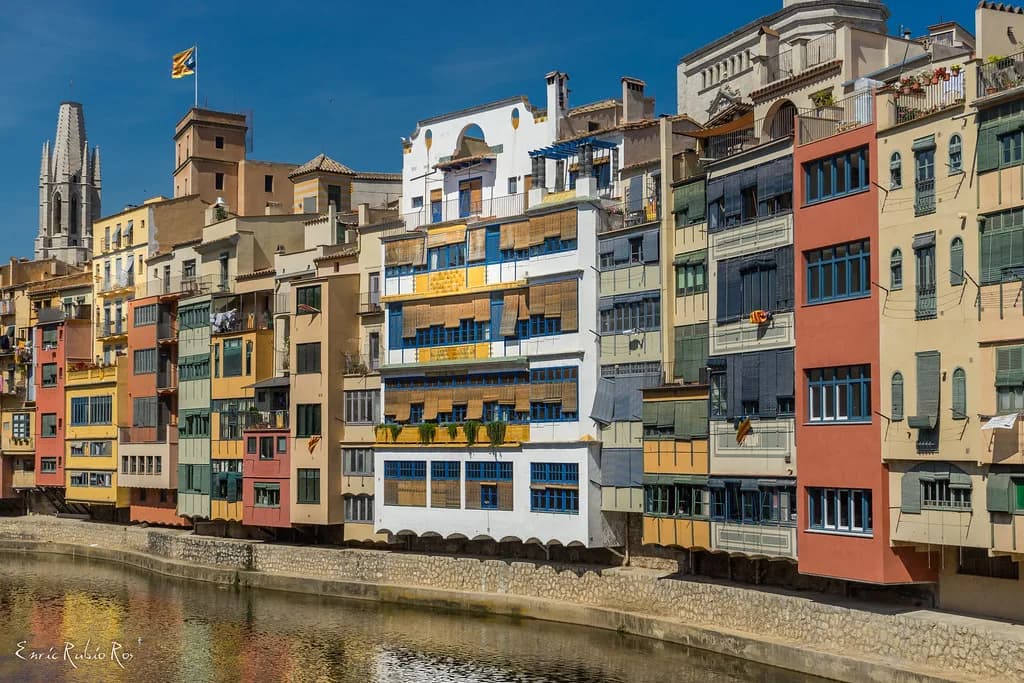
Before you cross the pedestrian bridge, stop for the view. The row of coloured houses along the Onyar is the classic Girona postcard, and on a still day the facades reflect almost perfectly in the water.
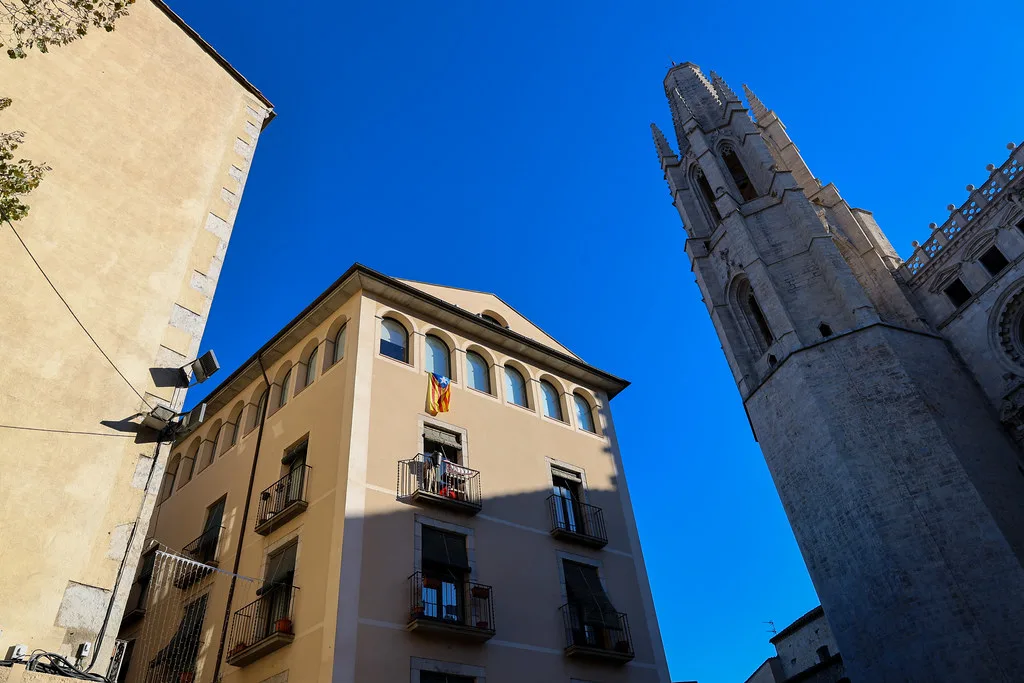
Across the bridge, the Basilica de Sant Feliu rises above a flight of steps. It was Girona's main church before the cathedral and mixes Romanesque, Gothic and Baroque work; inside are the tomb of St Narcissus and a set of eight Roman and early Christian sarcophagi from the 3rd and 4th centuries.
A combined ticket covers the Basilica and the Cathedral de Santa María and includes an audioguide. It costs €7.50 for adults and €5 reduced, which makes sense if you plan to see both rather than just one.
The Cathedral de Santa María: The Wide Gothic Nave, the Cloister and the Combined Ticket
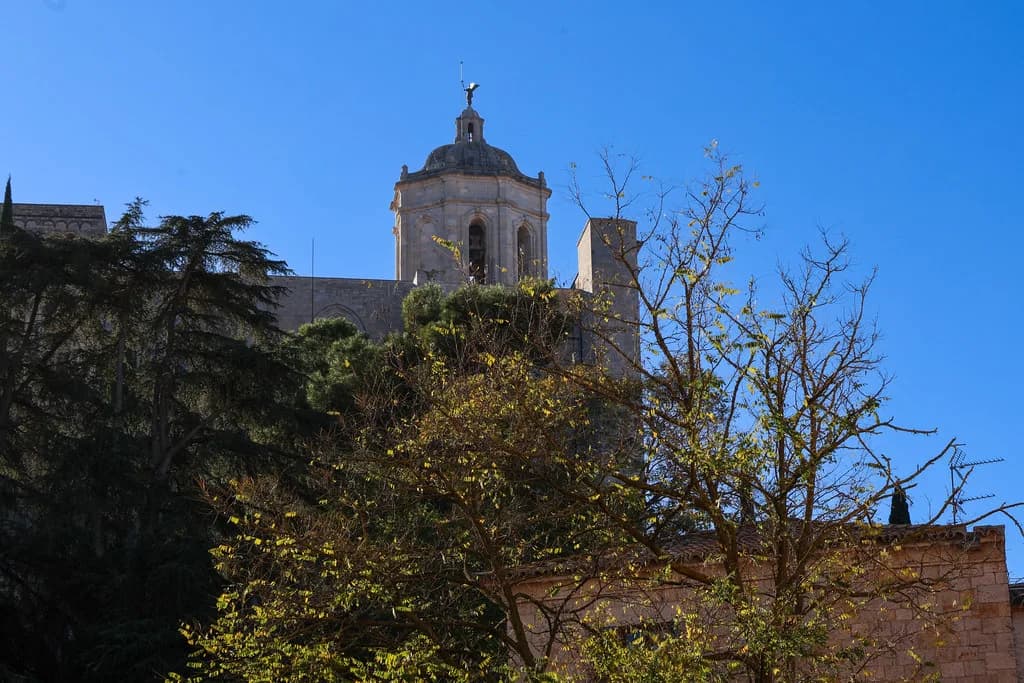
An even grander set of steps leads up to the cathedral, and a photo on them is a Girona rite of passage. Game of Thrones fans will recognise the staircase, but the building earns the climb on its own: a church has stood on the site since at least the 11th century, and the single Gothic nave begun in the 14th century is just shy of 23 metres across.
Inside, the Romanesque cloister has carved capitals, and the museum and treasury hold the Tapestry of Creation, an 11th-century embroidery and one of the most important pieces of Romanesque textile work to survive. The same combined ticket as the Basilica covers entry.
The Arab Baths: The Octagonal Pool Room and Entry Prices
A short walk from the cathedral, the Banys Àrabs were built in the 12th century in the Romanesque style, modelled on Roman baths, Turkish hammams and Jewish mikvahs. The room to linger in is the apodyterium, where bathers undressed: an octagonal pool ringed by eight slender columns, with a dome above letting light pour in.
Entry is €3, with reduced rates of €2 and €1. The baths are open Monday to Saturday from 10am to 6pm, and Sundays and holidays from 10am to 2pm, so a Sunday visit needs to be a morning one. If the baths put you in the mood for a soak, Aqva is around the corner in Girona's former hospital, with a Greco-Roman-style bath circuit among structures dating back as far as the 5th century. The circuit is €32, timed, and you need to book ahead, so it is a planned stop rather than a spur-of-the-moment one.
The Medieval Walls, Força Vella and the Jardins dels Alemanys
Between the cathedral and the walls, the Jardins dels Alemanys is a free garden where trees and plants grow among the ruins of the old city walls and parts of the Roman city. It takes its name from the barracks of German soldiers who fought in the 19th-century Peninsular War.
Girona was founded in 79 BC, and the Romans built a fortress here, Força Vella, enclosed by walls that stood largely unchanged until around 1,000 AD. The medieval walls you walk today date from the Carolingian period, around the 9th century, and run from behind the cathedral alongside the gardens; you can walk along the top and climb the lookout towers for the best views in the city.
Treat the wall walk with care: parts have been restored for walking, but not every stretch is safely restored. Stay on the marked path and save the sunset for the sections you know are open.
El Call, the Jewish Quarter: Which Lanes to Wander and the Museum of Jewish History
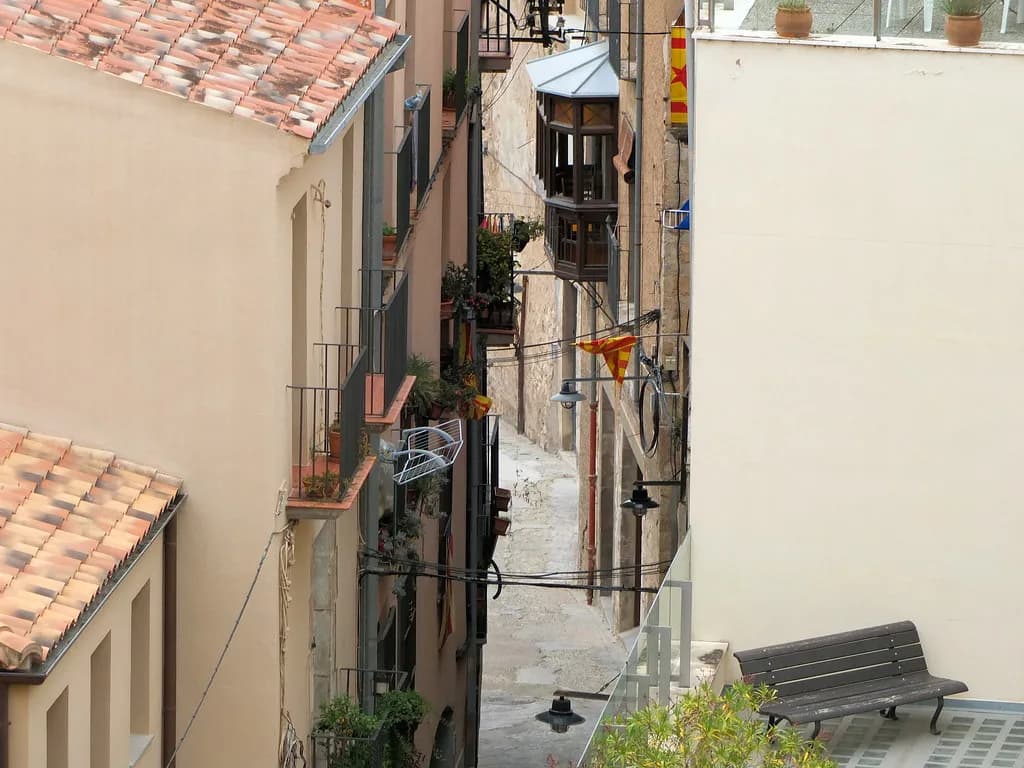
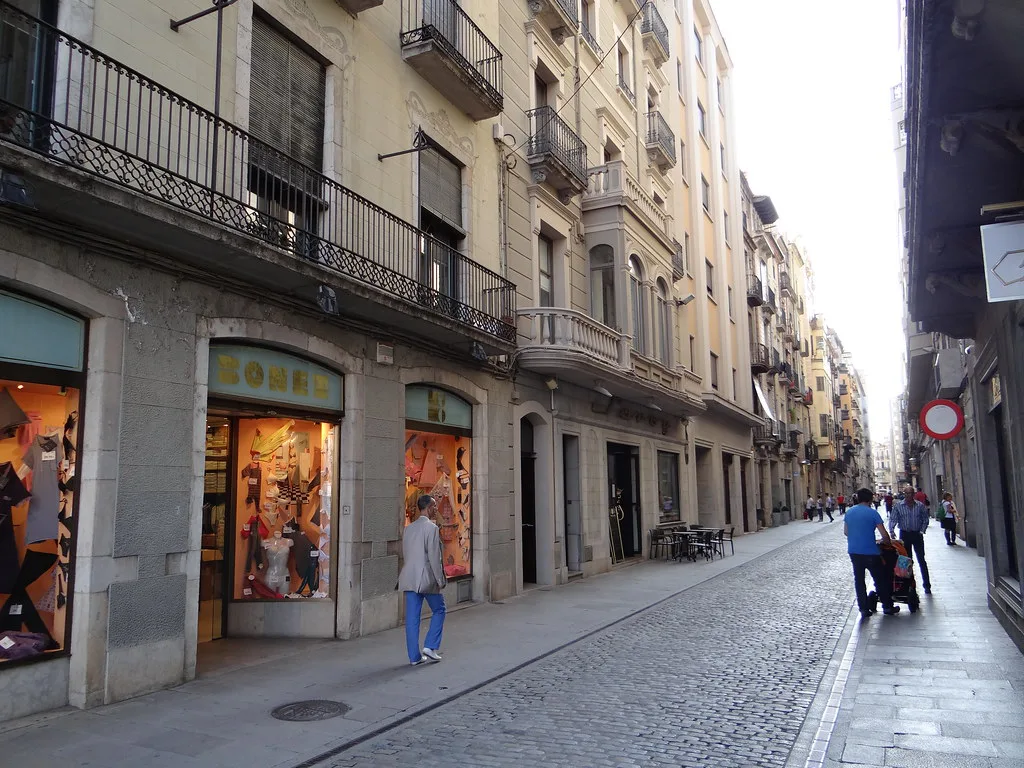
El Call, the Jewish Quarter, sits close to the cathedral. A Jewish community lived here from at least 982 until the expulsion of 1492, and the quarter is a maze of narrow cobbled lanes and half-hidden doorways with no cars.
Start on Carrer de la Força, home to the Museum of Jewish History, set in a 15th-century former synagogue and holding artefacts and information on the Jewish history of the city and Catalonia. Other atmospheric streets to wander are Carrer Manuel Cundaro, Carrer de Sant Llorenç and Carrer del Doctor Oliva i Prat.
The quarter is part of the Barri Vell, the old town you are already walking through, and its lanes are dark and almost empty after nightfall. If you want context beyond the museum panels, a guided walk covers the medieval streets and the people who lived in them.
Eiffel's Bridge, Plaça de la Independència and the Lion
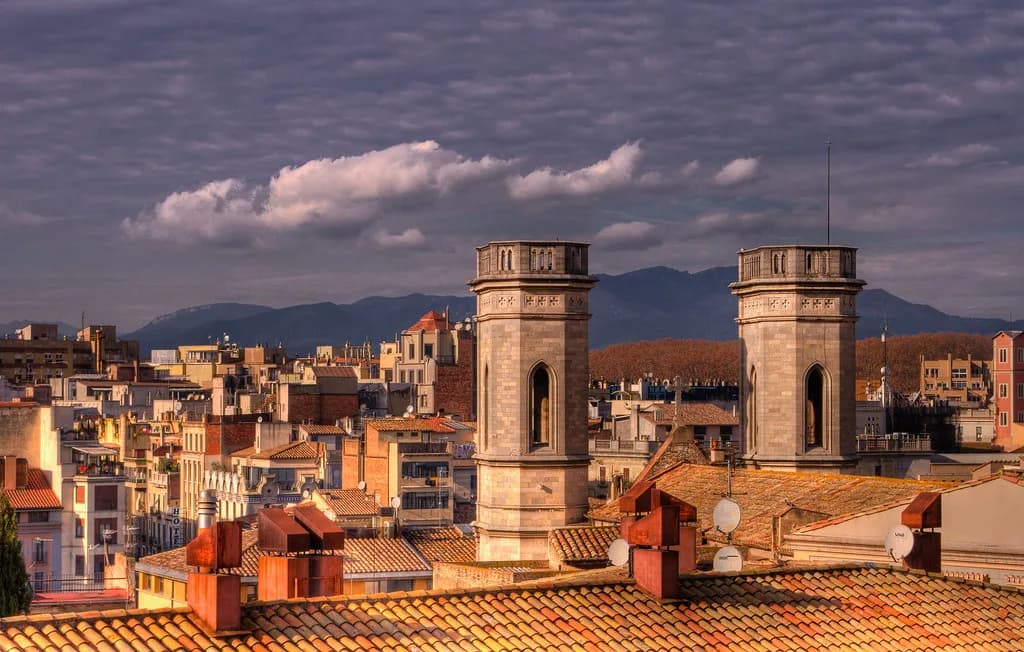
The Pont de les Peixateries Velles, known to most visitors as the Eiffel Bridge, is a footbridge of red iron latticework across the Onyar, built in 1877 by Gustave Eiffel's company. Look north for the coloured houses with the cathedral and Sant Feliu towers behind them.
Cross the river and you reach Plaça de la Independència, a 19th-century neoclassical square ringed by covered porticoes full of restaurants and cafés. It is the place to settle in with a coffee or a generously poured gin and tonic and watch the city go by.
Back near Pont de Sant Feliu, by the steps to the Basilica, stands El Cul de la Lleona, a column topped with a lion. Tradition says kissing the lion's backside guarantees your return to Girona; the statue is a replica, and the original lives in the city's Art Museum.
Museums Worth Your Time If You Stay the Night
Girona has six museums and a sensible money decision: visit more than one and you get a 50% saving at every museum after the first. That rewards picking two or three that appeal rather than racing through all six.
The Art Museum, in the old Episcopal Palace next to the cathedral, holds the best collection of art in the region, with Gothic altarpieces displayed in the former throne chamber. The Archaeology Museum, founded in 1846, sits in the old Monastery of Sant Pere de Galligants, itself a Game of Thrones filming location.
For film buffs, the Museum of Cinema opened in 1998 as the first of its kind in Spain, built around the Tomàs Mallol Collection and covering 400 years from shadow puppet theatre to modern cinema technology. Standard entry is €7, or €3.50 reduced.
Casa Masó is the last of the six and the only house along the river in the old town open to the public. It was the home and birthplace of the Catalan architect Rafael Masó i Valentí, and visits are by guided tour only.
The Mercat del Lleó and Where Locals Shop
The Mercat Municipal del Lleó is where locals actually shop, with more than 50 stalls selling vegetables, meat and fish. It is open Monday to Friday from 7am to 2pm, and Saturdays from 7am to 2.30pm, and closed on Sundays.
Come before lunch rather than in the afternoon; the market is a morning errand, not a late stop. Girona has other markets too, with jewellery and craft stalls on the Pont de Pedra linking the old town with the Mercadal neighbourhood, and a craft and artisan food fair in Plaça Miquel Santaló.
Where to Eat: Meal Times, What to Order and the City's Food Culture
Girona eats well for a city its size, with a regional food culture built on Costa Brava fish from ports such as Palamós, mushrooms, vegetables, rice and meat. Local dishes to order include pa amb tomàquet, bread rubbed with tomato and oil; botifarra, an ancient Roman-style sausage often grilled with white beans; Catalan-style cod, patatas bravas and crema catalana.
The local sweet is xuixo, a deep-fried, sugar-coated pastry filled with crema catalana. For something more everyday, Café le Bistrot has spilled onto a stepped street since 1978, and Rocambolesc, the Roca family's ice cream shop on Carrer de Santa Clara, needs no months-ahead booking.
For a tapas crawl or a sit-down dinner, our best restaurants and tapas picks in Girona cover both ends of the scale, and a food tour is a useful shortcut if you want orientation on day one. Spanish meal times matter: lunch runs from about 1.30pm to 4pm, and dinner starts from 8.30pm to 9pm.
If you are here for the top end, El Celler de Can Roca was named best restaurant in the world in 2013 and 2015 and has since been retired into the ranking's hall of fame. Tables open 11 months in advance at midnight on the first of each month and go fast; the full picture of what is available on a given date is in our guide to Girona Michelin restaurants.
For coffee, the Roca side of town also has solid options, and Girona cafés range from serious roasters to café terraces on Plaça de la Independència. A morning coffee before the market or after the cathedral fits the rhythm of the city better than an afternoon one.
Girona After Dark: Sunset on the Walls and an Evening in the Lanes
Day trippers are usually back on the bus by late afternoon, and staying into the evening is the best reason to base yourself in Girona rather than passing through. As the light goes, head up onto the walls or out onto one of the bridges for sunset over the coloured houses and the cathedral towers above them.
After dark the old town turns atmospheric: the lanes of El Call are lit by lamplight and almost empty, the cathedral steps are floodlit, and the river holds the reflections of the lit houses. Dinner runs late, so plan to eat from around 9pm and walk afterwards.
Practicalities: Getting There, When to Go and How Long You Need
Girona is under an hour by train from Barcelona and has its own airport, GRO, so it works as a short break as well as a day trip. A few hours covers the old town highlights; two days lets you slow down for the museums, the food and a day out on the Costa Brava.
May brings the Temps de Flors flower festival and September and October are the most comfortable months for walking the walls. Summer is hot and busy, and the steps and steep lanes ask for an early start.
The Monastery of Sant Daniel, about ten minutes' walk outside the old town in a green valley, has limited access: the two-level cloister opens on non-holiday Thursday mornings, and a guided tour of the church, cloister, old kitchen and cellar runs on the first Saturday of each month. Plan that stop around those times rather than turning up.
Plan Your Visit
Build the day around one loop: river, Basilica, cathedral, Arab Baths, gardens and walls, then El Call and the bridges. Buy the combined Basilica and Cathedral ticket, decide in advance whether you want the timed Aqva circuit, and leave the market and a late dinner for the end.
If you are comparing city breaks, the same approach of grouping sights by area and time of day works for things to do in Alicante and things to do in Ibiza. Check the official pages for the monuments and spa before you book a time slot.
Explore more Girona guides
Frequently Asked Questions
Is Girona worth visiting from Barcelona?
Yes, and it is easy to reach by train in under an hour. A few hours covers the cathedral, Arab Baths, city walls and Jewish Quarter, but two days lets you add the museums, the market and the food, and see the old town after dark.
How many days do you need in Girona?
A half day is enough for the main monuments on the uphill loop. A full day or two is better: it gives you time for the museums, the Mercat del Lleó, the food and a trip out to the Costa Brava.
Was Game of Thrones filmed in Girona?
Yes. Season 6 scenes were filmed in the city, with the cathedral steps among the most recognisable locations, alongside the area outside the Arab Baths, the Monastery of Sant Pere de Galligants and Plaça dels Jurats.
What is there to do in Girona in the evening?
Head up to the medieval walls or one of the bridges for sunset over the coloured houses, then walk the lamplit lanes of El Call. Dinner starts from about 8.30pm to 9pm, later than most British visitors expect.
When is the best time to visit Girona?
May brings the Temps de Flors flower festival, and September and October are the most comfortable months for walking the walls. Summer is hot and busy, so plan an early start for the steep lanes and steps.
Is Girona walkable?
Yes. The historic core is small and almost entirely walkable, though it sits partly on a hill, so expect steep, narrow lanes and plenty of stairs. Wear shoes you can climb in and allow for the climb up to the cathedral and walls.
Sources
Notes for eating well in Spain
Optional updates to our guides.
You might also like
Continue reading
More guides you'll find useful