Things to Do in Alicante: Castles, Beaches and Where to Eat
Plan your days in Alicante by area: the castle, Barrio de Santa Cruz, the Central Market, Postiguet beach and Tabarca, plus where to eat tapas and when.
On this page
Alicante packs a fortress, a working market, a marble seafront and a city beach into a compact centre you can cross on foot. Group your day by area — old town, city centre, waterfront — and let the Mercado Central's early finish and the castle's late opening set the rhythm. Then hang lunch and dinner on Spanish meal times: lunch roughly 1:30–4pm, dinner from 8:30–9pm.
What to do in Alicante: the short answer
The must-do is Castillo de Santa Bárbara, a hilltop fortress with free admission and sweeping views over the city and the Mediterranean. Pair it with a wander through Barrio de Santa Cruz, the whitewashed old quarter climbing the same hill. Add the Explanada de España, the Mercado Central and Playa del Postiguet, and you have the core of the city in two days.
For a longer stay, the water and the countryside pull you out: boat trips to Tabarca Island, the long Blue Flag sands of Playa de San Juan, and day drives to Guadalest, Altea or the Vinalopó wine villages. This page covers the shape of the trip and the big decisions; the neighbourhood and restaurant guides carry the depth.
How Alicante fits together: city centre, old town, waterfront
Alicante divides neatly into three walking zones. The city centre holds the Mercado Central, the Explanada de España and Casa Carbonell, a modernist apartment block built between 1922 and 1925 at the end of the promenade. The old town, Barrio de Santa Cruz, sits under the castle with narrow streets and painted front doors. The waterfront gives you Playa del Postiguet on one side of the marina and the harbour on the other.
That layout means you can plan by half-day rather than by transport. A tram line runs from the city centre towards the beaches, which makes Playa de San Juan easy without a car. If you want to see the sights as a set, the Alicante Attractions: 6 Visitor Guides hub links each one in detail.
Castillo de Santa Bárbara: walking up versus the lift, and going in the evening
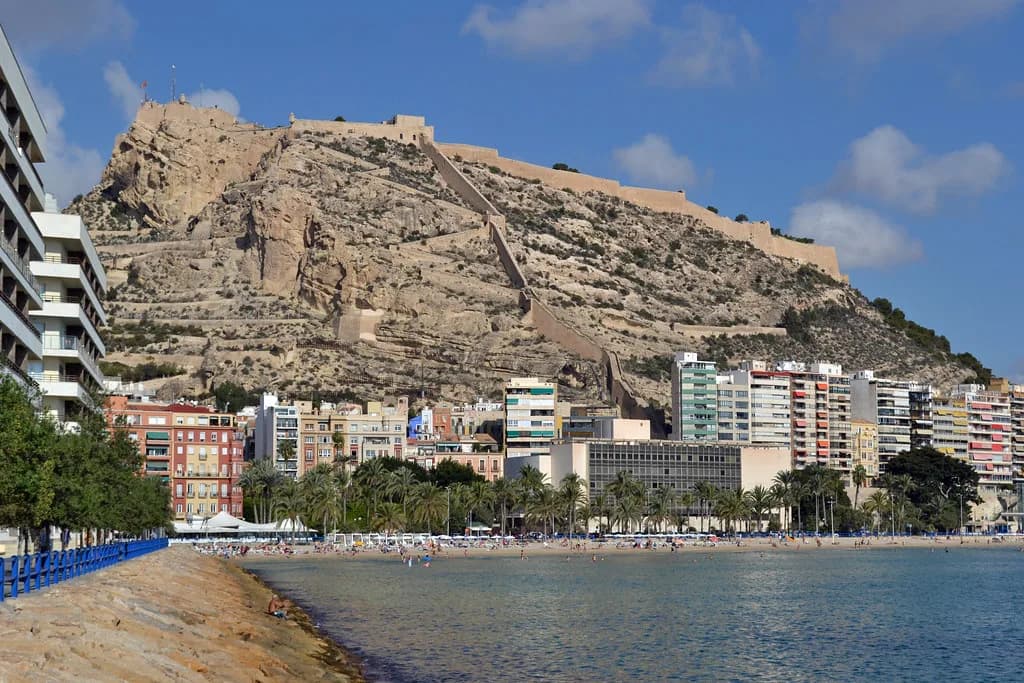
The castle crowns Benacantil hill at 166 metres above sea level, and admission is free. You can walk up from the centre in around 25 minutes, but the final stretch is steep and punishing in the heat of the day. There is a lift from near Playa del Postiguet for those who would rather save their legs.
Go late. The castle stays open until 11pm, so an evening visit gives you cooler air and a sunset over the sea, a far better trade than midday sun on the ramparts. There is a restaurant and a kiosk on site for refreshments, and the archaeology spans Bronze Age, Iberian and Roman remains beneath a fortress begun in the ninth century.
Barrio de Santa Cruz: the old town climb and its evening tapas tavernas
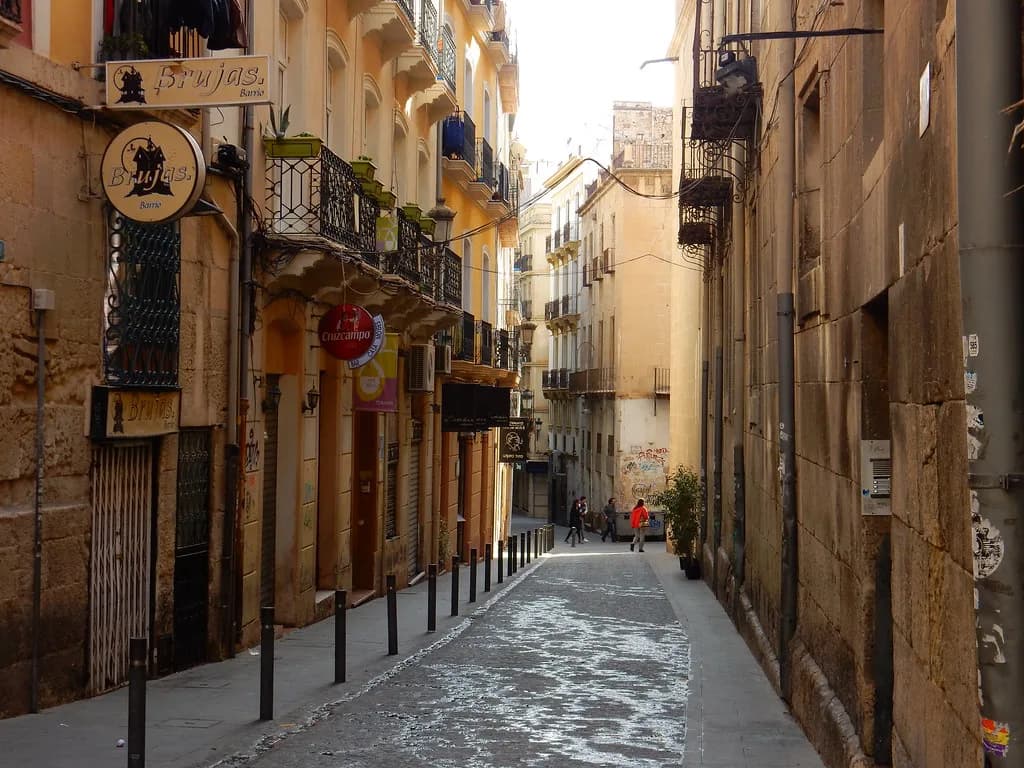
Barrio de Santa Cruz is the oldest part of the city, a knot of narrow streets and whitewashed houses tucked under the castle. It is still largely residential, so you will pass neighbours on doorsteps and pot plants against bright painted doors. Climb slowly; the lanes are the point, not the destination.
In the evening the quarter fills up as locals head to its tavernas for tapas and drinks. That makes it the natural place to start a night out, before dinner properly begins at 8:30–9pm. For specific bars, use our pick of Alicante old town restaurants rather than guessing from the street.
Mercado Central: morning only, and what to eat inside
The Mercado Central is a modernist market hall from 1912 with more than 300 stalls, and it runs to a morning rhythm. It opens Monday to Saturday from 7am to 2:30pm, and some stalls start packing up around lunchtime, so arrive before noon if you want the full picture. The first floor leans to meat, dairy and household goods, the upper floor to vegetables and fish.
Eat inside rather than treating it as a photo stop. Cafetería Anamar does ham, cheese and egg sandwiches, and Salzillo is a good shout for coffee. This is also where many of the city's restaurants buy their produce each morning, so a lap of the fish counters tells you what is good that day.
Explanada de España and Casa Carbonell: the seafront stroll
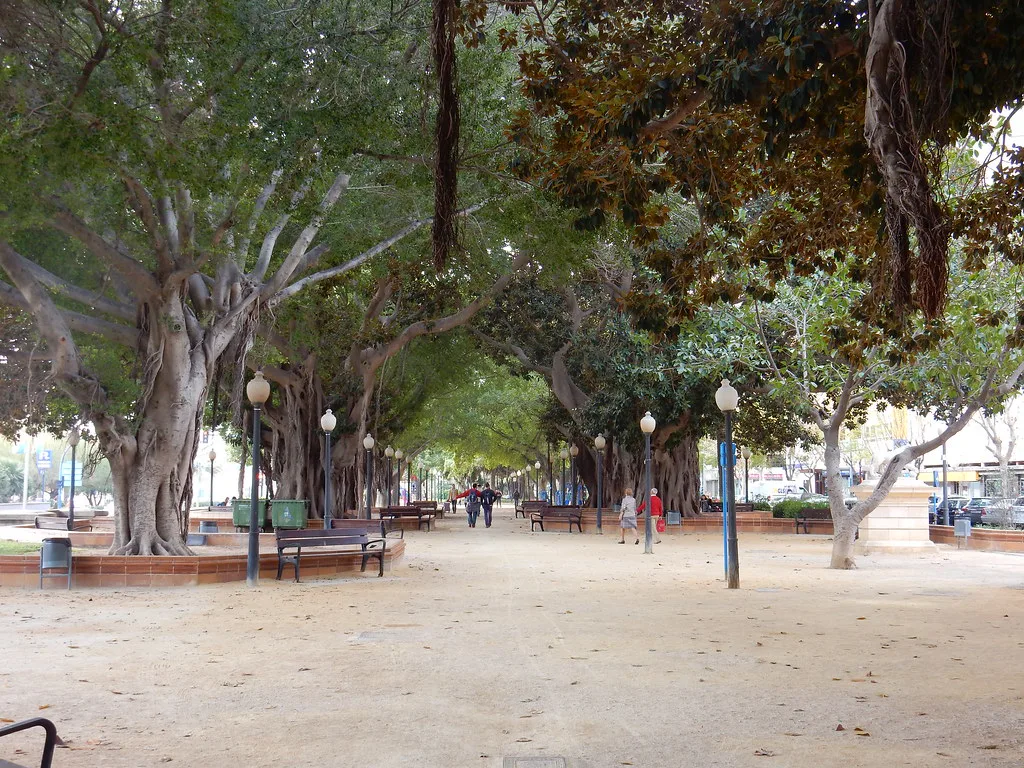
The Explanada de España is paved with millions of marble tiles laid in a wave pattern, palms on one side and the marina on the other. It is the city's promenade and its social centre, lined with bars and restaurants. Stop for a horchata at Horchatería Peret, which has been serving Alicante for over 50 years, or take a coffee at Cafetería Ripoli.
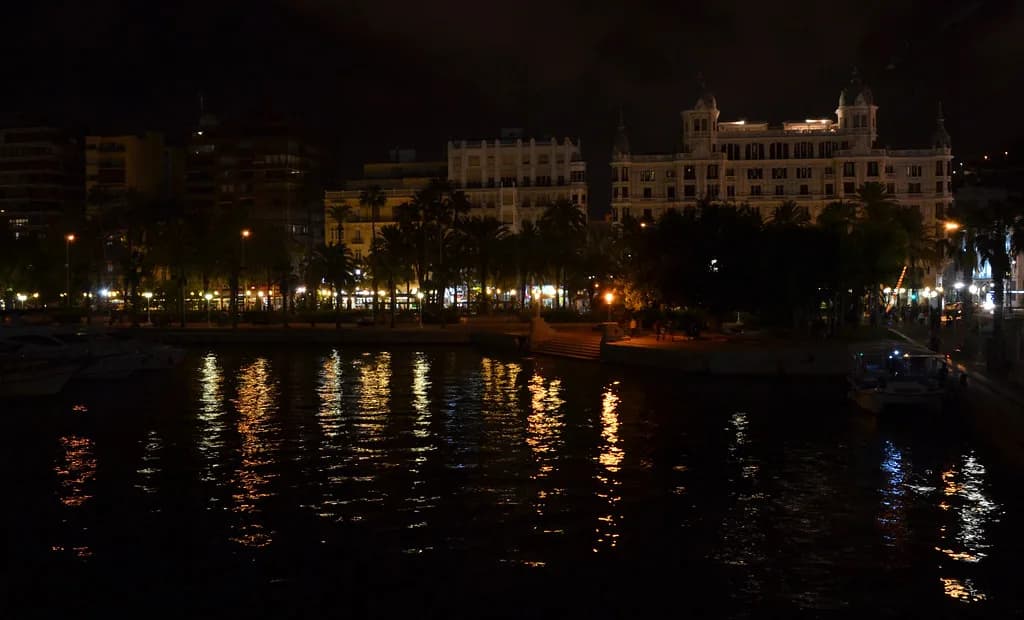
Walk to the end of the promenade for Casa Carbonell, an early twentieth-century modernist building with wrought-iron balconies and large windows. It now holds apartments and commercial space rather than a museum, so admire it from the street. In the evening the Explanada is where the city comes out to eat and drink, which makes it a good pre-dinner loop.
Playa del Postiguet and the marina
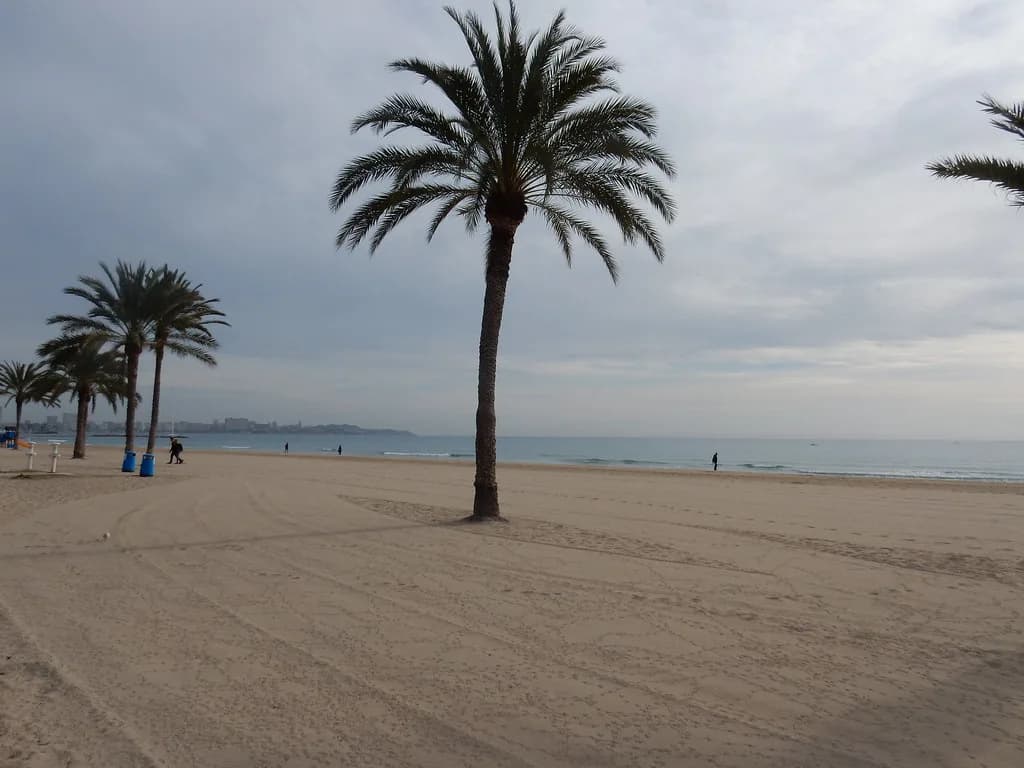
Playa del Postiguet sits right against the city, next to the marina, with golden sand and calm water for swimming. There are beachside cafés, a volleyball net and a children's playground, and you can rent sunbeds for a small fee. It is the easy beach day: no car, no planning, just walk down from the old town.
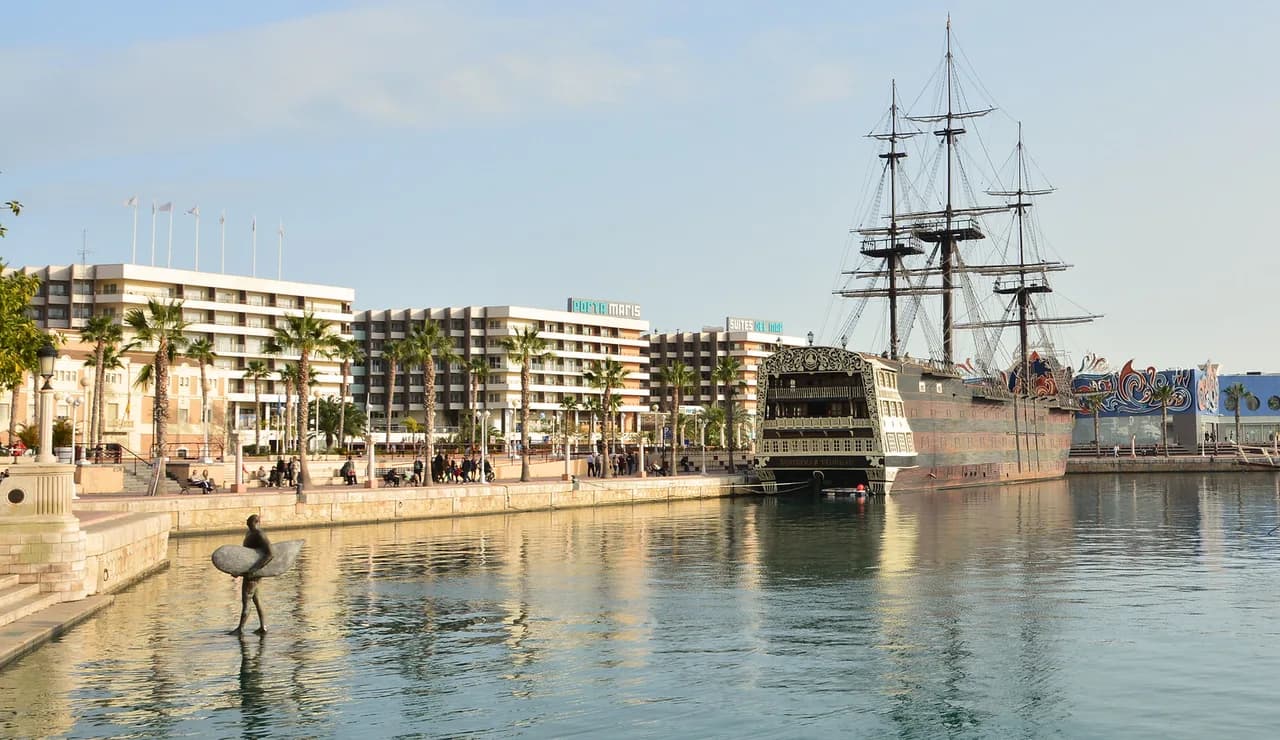
The marina itself is a pleasant hour of people-watching, with bars, restaurants and shops along the water. Harbour-front restaurants charge more for the position, so treat them as a drink-and-view stop rather than the value meal of the trip. For sand without the city bustle, Playa de San Juan stretches about 7 km, with a promenade of cafés behind it.
MACA and the city's churches: a cool hour in the middle of the day
The Museo de Arte Contemporáneo de Alicante, MACA, occupies the Casa de la Asegurada, the city's oldest civil building, and shows twentieth-century work including Miró and Dalí. It is a sensible midday stop when the streets are hottest. Almost opposite stands the Basílica de Santa María, the oldest active church in the city, Gothic in origin with a baroque façade added in the eighteenth century.
The Concatedral de San Nicolás, the city's cathedral, mixes Renaissance and baroque, with a blue dome and an ornate interior. Both churches are free to look at from outside and quick to visit inside, which makes them easy to slot between lunch and an afternoon walk.
Tabarca Island: boat trip or DIY from Santa Pola
Tabarca is a small inhabited island and a Mediterranean marine reserve, once a pirate hideaway, with a village built in the 1700s. Boats leave from Alicante harbour, and the crossing makes a good half-day or full-day outing. A restaurant lunch on the island is the obvious move; for the seafood rice itself, see our guide to the best paella in Alicante before you go.
You can also do it yourself: a taxi boat from Santa Pola on the mainland is the cheaper route, and you set your own schedule. Check crossing times and the last return before you commit, since the island is small and the day is shaped by the boats.
Day trips worth the drive: Guadalest, Altea, the Vinalopó wine country
Guadalest is a village of about 200 people perched on a pinnacle about an hour's drive away, with a castle reached through a short tunnel and a white bell tower that appears on half the postcards of the region. Altea, roughly 52 km from Alicante, is a whitewashed old town above a palm-lined promenade and a stony beach. Both are easiest with a car or an organised tour, and Altea in summer is best early or late in the day.
The Vinalopó region, about 45 minutes out, makes Fondillón, a sweet dessert wine aged for around a decade, alongside Tempranillo, Garnacha, Merlot and Cabernet Sauvignon. Harvest-season visits in September and October can include picking grapes. Tours run as third-party excursions with their own prices, so compare what each includes instead of assuming a standard rate.
Where to eat in Alicante: tapas bars and restaurants to book
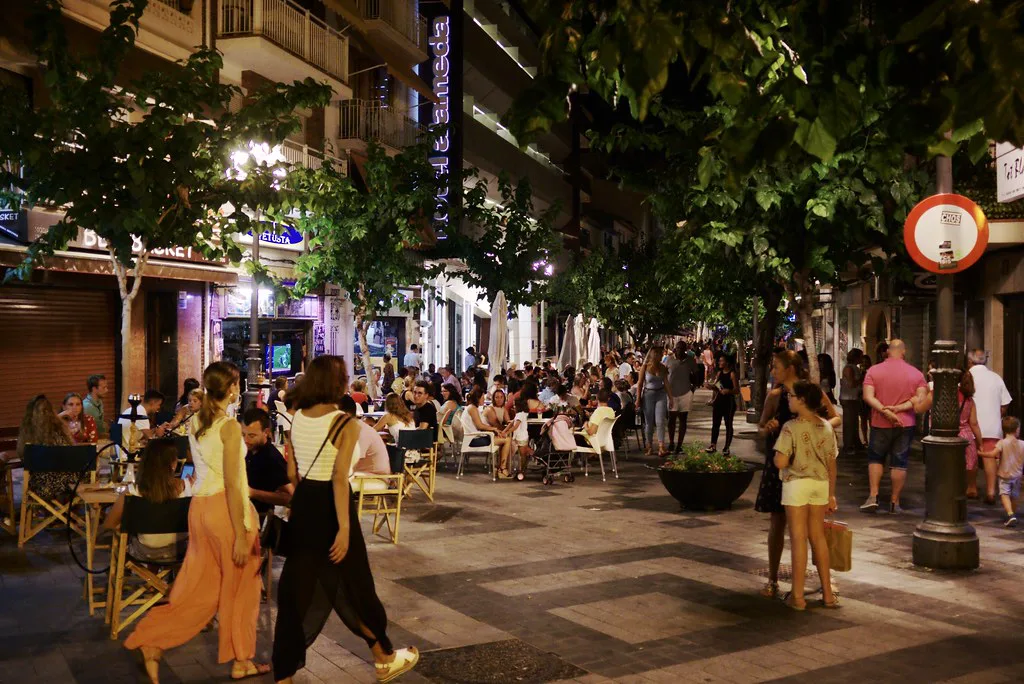
Alicante's food is the reason to stay longer than a day. Manero is the special-occasion tapas room, not the cheapest table in town but strong on wine and oysters, with a striking interior of cork tiles and skirted light shades. Bar Cento cooks traditional Spanish dishes in front of you in an informal, rustic room.
Book the big names ahead and keep the rest loose. For a wider shortlist of the best restaurants in alicante, from seafood to rice, start with our restaurant guide and filter by area. If you only have one night, spend it in the old town, where the bars and the walk home are one and the same.
For a tapas crawl, our pick of the best tapas in alicante covers the bars worth a detour. Order a few plates at a time, keep the wine local, and plan the last stop near your hotel. If you want to know what to order before you sit down, start with Alicante food and the dishes of the Valencian Community.
Eating on Spanish time: lunch and dinner slots
Spanish meal times decide your day. Lunch runs roughly 1:30–4pm and dinner starts around 8:30–9pm, so the hours between four and eight are for walking, the castle or the beach rather than a sit-down meal. The Mercado Central's 2:30pm close fits neatly before a late lunch.
Late afternoon is the tapas hour, and Barrio de Santa Cruz is the natural setting for it. Book dinner for 9pm and you eat with the city rather than ahead of it. Keep one evening free for the Explanada and the marina, where the stroll is the main event.
A three-day shape for an Alicante trip
Day one: Mercado Central in the morning, a late lunch, then MACA and the churches in the hot hours, and the castle at sunset. Day two: Barrio de Santa Cruz and the Explanada in the morning, Playa del Postiguet in the afternoon, tapas in the old town at night. Day three: Tabarca by boat or Guadalest and Altea by car, depending on whether you want sea or mountain. If you are weighing a longer Catalonian city break instead, our things to do in girona covers an old town walk, sights and where to eat.
Swap in Playa de San Juan if you want a proper beach day, and a Vinalopó wine tour if you would rather drink than swim. The full set of city sights sits in Alicante Attractions: 6 Visitor Guides, which is the quickest way to check what you have missed.
What to skip or save for a return visit
Benidorm is the honest trade-off. The old town on the hill between the two beaches has cobbled streets and character, while the Levante strip is high-rises, karaoke and stag parties. If that is not your scene, skip it; if you want a contrast to Alicante's calm, it is under 40 minutes away.
Save the far-flung coast for another trip. La Granadella, over an hour away, is tiny at 220 metres and needs an early start in summer. The city itself rewards a slow second visit more than a rushed checklist, and Alicante is worth at least two days, with five ideal.
Plan Your Visit
Build your Alicante days around three fixed points: the market before 2:30pm, the castle after the heat, and dinner from 8:30pm. Everything else — the Explanada, the old town, the beach — fits between them on foot. Confirm current opening times and tour departure points directly with the Castillo de Santa Bárbara and Mercado Central before you travel, since these change with the season.
Explore more Alicante guides
Frequently Asked Questions
What is the must-do in Alicante?
Castillo de Santa Bárbara, for the views and the free admission, combined with a walk through Barrio de Santa Cruz below it. Add the Explanada de España and the Mercado Central and you have the core of the city.
What can you do in Alicante in one day?
Shop the Mercado Central in the morning, have a late lunch, see MACA or the Basílica de Santa María in the hot hours, then climb to the castle for sunset. Finish with tapas in Barrio de Santa Cruz.
What is free to do in Alicante?
Admission to Castillo de Santa Bárbara is free, and so is walking the Explanada de España, the marina and Playa del Postiguet. Boat trips, wine tours and guided city tours are paid third-party excursions.
Is Alicante worth visiting?
Yes, for a compact city break: a hilltop fortress, a working market, a marble promenade and a city beach within walking distance, with Tabarca, Guadalest and Altea as day trips.
How many days do you need in Alicante?
Two days covers the centre; three lets you add Tabarca or a drive to Guadalest and Altea. Five days gives you time for the beach and the Vinalopó wine country without rushing.
When do people eat in Alicante?
Lunch runs roughly 1:30–4pm and dinner starts around 8:30–9pm. Plan sightseeing for the late afternoon gap and book dinner for 9pm to eat with the city.
Should you walk or take the lift to the castle?
Walk up from the centre in about 25 minutes if the weather is cool, but the final climb is steep. The lift from near Playa del Postiguet saves your legs, and an evening visit avoids the worst heat.
Sources
Notes for eating well in Spain
Optional updates to our guides.
You might also like
Continue reading
More guides you'll find useful