Things to Do in Menorca: Beaches, Coves and Towns
Plan Menorca around its coves, Ciutadella and Mahón, the Camí de Cavalls and the dishes worth ordering, with honest trade-offs on coasts and seasons.
On this page
Menorca is the quiet Balearic: flatter and calmer than Mallorca, with its energy in nature, history and food rather than nightlife. Most visitors get the best out of it by choosing either the Ciutadella end in the west or Mahón (Maó) in the east as a base, then treating the other end as a day out rather than a short hop.
Distances on the map flatter the driving, because most roads feed into the single main route across the island. That makes a two-base split sensible on a long holiday and a single base with one cross-island excursion the realistic plan for a short one, with beaches picked by coast rather than by list.
Plan around the island's two ends
Ciutadella de Menorca is the old capital, and its narrow cobbled streets, palaces and lively squares make it the natural base for the west and the south-coast coves. Plaça des Born is the main square, with the cathedral nearby and a viewpoint over the old town and port; the harbour itself fills with seafood restaurants in the evening. Nibs Healthy Bar, a couple of blocks away, is a good brunch stop before a day on the water.
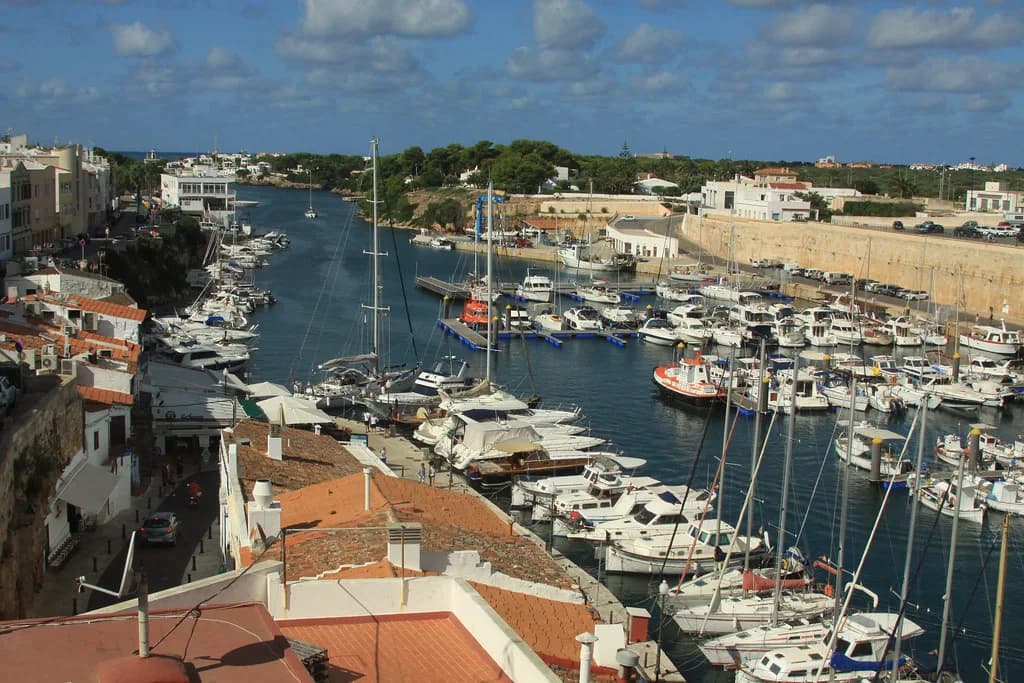
Mahón sits above a harbour more than 5 km long, with Georgian-style houses along the port, a grand fortress at La Mola and a fish market at the heart of the old town. It is under 5 km from the airport, and buses to the coast and the airport leave from or connect at the city's bus station, so it doubles as a practical first or last night.
The two towns pull in different directions: Ciutadella for evening harbour dinners and the west, Mahón for ferries, flights and the east. Pick the one that matches most of your days and accept that some highlights will be a longer drive away.
Ciutadella de Menorca: old town, Plaça des Born and the harbour
Ciutadella rewards slow wandering rather than a checklist. Boutique shops in the old town sell handmade leather sandals, the avarcas, and locally crafted jewellery, and the squares are ringed with whitewashed and pastel buildings with traditional shutters.
From Plaça des Born, the Mirador des Bastió des Governador gives a sweeping view over the old town and the port, which is worth timing for late afternoon light. The harbour below is lined with restaurants advertising fresh seafood and Mediterranean cooking, and it is at its liveliest in the evening.
Cala en Brut is about ten minutes out of town if you want a swim before dinner. Menorca's festival calendar peaks around Sant Joan in Ciutadella, when the town fills for the summer festivities, so book accommodation well ahead if your dates overlap.
Mahón: the fish market, the port and the harbour steps
The Mercat des Peix, in Plaça d'Espanya at the top of the harbour steps, is the best lunch decision in Mahón. Fresh-fish stalls generally run from about 7am to 2pm Tuesday to Saturday, while the gastronomic side opens 11am to 4pm and 6pm to 11pm Monday to Friday and continuously 11am to 11pm on Saturday, closing on Sunday. You queue at each individual stall rather than at one central till, so grab a table first if you are a group at peak lunch.
Expect to pay around €2 to €4 for each pintxo and about €2.50 for a glass of wine, which makes a tray of small plates a cheap way to try local cheese, shellfish and cured meat. An earlier published range of €1 to €3 for tapas reflects older prices, so treat the current counter prices as the guide.
Above the market, the Carmelite cloisters have been converted into a covered market selling fruit, vegetables, shoes and local specialities, with a public toilet that is scarce elsewhere in the old town. Ca n'Oliver, a mansion on Carrer Anuncivay, displays the Hernandez Sanz art collection and Menorca's British legacy, and the Museum of Menorca in the old Franciscan monastery covers the island's Talayotic culture and later occupations.
For lunch by the water, La Minerva on Carrer Moll de Llevant has a terrace and serves arròs, the soupy rice with seafood that Menorcan families eat on Sundays. Along the Moll de Llevant you also find Can Vermut for vegetarian-friendly tapas, 117 Tapas y Vermuts for small traditional plates and Vida Una Vermuts for vermouth and late drinks.
Mahón's other draw is the water. A one-hour harbour boat tour runs from the kiosk near the cruise terminal, with commentary in English, and passes the English Arsenal, Quarantine Island and the harbour entrance before returning by Cales Fonts.
Beaches and coves: north-coast red beaches versus south-coast white sand
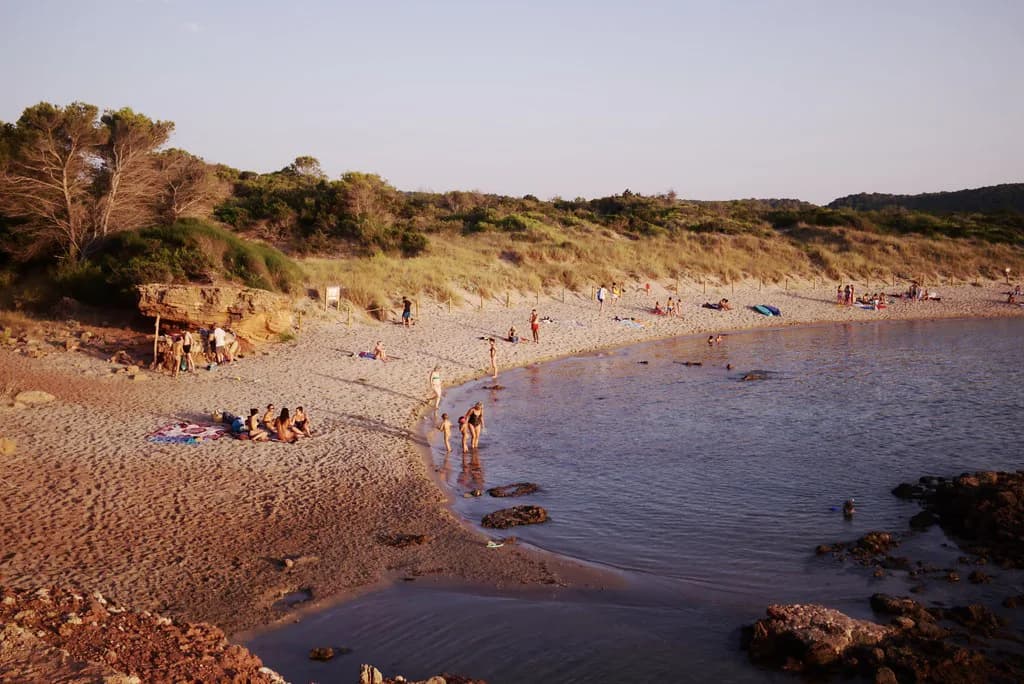
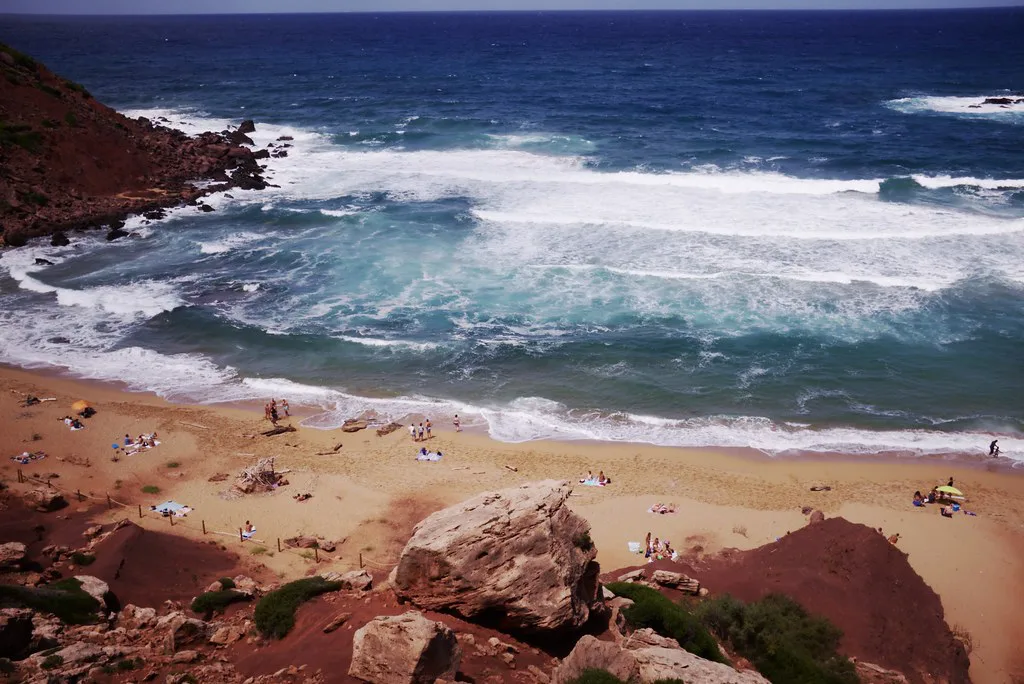
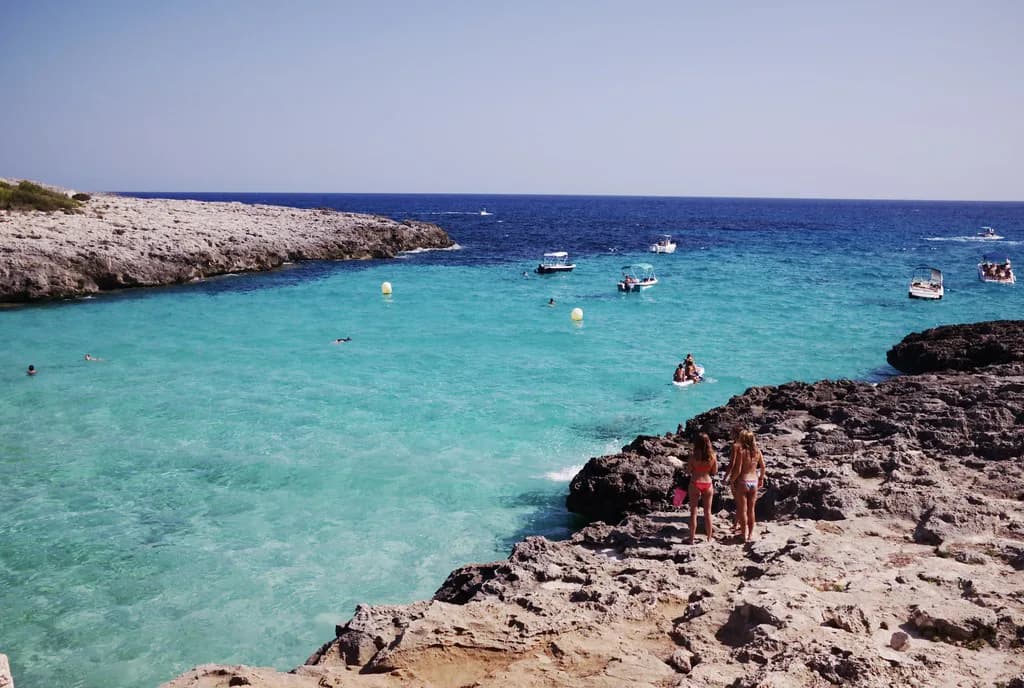
Menorca's beaches are not interchangeable. The south coast delivers soft white sand at Cala Macarella, Cala Macarelleta, Cala en Turqueta and Cala Mitjana, while the north has the red-toned Cavalleria and Cala Pregonda. Choose a coast for the day rather than trying to tick off both. If you are comparing island beach holidays, it is worth reading up on things to do in Fuerteventura before committing to one set of sands.
Some coves are genuinely hard to reach, and in high summer the car parks and paths fill early. A few beaches have a shuttle bus, and boat trips are an efficient way to combine two or three coves without moving the car.
Cala Galdana, on the south coast, is one of the more family-friendly bases, with a sheltered bay and hotels within walking distance of the sand. It also puts you within easy reach of the Camí de Cavalls and the south-coast coves.
Camí de Cavalls: how to walk a stage rather than the whole 185 km
The Camí de Cavalls is a 185 km trail that encircles the entire coastline, originally used for defence and now walked, cycled and ridden. It is divided into 20 stages, so a single stage is a realistic day out and a full circuit is a multi-week project.
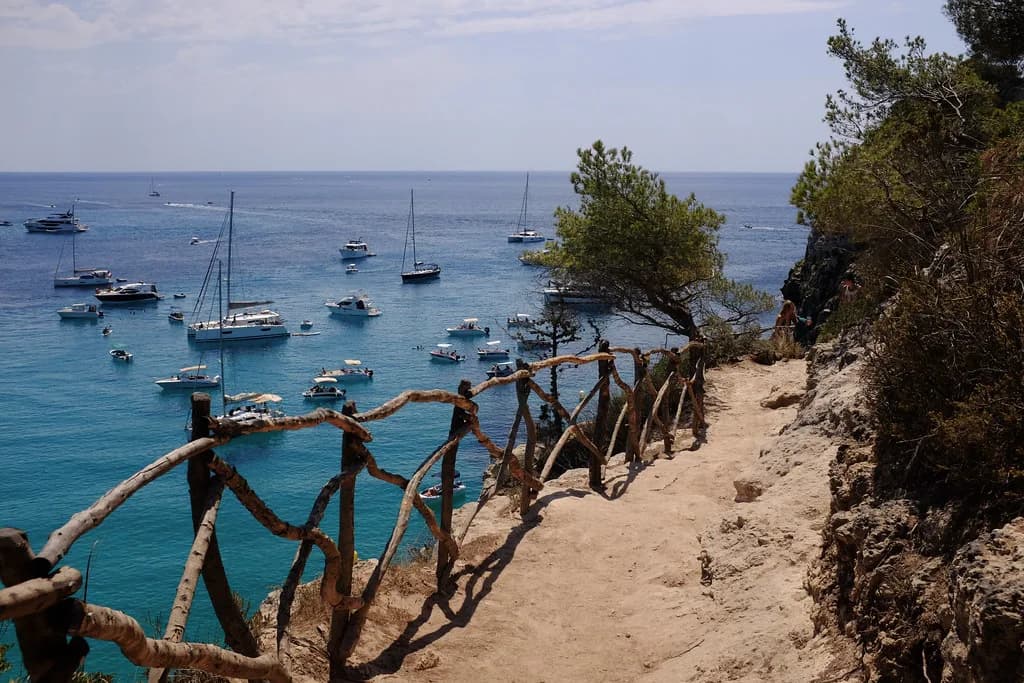
Pick a stage that links two coves or a beach and a village, arrange a lift or bus back, and start early in summer. The route crosses cliffs, secluded beaches, forests and farmland, which means shade is patchy and water supplies thin.
Cova d'en Xoroi and El Toro: the viewpoint stops
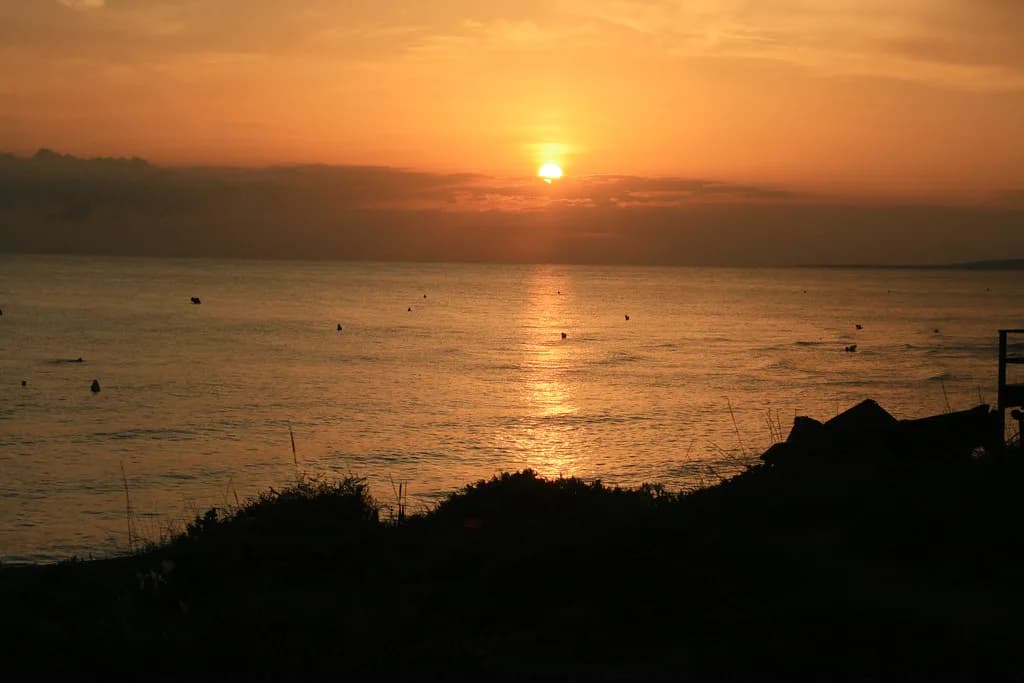
Cova d'en Xoroi at Cala en Porter is a cliffside bar and nightclub set in natural caves above the sea, famous for sunset and busiest at that hour. It works as a drink with a view by day and a night out later, so decide which you want before you go.
El Toro is Menorca's highest point, in the centre of the island, with views across the island and, on clear days, to Mallorca. A 13th-century sanctuary and monastery stand at the summit, with a small cafe on the square in front, and the top is easy to reach by car or on foot.
Binibeca Vell and the white-town walk
Binibeca Vell on the south coast is the white town of narrow alleys and zigzagging paths between whitewashed buildings, and it is at its best outside the middle of the day. Follow the lanes down towards the rocky coves for sea views, and stay for sunset if you can.
Nearby, BB Cocktail Bar Menorca has a terrace over the bay, and Cocoon Food and Fun and Bakery Cala Torret are reliable for a meal. Park once and walk, because the lanes are not built for circling traffic.
Fornells: sheltered bay and fishing village pace
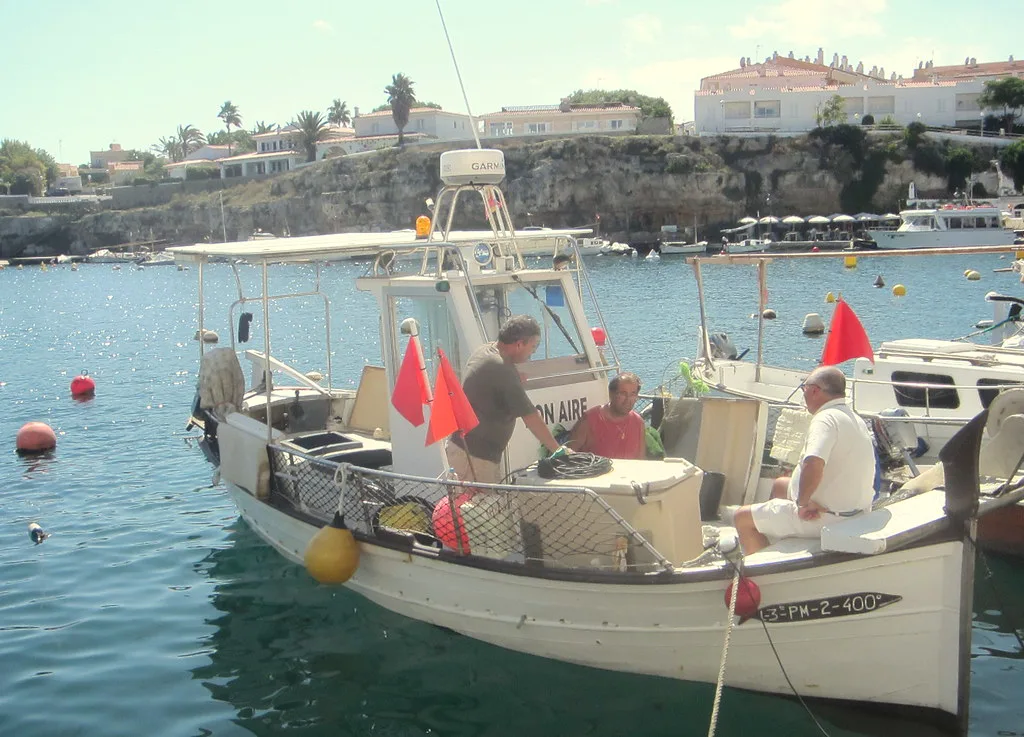
Fornells is a fishing village on a bay stretching more than 5 km, lined with small wooden fishing boats called llauts. The sheltered water suits sailing, kayaking and paddleboarding, with boards and kayaks available along the shore or through organised tours.
Sa Fonda Fornells, with harbour views, is a good lunch stop. Fornells pairs naturally with El Toro, about 20 minutes away by car, so combine the two in one half-day.
Favàritx Lighthouse and the Albufera des Grau landscape
The black-and-white Favàritx Lighthouse stands on an eastern peninsula inside the Albufera des Grau Nature Park, surrounded by a stark, lunar landscape. It is a lesser-visited alternative to the beach towns, and a good early-morning or sunset stop for photography.
Bring layers even in summer, because the exposed headland catches the wind. The park around it is a protected natural area, so stay on marked paths.
Wineries and tastings, including Bodegas Binifadet
Bodegas Binifadet in southern Menorca combines a vineyard, a restaurant and tours, and sits about 10 minutes' drive from the airport, which makes it feasible on arrival day. Book tours and restaurant tables through Binifadet's own website before you travel.
In Mahón, Gin Xoriguer on the harbour front is the island's surviving gin distillery, a legacy of British rule, and you can see the stills through the windows and taste before buying. The one-hour guided tour runs with a limited group, and availability varies by date.
Hauser & Wirth occupies the former naval hospital on Illa del Rei in Mahón harbour, reached by a shuttle boat from Moll de Llevant and open with seasonal timetables. The gallery and gardens are free to enter, the boat ticket covers transport, and the Cantina is run by Binifadet.
Menorcan food to order: lobster stew, arròs, Mahón-Menorca cheese and pomada
Start with the island's signatures: stewed lobster with fried vegetables, arròs, and bacalao ab burrida, the cod meatballs. Mahón-Menorca cheese carries a protected designation and can only be made with island milk, and the wrinkles left by the cloths in which it is wrapped mark the artisan wheels.
For cheese and produce, Autentic on Plaça de s'Esplanada in Mahón sells cheese, sausages, honey and flavoured liqueurs, usually with a taste before you buy. Pair it with a pomada, the local mix of gin and fizzy lemonade served in vast quantities at fiestas.
In Ciutadella, the evening harbour restaurants specialise in seafood and Mediterranean cooking. For a fuller picture of where to eat across the island, work through the best tapas bars as well as the restaurants.
When to go: shoulder season versus high summer and winter closures
Spring and autumn are the sweet spots: sunny days with fewer crowds, and average temperatures around 22°C when the season turns. Mid-summer brings the heat and the busiest beaches, which matters most at the popular south-coast coves.
Winter is quiet to the point of closure: Menorca's sites and restaurants tend to shut for the winter season, so late autumn and early spring are safer for a full choice of places to eat.
July is the month for Sant Joan in Ciutadella and the busiest stretch on the south coast, so book both accommodation and restaurant tables well ahead. August keeps the heat and the crowds, with the white towns at their most photographed.
September usually keeps the sea warm while the peak crowds thin, which makes it a strong month for walking the Camí de Cavalls and eating out without queues.
Getting around: hire car versus bus
A hire car is the easiest way around the island. The roads are generally good and link to one main road across the island, but because every trip feeds onto that road, short distances can take longer than they look.
Buses work for the airport run and for getting between Mahón and the main coastal resorts, but they are not a practical way to link remote coves. If you are staying in Ciutadella and want to explore the east, plan the transfers rather than improvising.
Where to base yourself
Ciutadella suits evenings on the harbour and the west-coast beaches, while Mahón suits flights, ferries and the east. A villa near Cala Blanca puts you close to Ciutadella and its bays, and staying slightly east of the island is more central if you want to reach most of the sights.
In Mahón, ARTIEM Capri sits close to Plaça de s'Esplanada and about a 15-minute walk from the port, with a rooftop pool. Es Castell, a short taxi ride away, has restaurants around the harbour at Cales Fonts for a change of scene.
How many days you need
Plan on at least three full days to see the island without rushing, and a relaxed ten-day holiday to combine beaches, walks and restaurants without long drives. Menorca works well for families with small children, with shallow bays and short transfers, and equally for couples who want quiet coves.
If you are weighing three days against a week, the trade-off is simple: three days covers one end of the island and one coast, and a week covers both ends with a stage of the Camí de Cavalls.
Rough daily costs
Menorca is a little easier on the wallet than Mallorca, with accommodation and restaurant prices both slightly lower. A week's budget runs from around €310 to €900 per person on a budget, €1,080 to €1,570 mid-range, or €1,620 to €2,270 high-end, excluding flights, with hotels from about €70 to €175 a night and food €15 to €25 a day.
Parking is generally cheap and most towns have large surface or underground car parks, so a hire car does not add much to the daily cost.
Plan Your Visit
Choose one end of the island, pick a coast, and build your days around lunch at a fish market or harbour restaurant and an afternoon on the Camí de Cavalls or at a cove. That rhythm suits Menorca better than a hotel-hopping itinerary.
Outside high summer, Menorca's quiet is the point, but it also means many places shut for the winter, so late spring and early autumn give you the best of both. Use the Menorca Itinerary to slot the days together.
Explore more Menorca guides
Frequently Asked Questions
Do I need a car in Menorca?
A hire car is the easiest way to reach the coves and to move between Ciutadella and Mahón. Buses are fine for the airport and main resorts but thin out for remote beaches, and driving takes longer than map distances suggest because roads feed one main cross-island route.
How many days do you need in Menorca?
Three full days is the minimum for a comfortable taste of one end of the island and one coast. A week lets you cover both Ciutadella and Mahón, add a stage of the Camí de Cavalls and still have beach days.
When is the best time to visit Menorca?
Spring and autumn bring sunny days with fewer crowds and milder temperatures, which suits walking and eating out. High summer is hottest and busiest, particularly on the south-coast beaches, and many restaurants and sites close for the winter.
What food should I order in Menorca?
Look for stewed lobster with fried vegetables, arròs, bacalao ab burrida and Mahón-Menorca cheese. In Mahón, a pomada made with local gin and fizzy lemonade is the drink to try, and the fish market stalls are a cheap way to build a plate of local produce.
Where can I find the best shopping in Menorca?
Ciutadella's old town is good for handmade avarcas sandals and locally crafted jewellery, while Mahón has Carrer Hannover for shoes, including the Avarca de Menorca label. The Carmelite cloisters in Mahón sell shoes and local food specialities alongside fruit and vegetables.
Is Menorca good for families?
Yes. Menorca is known for shallow, sheltered bays, short transfers and a calm pace, and Cala Galdana on the south coast is a family-friendly base with hotels near the sand and easy access to the Camí de Cavalls.
Where is the most beautiful part of Menorca?
The south-coast coves at Cala Macarella, Cala Macarelleta, Cala en Turqueta and Cala Mitjana are the classic white-sand spots, while the north coast offers red-toned Cavalleria and Cala Pregonda. Binibeca Vell and the old towns of Ciutadella and Mahón add architecture to the mix.
Which month is the rainiest in Menorca?
Menorca's climate is mild, and the shoulder months are the safest bet for dry, sunny days. If rain is a concern, plan around late spring and early autumn rather than deep winter, when many places close.
Sources
Notes for eating well in Spain
Optional updates to our guides.
You might also like
Continue reading
More guides you'll find useful