Things to Do in Nerja: Beaches, Caves & Tapas by Area
Plan your days in Nerja with the Balcón de Europa, Calahonda and Burriana beaches, the Cueva de Nerja and where to eat tapas, arranged by area and time of day.
On this page
Nerja works as a short break because the centre is small and walkable: the Balcón de Europa, the old town lanes, the church and the closest cove all sit within a few minutes of each other. The two things that pull you out of town are the Cueva de Nerja and the Acueducto del Águila, which pair neatly in one half-day. Base yourself centrally and you can walk everything except those outlying sights.
Shape the day around Spanish hours rather than fighting them. Lunch runs roughly 1:30pm to 4pm and dinner starts around 8:30pm to 9pm, so the middle of the afternoon is for caves, beaches or a museum, not a sit-down meal. Book the cave for a set time slot in summer and you will not lose an hour queueing in the heat.
Why Nerja suits a short break
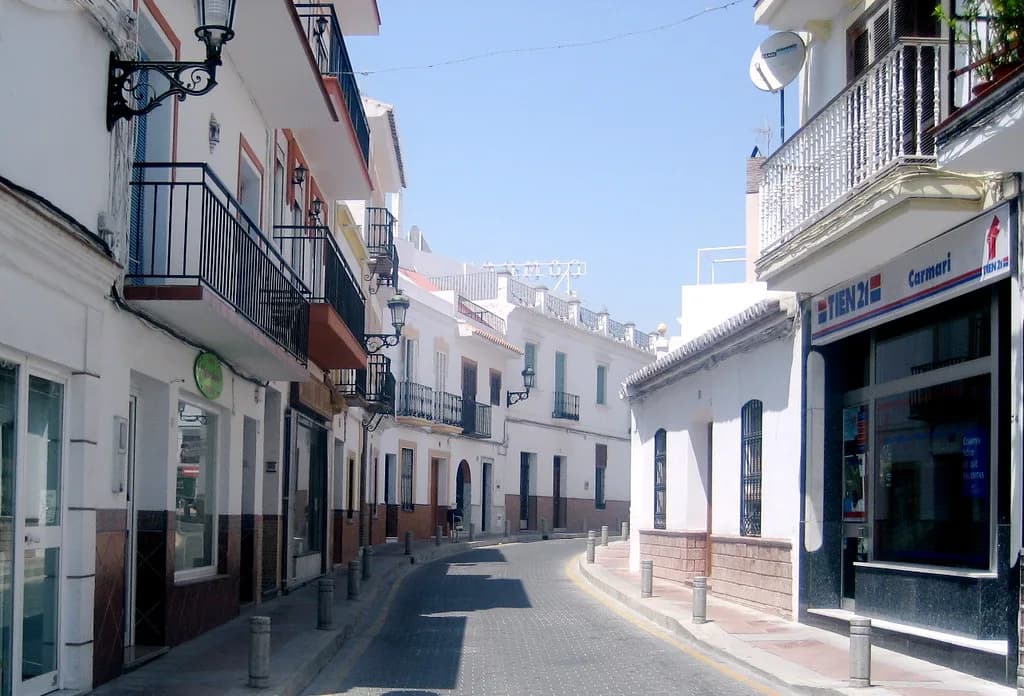
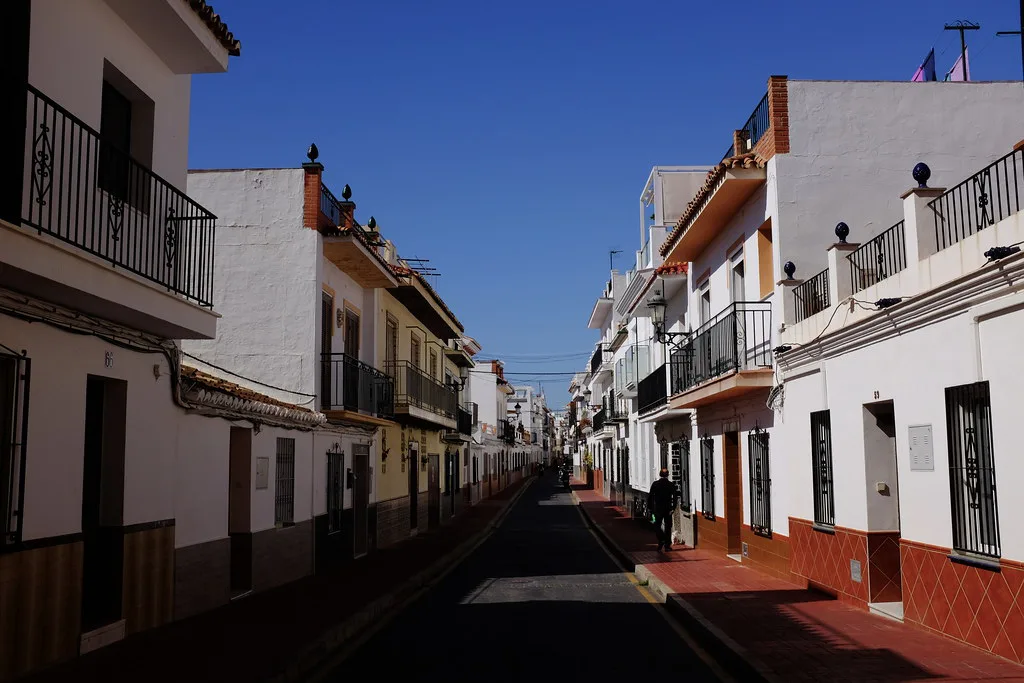
Nerja sits at the eastern end of the Costa del Sol, about a 50-minute drive from Málaga, and it has kept a small-town feel that the bigger resorts lost. Under Moorish rule it was called Narixa, meaning abundant spring, and the maze of narrow streets behind the Balcón still carries that layout. Expect whitewashed houses, flower-filled corners and a cliff-top viewpoint rather than high-rise strip development.
The heart of town is compact enough to cover on foot: the Balcón de Europa, the old town, the main squares and the central beaches are all minutes apart. You need wheels, a taxi or the local bus only for the Cueva de Nerja, the aqueduct and day trips such as Frigiliana. If you are arriving from Málaga airport, the bus or a private transfer is the simplest route, and a hire car puts you on the beach in under an hour.
Two days lets you see the centre properly and fit in the cave half-day, while one day forces a choice between the cave and a slow morning in the old town. The balcony is lovely but similar views exist elsewhere in Andalusia; the cave is the one sight you cannot find a substitute for. Plan around that.
Morning in the centre: Balcón de Europa and the old town
Start at the Balcón de Europa, the palm-lined promenade that ends in a viewpoint on a rocky headland with the sea on three sides. The headland began as a 9th-century Moorish watchtower and later became a coastal fort; two old cannons still point out to sea. It is also the busiest spot in town, so early morning gives you the view without the crowd.
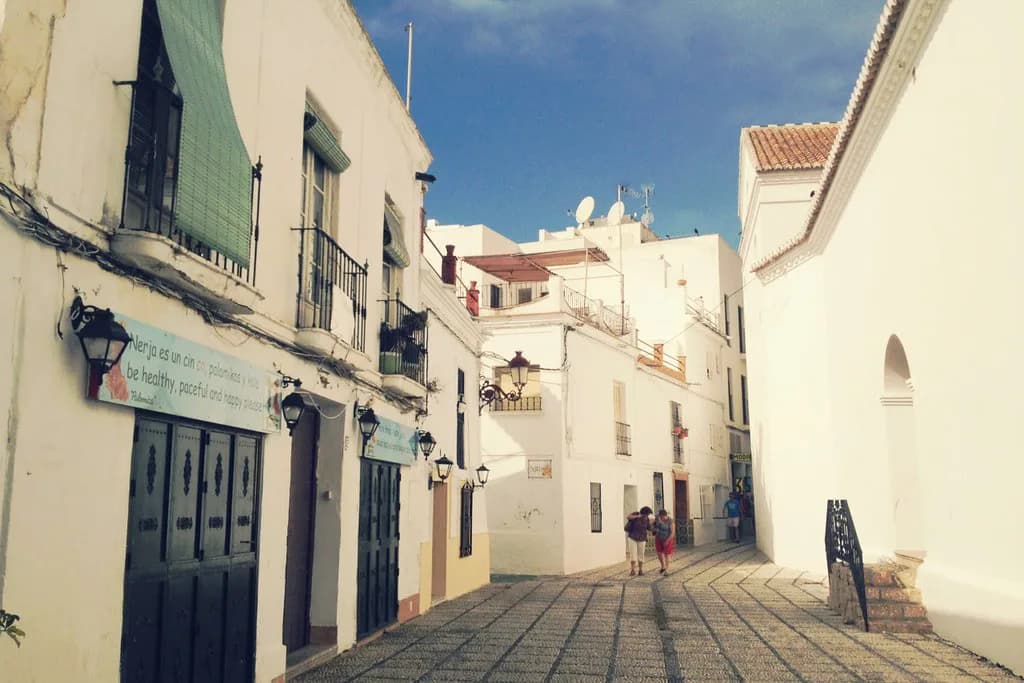
If you want a quieter platform, walk a few minutes along the promenade to the Mirador de la Torrecilla, a flat stroll past cafés to a viewpoint over Torrecilla beach and the ruins of an old watchtower. Then head into the lanes behind the balcony, where Calle Tajillo is the most flower-filled street in town, with pots on the walls, windows and cobblestones and a small viewpoint over the sea at the end. It hides just behind the Iglesia de El Salvador, so keep an eye out for it.
Nerja Attractions: 4 Visitor Guides covers the headline sights if you want to check details before you set out. For shopping, Calle El Barrio is lined with independent boutiques selling handmade shoes, espadrilles, leather bags, ceramics and local food such as olive oil and nuts, and it is more popular with locals than the bigger Calle Pintada.
Coffee and a tostada, then El Salvador
Nerja takes its café time seriously, and many places advertise a deal combining coffee with a tostada, pastries or orange juice. Panadería Salvador is the busy local bakery pick, packed with people buying their daily bread and worth a stop for cakes and pastries as well. Eat standing at the bar if you want the local pace.
Then visit the Iglesia de El Salvador on the edge of Plaza Cavana, a short walk from the balcony. The original church dates from 1505, the present structure was completed in 1697, the bell tower followed in 1724 and it was extended in the late 1700s. It is built in baroque and Mudéjar style with three naves and a wooden Mudéjar ceiling over the central one, and it is one of the few churches in the world depicting all three archangels.
Entry is free, and the church sits where the old town meets the balcony, so you will pass it several times anyway. San Miguel, one of the three archangels shown inside, is Nerja's patron saint and is celebrated each October during the town's feria.
Down the Boquete de Calahonda to Playa Calahonda
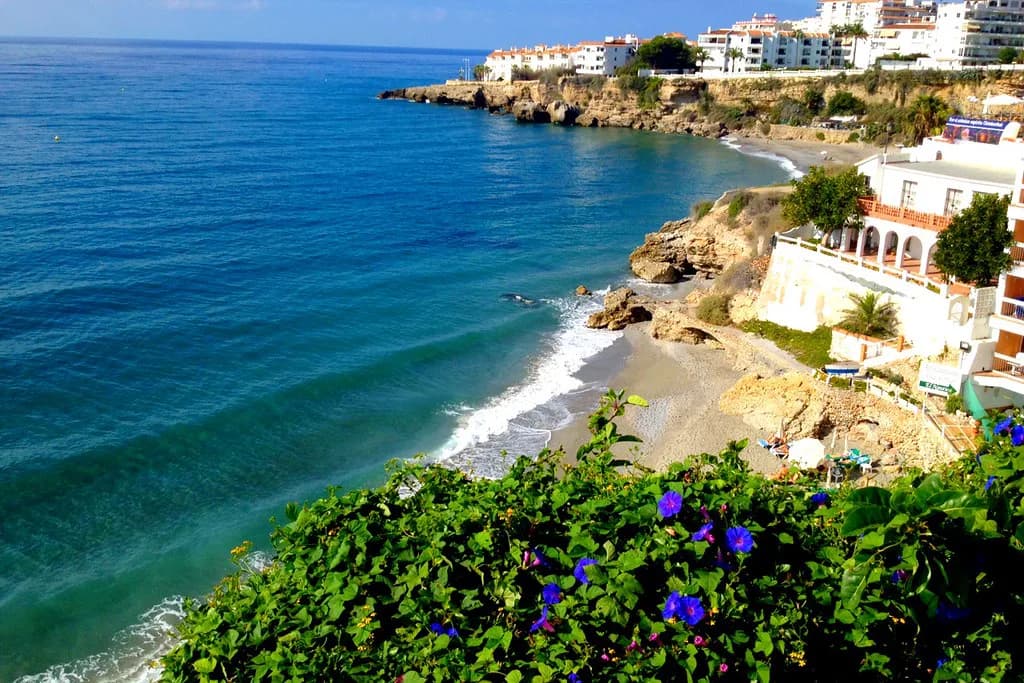
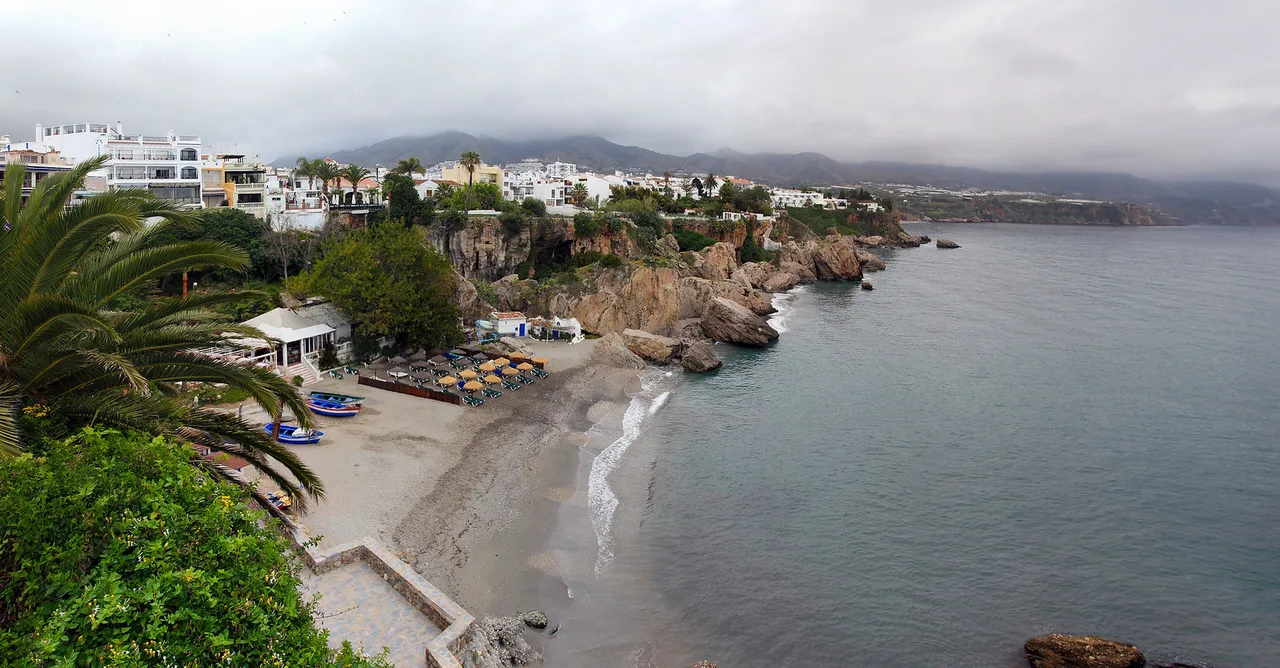
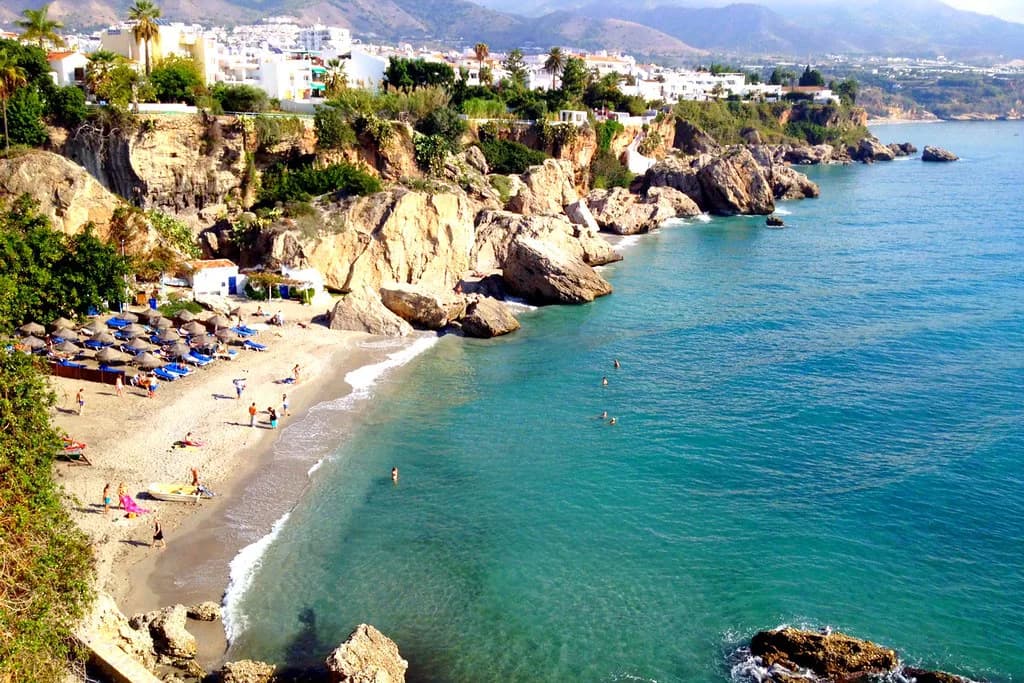
From the balcony square, find the small arched passage on the eastern side called the Boquete de Calahonda, then take the zigzagging steps down the cliff. In a couple of minutes you are on Playa Calahonda, a small cove framed by cliffs with fishing boats pulled up on the sand and pebbles. Look for the Casa de Don Ducano, a tiny old fisherman's house with white walls and blue doors built partly into the rock.
This is the beach to pick if you only have one day, because everything else stays within a short walk. The trade-off is crowds: Calahonda fills up fast, so come straight after an early balcony visit. There is only a small snack bar on the sand, so carry water on a hot day.
Lunch: tapas on Plaza de España or by the balcony
Aim for the table between 1:30pm and 4pm, when lunch is served properly. Bar La Piqueta on Plaza de España is a good choice for a spread of tapas to share slightly away from the busiest crowds, while Restaurante El Náutico on the balcony square puts you outside with a view. La Bottega Food & Wine leans Italian but still serves quality tapas and Spanish dishes if you want a calmer room.
For seafood and a more local feel, Bar Dolores El Chispa is known for fresh fish away from the crowds, and Restaurante La Puntilla is a local favourite for freshly caught fish and made-to-order paella, which you should order ahead. Taberna de Pepe offers good wine and a lively atmosphere, while Esquina Paulina is a relaxed spot for sangria and people-watching.
Atipiko, next to the balcony square, serves Mediterranean and fusion plates, Restaurante Lacal is the upscale option, and Restaurante El Refugio has been family-run since 1970 with hearty Spanish home cooking on a terrace. A menú del día with three courses and a drink was reported at 8–12 EUR, a useful benchmark for lunch value rather than a promise of today's prices.
If tapas is the main event of your trip, work through our best tapas in nerja picks and order several small plates rather than one large one. Oliva, among the highest-rated places in town, suits a special occasion with its gourmet take on Mediterranean and Spanish cooking.
Afternoon out of town: cave, train and aqueduct
The Cueva de Nerja is the one big sight outside the centre, a huge system of chambers near the village of Maro full of dramatic stalagmites and stalactites. Five local boys rediscovered it in 1959 while looking for bats, and one chamber holds the widest natural column in the world, a 32-metre giant recognised by Guinness World Records since 1989. Entry costs 18 EUR, and booking a set time slot online is sensible in summer.
You can reach the cave by car, taxi or the little tourist train from the centre. A combined ticket covering the museum, train and cave entrance was reported at 18 EUR, bought directly at the museum so you can do both on the same day. If you would rather keep it simple, book the cave alone and walk or drive up.
Combine the cave with the Acueducto del Águila on the road out towards Maro. It looks Roman but was built around 1879 to 1880 in Mudéjar style to carry water to the San Joaquín sugar mill, with 37 brick arches across four tiers over a ravine and a double-headed eagle weather vane on the central spire. It still serves irrigation today; park roadside and walk about 300 metres to the base for the best view, or stop at the top if you are short of time.
Pair the cave with the Museo de Nerja and Pepita
The Museo de Nerja on Plaza de España, a couple of minutes from the balcony, walks you through the town's story from prehistoric times to the present. Its centrepiece is Pepita, the skeleton of a woman who lived more than 9,000 years ago, found inside the Cueva de Nerja, along with many artefacts from the cave. Entry is around 4 EUR, and it is free within 10 days of buying a Cueva de Nerja ticket.
It is small enough to see in under an hour, which makes it a good bolt-hole from the afternoon sun or a wet morning. Doing the museum and the cave in either order, within that ten-day window, gets you both for the price of the cave ticket alone.
Beach choice by mood
Playa de Burriana is the longest and most popular beach, with soft sand, watersports, sun loungers and a row of chiringuitos for lunch. The walk from the centre takes about 20 minutes along the coast and over the hills, and the first glimpse rewards the effort. Our Burriana Beach guide covers what to order once you are there.
On Burriana you will find Chiringuito de Ayo, known for giant pans of paella cooked over an open fire, and the beach is also the launch point for kayak tours along the Maro cliffs. For something quieter, Playa El Salón is a sandy stretch just below the old town and Playa Torrecilla is central and easy to reach west of the centre, while Playa Carabeo is a small pocket of sand between the cliffs.
Playa de Maro, just east of town, is the prettiest and most natural option, with clear water inside a protected park that makes it the best bet for snorkelling. The Maro waterfall tumbles straight into the sea and can only be reached from the water, which is why the kayak tours run from Burriana. Beach restaurants and their paella are covered in our best paella in nerja guide.
Markets: Saturday on Plaza de España, Tuesday near the Balcón
On Saturdays a traditional outdoor market fills Plaza de España in front of the town hall, with artisans and vendors selling handmade goods, leather bags and belts, jewellery, clothes, sun hats and local products. It is a relaxed local affair and a good slow-morning wander even if you buy nothing. Any day of the week, the shops around Calle El Barrio cover similar ground.
A second, larger market runs every Tuesday about a 15-minute walk from the Balcón de Europa, with stands of clothes, jewellery and souvenirs. A more local market is held in the same spot on Sundays, closer to a flea market than a tourist browse. Neither is worth rearranging a short break for, but either fills a morning nicely.
Active options: the Río Chillar and kayaking the Maro cliffs
The Río Chillar riverbed walk starts from town and heads up a shallow river into a narrow rock canyon, with water that deepens to knee or thigh height as you go. It is a proper half-day outing rather than a stroll, so take footwear you do not mind soaking. Access and conditions change with the season, so confirm the route is open locally before setting out.
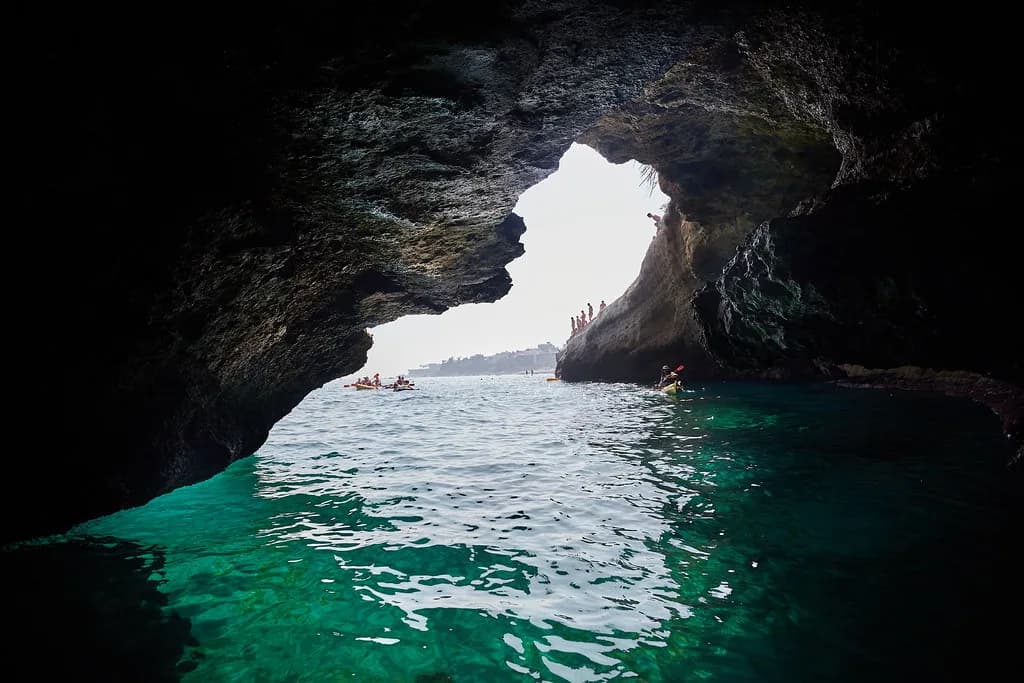
Kayak and paddleboard rental is available at Playa Burriana, and group tours paddle along the Maro cliffs past hidden coves with time to swim and snorkel. The cliffs are part of a protected natural park, and the water along that stretch is some of the clearest on this coast. Book ahead in high season rather than turning up at midday.
Evening: sunset drinks, then dinner from 8:30pm
Sunsets here are worth planning around, and arriving early secures the best seat. Bamboo near Playa Torrecilla has a tropical feel, while Cochran's Terrace, around the corner from the Balcón de Europa, sits high on the cliffs with a wide view. Both fill up, so treat the early drink as the reservation.
Dinner starts around 8:30pm to 9pm, so book a table rather than drifting in at 7pm and finding a closed kitchen. For a special occasion, Oliva is among the strongest options in town, and the lively bars around the squares keep going afterwards.
If you would rather have someone else do the ordering, a nerja tapas tour is a straightforward way to cover several bars in one evening without working out the menu yourself. Otherwise, our best restaurants in nerja guide sets out the full spread for dinner.
Day trips: Frigiliana, Málaga and Granada
Frigiliana is the easy win, a mountain village tucked above the coast and only about a 15-minute bus ride from Nerja, which makes it doable without a car. Go in the morning and you are back for lunch. The whitewashed lanes climb steeply, so wear proper shoes.
Málaga and Granada are both reachable by car, but neither makes a comfortable day trip from Nerja; they deserve their own stay on a longer Andalusian itinerary. Closer alternatives include Torrox Costa and La Herradura, the latter a small, more local beach town to the east with striking views.
If you enjoy seeing how other Spanish cities organise their sights by district, things to do in alicante and things to do in girona apply the same area-by-area approach.
How many days you need and a sample one-day plan
Two nights is the honest minimum for Nerja: one full day for the centre and a beach, and one half-day for the cave and aqueduct. With a single day, watch sunrise at the Balcón, walk Calle Tajillo and the church, drop down to Calahonda before it crowds, then eat lunch around 1:30pm. Use the afternoon for the Cueva de Nerja and the aqueduct, and finish with sunset drinks before a late dinner.
With three days, add the Museo de Nerja, a full beach day at Burriana, and Frigiliana by bus. Swap the cave for the Río Chillar walk if you want exercise over geology, but check access first. For a sense of what to eat beyond tapas, our nerja food guide covers the local dishes worth ordering.
Where to base yourself and whether you need a car
Stay within walking distance of the Balcón de Europa or Plaza de España and you can leave the car parked for the whole trip. Hotel Balcón de Europa sits right on the square with sea views, MB Boutique Hotel is steps from Torrecilla beach, La Puerta de Nerja Hostal is central with a rooftop jacuzzi, and Charming Nerja Hostel offers private rooms and dorms near the balcony.
Skip the car if you are staying in the centre and taking the bus to Frigiliana; hire one only if the cave, the aqueduct and day trips to Málaga or Granada are on your list. Parking in the centre is not part of the appeal, and the tourist train covers the cave run from town.
Plan Your Visit
Nerja rewards a loose plan: mornings in the centre, lunch at Spanish hours, afternoons for the cave or a beach, and dinner late. Book the cave slot and the evening table, and the rest of the town fits around them on foot.
Cave prices, museum entry and market days are as reported by the sources linked above; check current details on the Nerja tourist office website before you travel, as the town's tourism office publishes up-to-date information.
Explore more Nerja guides
Frequently Asked Questions
How many days do you need in Nerja?
Two nights covers the centre, one beach and the cave half-day comfortably. A single day is enough for the balcony, the old town, Calahonda beach and either the cave or an afternoon on Burriana, but not both at an unhurried pace.
What day is the market on in Nerja?
The traditional outdoor market runs on Saturdays on Plaza de España in front of the town hall. A second, larger market is held every Tuesday about a 15-minute walk from the Balcón de Europa, and a more local Sunday market takes place in the same spot.
Do you need a car in Nerja?
No, if you stay centrally. The Balcón de Europa, the old town, the church and the central beaches are all walkable, and Frigiliana is a short bus ride away. A car helps for the Cueva de Nerja, the Acueducto del Águila and longer day trips, though a taxi and the tourist train also reach the cave.
What is Nerja best known for?
The Balcón de Europa, the cliff-backed beaches and the Cueva de Nerja. The balcony is a headland viewpoint with sea on three sides, and the cave near Maro contains the widest natural column in the world at 32 metres.
Is Nerja worth visiting?
Yes, particularly if you want a walkable Costa del Sol town with a genuine local feel rather than a resort strip. The cave alone justifies the trip; the balcony and old town make the rest of the day easy.
What towns are close to Nerja?
Frigiliana is the closest and easiest, about a 15-minute bus ride inland. Torrox Costa and La Herradura are other nearby beach towns, while Málaga and Granada are reachable by car but better suited to their own stay.
What can you do in Nerja for a day?
Watch sunrise at the Balcón de Europa, wander Calle Tajillo and the Iglesia de El Salvador, then take the Boquete de Calahonda steps down to the cove before it fills up. Eat lunch around 1:30pm, spend the afternoon at the Cueva de Nerja and the Acueducto del Águila, then have sunset drinks before dinner from 8:30pm.
Is the Río Chillar walk open?
The riverbed walk from town into the narrow canyon is an established outing, but access and conditions vary through the year. Check locally before setting out, and wear footwear you do not mind getting wet.
Sources
Notes for eating well in Spain
Optional updates to our guides.
You might also like
Continue reading
More guides you'll find useful