
Caldera de Bandama: A Visitor's Guide to Gran Canaria's Volcanic Crater
Caldera de Bandama is a volcanic crater in the north-east of Gran Canaria, set in the Bandama area about 15 kilometres from Las Palmas de Gran Canaria. You visit it for two different things: the sweep of the crater from the rim road, and the steep walk down to the floor. Allow a half day if you add the botanic gardens at Tafira on the way back.
What the Caldera de Bandama is
Bandama is a round volcanic depression, and geologists classify it as a maar rather than a true caldera. The distinction matters when you read about the island: a maar forms when rising magma meets groundwater and the resulting steam explosion blasts a bowl in the surface, while a caldera collapses after a magma chamber empties. That is the story behind the shape you are looking at from the rim.
The crater sits in the north-east of Gran Canaria, close to the island capital, and the highest point on its rim is Pico de Bandama. The site is a natural stop on the eastern touring route that runs from Las Palmas de Gran Canaria through Telde, Valsequillo de Gran Canaria, Ingenio and Agüimes. Treat it as a landscape visit rather than a museum one: there is no collection to work through, just the bowl, the walls and the view out.
If you are building an island itinerary, this is one of several natural and historic sights worth slotting together. Browse our Gran Canaria Attractions: 6 Visitor Guides to see how Bandama fits alongside the coast and the old towns before you commit a morning to it. It also sits naturally among the wider things to do in gran canaria if you are weighing the crater against beaches and mountain villages.
Where it is and how to get there
The crater lies in the Bandama area about 15 kilometres from Las Palmas de Gran Canaria, up in the hills above Tafira. If you are staying in the capital, this is one of the easiest half-day escapes: leave after breakfast, drive up, and you are on the rim well before the Spanish lunch window opens at 1:30pm. From the south of the island you are looking at a much longer drive, so pair it with a day in the capital rather than treating it as a beach-side excursion, and see what else the city offers in our guide to things to do in gran canaria.
Driving is the straightforward option, and the rim road brings you to the crater edge. Public transport on the island uses the guagua bus network, which reaches the edge of the crater area; the walk from the stop is then on foot and on road. Do not assume a bus drops you at a viewpoint — check the route and stop before you set out, because the last stretch is not something you want to improvise.
Getting to Gran Canaria itself is a matter of flights into the island airport near the capital, with ferries linking the Canaries. The official island tourism site covers the capital's districts and touring routes if you want to plan the drive in more detail.
How deep and how wide the crater is
The crater reaches 574 metres at its highest point on the rim, with the floor lying 216 metres below that, according to Hello Canary Islands. Measured rim to floor, that is a serious drop — steeper than a photograph suggests. The bowl is wide enough that people on the far side look small, which makes the scale hard to judge until you are standing on the edge.
Some published descriptions give the diameter as over 1,000 metres, while Wikipedia puts the rim height at 569 metres. These small differences are typical of measurements taken at different points on an uneven rim. For a visit, the takeaway is simple: the crater is wide enough to read as a landscape rather than a pit, and deep enough that the walk back up is real work.
Wikipedia records the rim summit as Pico de Bandama at 569 metres above sea level.
The walk down to the crater floor
A path leads from the rim down to the bottom of the crater, dropping around 200 metres over a route of volcanic rock and loose surface. Travellers who have walked it describe the descent taking roughly half an hour at an easy pace, with the climb back out taking longer. Budget an hour and a half for the round trip including time at the bottom, and more if the day is hot.
Footing is the thing to plan for. The path is rocky and uneven rather than a smooth trail, so trainers with grip are the minimum and proper walking shoes are better; sandals or smooth-soled shoes make the descent unpleasant and the return harder. There is no shade to speak of inside the bowl, which means the walk is best done early rather than in the middle of the afternoon.
If you only have time for one thing, choose the rim. The views from the top need no effort beyond parking, and the crater reads clearly from above. The floor walk is for people who want the physical side of the visit and have shoes and water for it. If you are weighing the crater against the island's beaches and villages, our guide to things to do in gran canaria sets out the alternatives.
What you see from the rim
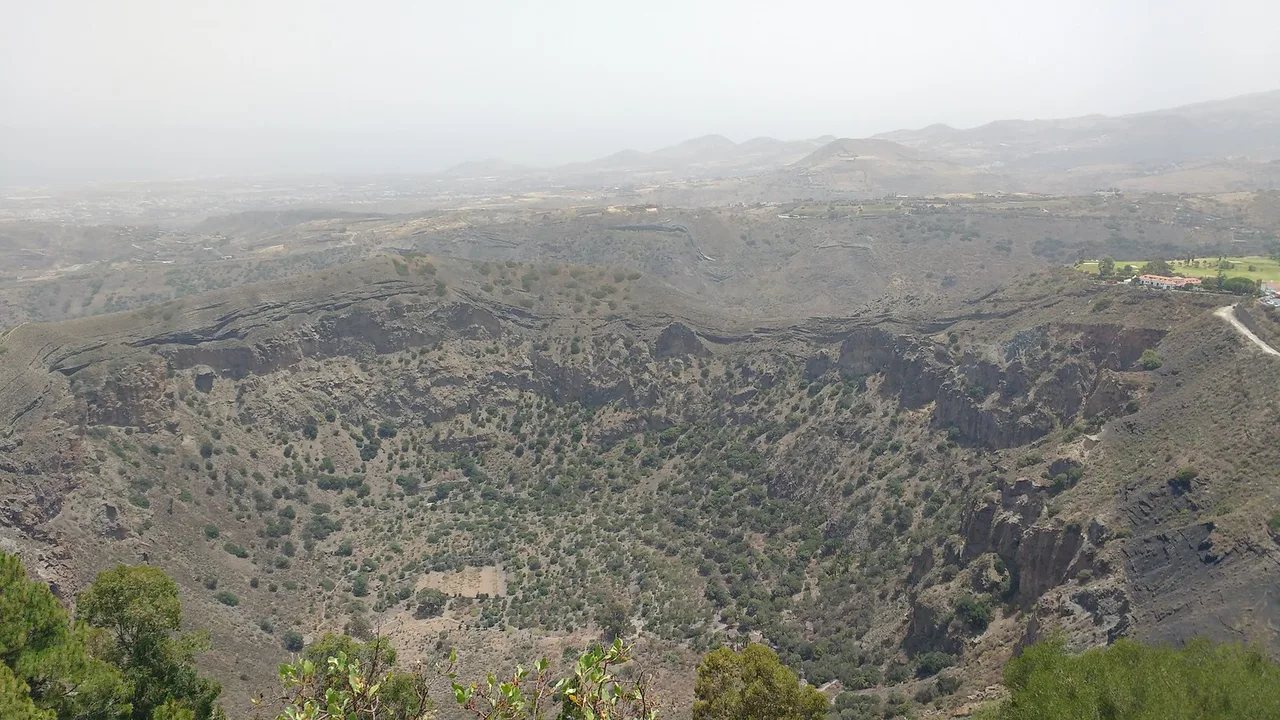
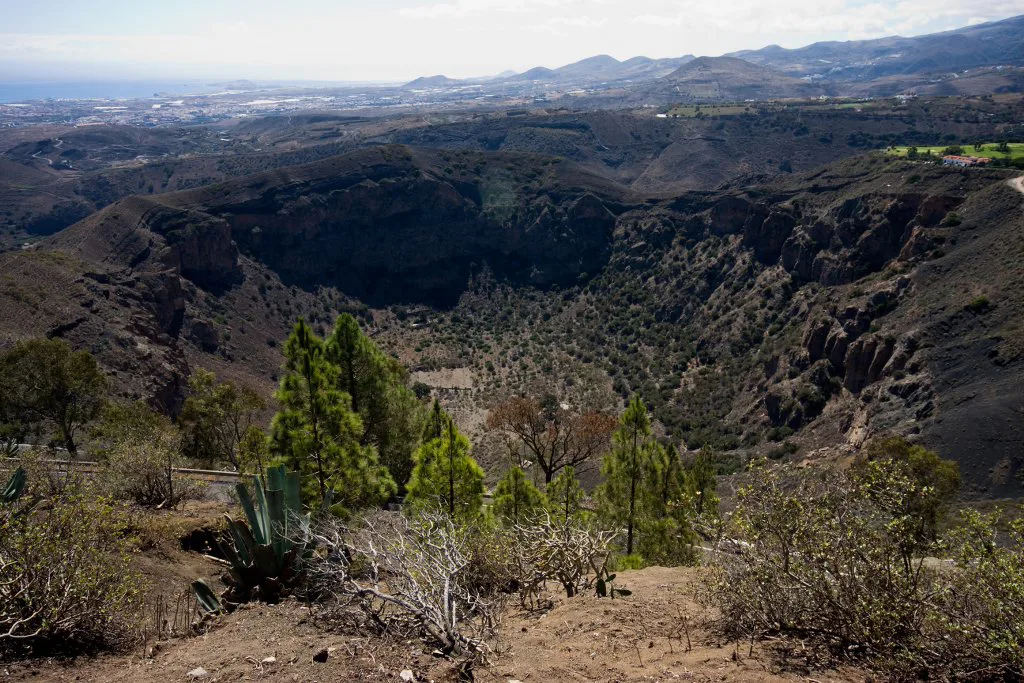
From the edge you look straight down the crater walls to the floor, with the banded rock of the inner slopes visible in good light. Beyond the bowl, the land opens out over the hills north-east of the capital, a patchwork of small plots and terraces rather than a wild volcanic landscape. On a clear day the coast and the city are part of the view; when cloud sits on the rim, the crater can vanish entirely and you are looking at white.
The wider Bandama area includes vineyards and an 18-hole golf course, so the surroundings are working countryside rather than a fenced-off reserve. That is worth knowing if you plan to walk beyond the rim: you are moving through agricultural land and should keep to paths and roads. The crater itself is the attraction; the surroundings are the reason the drive up is pleasant.
For a different angle on the island's history, the old quarter of the capital is the obvious counterpart to a morning in the hills. Vegueta, Gran Canaria is where the city's earliest buildings and museums sit, and it makes a natural afternoon after Bandama if you are based in Las Palmas; for more ideas around the capital and beyond, see these things to do in gran canaria.
When to go and what to carry
Morning is the better half of the day here. The light is cleaner for looking into the crater, the climb back out happens before the heat builds, and you finish in time for a late lunch in the capital or in Tafira. Cloud can settle on the rim at any time of year, and the exposed edge is windy even when the city below is calm.
Carry more water than you think you need for the descent, a windproof layer for the rim, and shoes with real grip. A hat matters on the crater floor, where there is nothing overhead. If you are walking down, tell someone your plan and keep an eye on the weather coming in from the coast, because conditions at the edge change quickly.
This is a short visit rather than a day out in itself: an hour at the rim, or two to three hours with the floor walk and a slow look round. Build the rest of the day around it rather than expecting facilities on site.
Nearby: Tafira and the botanic gardens
The Viera y Clavijo Botanic Gardens sit in Tafira, about 7 kilometres from the capital on the road up towards Bandama, and they open daily from 10:00 to 18:00. The garden holds the main botanical endemisms of the Canaries, which makes it a good pairing with the crater: geology first, then the plants that grow on this island and nowhere else. Allow an hour to walk it properly.
That same official route page notes that Bandama is roughly 15 kilometres from the capital and that the area has an 18-hole golf course, so the two stops fit a single loop out of the city. Do the crater first while the light is good, then the garden, then lunch. It is a realistic half day without any rushing.
If you would rather spend the afternoon indoors, the Casa de Colón in the capital's historic quarter is a partly museum, partly events complex in a house more than five centuries old, at Calle Colón 1. Check its hours and any exhibition changes before you go, since the building hosts courses and displays alongside the permanent visit.
Other trips north of the capital reward a full day rather than a half. The archaeological site at Cenobio de Valerón is a collective granary cut into soft rock, and it pairs with the mountain villages on a longer loop.
Practical points before you set off
Parking at the rim is limited and the road up is narrow, so arriving early solves two problems at once. There is no ticket to buy for the crater viewpoint in the sources here, but access arrangements, path condition and any closures can change; confirm the current position with the island's tourist information offices in Las Palmas before you drive up. That is also where to ask about bus routes if you are going without a car.
Around the crater, the useful plan is short and specific: drive up in the morning, park at the rim, look into the bowl, walk down only if you have the shoes and the time, then drop into Tafira on the way back. The crater is close enough to the capital that it never needs to be the whole day. Treat the rim as the guaranteed part of the visit and the descent as the optional extra.
Plan Your Visit
Bandama rewards a morning rather than a day: a short drive from Las Palmas, a rim view that needs no effort, and a steep floor walk for those properly shod. Add the Tafira gardens and you have a full half day in the north-east before lunch. Check the day's cloud and wind before you leave the city, since the rim has its own weather.
Explore more Gran Canaria guides
Frequently Asked Questions
Is the volcano on Gran Canaria active?
Gran Canaria is a volcanic island, and Bandama is the evidence of past explosive activity. The crater is a maar formed by a steam-driven eruption, not a live vent, and nothing in the visitor information treats it as an active site. Treat the visit as geology, not hazard-watching.
How long does it take to walk down into Caldera de Bandama?
Allow about half an hour for the descent and longer for the climb back out, with around an hour and a half for the round trip including time at the bottom. The drop is roughly 200 metres over rocky ground, so it feels harder than the distance suggests. Add time on a hot day.
Where do you park for Caldera de Bandama?
Parking is at the rim, along a narrow access road, and space is limited, so early arrival is the sensible approach. If the roadside is full, you may need to wait or come back later. Check locally before driving up if you are visiting at a busy time.
Do you need hiking boots for the crater floor?
Shoes with real grip are the minimum. The path is volcanic rock and loose surface, and the return is a sustained climb. Trainers will do in dry conditions; sandals and smooth soles are a poor choice.
What else is near Bandama?
The Viera y Clavijo Botanic Gardens at Tafira, about 7 kilometres from Las Palmas and open daily from 10:00 to 18:00, make the natural pairing. The capital's old town is a short drive on, and the golf course sits in the same Bandama area.