
Cenobio de Valerón: Gran Canaria's Cliffside Cave Granary
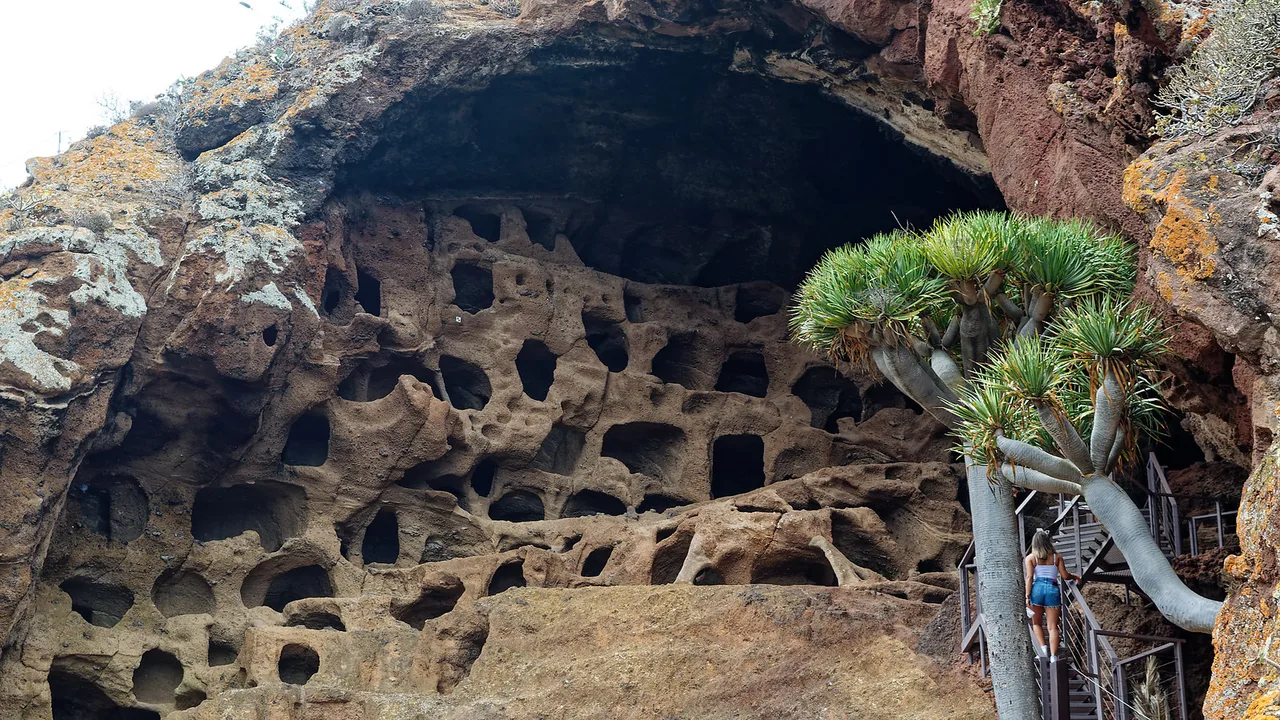
Cenobio de Valerón is a collective granary carved into a soft rock face in the Valerón valley, in the northern municipality of Santa María de Guía. It holds more than 300 silos cut at different levels, and the visit is short: you climb to the cliff, look at the tiers of hollows and read what they were for.
Come for the pre-Hispanic context rather than a big museum. The site is a single rock face with a viewing route, so it slots into a northern loop with Arucas, Firgas or Las Palmas rather than filling a half-day on its own. If you are weighing how this short archaeological stop fits against beaches and mountain drives, our guide to things to do in Gran Canaria helps you build the rest of the day around it.
What the Cenobio de Valerón actually is
The site is a granary, not a village. Pre-Hispanic islanders cut more than 300 cavities into the soft volcanic rock of the Valerón valley to store cereal, and the silos sit in tiers up the cliff, connected by ledges and small paths. The name 'cenobio' suggests a monastery, which is a later misunderstanding; the structure is agricultural storage.
That distinction matters when you plan the stop. You are not walking through rooms, kitchens or cave houses; you are looking at a working grain store from below and from the viewing platforms, and the scale comes from the number of hollows rather than from any interior. Read up on the site before you arrive and the cliff face makes far more sense.
Where it is
Cenobio de Valerón lies in the Valerón valley in Santa María de Guía, in the north of Gran Canaria. The nearest city is Las Palmas de Gran Canaria, the island capital, which sits on the north-eastern corner and makes a sensible base for a northern day out.
The island's official tourism site groups the capital and the north-east into an eastern route, which is a useful way to structure the drive. Santa María de Guía is not on that route's headline list, so treat the Cenobio as a deliberate detour rather than something you stumble across in the old town.
How to get there
The practical approach is by car: the site sits in a valley away from the main coastal towns, and bus coverage on this stretch of the north is thin. Self-drive gives you the flexibility to combine the Cenobio with Arucas and Firgas in one morning, which is how the site is most sensibly visited. If you are planning a broader tour of the island, see our guide to things to do in Gran Canaria for more ideas.
If you would rather not drive, the tourist offices in Las Palmas de Gran Canaria are the place to ask about organised excursions and current access. Check road access and parking arrangements before setting out, since the approach is a minor valley road.
What you see at the cliff
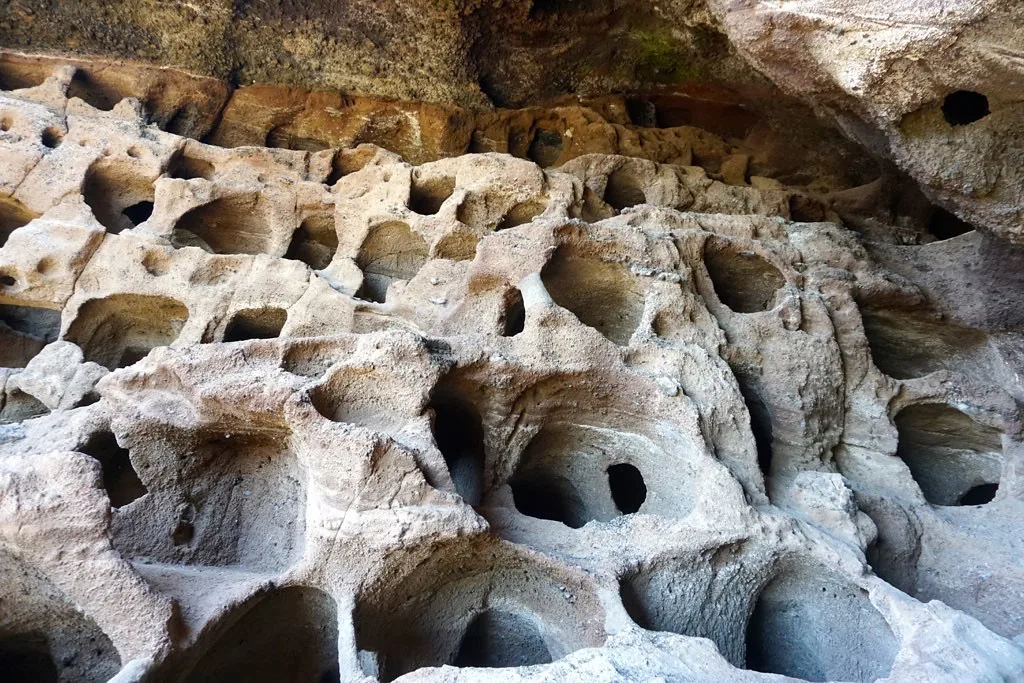
The route takes you up to the rock face, where the silos are cut in horizontal bands. Some are small and rounded, others larger and squarer, and the whole face is pitted with them, which is what gives the site its distinctive honeycomb look. The cavities were shaped to hold grain and keep it dry and protected.
Interpretation panels explain how the granary worked and who used it, and the climb is stepped rather than long. Treat it as an archaeological viewpoint: you look, read and take in the valley, then move on. The cliff itself is the attraction, so the quality of the light matters more than the time you spend.
Who carved it
The granary belongs to the pre-Hispanic Canarians, the islanders who lived on Gran Canaria before the Spanish conquest. Storing cereal collectively in a defended, hard-to-reach cliff face tells you something about how communities managed food and protected surpluses. It also shows how skilfully they worked soft rock with simple tools.
For the wider picture, the Canarian Museum in Vegueta holds the island's main archaeological collection, including pre-Hispanic material. Visiting the museum in Las Palmas first, then the cliff, gives you a much better read on what you are looking at.
Tickets and opening hours
The site is managed separately from the city museums, so hours and admission are not the same as those of the Canarian Museum or the Casa de Colón. Check the current opening days and ticket price with the Santa María de Guía tourist office or the island's official tourism site before you drive out.
Opening days at archaeological sites on the island can change with the season, and a wasted drive to the north is a real risk. Confirm before you set off, and have a fallback such as Arucas if the gate is shut.
How long to allow
Plan around an hour at the site itself, including the climb, the panels and the view. That is enough to see the silos properly; anyone expecting a museum with rooms will be disappointed. The visit is short by design and works best as one element of a northern loop, much like the short stops you would build into a day of things to do in Gran Canaria.
A realistic half-day pairs the Cenobio with Arucas, whose cathedral and old town sit a short drive away, or with Firgas and its stepped waterfall walk. Both are easy to combine with the granary without rushing. If you would rather swap the archaeology for coastline, our roundup of things to do in Gran Canaria covers the beaches and mountain drives that fit a similar half-day.
Nearby in the north
Las Palmas de Gran Canaria is the obvious anchor for the day. Vegueta, the old quarter, has the Santa Ana Cathedral and the Casa de Colón, where the island's history is laid out in a sixteenth-century mansion on Calle Colón; both are worth an afternoon in their own right.
In the city, the Catedral de Santa Ana is the centrepiece of the old town, and the Casa-Museo Pérez Galdós in Triana covers the novelist Benito Pérez Galdós. Both make a natural pairing with a morning at the Cenobio.
If you have a full day, add the Caldera de Bandama, a volcanic crater about fifteen kilometres from the capital, with a viewpoint and a walk down into the cone. It is a very different landscape from the granary and a good contrast.
Practical trade-offs
The site is exposed, stepped and has limited shade, so go early, wear proper shoes and take water. The climb is short but uneven, and the cliff face gives little shelter from the sun or wind. Anyone with mobility problems should check access before committing to the drive.
The honest verdict is that the Cenobio de Valerón is a specialist stop: excellent if you care about pre-Hispanic history, thin if you want a day out with facilities. It is not a substitute for Vegueta, Las Canteras or the mountains, and it should not be sold as one.
Plan Your Visit
Cenobio de Valerón rewards preparation more than most stops on the island. Read about the silos before you go, check the opening days and ticket price with the Santa María de Guía tourist office, and build the visit into a northern loop with Arucas, Firgas and Las Palmas.
Give it an hour, take water, and pair it with the Canarian Museum or the Casa de Colón in Vegueta if you want the full story of the island before the conquest.
Explore more Gran Canaria guides
Frequently Asked Questions
What is the Cenobio de Valerón?
It is a collective granary of more than 300 silos cut into a soft rock face in the Valerón valley, in Santa María de Guía, in the north of Gran Canaria. Pre-Hispanic islanders used it to store cereal, and the tiers of hollows are what you see today.
How much does it cost to visit the Cenobio de Valerón?
Admission is set by the site's own management and is not the same as the city museums. Check the current ticket price and opening days with the Santa María de Guía tourist office or the island's official tourism site before you drive out.
How long do you need at the Cenobio de Valerón?
Allow around an hour for the climb, the interpretation panels and the view over the valley. The visit is short, so plan it as one stop on a northern loop rather than a half-day outing on its own.
Who built the Cenobio de Valerón?
It was carved by the pre-Hispanic Canarians, the islanders who lived on Gran Canaria before the Spanish conquest. The collective storage in a defended cliff face points to a community that managed food surpluses and protected them.
Is the Cenobio de Valerón worth visiting?
It is worth it if you are interested in pre-Hispanic history and archaeology, and it pairs well with Arucas or Las Palmas. If you want a big museum or a family day out with facilities, it will feel thin, and the climb is exposed with little shade.
What else is near the Cenobio de Valerón?
Las Palmas de Gran Canaria is the nearest city, with Vegueta, the Santa Ana Cathedral and the Casa de Colón. Arucas and Firgas are easy additions to the same northern drive, and the Caldera de Bandama makes a good contrast later in the day.