Things to Do in Gran Canaria: Beaches, Mountains & Villages
Plan things to do in Gran Canaria, from the Maspalomas dunes and Roque Nublo to Puerto de Mogán, Tejeda, Agaete and the old town of Las Palmas.
On this page
Gran Canaria rewards travellers who treat it as more than a beach. The south gives you the Maspalomas dunes and sheltered swimming at Amadores, the centre rises to Roque Nublo and Pico de las Nieves, and the capital, Las Palmas de Gran Canaria, holds the old quarter of Vegueta and the city beach of Las Canteras. The island is recognised as a UNESCO Biosphere Reserve, which reflects how compressed and varied its landscapes are.
Plan around two things: driving times on mountain roads are longer than the map suggests, and lunch runs from about 1:30pm to 4pm while dinner starts around 8:30pm to 9pm. That makes an early start the single most useful decision on a mountain day, and it also gets you to Puerto de Mogán before the coaches.
When to Go and How to Pace the Day
Spanish meal times set the rhythm of a Gran Canaria day. Lunch is served roughly 1:30pm to 4pm, so if you want a proper mountain lunch in Tejeda you should plan the hike or viewpoint for the morning. Dinner starts around 8:30pm to 9pm, which leaves the late afternoon free for a beach or a promenade walk. The same split between morning sights and a late lunch shapes things to do in Alicante, where castle visits work best before the midday meal.
The temperature difference between coast and summit catches people out. At Pico de las Nieves, the island's highest point at 1,949 metres, you can drive to a parking area at the top and walk only a few steps, but the air is far cooler than at sea level. Pack a layer and a hat even if you left the beach in sunshine.
Summer heat makes early starts worthwhile, and if you are travelling in gran canaria in july the mountains are the sensible midday escape while the coast stays busy. August brings peak Spanish holiday traffic to the south, and Las Palmas empties out in the opposite direction as residents head for the beaches.
Las Palmas de Gran Canaria: Vegueta and Las Canteras
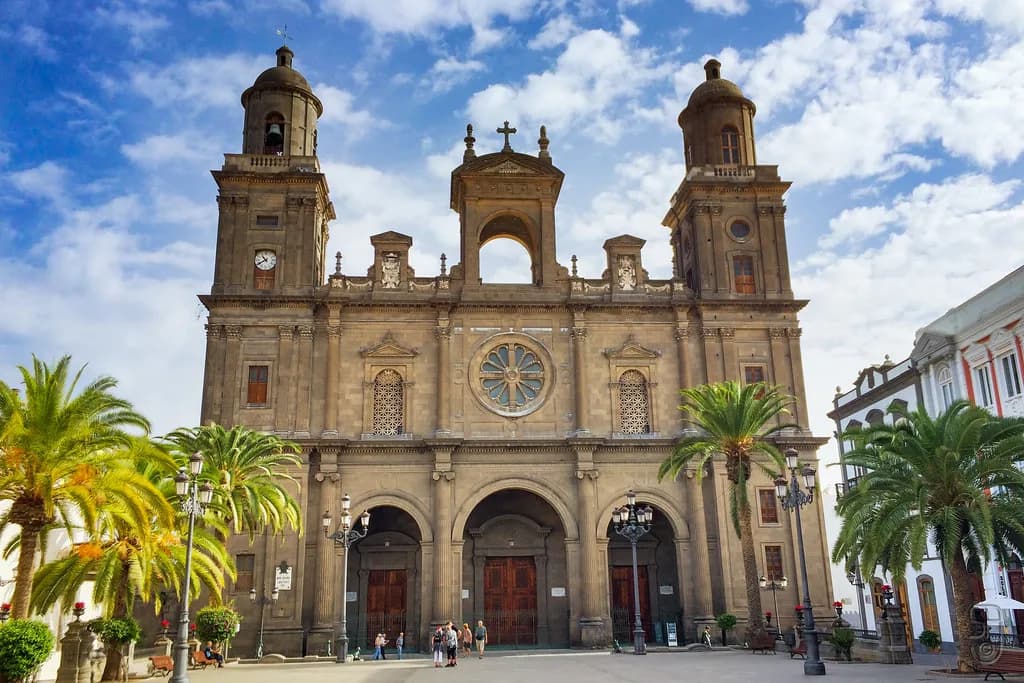
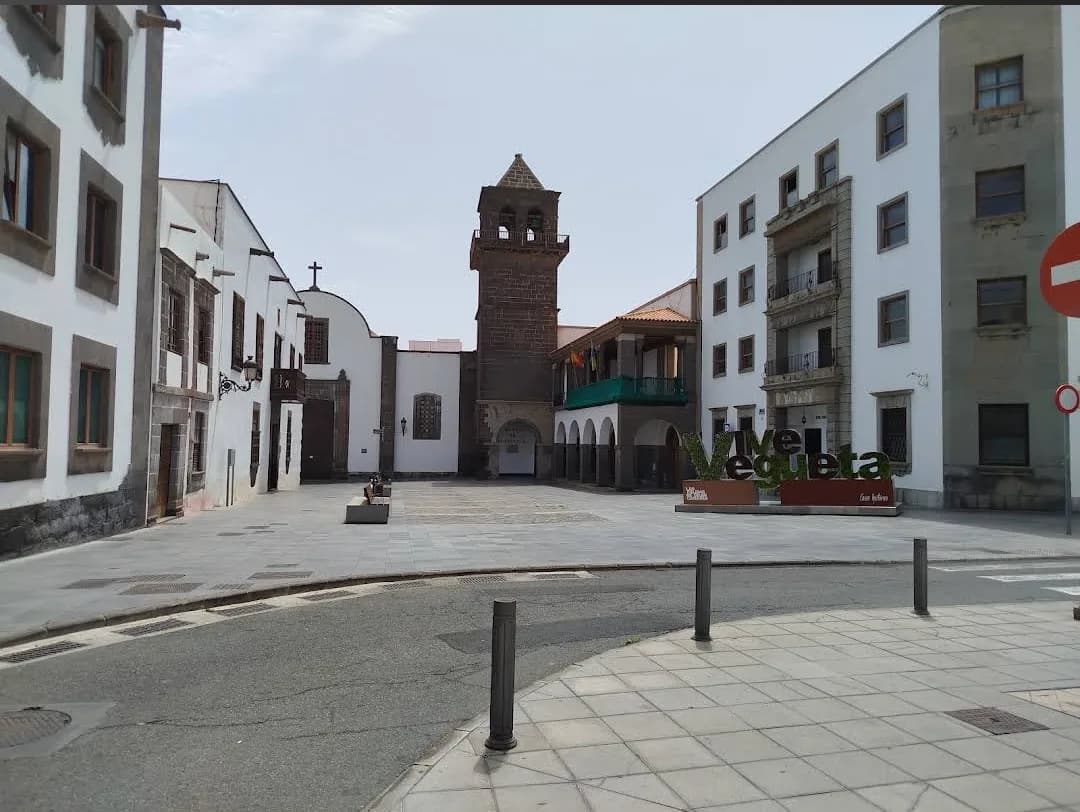
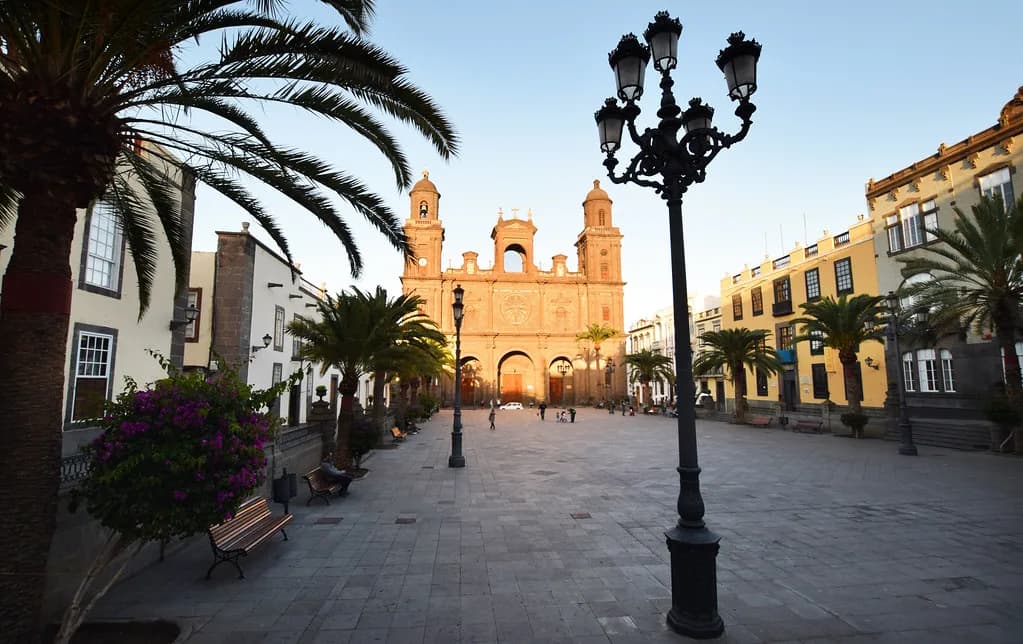
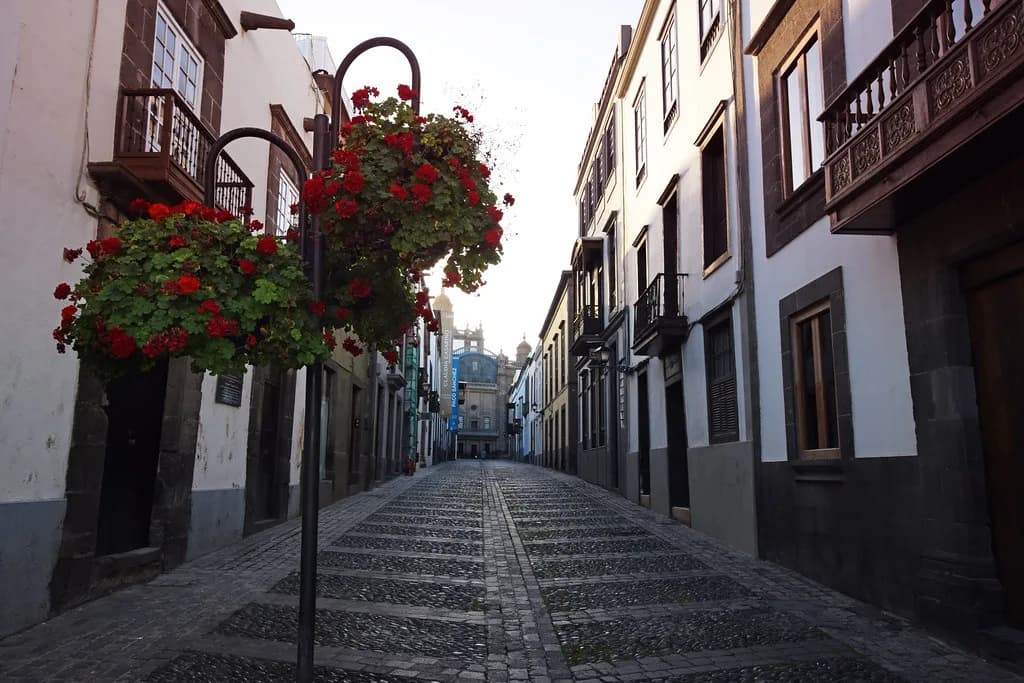
Start in Vegueta, the oldest part of the capital, where the Santa Ana Cathedral faces the Plaza de Santa Ana and the surrounding streets hold the Casa de Colón and the Museo Canario. It is compact enough to walk, and the official city guide sets out the opening hours for each museum. The Atlantic Centre of Modern Art opens Tuesday to Saturday from 10:00 to 21:00 and Sundays from 10:00 to 14:00, and closes on Mondays and public holidays.
The Casa de Colón keeps longer hours, Monday to Saturday from 10:00 to 18:00 and Sundays and public holidays from 10:00 to 15:00, which makes it a good wet-weather or late-afternoon stop. If you want a single museum for art and design, the Néstor Museum in Doramas Park is closed in August, so check the calendar before building a day around it.
Las Canteras is the other half of the city's appeal, three kilometres of golden sand backed by a promenade lined with bars, terraces and kiosks. It is a working city beach rather than a resort strip, so mornings belong to swimmers and the evening to walkers. Pair it with a coffee in Vegueta and you have a full day without leaving the capital.
Maspalomas: Dunes, Lighthouse and Promenade
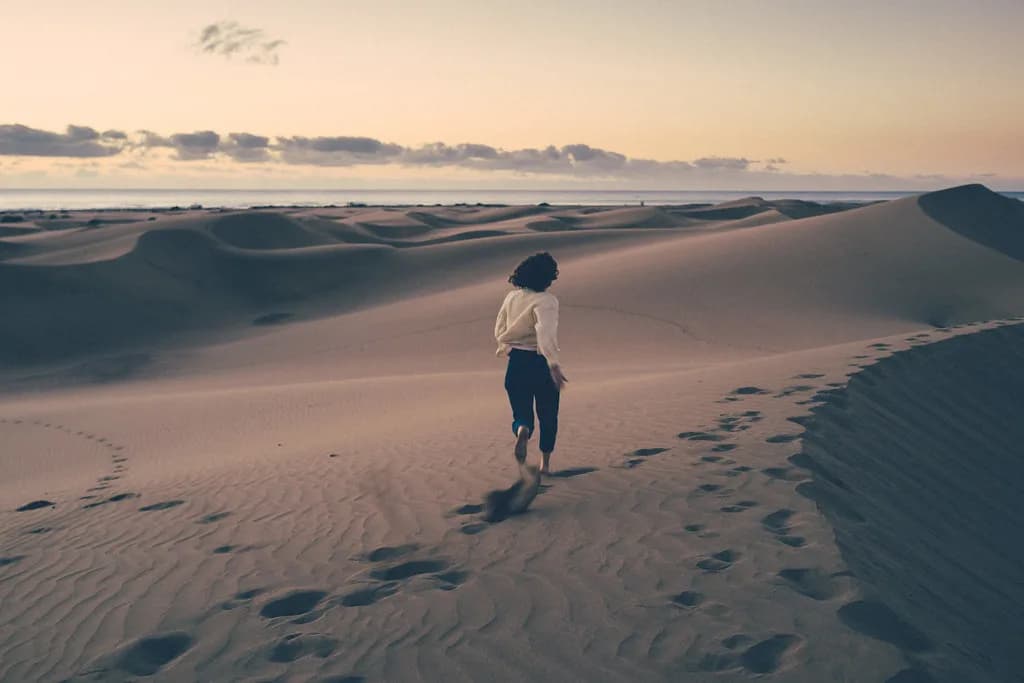
The Dunas de Maspalomas are a protected nature reserve, so you walk the designated trails rather than striking out across the sand at random. Two viewpoints give you the classic panorama: Mirador de las Dunas and Mirador Dunas Santa Mónica. Late afternoon is the best light, when the sand turns gold and the heat eases.
At the southern edge, the Faro de Maspalomas stands 55 metres tall beside the beach, with a seaside promenade running past it. It is a good place to start a dune walk from Playa del Inglés or from the lighthouse end, and a natural spot to sit by the water at sunset.
Playa del Inglés next door is the island's nightlife and hotel centre, with bars, restaurants and water sports along the shore. It is not the quietest base, but it puts the dunes and the beach within walking distance. Families often prefer the calmer water further west at Amadores, which is sheltered by two breakwaters and good for swimming with children.
Puerto de Mogán: Canals, Harbour and the Parking Squeeze
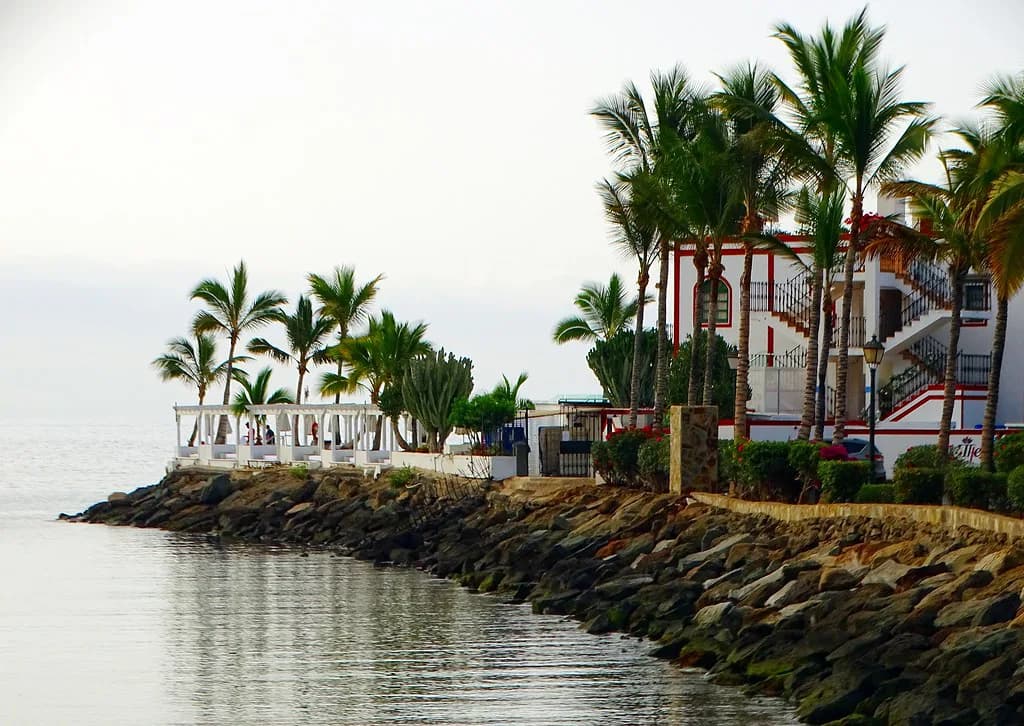
Puerto de Mogán is the island's prettiest harbour village, with canals, footbridges and whitewashed houses draped in bougainvillea that earn it the nickname Little Venice. It began as a fishing village and now draws crowds, so the earlier you arrive the better for both the photographs and the limited paid parking by the entrance to the canal quarter. There is a golden-sand beach in the heart of town and a row of waterfront restaurants where you can stop for lunch.
Use it as a half-day rather than a full one: walk the harbour, take a boat trip to spot dolphins, or simply eat by the water. For a different side of the south coast, the quieter resort of Puerto Rico lies nearby and works well as a base if you want more space than the harbour village allows.
Roque Nublo: The Permit Window and the Hike
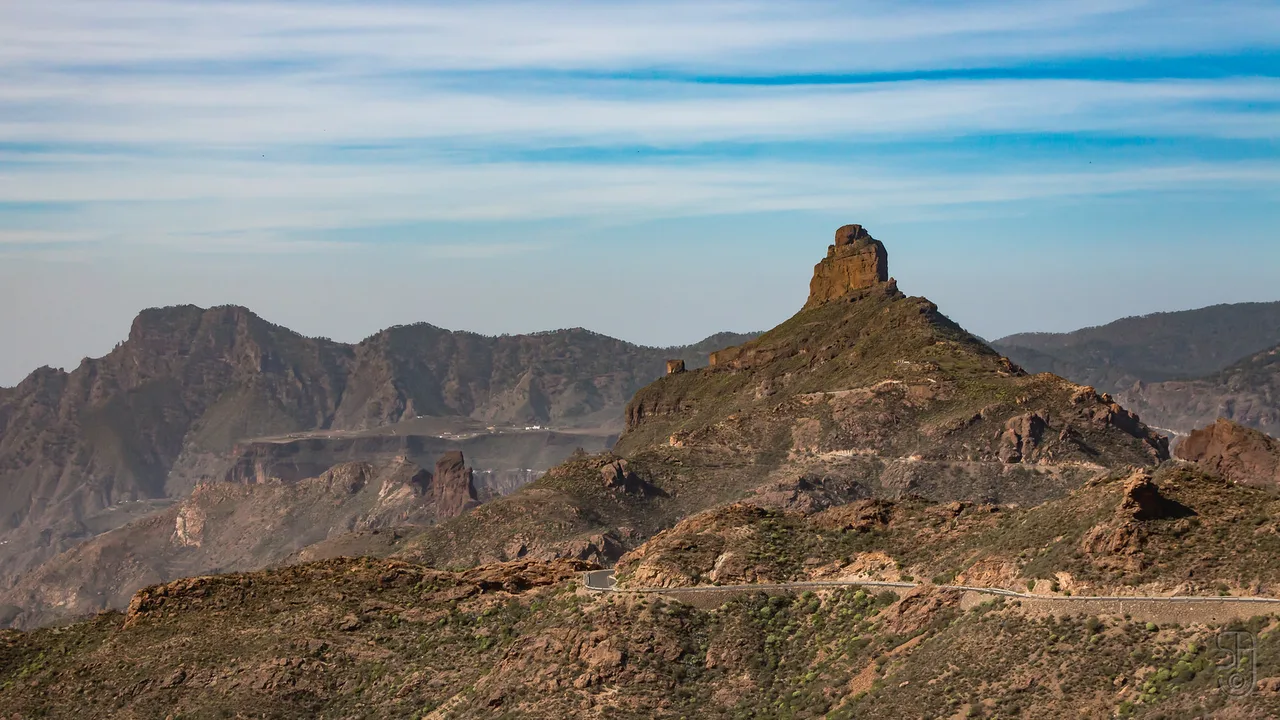
Roque Nublo is the island's symbol, an 80-metre volcanic monolith standing at 1,803 metres above sea level in the centre of Gran Canaria. The most popular route is a short 1.3-kilometre walk each way from the GC-600 road, and during the day, from 9:00 to 17:00, you need a free permit to walk it from that checkpoint. Outside those hours no permit is required.
You cannot park at the trailhead itself. Leave the car at one of the nearby campsites, Bailico or Llanos de la Pez, and add a few kilometres to the walk, or take the public bus, which stops at the starting point. A longer alternative is the 3-kilometre route from Presa de Elba, where there are a few parking spots beside the bus stop and the trail follows the reservoir up.
Roque Bentayga, the other great rock of the interior, has a visitor centre where you can learn about the area's history. The walk to the rock is not difficult, but the rocky ground rewards proper walking shoes over trainers.
Tejeda: Almond Pastries and Mountain Lunches
Tejeda is the most scenic village on the island, wedged into the mountains with views of Roque Bentayga and Roque Nublo. It is famous for almond pastries, and a palmera from Dulcería Nublo is the thing to order; arrive later in the morning and you will join a queue outside. Eat it on the benches facing the peaks rather than at a table.
Walk down Calle Dr. Domingo Hernández Guerra to the small square by the church, the Mirador de Tejeda, for the front-row view of Roque Bentayga. Book a mountain-view restaurant for lunch and you have the classic Tejeda day: hike in the morning, eat at 2pm, and drive back through the interior in the afternoon.
Pico de las Nieves, at 1,949 metres, is the island's highest point and can be reached by car with free parking at the top. Its name means Peak of the Snows, and the summit is often several degrees cooler than the coast. It sits naturally on the same loop as Tejeda and Roque Nublo if you start early.
Agaete and Puerto de las Nieves: Fish, Sunsets and Coffee
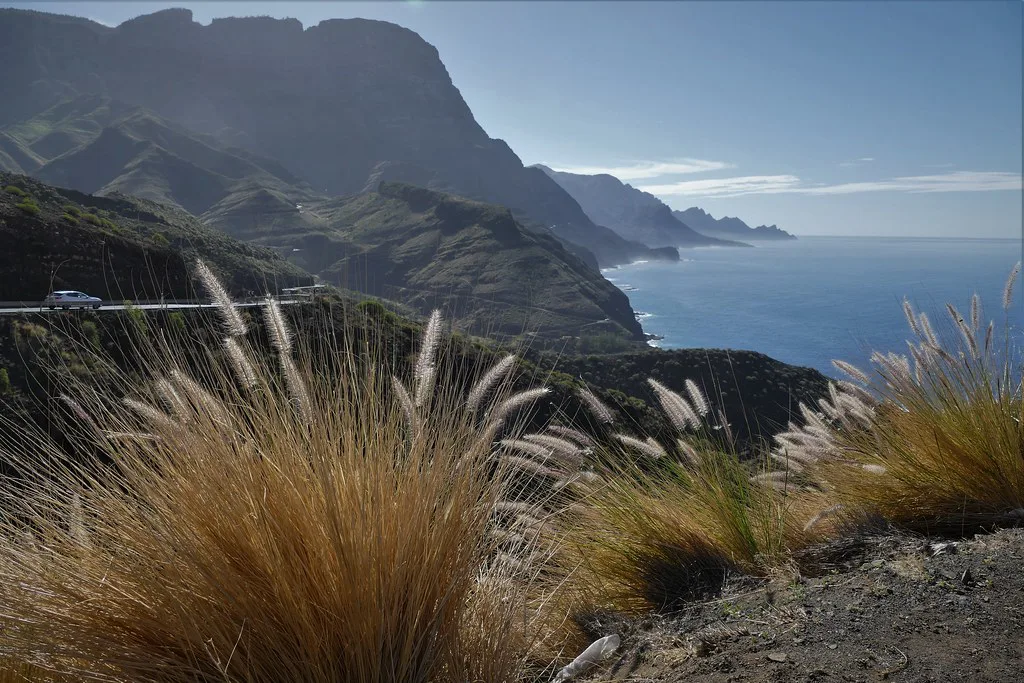
Agaete on the west coast is one of the best places for a sunset, with cliffs and blue water framing the view. The fishing village of Puerto de las Nieves has local restaurants facing the pebble beach where grilled fish is the thing to order. It is also where the ferry leaves for Tenerife, which makes it a practical last stop before crossing.
The Agaete Valley behind the coast is coffee country, one of the few places in Europe where coffee is grown. Bodega Los Berrazales, Café Platinium and Finca los Castaños are among the plantations that take visitors for tours and tastings. The valley is greener and wetter than the south, which is exactly why coffee and tropical fruit thrive here.
For the other green corner of the north, Hacienda La Rekompensa near Arucas runs guided tours of a banana plantation lasting about an hour, with tastings of banana products. It is a good rainy-day or family option and pairs naturally with Arucas itself.
Archaeology and History in the North
The Cenobio de Valerón in the north is a collective granary carved into soft rock, with more than 300 silos at different levels. It is one of the most spectacular archaeological sites in the Canary Islands and has been adapted for visits. It is open to the public Tuesday to Sunday.
Cueva Pintada in Gáldar, the former Guanche capital, holds painted cave chambers that tell the story of the island's first inhabitants. Combine it with the Cenobio de Valerón for a half-day of pre-conquest history if archaeology interests you.
Firgas, Teror and Arucas: Northern Towns for a Half-Day
Firgas is known as the Village of Water, and its Paseo de Canaria is a stepped waterfall lined with mosaics running beside the road. The historic centre is small and walkable, with churches and traditional Canarian buildings, and the whole visit takes under an hour.
Teror is the pilgrimage village of the island, home to the Basílica de Nuestra Señora del Pino and its patron virgin. Its streets are among the most authentic in Gran Canaria, and it is a natural lunch stop between the north coast and the mountains.
Arucas is dominated by the Parroquia de San Juan Bautista, one of the island's most impressive churches, surrounded by banana plantations. A walk through the old town is a pleasant way to spend an hour, and it sits about 18 kilometres northwest of Las Palmas, making it easy to combine with the capital.
Caldera de Bandama: Viewpoint or Crater Floor
Caldera de Bandama is an extinct volcanic crater about 1,000 metres across and 200 metres deep, close to Las Palmas. You have two choices. Drive up to Pico de Bandama for the view over the crater, or walk down to the crater floor in about half an hour on a path of volcanic rock, which needs proper shoes.
The Bandama area also holds an 18-hole golf course, which is worth knowing if you want to combine a round with the viewpoint. The crater walk is the more rewarding option for walkers; the drive-up viewpoint is the better one if time is short.
Barranco de las Vacas: The Short Slot Canyon
Barranco de las Vacas is a slot canyon of about 100 metres with wave-like sandstone walls in gold and rust, often compared to Antelope Canyon. There is no sign and no real trail, so you look for the stone bridge and park in the tiny space for one or two cars just before it. From there you step over the safety rail and follow a fairly steep path down to the ravine.
Go through the tunnel under the bridge and follow the riverbed uphill; the narrow, photogenic section is just 100 metres from the bridge. Sturdy shoes matter, and a morning visit gives you the most tranquil experience. Families and anyone without grippy footwear should use the gentler path from the parking area rather than the steep walls by the bridge.
Guayadeque and Agüimes: Cave Restaurants and a Cobbled Old Town
Guayadeque is a 15-kilometre canyon on the east side of the island where houses and restaurants are carved into the rock. Some restaurants sit inside natural caves, which keeps them cool on hot days, and the Guayadeque Visitor Centre at the mouth of the ravine explains the customs of the island's first inhabitants. The road climbs to a hermitage and several restaurants, and a seven-kilometre trail at the end leads to the volcanic caldera of Los Marteles.
Agüimes sits nearby and makes a natural pairing: an old town with a striking main square, the Church of San Sebastián and a scattering of bronze sculptures. It was one of the first settlements after the Spanish conquest in 1491.
The South Coast for Families
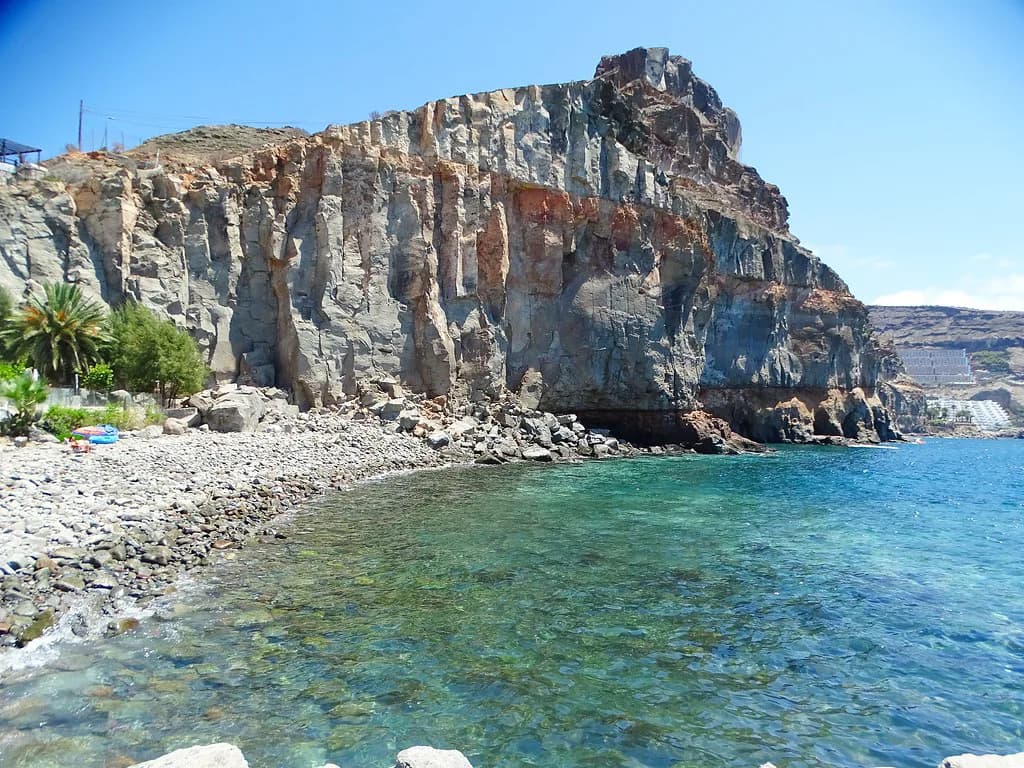
Playa de Amadores is the family pick, a white-sand bay protected by two breakwaters so the sea stays calm for swimming. It is well set up for sunbathing and swimming with children, and a cluster of hotels makes it a sensible base if beach time matters more than sightseeing.
Playa del Inglés and Maspalomas are the busier alternatives, with water sports including surfing, paddleboarding, jet skiing and diving. Maspalomas also has the dunes and the promenade for non-beach hours, which gives families more to do when the sun is at its strongest.
Day Plans: Coast and Mountains in One Day
The classic single day is capital and mountains: Vegueta in the morning, then drive up to Bandama or Tejeda for lunch and return via Roque Nublo in the late afternoon when the permit window has closed. It works because the museums open early and the mountains are at their quietest after 5pm.
A second day belongs to the south: Maspalomas dunes and lighthouse in the morning, Puerto de Mogán for lunch and a walk, then Amadores or Playa del Inglés for the afternoon. Allow a full day for this rather than trying to bolt on the north coast, because the mountain roads make the timings unrealistic.
Practical Tips on Parking, Permits and Crowds
The popular spots punish late arrivals. Puerto de Mogán's paid parking by Little Venice is very limited, Roque Nublo has no car park at the trailhead, and the Barranco de las Vacas turning holds only one or two cars. For all three, early morning is the answer, and the same early start also gives you the best light for photographs.
Altitude and sun are the other practical concerns. Pico de las Nieves is cool even when the coast is hot, and the dunes and slot canyon offer little shade at midday. Carry water, wear proper shoes for the crater floor and Roque Nublo, and treat the permit window at Roque Nublo as a fixed constraint rather than an optional detail.
Where to Eat and What to Order
Gran Canaria's food is coastal and mountain food at once. On the coast, order grilled fish in Agaete and Puerto de las Nieves, and eat it at a waterfront table facing the pebble beach. In the mountains, order almond pastries in Tejeda and sit down for a proper lunch rather than a snack.
In Las Palmas, the Vegueta market dates from 1854 and opens Monday to Thursday from 06:30 to 14:00 and Fridays and Saturdays from 06:30 to 15:00, which makes it a morning stop for provisions or a coffee rather than a late lunch. The Muelle Deportivo in the capital is the place for an evening walk followed by a meal on the waterfront.
If you want a broader survey of the island's gastronomy before you go, use the Gran Canaria Attractions: 6 Visitor Guides as a starting point and then decide which stops earn a table.
Where to Stay and How to Get Around Without a Car
Where you stay decides how much driving you do. Las Palmas suits city and culture, Maspalomas and Playa del Inglés suit the south coast and dunes, and Puerto de Mogán suits harbour life and boat trips. The south gets more sunshine and is drier, while the north around Arucas and Agaete is greener and wetter because of moisture from the ocean.
Without a car, the practical plan is to base yourself in the capital or the south and use buses for the main routes. Roque Nublo is reachable by public bus from the GC-600 starting point, though the service is limited, and the capital has an internal bus that takes you to the Botanic Garden of Viera y Clavijo, about 7 kilometres from the centre. For the mountain villages and the west coast, hire a car for at least a day or two.
Plan Your Visit
Gran Canaria works best as a two-centre trip: a few days in the capital for Vegueta, Las Canteras and the northern towns, then a few days in the south for the dunes, Puerto de Mogán and Amadores. Use a car for the mountain day that links Bandama, Tejeda and Roque Nublo, and start early enough to beat the heat and the parking.
Book the free Roque Nublo permit for the 9:00 to 17:00 window if you plan the popular route, or walk outside those hours to avoid it. Check museum hours and hotel rates direct, and expect August to be the busiest month on the coast and the quietest in the city.
Explore more Gran Canaria guides
Frequently Asked Questions
What is the prettiest place in Gran Canaria?
Tejeda is the most scenic village on the island, wedged into the mountains with views of Roque Bentayga and Roque Nublo, and Puerto de Mogán is the prettiest coastal village, with canals and flower-draped whitewashed houses that earn it the Little Venice name. Both are worth a half-day.
Can you still walk on the dunes in Maspalomas?
Yes, but the dunes are a protected nature reserve, so you should walk on the designated trails rather than across the sand at random. The two viewpoints inside Maspalomas, Mirador de las Dunas and Mirador Dunas Santa Mónica, give you the classic panorama without damaging the dunes.
What part of Gran Canaria is best for kids?
Playa de Amadores is the family pick, a white-sand bay protected by two breakwaters so the sea stays calm for swimming. Maspalomas and Playa del Inglés add water sports and the dunes, and Hacienda La Rekompensa near Arucas runs hour-long banana plantation tours that work well for children.
Do you need a permit to hike Roque Nublo?
On the most popular route from the GC-600 road, a free permit is needed during the day, from 9:00 to 17:00. Outside those hours no permit is required, and there is no parking at the trailhead itself, so leave the car at Bailico or Llanos de la Pez or take the bus.
Do you need a car to get around Gran Canaria?
A car is the most practical way to link the mountain villages, the west coast and the viewpoints. Without one, base yourself in Las Palmas or the south and use buses for the main routes, and hire a car for a day or two if you want the interior.
How many days do you need in Gran Canaria?
Allow a week to cover the capital, the south coast and a full mountain day without rushing. Four or five days works if you pick two bases and accept that you will leave either the north or the west for another trip.
Where can you eat in a cave in Gran Canaria?
Guayadeque Ravine on the east side of the island has restaurants carved into the rock, some inside natural caves that stay cool on hot days. Combine a cave lunch with the Guayadeque Visitor Centre and the old town of Agüimes nearby.
Sources
Notes for eating well in Spain
Optional updates to our guides.
You might also like
Continue reading
More guides you'll find useful