
Palma Old Town: A Neighbourhood Guide for Visitors
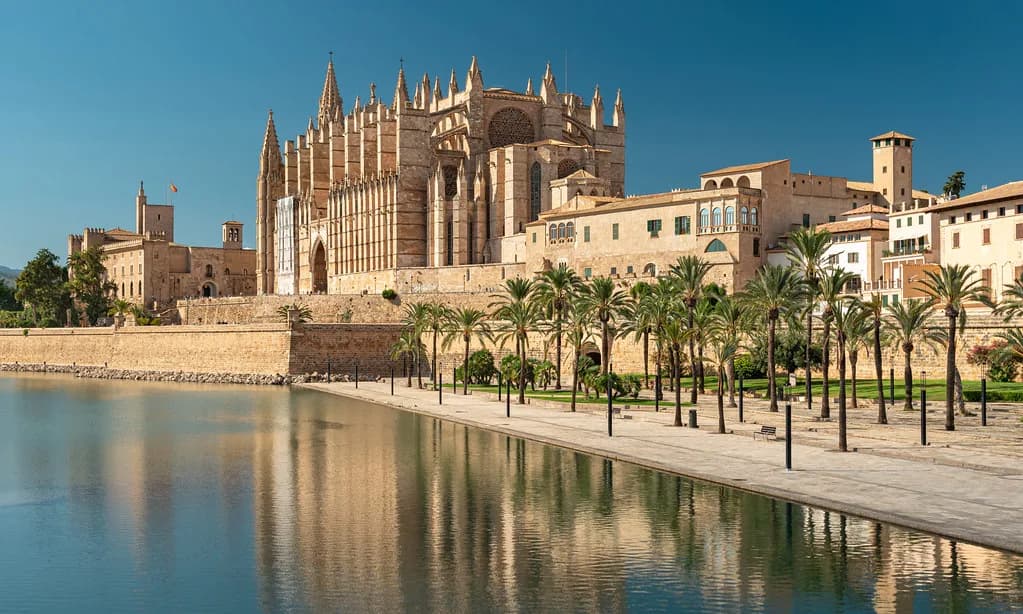
Palma Old Town is the historic centre wrapped around the Gothic cathedral, La Seu, which rises from the old city walls beside the Parc de la Mar. Half the island's population lives in the capital, and this compact quarter is where the narrow lanes, hidden courtyards and historic buildings cluster most densely. Everything sits within easy walking distance of the port, so you can step off the promenade and be among honey-coloured stone within minutes.
It suits walkers, sightseers and anyone who wants museums, markets and a serious restaurant scene on the doorstep. It does not suit anyone who wants a beach outside the hotel: the nearest sand, Ca'n Pere Antoni, starts just beyond the cathedral and is a further 15-minute walk along the promenade. Use the Palma Neighborhoods: 3 Area Guides map to compare the Old Town with the city's other districts.
What Palma Old Town is and where it sits
The Old Town is the area just behind and around Palma Cathedral, known as the Arab or Cathedral Quarter, and it sits directly above the seafront and harbour. Narrow lanes, archways opening onto Spanish courtyards, and small squares with gardens and tiny cafés make it a district to wander rather than tick off.
The heart of the city lies around La Seu, which overlooks the Parc de la Mar, a park that hosts concerts, open-air films and local festivities through the year. From the cathedral, the old Arab quarter spreads behind it as a maze of lanes full of history, and getting a little lost is part of the experience.
The district is compact and pedestrian-friendly, with quirky cafés, galleries and boutique shops dotted through the streets. Passeig des Born and La Rambla, the two grand arteries, were built in the 19th century on a dried-up river bed, which is why the Old Town feels wider at its edges.
Who the Old Town suits — and who it does not
Book the Old Town if you want to walk everywhere: the cathedral, the royal palace, the museums and the main shopping streets are all within a compact area. It is also the right base if evening tapas and a short stroll back to your room matter more than a pool.
Choose elsewhere if a beach is the point of the trip. The city's own beach requires a walk east past the cathedral, and the resort sands at Playa de Palma sit about 10km away with regular buses linking them to the city. Swimmers who want calm, sheltered water should look west to Cala Major and Illetas, where parking is limited and a short taxi ride is often easier.
Travellers who want a quieter, more local base within Palma should weigh the fishing-quarter feel of the neighbouring district against the historic centre's sightseeing density. Compare the two properly in the Santa Catalina, Palma guide.
How to get there and around
Fly into Palma de Mallorca airport and you are a short taxi ride from the centre, which makes the city work as a weekend break as well as a base for the island. Once you are in the Old Town, you do not need transport: the streets are made for walking and the distances between sights are small.
Bring comfortable shoes and expect to get turned around in the lanes behind the cathedral. If you would rather have structure, the tourist office runs guided city tours in several languages throughout the year, most heavily in summer.
For a wider view of what the city offers beyond the historic centre, including the castle and the art museums, see the Palma Attractions: 6 Visitor Guides hub before you plan your days.
The headline sight: La Seu cathedral
La Seu, officially the Catedral-Basílica de Santa María de Mallorca, is the city's defining landmark and the most-visited attraction. It stands on the site of an old mosque, itself built on a Roman temple, and rises from the old city walls that once met the sea.
Inside, look for the vast pillars holding up the vaulted ceilings and a rose window counted among the world's largest stained glass windows. Above the altar, a huge crown of thorns sculpted by Antoni Gaudí sits oddly against the medieval fabric, a deliberate jolt in an otherwise traditional interior.
Unlike many Catholic churches, there is a fee to go in, and queues build, so booking a skip-the-line ticket in advance saves time. Check the cathedral's current ticketing before you travel.
Beside the cathedral: La Almudaina and S'Hort del Rei
Opposite the cathedral stands the Royal Palace of La Almudaina, easily combined with a cathedral visit. The site dates back to Roman days, though the current palace was rebuilt in the 14th century; its name comes from the Arabic for fortress or citadel.
Inside, 16th-century Flemish tapestries hang on the walls and some ceilings are painted in traditional Mallorcan black and red, while the rooms display furniture and treasures from different eras. The windows frame views over the Bay of Palma and its yachts, which are as much a reason to visit as the collections.
Below the palace, the Jardines de S'Hort del Rei were originally part of the royal palace and are now a small public garden with fountains and shade. It is a free pause between ticketed sights, and a good spot to sit with a coffee before tackling the lanes behind the cathedral.
Behind the cathedral: the old Arab quarter
Directly behind La Seu, the old Arab quarter is a maze of narrow lanes full of history and charm. It holds quaint museums, peaceful courtyards and distinctive architecture that gives a real glimpse of the city's past, with exhibitions covering everything from Mallorcan history and religious artefacts to antique toys.
Architecture lovers should keep their eyes up: the modernist style arrived in Palma when Gaudí came to help restore the cathedral, and the Old Town carries elegant façades, curving balconies and ornate detail around unexpected corners.
Plaça Cort, with Palma's Town Hall and an old olive tree thought to be around 800 years old, is one of the district's most photogenic corners. It is a natural waypoint between the cathedral area and the shopping streets.
Bellver Castle and Es Baluard
Bellver Castle sits on a hill just west of the city, a unique circular 14th-century fortress with some of the best views over Palma, and it doubles as a museum of the city's history. Confirm the current entry arrangements at the ticket desk before you go.
For contemporary art, the Es Baluard Museum is housed in an old fortress and is well worth a visit, with a terrace restaurant that has a strong reputation of its own. It is the obvious counterweight to the Gothic core when you want a modern-art afternoon.
The Catalan artist Joan Miró spent the best part of 30 years living on Mallorca, and his foundation, the Fundació Miró Mallorca, sits just to the west of Palma rather than in the Old Town, so plan it as a separate outing.

Markets and food shops
Mercat de Santa Catalina, established in 1920, is Palma's oldest food market, and dozens of artisan producers sell fruit, vegetables, meat, cheese, seafood, flowers and pastries. Browse, then sit down at one of the small cafés inside for a tapa and a glass of wine.
Plaça Major, the city's lively main square, hosts local markets selling handmade crafts and souvenirs, and it is where you go for gifts rather than groceries. For a proper food hall experience, the San Juan Gastronomic Market has 17 food stalls, a bar and a café, and often runs events.
The market sits in the neighbouring Santa Catalina district, which is worth exploring beyond the stalls. It began as a fishermen's and artisans' quarter and is now one of the city's coolest areas, with independent boutiques by day and bars and modern restaurants after dark.
Where to eat in the Old Town
For tapas, La Bodega on Carrer dels Apuntadors is a tiny, unassuming room of no more than ten tables, so book it or expect to wait. The cooking is classic rather than clever: hot whitebait, slow-cooked chopped squid, oozy croquettes, braised octopus and a curry meatball with shrimp that reads oddly on paper and works on the plate.
For contemporary Mallorcan cooking with a Michelin-starred kitchen, DINS Santi Taura sits in Sa Calatrava, a few metres from the cathedral and the sea. Book well ahead and treat it as the special-occasion meal of the trip rather than a casual supper.
On Tuesday evenings, La Ruta Martiana sends drinkers around Old Town bars offering a small tapa or pintxo with a caña of beer at a modest price, which is the cheapest way to eat well away from the tourist crush. Prices vary by venue, so check the board outside each bar before ordering.
Beyond tapas, the city has plenty of international cooking for all budgets, and the back streets off the main squares reward menu-reading. Seafood and paella are strongest down by the water rather than in the lanes, which is covered below.
Paella and seafood by the water
For traditional seafood and paella, head to the waterfront at Portixol and Molinar, only 3km from the cathedral. These working fishing ports are where you find some of the island's best paellas, and the walk or short taxi ride there is part of the pleasure.
Portixol keeps its fishing-village feel, with small colourful houses, a marina, a beach popular with locals and restaurants along the seafront. It is a change of pace from the historic centre, and a good lunch stop if you want sea air without a full beach day.
If you would rather stay near the port for the evening, the Portixol, Palma guide covers the area in more depth.
Drinks: spritzes in the lanes and cocktails in La Lonja
Lili's, tucked on a quiet square slightly off the main drag, works as a pre-dinner stop, with a Fiero spritz built on Martini Fiero, white peach, cava and elderflower and a small tray of warm flatbread, olives and herby dip. It is the sort of place that swallows an hour you had not budgeted.
In La Lonja, Neo Cultural hides behind a discreet door at Carrer de la Boteria 8, with marble counters, leather seating and no outdoor terrace, which makes the air conditioning a blessing after a hot day. There is no menu; the bartender asks what you fancy and builds the drink, so go with a clear direction rather than a brand name.
La Lonja also holds jazz clubs and other live-music bars, so the district is a natural place to end the evening. The nearby square, Plaça de la Llotja, is lined with restaurants and bars with outdoor seating, and the Gothic Llotja building itself is free to enter.
Where to stay in the Old Town
Boutique hotels have multiplied in the old town, often in converted townhouses with rooftop pools and views over the cathedral. Posada Terra Santa, an ancient Spanish townhouse turned boutique hotel, has a rooftop terrace and pool overlooking the cathedral and a spa in the basement.
Petit Palace Hotel Tres is a minimalist boutique hotel in the heart of the Old Town, with rooms in a centuries-old palace building, and Can Bordoy is a five-star option with two small pools and a garden courtyard restaurant. Both put the cathedral, shops and restaurants within a few minutes' walk.
Staying outside the centre changes the trade-off: JS Palma Plaza is about a 15-minute stroll from the middle, with a rooftop terrace, pool and gym, and sits near a quieter local eating zone. Choose it if you want calm and value over a doorstep location in the lanes.

Shopping streets
Passeig des Born is the grand avenue for high-street names and designer stores, and it is where you go for deliberate shopping rather than browsing. Sant Miquel is a bustling street full of shops, and La Rambla brings florists and newspaper vendors for a more local feel.
The Old Town's own boutiques sell handmade leather goods, crafts, summer linens, basket bags and flip-flops, and the streets around Unió, Avinguda d'Alexandre Rosselló and La Rambla are the ones to walk. The Plaça Major market adds crafts and souvenirs to the mix.
Practical timing
Spanish meal times matter here. Lunch runs roughly 1:30–4pm and dinner starts from 8:30–9pm, so a 7pm hunger pang is best met with a bar snack rather than a full table. Build the evening around a pre-dinner drink at Lili's or in La Lonja and sit down to eat when the kitchens are actually busy.
Book the small rooms ahead, especially La Bodega, where ten tables fill fast, and Rikito on Carrer de la Fàbrica, which has a more premium feel and fills up quickly. The best places can look empty early and then turn away walk-ins an hour later.
Restaurants in the Old Town do close on weekly rest days and some shut for parts of August or winter, so confirm the day before you go. One useful check is the door: a posted menu and a lit room at 8:45pm tells you more than any listing.
Walking distance: the promenade and the beach
From the Old Town you can walk the whole waterfront. The promenade stretches past the cathedral and the Almudaina and on towards Portixol, with a smooth path that suits walking, jogging and cycling.
The closest beach is Can Pere Antoni, starting just beyond the cathedral and reachable via the cycle path and promenade, about a 15-minute walk from the port front. Portixol's small shingle and sand bay is more sheltered, so the water stays calm, and it comes with cafés and restaurants behind it.
Common mistakes
The Old Town is not a beach base. The city beach is a walk away and the resort sands are 10km out, so a hotel with a rooftop pool earns its keep here in a way it would not elsewhere.
Do not leave dinner too late and expect to walk in. The tiny tapas rooms and the premium tables fill, and the local rhythm — a drink first, dinner from 8:30 or 9 — is not a formality.
Do not write off the lanes behind the cathedral after one loop. The old Arab quarter holds courtyards, small museums and toy collections that reward a second pass, and it is where the Old Town stops feeling like a shopping street.
Where to go next
The vintage narrow-gauge train from Palma to Sóller has run since 1912 through the Serra de Tramuntana, taking about an hour through 13 tunnels, and it is a day out in its own right. Timetables and fares are published by Ferrocarril de Sóller, so check them directly rather than relying on an old blog post.
From Sóller, the open-air tram of 1913 runs the few miles to the fishing village of Port de Sóller, where the waterfront promenade is lined with seafood restaurants. In Sóller itself, the Plaza de la Constitución is the place to sit with an orange juice from the surrounding groves.
Plan Your Visit
Palma Old Town rewards a two- or three-night stay: one day for the cathedral, palace and lanes, one for the markets and shops, and an evening for tapas or the Michelin-starred dining room at DINS Santi Taura. Add a waterfront lunch at Portixol or a day on the Sóller train if you have longer.
Confirm ticket times, restaurant rest days and season openings directly with each venue before you travel, then let the lanes do the rest. The district is small enough that a good pair of shoes and a booked dinner are most of the planning.
Frequently Asked Questions
Is Palma Old Town worth visiting?
Yes, if you want Gothic architecture, museums, markets, shopping and a strong restaurant scene in a compact, walkable area. La Seu cathedral, the Royal Palace of La Almudaina and the old Arab quarter sit within minutes of each other, and the Santa Catalina food market is a short walk away. It is less suited to travellers who want a beach on the doorstep.
Where is the old part of Palma?
It sits in the south of the city around the Gothic cathedral, La Seu, directly behind the seafront and the Parc de la Mar. The lanes of the old Arab quarter run behind the cathedral, and Passeig des Born and La Rambla mark the edge of the historic core.
How long do you need in Palma Old Town?
Two days covers the cathedral, La Almudaina, the S'Hort del Rei gardens, a walk through the Arab quarter and a decent meal or two. Add a third day for Bellver Castle, the Es Baluard museum and a waterfront lunch at Portixol or Molinar.
Where should you eat in Palma Old Town?
La Bodega on Carrer dels Apuntadors for classic tapas in a ten-table room, DINS Santi Taura in Sa Calatrava for contemporary Mallorcan cooking, and the Tuesday La Ruta Martiana bars for a tapa and a caña at a modest price. For paella, head to the fishing ports of Portixol and Molinar.
What shops are in Palma Old Town?
Passeig des Born carries high-street and designer names, Sant Miquel is a busy shopping street, and La Rambla brings florists and news vendors. The lanes hold independent boutiques selling leather goods, crafts, linens and basket bags, and Plaça Major hosts a crafts and souvenirs market.
Where is the nicest part of Palma to stay?
The Old Town is the pick for sightseeing on foot, with boutique hotels in converted townhouses. Santa Catalina suits food-led travellers who want a local, laid-back base, while Portixol gives you the fishing village and seafront without being in the middle of the historic core.