
La Lonja (La Llotja), Palma: A Neighbourhood Guide

La Lonja is two things at once: a 15th-century Gothic civil building on Plaça de la Llotja, and the small district of lanes around it that fills with restaurants, bars, cafés and clubs in the evening. Come in the morning for the hall itself, return after dark for the streets.
It sits at the harbour edge of the old city, a few minutes' walk from the cathedral quarter and the Passeig del Born. That position makes it easy to fold into a half-day on foot rather than treat as a separate trip across town. If you are still deciding how many days in Palma to allow, this is one of the sights that fits neatly into a single day.
What La Lonja is: the Gothic guildhall and the district around it
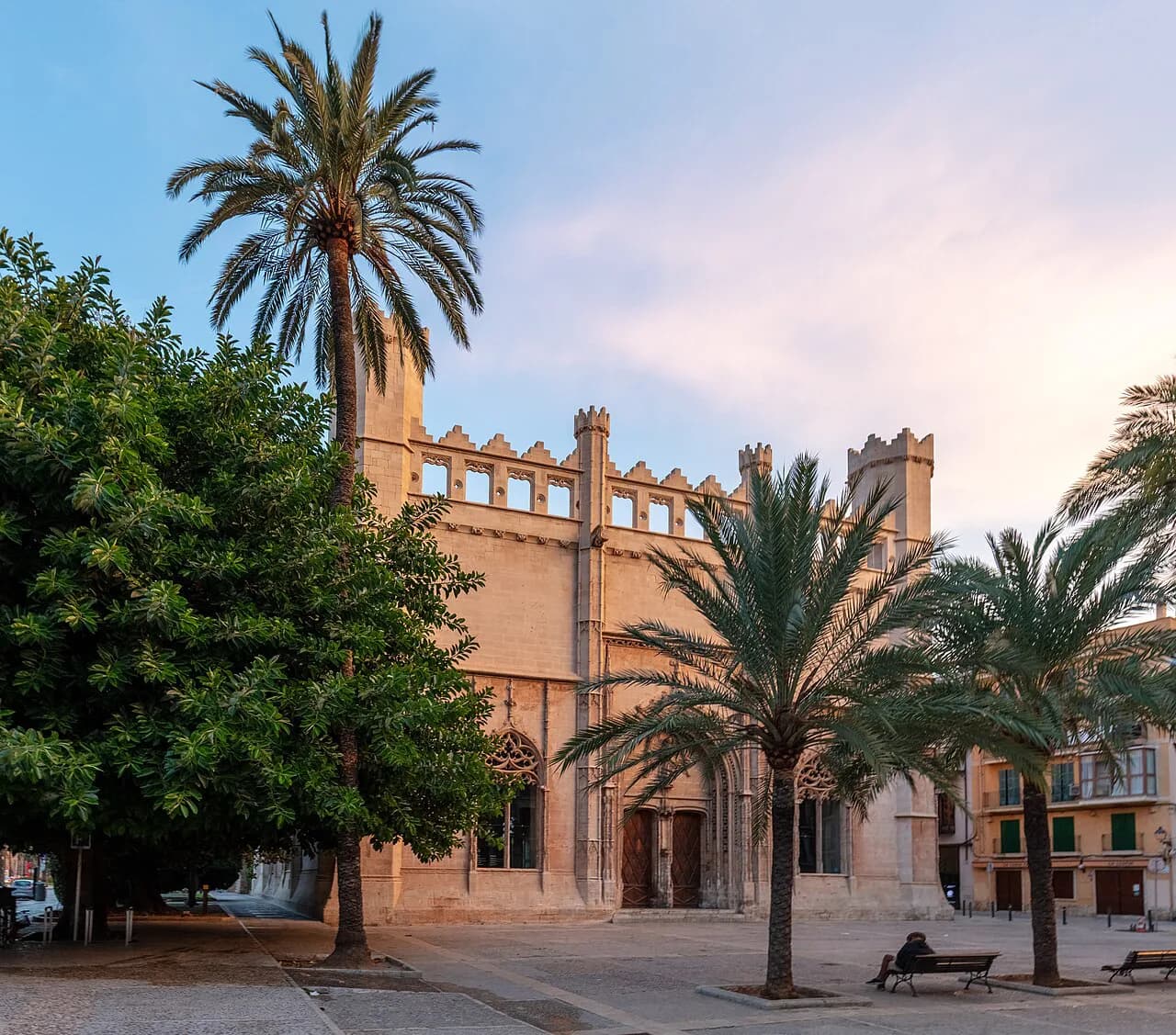
The building known as La Lonja or La Llotja is Palma's old market and maritime trade hall, built in 1426 by the architect Guillem Sagrera. It stands on a rectangular base and is widely described as one of the finest civil buildings on Mallorca, a rare case of Gothic ambition applied to commerce rather than a church.
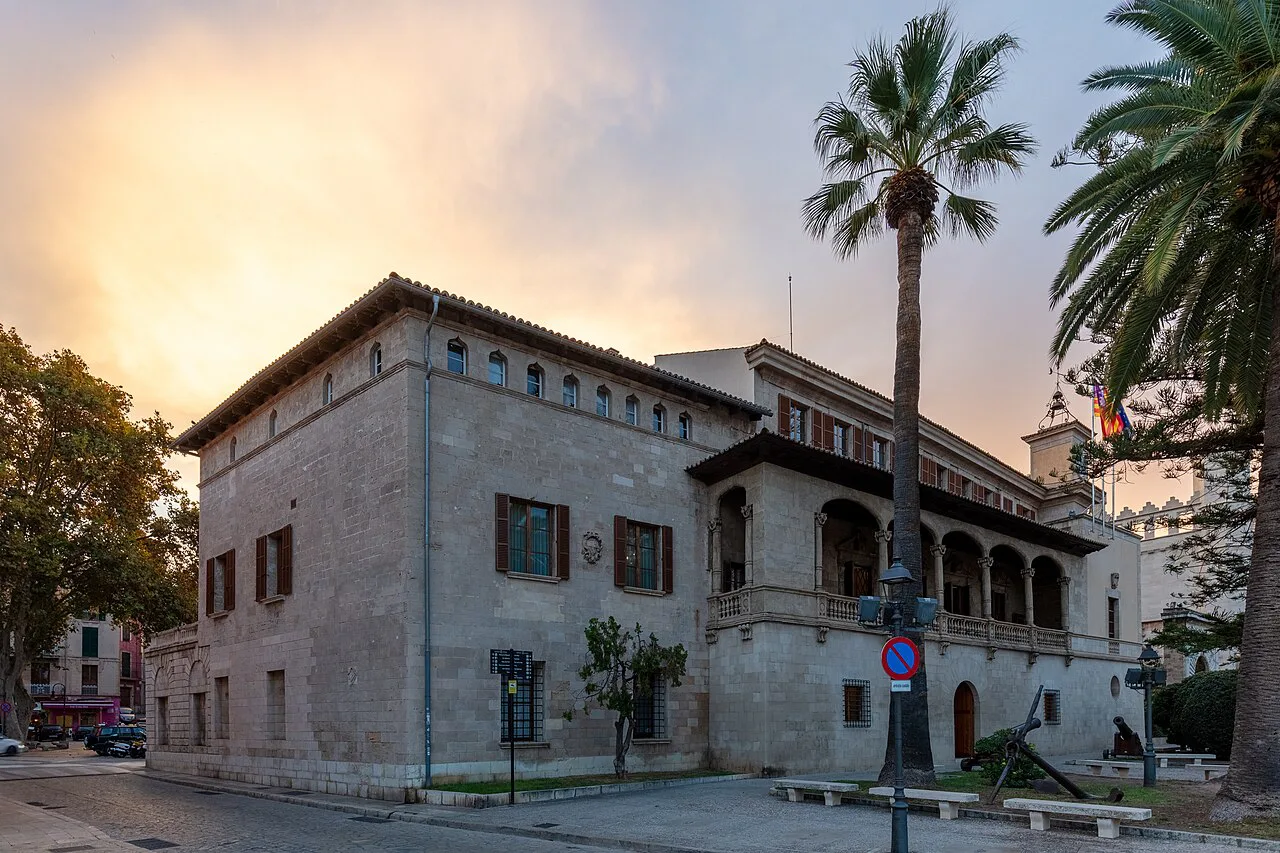
Inside, the hall is a single roof spanned by an ogive dome carried on helicoidal, or spiral, columns, and a garden separates it from the Consulado del Mar, a Renaissance building now used as the headquarters of the regional government. Address it as Plaça de la Llotja, 5, 07012 Palma.
The name is used for both the monument and the surrounding streets, which is why you will see the district written as La Lonja and the building as La Llotja on local signage. Treat the hall as the daytime sight and the lanes as the evening one.
Why visitors come: Gothic architecture by day, bars and restaurants by night
The daytime draw is architectural: a Gothic trading hall you can look at closely without paying cathedral-level attention. The district's second personality is social, a lively area full of restaurants, bars, cafés and clubs that changes character as the evening goes on.
If you want a quiet base for a daytime coffee, this is not the obvious pick; if you want dinner and a drink without walking back across the old town, it is. Decide which of those you are doing before you book a hotel here.
La Lonja itself: Guillem Sagrera's 1426 building
Give the hall twenty to thirty minutes rather than a whole morning. Look for the spiral columns and the single dome, then step outside to compare the Gothic stonework with the Renaissance lines of the Consulado del Mar next door.
Visiting hours and any entry conditions are set by the building's managers, so check the official Mallorca tourism site or the Palma visitor site before you plan a day around going inside.
Nearby sights within a few minutes' walk
The official Palma listings put several major sights very close: Es Baluard, the museum of modern and contemporary art, and Palma Cathedral both around 0.3 km away, and the Palau March Museum and La Almudaina Royal Palace at roughly the same distance. That cluster alone fills a morning.
Slightly further out, the Majorca Museum and the Arab Baths sit a short walk from the hall, with the Convent of San Francisco and the Juan March Foundation Museum a little beyond them. Build a loop that starts at La Lonja, reaches Es Baluard and the cathedral, then returns through the old town.
La Seu cathedral and the lanes around it are covered in more depth in the Old Town Palma guide, which is the natural next stop after the waterfront.

Where to eat and drink in and around La Lonja
For lunch, Café La Llotja is a straightforward stop in the harbour area, reviewed as a pleasant lunch option with good-quality food at reasonable prices. It suits a plate and a coffee between sights rather than a long sit-down meal.
For a broader choice of restaurants and a different pace, Santa Catalina is a short walk west across the old town and works well for an evening meal. If you want fish by the water instead, Portixol is further along the coast and better suited to a separate outing.
Dinner in these streets starts late by British standards: kitchens in Palma typically get going from around 8.30–9pm, so an early evening here is better spent on the architecture or a drink than on a table.
Evening in La Lonja: how the area changes after dark
After dark the grid becomes a going-out district, with bars and clubs filling the lanes and noise carrying into the small streets. It is the liveliest part of the old city for a night out, and it is also the least restful place to sleep if you are an early riser.
The rhythm suits a late dinner followed by drinks within a few minutes' walk of your table. If you would rather eat at 7pm and be in bed by 11pm, look at a quieter part of the city.
Who La Lonja suits, and who should look elsewhere
La Lonja suits travellers who want a Gothic monument, a central location and a night out in the same square kilometre. It is a good base for a short city break where dinner and a drink matter as much as the sightseeing.
It suits less well if you are travelling with small children, need quiet evenings or want a calm hotel to return to. For those, the old town's inner lanes or a seaside neighbourhood will serve you better.
If you are choosing between areas, the three district guides give you a direct comparison of what each one offers.

Getting there and around on foot
La Lonja is a walking neighbourhood: from the cathedral and the Almudaina it is a few minutes downhill, and from the Passeig del Born it is a short stroll towards the water. Wear shoes you can walk in, because the lanes are cobbled and narrow.
Buses and taxis drop you on the edge of the old town rather than in the square itself, so plan on the last stretch on foot. If the waterfront districts are only part of a wider trip, work out how many days in Palma to set aside before you lock in an itinerary. The wider city guide covers the main sights in more detail if you want to string several districts together.
Use the Palma Attractions hub to compare individual monuments before you commit your morning to one of them.
Practical timing: fitting La Lonja into a Palma day
A workable plan is to see the hall and the Consulado del Mar in the morning, walk to the cathedral and Es Baluard before lunch, then eat around 1.30–2pm. That leaves the afternoon for the museums and puts you back in La Lonja for a late dinner.
Because lunch runs from roughly 1.30pm to 4pm and dinner starts from 8.30–9pm, the late afternoon is the awkward gap: use it for the Palau March or a walk along the waterfront rather than hunting for a full meal.
Opening days vary from venue to venue across Palma, and the reliable way to check a specific sight is to look at its own official page before you set out.
Plan Your Visit
Treat La Lonja as a morning monument and an evening district, and the area works well: a Gothic hall on your doorstep and restaurants and bars within a few minutes' walk. Book a hotel here only if late nights suit you.
Line up the cathedral, Es Baluard and La Almudaina for the same day, and eat in Santa Catalina if you want a quieter dinner away from the busiest lanes.
Explore more Palma guides
Frequently Asked Questions
What is La Lonja in Palma?
It is Palma's Gothic guildhall and maritime trade building, completed in 1426 by Guillem Sagrera and standing on Plaça de la Llotja. The name is also used for the streets around it, which are full of restaurants, bars and clubs.
Is La Lonja worth visiting?
Yes, if you want to see one of Mallorca's finest civil Gothic buildings and stay in a central area with plenty of places to eat and drink. Anyone after quiet evenings or a restful base should look at another part of the city.
What is La Lonja like at night?
It is Palma's going-out district, with bars, cafés and clubs filling the lanes and noise carrying into the streets. Plan for a late dinner and drinks close to your table.
Where do you eat near La Lonja in Palma?
Café La Llotja is a straightforward lunch stop in the harbour area with good-quality food. For a wider choice in the evening, walk to Santa Catalina across the old town.
How far is La Lonja from Palma Cathedral?
Around 0.3 km, which is a few minutes on foot through the old town. Es Baluard, the Palau March Museum and La Almudaina are on the same short loop.
When should I visit La Lonja?
See the building in the morning, then eat lunch around 1.30–2pm and return for dinner from 8.30–9pm. Check each venue's own page before you go for that day's visiting details.