
Castillo de San Gabriel: Arrecife's Island Fortress
The Castillo de San Gabriel is a compact fortress on a low rocky islet just off the Arrecife waterfront, and the walk across to it is a ten-minute detour from the town centre. Inside, it houses the Museo de Historia de Arrecife, which sets the fort's guns in the context of the pirate raids that shaped the town's defences. This guide covers the approach, the history that makes the crossing worthwhile, and the waterfront sights within easy walking distance.
What the Castillo de San Gabriel is
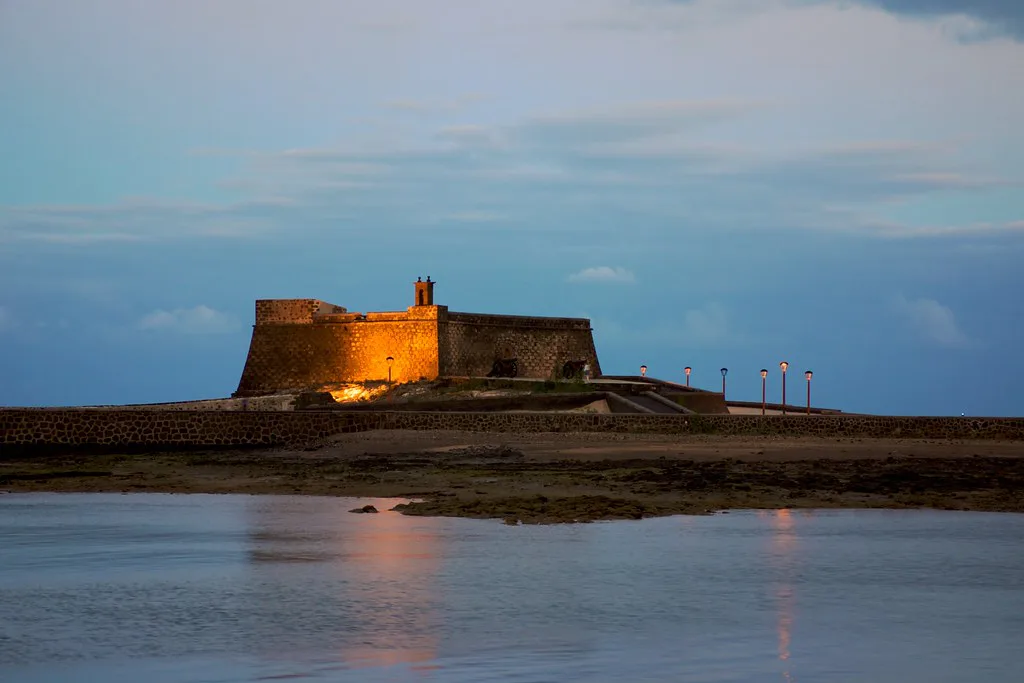
The Castillo de San Gabriel is a small sixteenth-century fortification on an islet in Arrecife, the capital of Lanzarote. It was built to protect the island from pirate attacks, and it now operates as a history museum. The appeal is twofold: the low, thick-walled defensive architecture itself, and the view back across the water to the town it was built to guard.
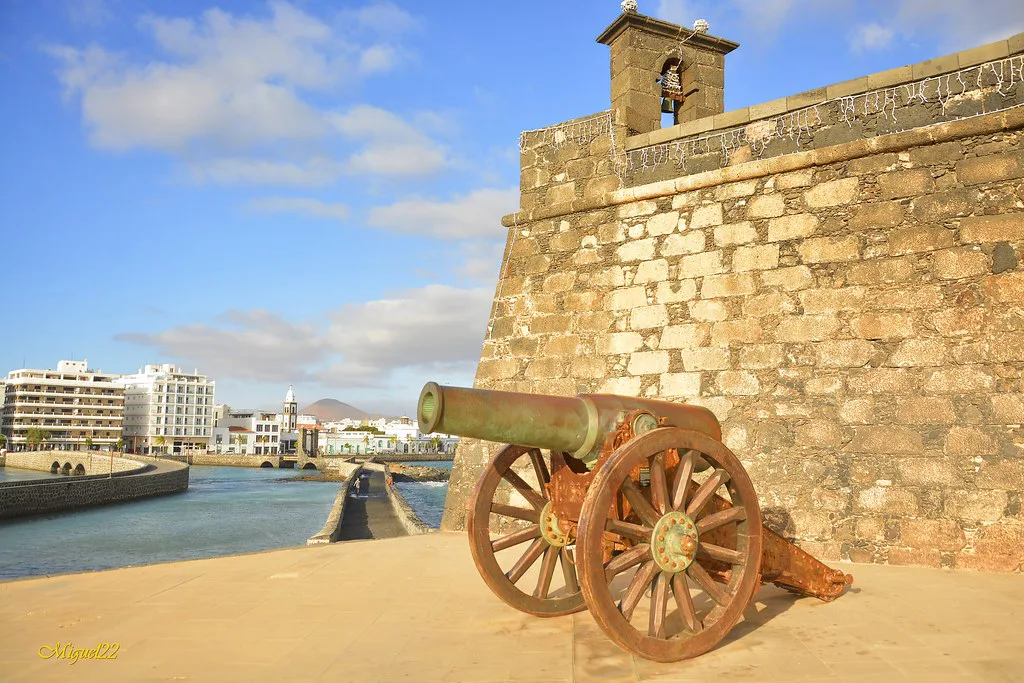
The fortification dates to 1574, when Felipe II's empire was at its height of wealth and reach. Its cannons defended the coast against the raiders that threatened Canary Island ports in this period. Knowing that date helps you read the building: the walls, the low profile and the position on the water all make sense as a gun platform rather than a palace.
Where it is and how to cross to it
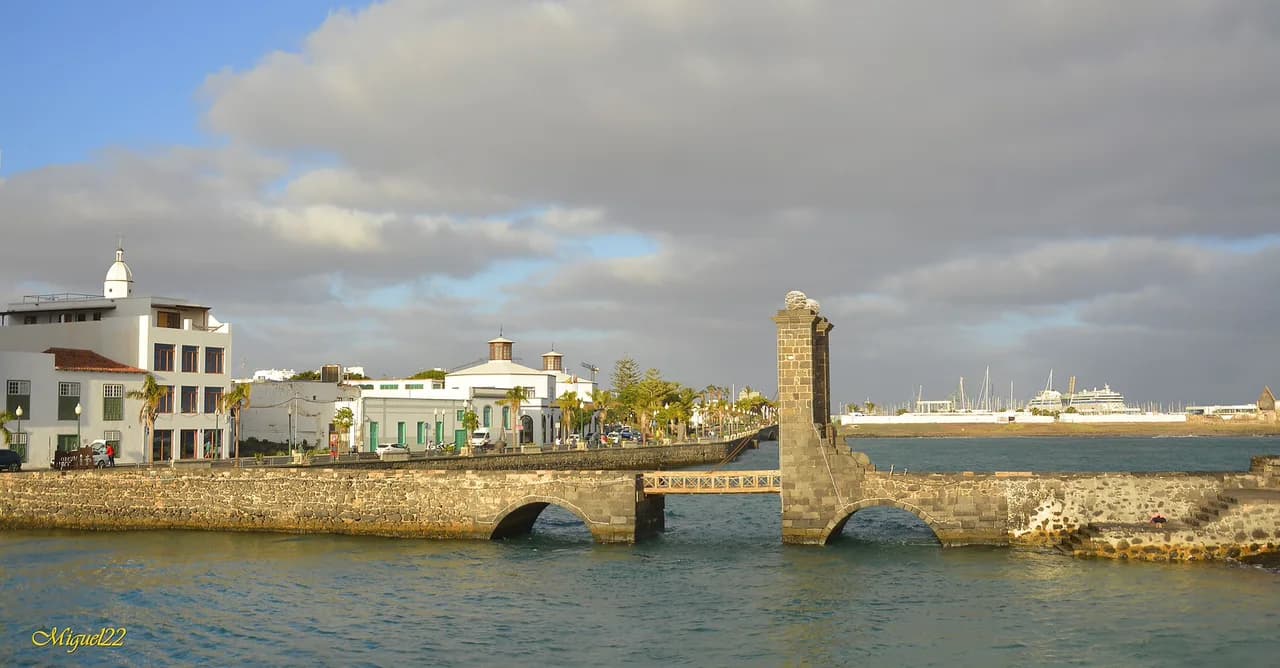
The castle sits on a small island linked to Arrecife by two causeways, so you have a choice of approach on foot. The best-known crossing is the Puente de Las Bolas, a drawbridge whose name comes from the stone spheres on its gateposts. Cross by the drawbridge, look back at the town, and then return by the second causeway so the islet feels like a place rather than a corridor.
Both approaches start from the seafront in central Arrecife, so you do not need a car or a bus to reach the castle. If you are coming from elsewhere on the island, park near the waterfront and walk; the town centre streets around the harbour are tight and better explored on foot. The walk over either causeway is short, flat and exposed to sun and wind, so a hat and a layer are worth packing.
Inside: the Museo de Historia de Arrecife
Within the fortress walls you will find the Museo de Historia de Arrecife, which explains the town's defensive past. The building's own history as a gun position against pirate raids is the reason to go inside rather than simply admire the exterior from the causeway. Read the museum panels first, then walk the ramparts with that context in mind; the two parts of the visit make more sense together than either does alone.
Keep your expectations calibrated: this is a small fortress, not a full-scale castle with towers and halls to wander through. The museum is compact, and the whole interior visit takes far less time than a major Manrique site such as Jameos del Agua, Lanzarote's lava-tube cultural centre in the north of the island. Treat San Gabriel as a forty-minute stop with a good story attached, not an afternoon out. If you're weighing whether the detour is worth it, our guide to things to do in Lanzarote puts it alongside the island's bigger draws.
How long to allow and when to go
Allow about half an hour for the crossing, a look at the exterior and a walk through the museum, plus another twenty minutes if you linger on the walls for photographs. The islet is open to the air, so the middle of the day in summer is hot and the light is harsh; early morning or late afternoon is kinder for both walking and photography. Opening times and entry terms change with the season, so check the current schedule on the Arrecife council page before you set out.
Spanish eating rhythms matter if you plan the castle around a meal. Lunch in Arrecife runs roughly from 1.30pm to 4pm and dinner starts from about 8.30pm to 9pm, so a late-morning castle visit followed by a proper lunch fits the day neatly. If you arrive between those windows, expect kitchens to be closed and plan a coffee instead.
Nearby: Charco de San Ginés and the old town
Charco de San Ginés, the small boat lake at the heart of Arrecife, is a short walk from the castle causeways and makes the trip into town worthwhile. Whitewashed houses ring the water, fishing boats sit at anchor, and the surrounding streets have the unhurried feel of a working capital rather than a resort. Pair the castle with a loop of the charco and you have used an hour or two well; if you are still deciding where to stay on the island, Lanzarote Neighborhoods sets out the main areas.
Arrecife repays a slow walk: the old town lanes, the harbour front and the Castillo de San Gabriel together give you a compact, walkable half-day that most Lanzarote visitors skip in favour of the beaches and volcanoes. If you are based in one of the resorts, this is the easiest way to see the island's capital without a full day out. Lanzarote Neighborhoods gives you the wider picture of where to base yourself on the island.
Combining the castle with the rest of Lanzarote
The castle is an Arrecife stop, not a standalone day out, so build it into a day that includes the north or south of the island. In the north, the Cueva de los Verdes lava tube and Mirador del Río's clifftop viewpoint sit close together and pair naturally with a morning in the capital. Inland, Timanfaya National Park, Lanzarote's volcanic heart, is the island's headline sight and best visited early before the car parks fill. For a fuller list of coastal stops and excursions like these, see things to do in Lanzarote.
For a full plan of the island's castles, caves and viewpoints, Lanzarote Attractions covers six visitor guides in one place. The Castillo de Santa Bárbara, on its volcano above Teguise, is the counterpoint to San Gabriel: a hilltop fortress rather than a maritime one. Seeing both gives you the two defensive positions that guarded the island's old capital and its port. If you'd rather plan your days around beaches and resorts than fortresses, our Lanzarote Neighborhoods guide covers the main areas to stay.
Plan Your Visit
The Castillo de San Gabriel suits travellers who want a short, historic stop in Arrecife with a sea view and a story, rather than a ticketed attraction that eats a morning. Walk over by the Puente de Las Bolas, see the museum, and loop back through the Charco de San Ginés waterfront. It is the most efficient way to give Lanzarote's capital an honest hour of your trip.
Frequently Asked Questions
Where is the Castillo de San Gabriel in Lanzarote?
It stands on a small rocky islet just off the waterfront in Arrecife, Lanzarote's capital, linked to the town by two causeways. The Puente de Las Bolas drawbridge is the best-known approach.
How do you reach the Castillo de San Gabriel?
Walk. Both causeways start from the seafront in central Arrecife, so no car or bus is needed once you are in town. The crossing is short and flat.
What is inside the Castillo de San Gabriel?
The fortress houses the Museo de Historia de Arrecife, which explains the town's defensive past against pirate raids. The building itself is a compact sixteenth-century gun platform rather than a large castle.
How long do you need at the Castillo de San Gabriel?
Allow about half an hour for the crossing, the exterior and the museum, plus another twenty minutes if you stop for photographs on the walls. Most visitors combine it with a walk around the Charco de San Ginés waterfront.
Is visiting Arrecife worth it for the castle?
Yes, if you treat it as part of a walkable half-day in the capital rather than a destination in itself. The castle, the boat lake at Charco de San Ginés and the old town lanes sit close together.
When should you visit the Castillo de San Gabriel?
Early morning or late afternoon is more comfortable, because the islet is fully exposed to sun and wind. Opening times and entry terms change with the season, so check the current schedule on the Arrecife council page before you go.