
Timanfaya National Park, Lanzarote: What to See and How to Visit
Timanfaya National Park is the volcanic core of Lanzarote, a 51 km² protected landscape of craters, ash and solidified lava that became a national park in 1974. Visits work around a guided bus circuit that leaves from Islote de Hilario, because private vehicles cannot freely circulate inside the park.
Allow two to three hours for the bus circuit, the thermal demonstrations at Islote de Hilario and a stop at the Montaña Rajada viewpoint. If you want to walk the lava fields with a ranger instead of just rolling past them, budget a good part of a morning or afternoon on top of that.
What Timanfaya National Park is and why it looks like this
The landscape comes from one of the most significant volcanic episodes in world volcanism. Emissions began on 1 September 1730 and stopped on 16 April 1736, burying fertile cereal plains and villages such as Santa Catalina, Tingada and Maretas under lava, slag and ash; a second phase in 1824 formed the Tinguatón, Tao and Chinero volcanoes, the last of which sits inside today's park boundary.
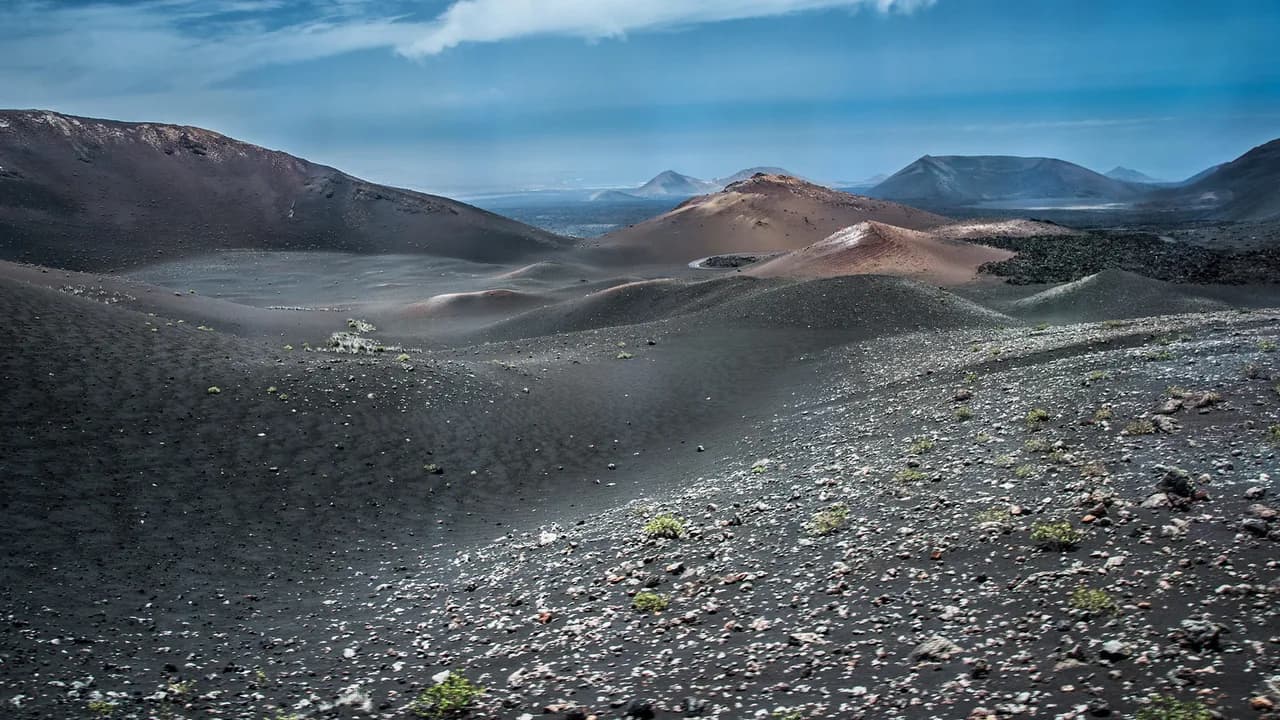
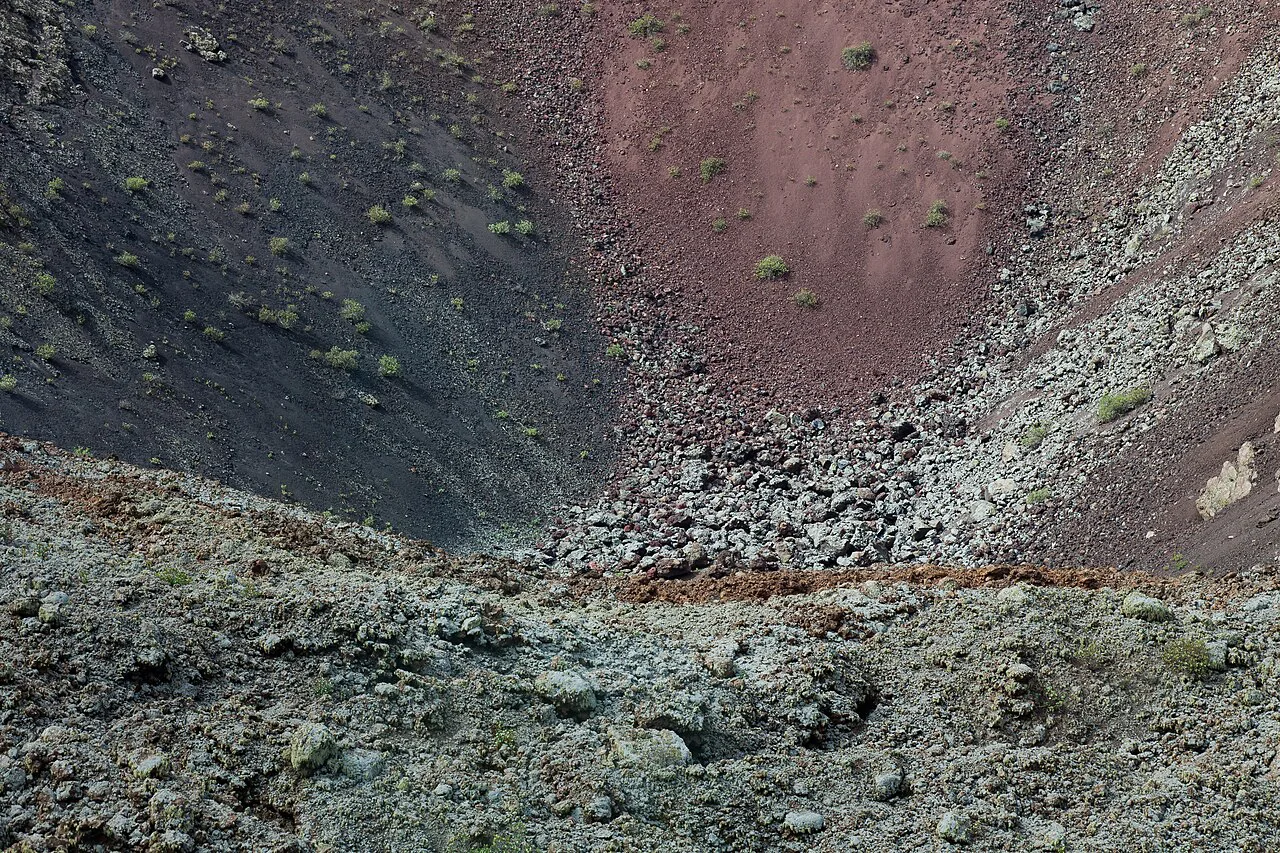
The result is a lunar plain of red, black, ochre and grey soils, with lichen beginning to colonise ground that is only a few centuries old. Timanfaya is the only Canary Islands national park that reaches the sea, and its geomorphology includes lava tubes, hornitos, lava seas and volcanic bombs.
Where the park is in Lanzarote and how to get there
The park occupies the south-west interior of Lanzarote, largely within the municipality of Tinajo, whose tourist office is based in the village itself. Arriving by hire car is straightforward, but you park at the visitor area and continue on the park's own transport rather than driving the volcano route yourself.
Guided bus tours along the Volcanoes route depart from the Devil's restaurant, and free circulation of private vehicles inside the park is restricted to protect the delicate landscape from crowding. Plan the bus circuit as a fixed part of the day rather than an optional extra.
If you are staying elsewhere on the island, check the coach company's pick-up points and departure times when you book, and confirm the route with the Tinajo tourist office if you are driving independently. A coach tour removes the parking question entirely.
How visiting works: the guided bus route from Islote de Hilario
The Volcanoes route is a guided coach circuit that starts and ends at Islote de Hilario, on the hottest ground in the park. You stay with the bus for the loop through the lava fields, so the visit is a structured ride rather than a self-guided drive.
The circuit is short and the main constraint is queueing for your slot, especially in the middle of the day. Arriving early or late in the afternoon is the practical way to spend less time standing and more time looking at craters.
Islote de Hilario: the thermal demonstrations and the Devil's restaurant
At Islote de Hilario the ground heat is visible: water poured into buried tubes erupts as a steam geyser because a residual magma chamber lies about three kilometres down, pushing surface temperatures to between 100 and 200 degrees Celsius. The demonstrations are the reason this spot, rather than a crater rim, is the park's focal point.
The restaurant building here is a point of interest in its own right. Conceived in the strategy of Lanzarote artist César Manrique to protect and frame the island's landscapes, it was designed with a technical project drawn up by architect Eduardo Cáceres in 1966, and its circular floor, glazed viewing walls and carved stone cladding were engineered by Jesús Soto so that heat could escape through a central oven and side vents.
Treat the building as part of the visit rather than only a lunch stop: look at how the stone cladding tries to sit in the lava field, and at the heat vents that make the structure work. The name comes from the infernal heat rising from below.

Walking with a ranger versus the bus route
The bus route suits anyone short on time or travelling with people who cannot manage rough ground: you see the lava sea, craters and colour changes without walking far. The trade-off is that you view the landscape through windows and at the pace of the circuit. If this is your first visit, it pairs well with the wider list of things to do in Lanzarote once the park day is done, and it is worth knowing how the park sits within the island's areas by reading the Lanzarote Neighborhoods guide before you plan transfer times.
Ranger-led hikes are the slower option, giving you time on foot in terrain the bus only skirts. Choose by appetite: the bus if you want the highlights with minimum effort, a ranger walk if you would rather understand the geomorphology up close and accept a longer, more exposed day.
How much time to allow and what to wear
Two to three hours covers the bus circuit, the thermal demonstrations and a viewpoint stop comfortably. Add more if you are walking with a ranger, eating at the restaurant or combining the park with other stops in Tinajo.
The lava field is exposed and reflects heat, so bring sun protection, water and a layer for the wind even on warm days. Sturdy shoes matter if you are walking; on the bus route, closed shoes are still the sensible choice for the uneven ground around Islote de Hilario.
If your day continues north, the Cueva de los Verdes lava tube and the Jameos del Agua are natural pairings with a volcanic morning, both shaped by the same island geology.
Tickets and opening hours: where to check before you go
Ticket prices, opening hours and any seasonal closures are set by the park and its concession operator, so confirm them on the official park pages and with your tour operator before fixing your day. Book the bus circuit or ranger walk in advance in peak season, when slots fill.
The Tinajo tourist office can confirm access arrangements and local conditions if you are driving to the park yourself.
Nearby: Montaña Rajada viewpoint and the Tinajo visitor information
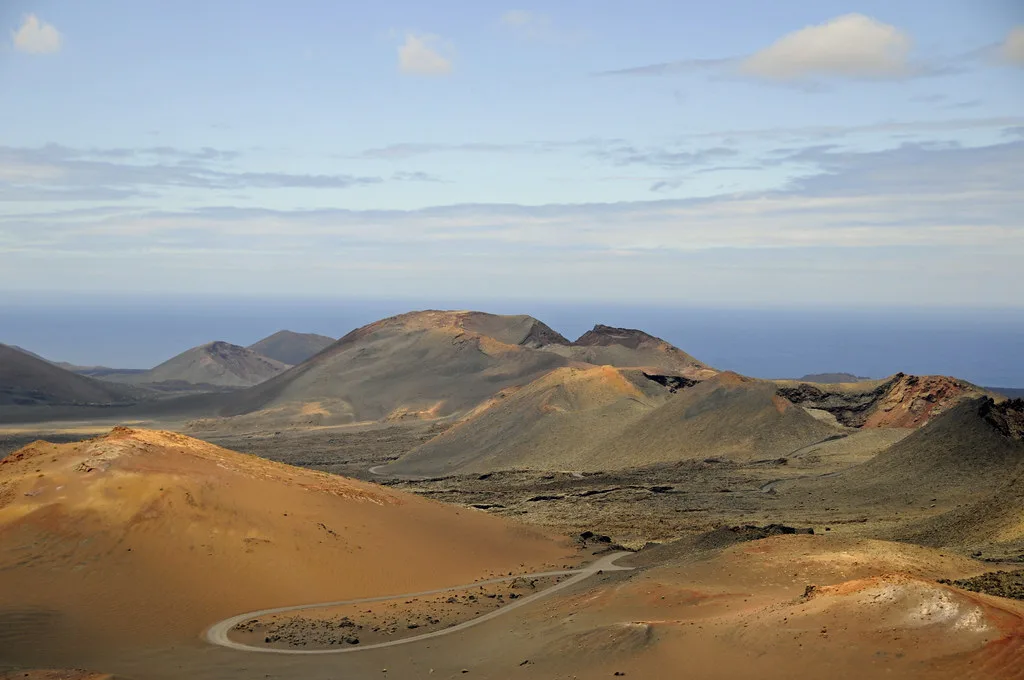
From the natural viewpoint of Montaña Rajada, at 350 metres, the lava sea stretches out towards the coast in one of the widest views on the island. It is the place to see the scale of the 1730s flows after the bus circuit has shown you their texture.
Tinajo's own heritage gives the surrounding area more to see, from its colonial church to old fortifications converted into lookout points. The municipality also publishes walking routes and local food information for visitors extending their day beyond the park.
North of the park, the Mirador del Río puts the archipelago in perspective from the cliff edge above the water.
Common mistakes and honest trade-offs
The biggest planning error is assuming you can drive the volcano route yourself: private vehicles are restricted inside the park, so build the guided bus into your timetable instead of a self-drive loop. The second is arriving at midday and losing an hour to queues.
Expect a managed, busy experience at Islote de Hilario rather than solitude, and choose a ranger walk if that matters to you. The landscape still delivers: the colour range, the steam geysers and the sheer extent of the lava sea are unlike anywhere else in the Canary Islands.
Plan Your Visit
Fix your day around the guided bus circuit from Islote de Hilario, add the thermal demonstrations and the Montaña Rajada viewpoint, and you have seen the park properly in half a day. Walkers should swap the bus for a ranger-led route and allow longer.
Check the official park pages for current tickets, hours and any closures before you travel, then build the rest of your island days around the lava country rather than treating it as a quick stop.
Frequently Asked Questions
Can you drive up Timanfaya National Park yourself?
Not freely. Guided bus tours along the Volcanoes route depart from the Devil's restaurant, and free circulation of private vehicles inside the park is restricted to protect the landscape. You drive or take transport to the visitor area and continue on the park's guided circuit.
What is the volcano called on Lanzarote?
The park's landscape comes from the 1730–1736 eruptions and a second phase in 1824 that formed the Tinguatón, Tao and Chinero volcanoes. Chinero sits within the current park boundary. The wider volcanic field is what people mean by the Timanfaya volcanoes.
How long does it take to visit Timanfaya National Park?
Allow two to three hours for the guided bus circuit, the thermal demonstrations at Islote de Hilario and a viewpoint stop. Add more time if you are joining a ranger-led walk, eating at the restaurant or combining the park with other stops in Tinajo.
What should I wear to Timanfaya?
The lava field is exposed, so bring sun protection, water and a windproof layer, plus sturdy closed shoes for uneven ground. Walkers should wear proper walking shoes and carry more water than they think they need.
How much does it cost to go to Timanfaya National Park?
Ticket prices vary by entry type and operator, so check the official park pages and your tour operator's booking page for the current rate before you commit to a day. Booking ahead matters in peak season, when slots fill.
Is the bus route or a ranger walk better?
The bus route is the efficient way to see the craters and lava sea with minimum effort, but you view much of it through windows. A ranger-led walk is slower and more exposed, but gives you time on foot in the terrain.