
Jameos del Agua: a visitor's guide to Lanzarote's volcanic cave
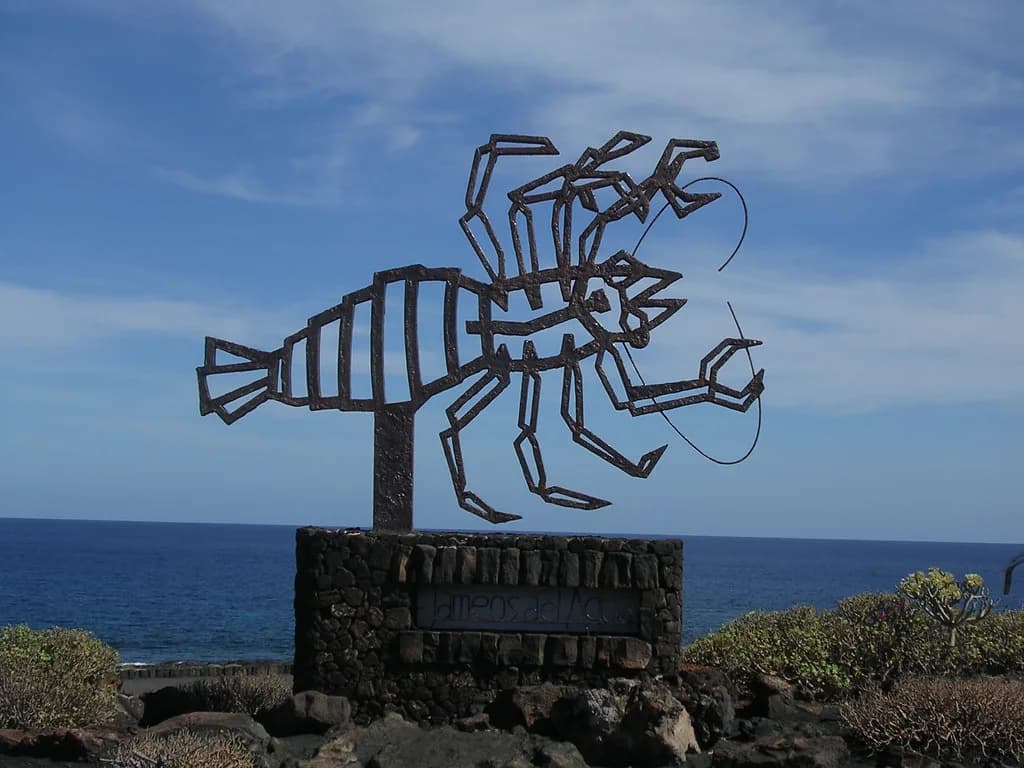
Jameos del Agua is a volcanic tunnel in Haría in northern Lanzarote that César Manrique transformed into an arts, culture and tourism centre, and the visit is built around three things: the cave lake, the turquoise pool in the rock and the auditorium inside the grotto. It is a designed visitor attraction rather than a wild cave or a beach stop, so you go to look, walk through and take it at an unhurried pace.
It sits on Carretera de Órzola in Haría, the road that carries on north to the port of Órzola, which makes it easy to pair with the north of the island rather than treat it as a separate trip from the southern resorts. Arrive knowing what you are paying for, and treat the CACT Lanzarote site as the page to confirm the day, the time and the ticket before you set off.
What Jameos del Agua is
The centre occupies a section of volcanic tube in Haría, and César Manrique shaped it so that the route joins art and nature rather than keeping them apart. The address is Carretera de Órzola, 35500 Haría, Lanzarote, with the contact number +34 928 84 84 84 and the site cactlanzarote.com given for details. Spain's official tourism portal lists Jameos del Agua as a Centro de Arte, Cultura y Turismo, which is the right frame for what you will see: built elements set into the rock rather than a natural cave you wander freely.
Because it is a visitor centre, expect a defined route and a ticket rather than open access to the tunnel. That matters most if you are travelling with young children or with someone who finds steps, low light or uneven ground difficult: plan the visit as a sight, not as a quick roadside stop.
Where it is and how to get there
Jameos del Agua lies in the municipality of Haría, in the north of Lanzarote, on the road towards Órzola. From the southern resort areas you drive north across the island, and the last stretch runs on the Órzola road; allow for the journey before you commit to a timed entry, because the northern roads take longer than the map suggests. Where you sleep shapes that drive, so compare the options in these Lanzarote Neighborhoods: 3 Area Guides before fixing your base.
A car gives you the most freedom here, since the site sits on a rural road rather than in a town centre, and it lets you combine the visit with the rest of the north in one loop. If you are relying on public transport or a coach tour, fix your return leg before you go in, as services on this stretch of the island are thin and the day fills quickly.
The cave lake and the blind albino crabs
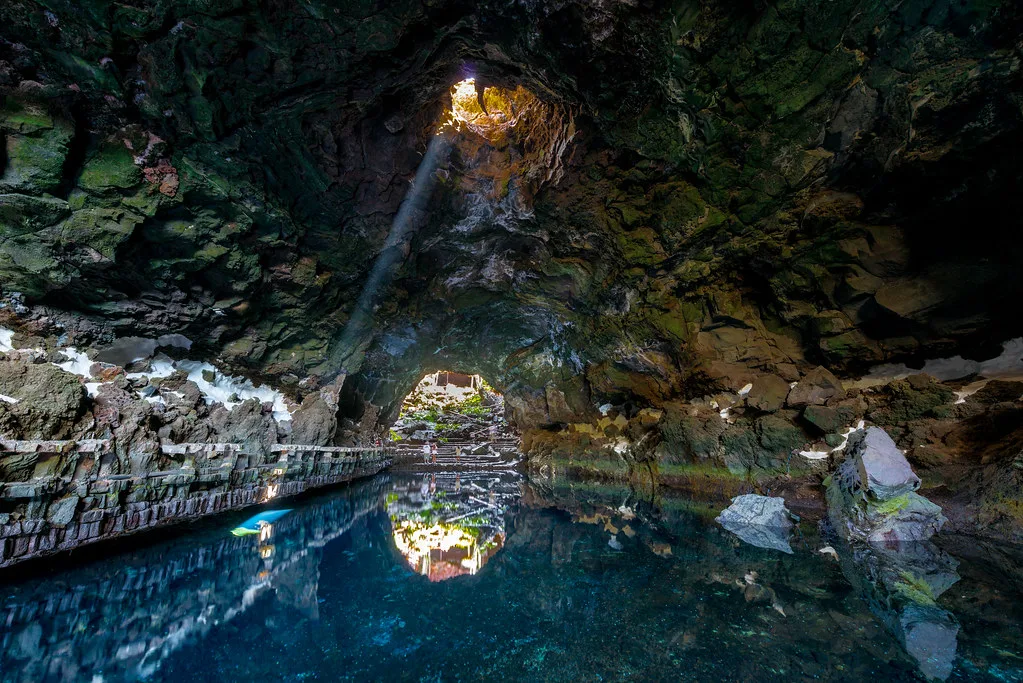
Inside the centre is a natural lake that lies in contact with the sea, and in it lives an endemic species of very small crabs that are albino and blind. Look for them at the edge of the water rather than in the middle of the lake, where the scale of the chamber makes them almost invisible. The lake is the first of the three things to seek out, and it sets the tone for the rest of the route.
Keep voices low and don't lean over the water: the chamber is the point, and the crabs are small enough that a careless hand or a dropped object does real harm. Photography without flash gives you a better record of the lake than a burst of light on wet rock.
The turquoise pool and the tunnel route
Past the lake the route brings you to a pool of turquoise water set into the volcanic rock, one of the images most associated with the centre. The walk continues through the tunnel, so the visit reads as a sequence of framed views rather than one single chamber: rock, water and planted edges in turn. Give yourself time to stop at each opening instead of walking straight through.
The tunnel is part of the same volcanic system that shapes this part of northern Lanzarote, and the Manrique treatment is what turns it into a route you follow rather than a cave you explore. Wear shoes with grip, since the surfaces are rock and can be damp, and carry a light layer even on a warm day because the interior stays cool.
The auditorium and the Tunnel of Atlantis
The centre contains the only auditorium in the world inside a volcanic grotto, with capacity for 550 people, alongside the Tunnel of Atlantis. The auditorium is the third thing to look for after the lake and the pool, and the seating in the rock is the detail most visitors remember. Check what is on before you travel if you want to attend something rather than simply see the space.
Events and performances are scheduled separately from ordinary visiting, and the CACT Lanzarote site is where the programme and the ticket terms appear. If a performance is the reason for your trip, build the rest of the day around it rather than the other way round.
How long to allow
The route through Jameos del Agua is compact and most visitors walk it in well under two hours, which makes it a half-day anchor rather than a full day out. That timing leaves room for a second stop in the north, and it suits a morning start before the coach parties build up. Treat the visit as one part of a northern loop: the centre first, then the road on towards Órzola and the coast, and browse the wider things to do in Lanzarote if you still have a day to fill.
If you want the cave lake and the auditorium to yourself, go early in the day and avoid the middle hours when organised tours tend to arrive. The site's published opening times are the thing to check before you plan around a quiet slot; confirm the current timetable and any seasonal change with CACT Lanzarote.
Tickets, opening times and booking
Tickets, opening times and booking rules for Jameos del Agua are published by CACT Lanzarote, the island's centres of art, culture and tourism body, and that is the page to check before you travel. Buying ahead matters most in peak season and at weekends, when timed entry can sell out. The ticket usually covers entry to the centre rather than a guided tour, so read what is included before you pay.
Third-party listings for the site are worth treating with caution: one well-known review page has carried opening hours that contradict its own weekly pattern, so don't plan a day around a scraped timetable. Go to the official CACT Lanzarote site for the day's opening, the last entry time and any closure, and check again the day before you drive north.
Nearby: the Cueva de los Verdes and the road to Órzola
The Cueva de los Verdes is the natural pairing with Jameos del Agua: both sit in the same volcanic tunnel system in the north, and visiting them on the same day saves you a second drive. The two are close enough that you can see one in the morning and the other after lunch, though each has its own ticket and its own entry arrangements.
Carry on north afterwards and the road runs to Órzola, the small port at the top of the island where ferries leave for La Graciosa. The Mirador del Río, another Manrique viewpoint, sits on the cliffs above the strait and takes the same northern day, so plan the order before you set off.
For a full island plan, the broader set of Lanzarote Attractions: 6 Visitor Guides puts the volcanic sites, the castles and the island's other stops in context, so you can see where the north fits against the south. If the weather turns, the interior sites hold up better than the coast and make a sensible substitute for a beach day.
The south of the island is a different day entirely: Timanfaya National Park and its Islote de Hilario restaurant sit in the volcanic heart of the island and are worth a separate trip rather than squeezing into the same afternoon. If you are weighing up the volcanic sights before you commit, our guide to the things to do in Lanzarote covers Timanfaya and the rest of the island's stops. Deciding where to base yourself for those southern days is easier with a look at the Lanzarote Neighborhoods: 3 Area Guides.
Practical points for the visit
Wear closed shoes with grip, bring water and a light layer, and leave the pushchair at home if you can: the route involves rock surfaces and changes of level that make wheels awkward. The centre is a cultural sight rather than a beach stop, so don't plan to swim, sunbathe or eat a full meal on site. A hat and sunscreen still matter, since the car park and the approach are fully exposed.
If anyone in your group has limited mobility, check access arrangements with CACT Lanzarote before booking, because the tunnel and the auditorium are set into rock and the route is not a simple flat loop. Parents with small children should plan the visit for a calm slot rather than the middle of a long day, as the lake and the low light hold attention for a shorter time than the drive north takes.
Is it worth it, and who will enjoy it most
Jameos del Agua rewards travellers who are interested in César Manrique's work and in how a natural feature can be turned into a designed space: the lake, the pool and the auditorium are the three reasons to go. It is less rewarding for anyone hoping for a wild caving experience, a long walk or a beach, because the route is short and structured. Set your expectations at a cultural visit and it delivers.
The best time to go is early in the day, outside the busiest hours and outside the peak summer weeks if your dates allow it. Anyone combining it with the Cueva de los Verdes, Órzola and the Mirador del Río should plan a full morning and an early lunch, rather than turning the northern drive into a race against closing time.
Plan your visit
Jameos del Agua works best as the anchor of a northern Lanzarote day: the cave lake and its blind albino crabs, the turquoise pool and the auditorium in the grotto, then the road on towards Órzola with the Cueva de los Verdes and the Mirador del Río as companions. Give it a morning, arrive early and confirm tickets and opening times with CACT Lanzarote before you drive north.
Explore more Lanzarote guides
Frequently Asked Questions
Where are the Jameos del Agua?
They are in the municipality of Haría in northern Lanzarote, on Carretera de Órzola, the road that continues north to the port of Órzola. That puts them on the same route as the Cueva de los Verdes and the Mirador del Río, so most visitors reach them by car as part of a northern loop rather than from a nearby town on foot.
What can you see inside the Jameos del Agua?
The visit is built around a natural cave lake connected to the sea, where tiny blind albino crabs live, a turquoise pool set into the volcanic rock, and an auditorium inside the grotto with seating for 550 people, along with the Tunnel of Atlantis. César Manrique shaped the site as an arts, culture and tourism centre, so the route links the rock with designed elements rather than leaving it as a raw cave.
How long does a visit to the Jameos del Agua take?
The route is short and most people are through it in well under two hours, which makes it a half-day anchor rather than a full day out. Extra time goes on the drive north and on a second stop such as the Cueva de los Verdes or the Mirador del Río. Early in the day is calmer than the middle hours, when organised tours tend to arrive.
Do you need to book Jameos del Agua tickets in advance?
Booking ahead is sensible in peak season and at weekends, when timed entry can sell out. Tickets, times and booking rules are published by CACT Lanzarote, and that is the page to check rather than a third-party listing, some of which carry timetables that contradict themselves. Read what the ticket covers before you pay, as entry and guided visits are sold separately.
How do you get to the Jameos del Agua from the resorts?
By car is the most practical way: from the southern resorts you drive north across the island and join the Órzola road, allowing for the journey before committing to a timed entry. Coach tours cover the site from the main resorts, and if you rely on public transport, fix your return leg before you go in, as services on this stretch of the island are thin.
What is nearby to see after the Jameos del Agua?
The Cueva de los Verdes sits in the same volcanic tunnel system and pairs naturally with it on the same morning. The road continues north to Órzola, the port for ferries to La Graciosa, and the Mirador del Río on the cliffs above the strait rounds off a northern loop. Timanfaya National Park and the southern sights are a separate day.