
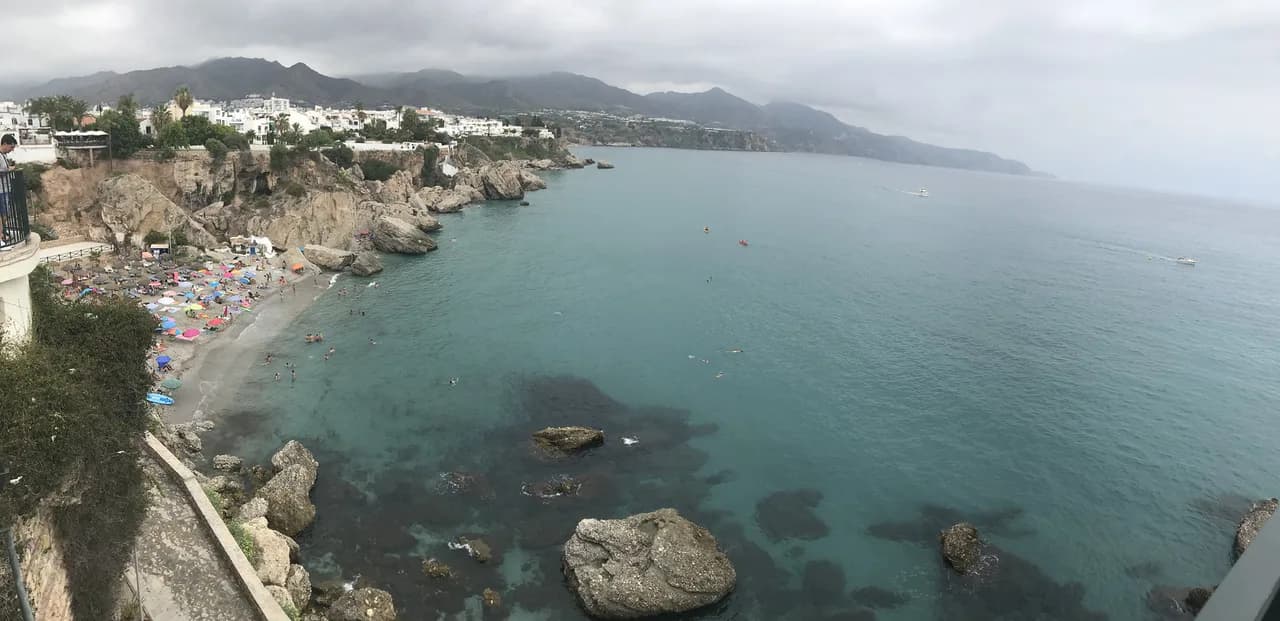
Museo de Nerja: what to see, how long it takes and what it costs
The Museo de Nerja is a small town-history museum on Plaza de España in the centre of Nerja, run by the Fundación Cueva de Nerja. It is not the cave: the Cueva de Nerja sits outside town at Ctra. de Maro, while the museum sits in the old streets and explains the place from prehistory to the present.
Allow about 60 to 90 minutes inside, and treat it as a morning or early-afternoon stop that leaves the rest of the day free for the beach or the centre. The museum closes on Mondays for most of the year, so plan it around your other Nerja days rather than slotting it into a Monday.
What the Museo de Nerja is
This is a modern, well-adapted museum devoted to the history of the municipality and to the archaeological work inside the Cueva de Nerja. Its permanent display runs through five rooms, using archaeological and ethnographic pieces, historical photographs, maps and models, plus video and explanatory panels.
The distinction matters for planning. A cave ticket buys you a walk through huge underground chambers; the museum buys you context, objects recovered from the cave and material from galleries closed to the public. Doing both, ideally the museum first, makes the cave far easier to read.
Where it is and how to get there
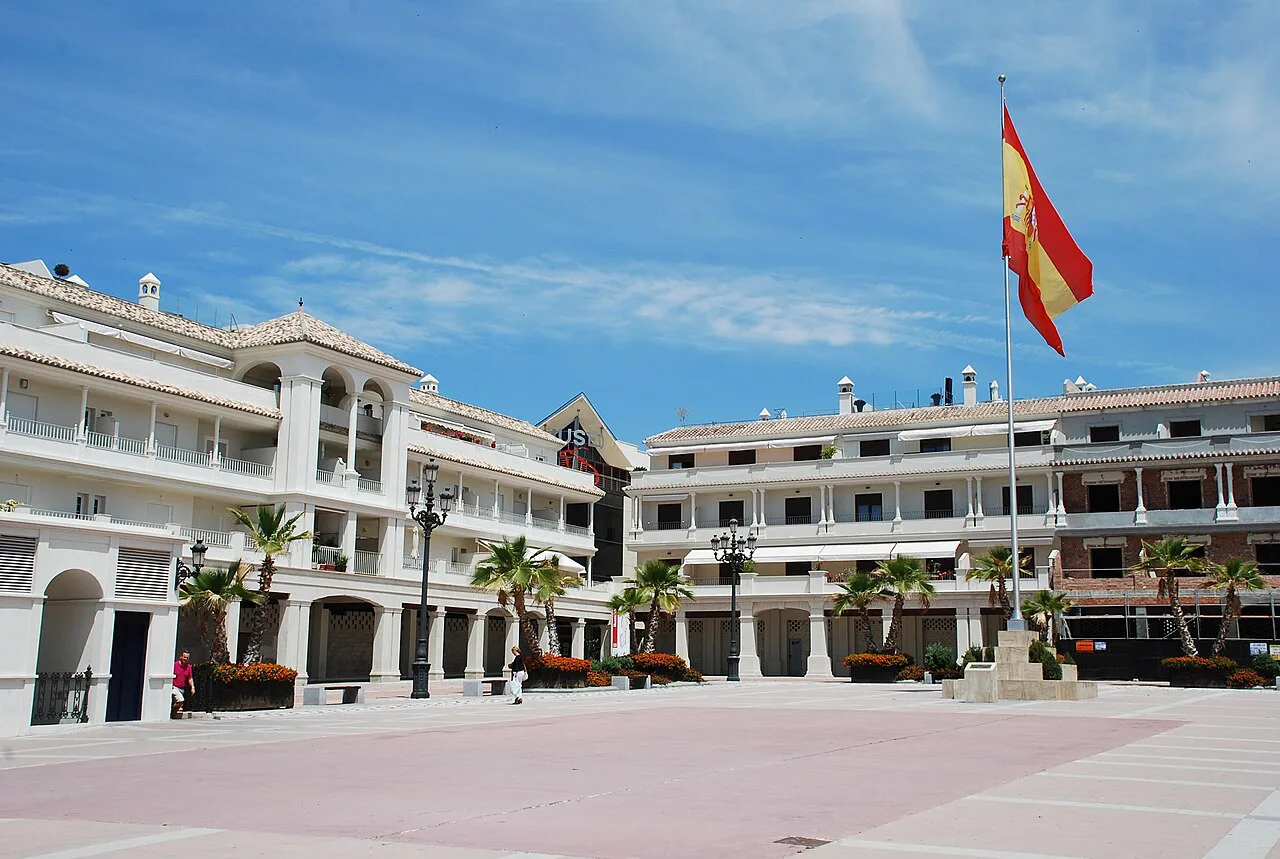
The address is Plaza de España, 4, 29780 Nerja, Málaga, which puts it in the heart of the town a short walk from the seafront streets and the Balcón de Europa. If you are staying in the centre, you can reach it on foot without a car or a bus.
Coming from the coast road, buses and taxis drop you within a few minutes' walk of the square, and the museum is a sensible add-on to a morning in the old town. For a wider look at how the town fits together, see the Nerja Attractions: 4 Visitor Guides collection before fixing your days.
Opening hours
The museum publishes its 2026 schedule as Tuesday to Sunday, 10:00 to 16:00, with Mondays closed for most of the year. From 1 June to 30 September it opens Monday to Sunday on the same 10:00 to 16:00 timetable, and the last visit begins 30 minutes before closing.
That 16:00 close makes it a morning museum, not an afternoon one. Ignore any listing that quotes a 17:00 finish; the museum's own published timetable is the one to plan around, and it is short enough that arriving after 15:30 leaves you rushed.
Tickets and prices
Online 2026 prices are €5 for general admission over 14, €4 for children aged 3 to 13, and free for 0 to 2 year olds. Concessions for visitors with functional diversity, over-65s and holders of the European Youth Card are €4 online, with the qualifying card requested on entry. Buying at the museum ticket office adds €1 to each of those online rates.
The detail most visitors miss: a Cueva de Nerja ticket makes the museum free for 10 days from the date on that ticket. If you are seeing both, buy the cave ticket and keep it, and book the cave for a day when the museum is open.
Tickets are transferable and carry no expiry date, which takes the pressure off a washed-out day. Free tickets issued alongside a cave ticket are the exception, valid for those 10 days only.
What's inside: the five rooms and the route
The permanent exhibition is laid out over five spaces: a mezzanine with an introductory video, a first floor, a second mezzanine, a second floor, and a basement reached by lift. The route is sequential, starting with the video and climbing through the town's history before dropping downstairs to the cave material.
Signage, panels and video make it easy to follow without a guide, and the whole circuit is adapted for wheelchairs and pushchairs. A route that runs vertically through a building also means stairs at points, but the lift connects the floors.
The history rooms: Phoenicians to the 16th century
Floor 1 runs through the local sequence from the Phoenicians to the 16th century, with the Roman and andalusí periods given particular weight. That is where the founding of both Nerja and Maro is explained, which gives useful background before you walk the streets outside.
If you only have half an hour, this floor and the basement carry the most substance for a first-time visitor. The material is displayed as objects, documents and models rather than as a text-heavy timeline.

The 18th-century room
The second mezzanine covers 18th-century Nerja: the story of the Ermita de Nuestra Señora de las Angustias, the illustrated-era figure Manuel Centurión and his paper factory, and old cartography of the town and its coast. The granting of the Libro del Privilegio by Queen Juana I, later ratified by King Felipe V, is explained here too, along with the municipal coat of arms.
This is the room that makes sense of the town's civic identity, so it is worth slowing down for if you plan to visit the church in the centre afterwards. The Iglesia de El Salvador, Nerja sits nearby and rounds off the picture. If you compare town-history museums elsewhere, the Museo de Segovia covers the same civic ground for a different city.
The contemporary room
Floor 2 takes the story into modern Nerja: sugar cane, the Sierra as a source of supplies and a setting for historical events, the discovery of the Cueva de Nerja and its scientific and tourist importance. There is also a section on Nerja as a film location from the 1940s onwards, with the series Verano Azul singled out, plus the growth of tourism and three centuries of urban change.
Two objects here are tied to major world events, a reminder that a small coastal town can sit inside a much larger story. For most visitors this floor is the quickest to walk through, but it explains why the town looks the way it does.
The basement: Pepita and the cave finds
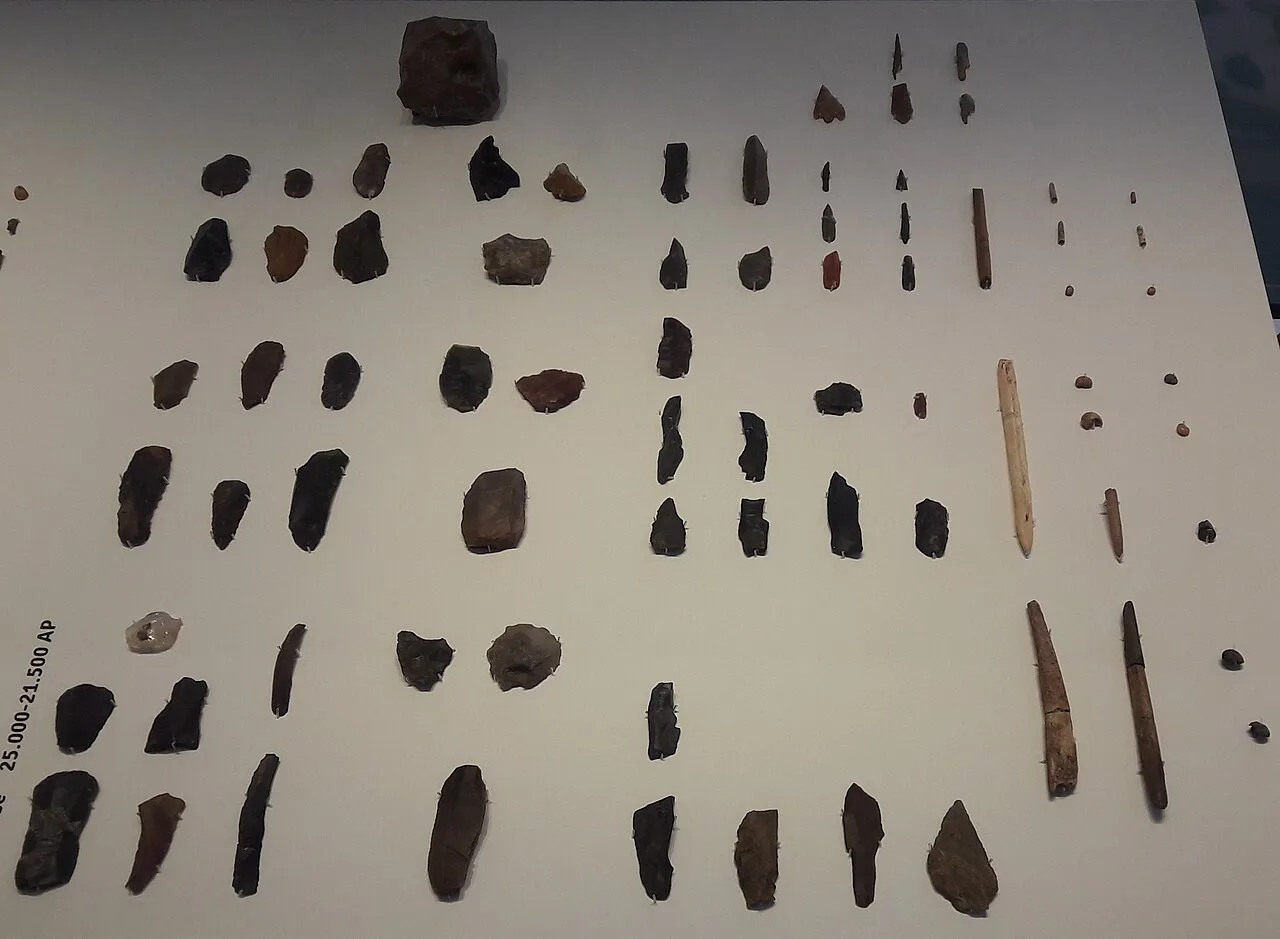
Down on floor -1 the museum displays material from the Cueva de Nerja investigations: stone and bone tools, ornaments, a collection of Neolithic and Chalcolithic pottery, and models of prehistoric figures. The centrepiece is Pepita, an epipalaeolithic skeleton more than 9,900 years old shown with a facial reconstruction, along with reproductions of rock paintings.
This floor is the reason to visit the museum before the cave rather than after. The objects and the reconstruction give the cave chambers a human scale that the bare rock, however spectacular, cannot supply on its own.
The cave video and the galleries you cannot enter
A video in the basement tells the story of the cave's discovery in 1959 and the research since, including footage of places closed to visitors for conservation reasons. The Galería Alta, the Galería Nueva and the painted galleries fall into that category, so this screening is the only way most visitors will see them.
Watch it before you go out to the cave, not after. It reframes the visit from a walk through a big chamber into a look at an active archaeological site with a long research history.
The Sala Ana María Márquez: free temporary exhibitions
The museum has a temporary exhibition room, the Sala Ana María Márquez, showing painting, drawing, printmaking, photography, sculpture and history displays by artists from Nerja, the Axarquía and further afield. Entry to these temporary exhibitions is free.
The programme changes periodically, so check the museum's social channels for what is on during your dates rather than assuming a particular show. It is a low-cost add-on if you are already in the centre and the main galleries are not your priority.

Practicalities: lockers, access, audioguides and rules
Four free lockers let you shed coats and bags, and the building is fully adapted for reduced mobility with wheelchairs available. Audioguides come in adult and child versions with sign-language translation, and guided visits for groups can be booked on 952 527 224 or at museodenerja@cuevadenerja.es.
Children get a trail game, Marco Topo, with a small reward at the end if they answer the questions. Photography without flash is allowed, but food, drink and pets are not, with assistance dogs the exception; swimwear and bare torsos are also turned away, so cover up if you are coming from the beach.
How long to allow, and when to go
Budget roughly 60 to 90 minutes: an hour if you move briskly through the history floors, closer to 90 minutes if you watch the videos and linger in the basement. That fits neatly into a morning slot before a 13:30–16:00 Spanish lunch, or into the late afternoon if you eat early.
The 10:00 opening and 16:00 close mean the museum pairs badly with a long lie-in and well with a proper lunch afterwards. Nerja Neighborhoods: 3 Area Guides is useful for working out which streets to walk on the way back.
What's nearby
Pair the museum with the Cueva de Nerja, which lies a short drive east along the coast towards Maro and is the reason the museum exists. Seeing both on the same ticket saves money and, if you go to the museum within 10 days of the cave, makes the museum entry free.
In the centre, the Balcón de Europa is the obvious next stop for the view and a coffee, while the Iglesia de El Salvador, Nerja continues the civic story told on the second mezzanine. All three are walkable from Plaza de España and make a natural half-day in town.
Common mistakes
The first is turning up on a Monday outside the June-to-September window and finding the doors shut. The second is buying a cave ticket and then paying full price at the museum because you did not know about the free-entry period.
The third is expecting the cave itself. This is a town museum with objects and video, not an underground visit, so leave time and budget for the Cueva de Nerja separately and see the full list of things to do in Nerja for the rest of the day.
Plan Your Visit
Book online for the lower rate, go on a day other than Monday unless you are travelling between June and September, and keep your cave ticket if you plan to come back within 10 days. Arrive by early afternoon at the latest and you will have the museum comfortably to yourself.
For the wider trip, the Nerja Attractions: 4 Visitor Guides collection covers the cave, the Balcón de Europa and the rest of the town's sights in the same practical detail.
Frequently Asked Questions
How long does a visit to the Museo de Nerja take?
Plan on 60 to 90 minutes. An hour covers the five rooms at a steady pace, while 90 minutes lets you watch the introductory and cave videos and spend longer with the basement finds.
What is inside the Museo de Nerja?
A permanent exhibition across five rooms covering Nerja from prehistory to the modern tourist era, with archaeological and ethnographic objects, documents, maps and models. The basement holds finds from the Cueva de Nerja, including the skeleton known as Pepita.
How much does it cost to enter the Museo de Nerja?
Prices are published on the museum's own website for each year, with lower rates online than at the ticket office and concessions for children, older visitors and card holders. Check the current rates before you buy.
Does the Museo de Nerja open on Mondays?
The museum publishes a Monday closure for most of the year. From 1 June to 30 September it opens every day, so check the current timetable on the museum website before fixing your day.
Is the Museo de Nerja free with a Cueva de Nerja ticket?
Yes, within a set window after your cave ticket date, as set out on the museum's website. Keep your cave ticket and check the exact validity period before you travel.
What can you see on floor -1 of the Museo de Nerja?
Prehistoric material recovered from the Cueva de Nerja: stone and bone tools, ornaments, Neolithic and Chalcolithic pottery and models of prehistoric figures, plus Pepita's skeleton and facial reconstruction.
Is the Museo de Nerja accessible for wheelchairs?
Yes. The building is adapted throughout, accessible by lift to every floor, with wheelchairs available on site, and audioguides in adult and child versions with sign-language translation.