
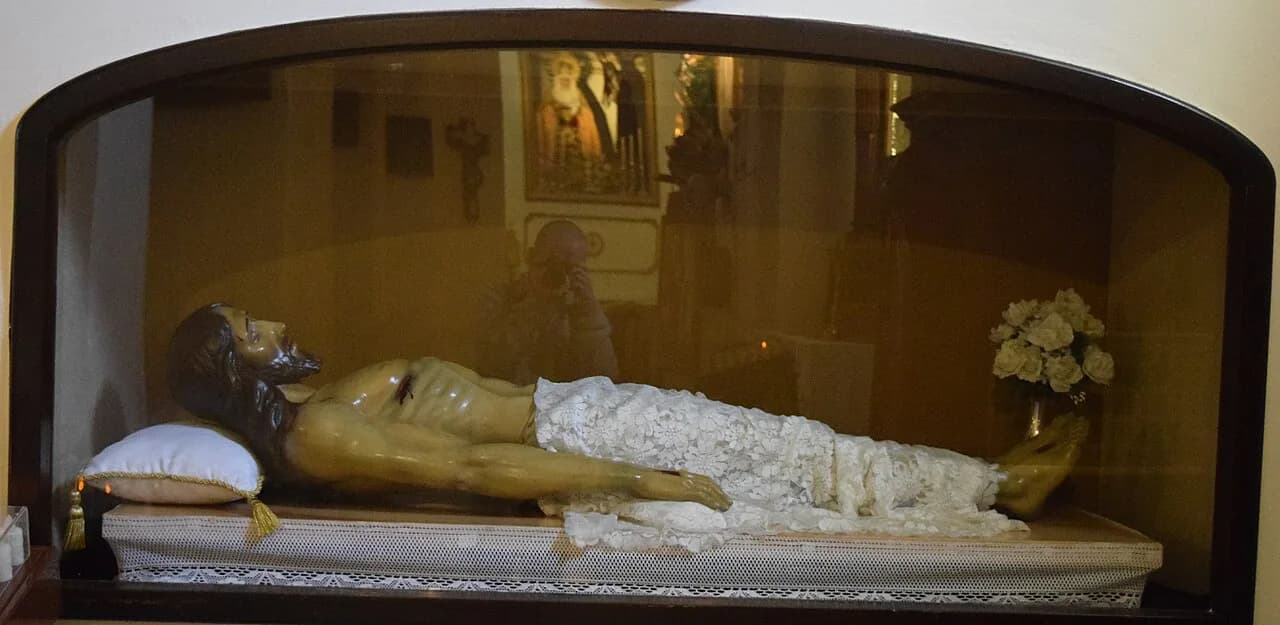
Iglesia de El Salvador, Nerja: What to See and How to Visit

The Iglesia de El Salvador is the easiest sight in Nerja to add to a day: a free, whitewashed baroque church on Plaza Cavana, roughly a minute's walk from the Balcón de Europa. You need 20 to 30 minutes inside, not a morning. Pair it with the balcony, the old-town lanes and a late Spanish lunch, and it fills the gap between a beach swim and a 2pm table.
The short answer: free, central and quick to visit
Entry to the Iglesia de El Salvador is free, and it sits right where the old town meets the Balcón de Europa, so you will pass it whether or not you plan to. Allow half an hour if you want to read the interior properly, or ten minutes for a look at the naves and the ceiling. It is a working parish church rather than a museum, so treat a visit as a quiet pause rather than a sight to tick off.
Where it is: Plaza Cavana, beside the Balcón de Europa
The church stands on the edge of Plaza Cavana, at the point where the whitewashed old town opens onto the Balcón de Europa. From the balcony square, walk inland past the cafes and you are at the door in a couple of minutes; from the town hall on Plaza de España it is an equally short stroll through the lanes. Because it anchors the centre, it works best as the first or last stop on an old-town wander rather than a separate trip.
You do not need a car for this one. The old town, the balcony, the beaches and the squares are all within a few minutes of each other on foot, which makes the church a natural stop between them. Save the taxi or local bus for the Cueva de Nerja and the Acueducto del Águila out towards Maro on another half-day.
Opening hours and entry: what the parish publishes
The parish of El Salvador publishes visiting hours of 9.00 to 13.30 and 17.00 to 20.30 daily, with entry free. Those are the parish's own published times and can shift around feast days and services. If the door is shut, wait for the next window, since a closed door between services doesn't mean the church is closed for the day, and check the parish page before a special trip.
The morning slot is the most useful for visitors: it opens before the Spanish lunch hour, so you can see the church, walk the old town and still sit down for a 1.30pm to 2pm lunch. The evening window reopens before dinner, which suits a pre-meal wander when the whitewash glows and the square is quieter. Avoid the middle of the day, when the doors are shut and the centre bakes.
The building: 1505 origins, 1697 structure, 1724 bell tower
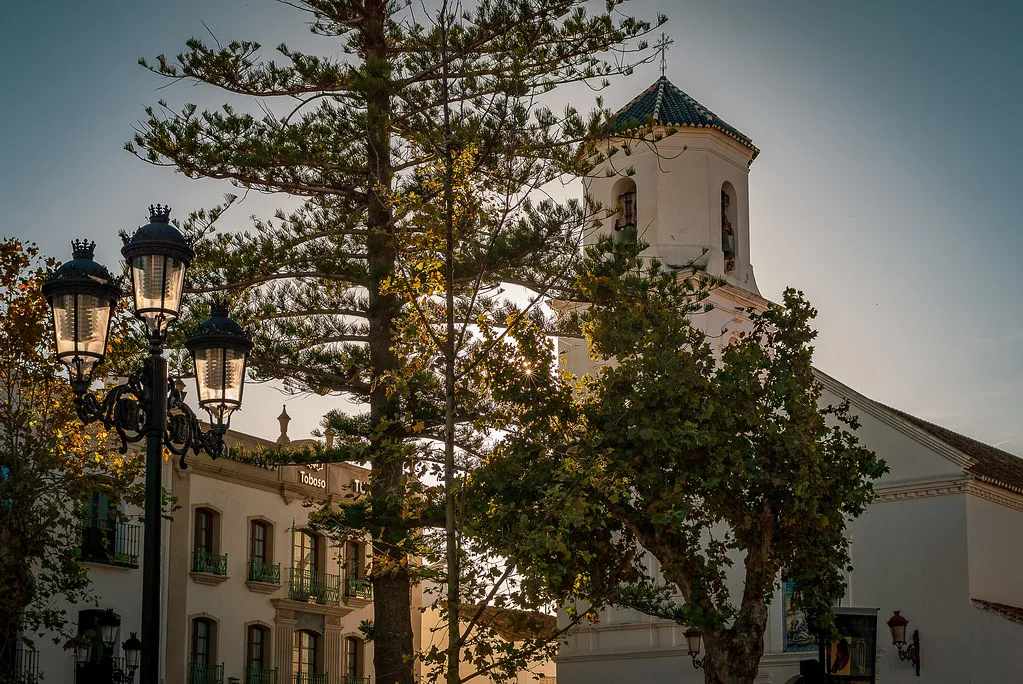
The original church dates from 1505, though most of what you see was completed in 1697, with the square bell tower added in 1724 and the building extended in the late 1700s. Knowing the phases helps you read the facade: the whitewashed walls and square tower are the parts to look at, not the interior chapels alone. It is the main church in Nerja and one of the prettiest buildings in the centre.
Inside: three naves, the Mudéjar ceiling and the archangels
Inside, the church has three naves and a wooden Mudéjar ceiling over the central one, the detail worth craning your neck for. The style is baroque with Mudéjar elements, a combination you see across Andalucía but rarely so compactly in a parish church. Stand at the back of the central nave first to take in the proportions before walking the side aisles.
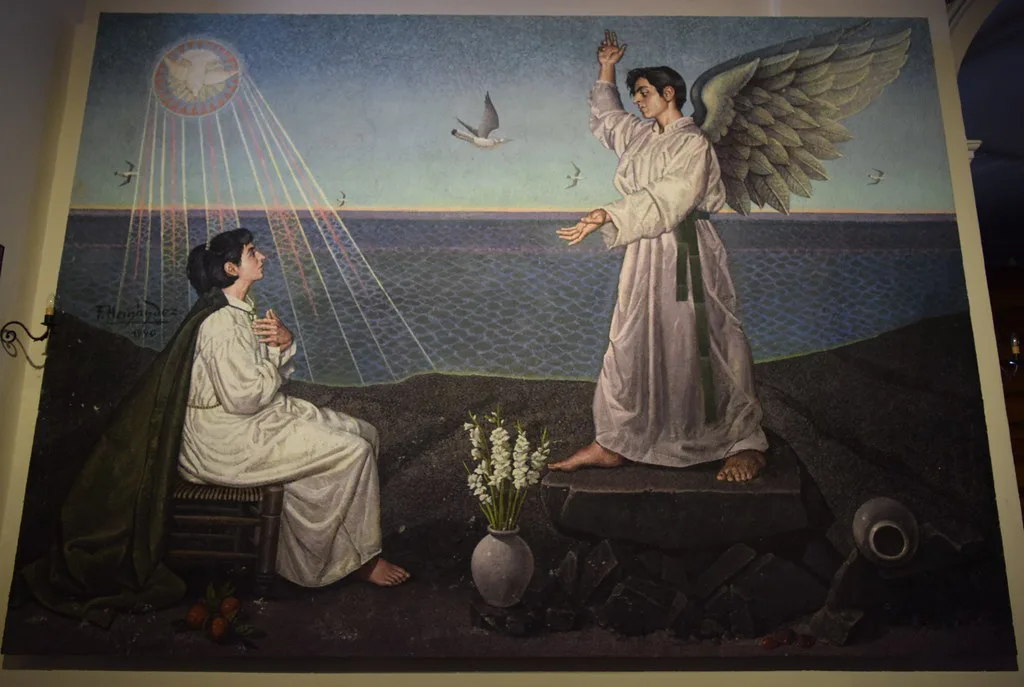
The church is one of only a few in the world that depicts all three archangels, which is the reason to look carefully at the imagery rather than hurry through. San Miguel, Saint Michael, is the patron saint of Nerja and is celebrated every October during the town's feria, so the archangel scheme ties directly to the town's calendar. If you are in Nerja during the feria, the church is the place to see the saint in context.
How long to allow, and when to slip in
Budget 20 to 30 minutes: enough to see the three naves, the ceiling and the archangel imagery without rushing, and short enough to slot between the balcony and lunch. The quietest moments are usually just after the morning opening and again when the evening window begins. Because it is a parish church, a service or a funeral will sometimes take priority, so be ready to step out and return later.
Dress and behaviour matter more than at a museum: cover shoulders and legs, keep your voice down and do not walk in front of anyone praying. Photography without flash is the safe default, and it is worth checking signage at the door in case the parish has posted restrictions. The church is small, so a respectful ten minutes goes a long way.
Nearby: Calle Tajillo, Plaza de España and the Nerja Museum
Step out of the church and Calle Tajillo, the most flower-filled street in Nerja, is just behind it. Flowerpots cover the walls and windows, and the lane ends at a small viewpoint over the sea, which makes it the best five-minute detour in the old town. From there, loop down through the whitewashed lanes to Plaza de España, where the town hall and the Nerja Museum sit a couple of minutes from the balcony.
The Museo de Nerja, on Plaza de España behind the town hall, walks you through the town's history from prehistory to the present and holds the skeleton known as Pepita, found in the Cueva de Nerja. Entry is around 4 EUR, and a Cueva de Nerja ticket gets you into the museum free within 10 days, which makes this a sensible pairing with the cave visit. It is small enough to see in under an hour.
Where to eat afterwards: tapas near the plaza
Lunch in Nerja usually runs from 2pm to 4pm, and most restaurants open for lunch between 1pm and 2pm, so leave the church before 1.30pm if you want a proper sit-down meal. Bar La Piqueta on Plaza de España is a good choice for tapas to share, while Restaurante El Náutico on the Balcón de Europa square puts you outside with a view. For a more polished meal, La Bottega Food & Wine leans Italian but also serves Spanish dishes.
For something more local, Taberna de Pepe on Calle Hernando de Carabeo gives a free tapa with each drink, and Bar Dolores El Chispa on Calle San Pedro lets you choose your fish and watch it grilled over open flames. Arrive as they open or late in the evening if you want a table at Dolores El Chispa, because it fills quickly. If you are eating on a budget, Anahi near the Balcón de Europa serves sandwiches, churros and tortillas.
Dinner starts at 9pm, with 10pm more common, so the evening opening of the church at 17.00 fits neatly before a late meal. British and Irish visitors used to eating at 7pm will find the square quiet then and the restaurants only warming up. Book ahead in summer for the more popular places, especially at the weekend.
Getting there: walking from the centre, parking and buses
The easiest approach is on foot: from the Balcón de Europa, walk inland past the cafes and you are at Plaza Cavana in a minute or two. From further out, the town centre is compact and walkable, with the beaches, squares and old town all within a few minutes of each other. Drivers should leave the car on the edge of the centre and walk in, because the old-town lanes are narrow and parking is limited.
Nerja sits at the eastern end of the Costa del Sol, about a 50-minute drive from Málaga, which makes it feasible as a day trip but better with a night or two. Local buses and taxis cover the out-of-town sights such as the Cueva de Nerja and the Acueducto del Águila, so you can leave the car behind. For a wider plan of the town, see the things to do in Nerja.
Plan Your Visit
The Iglesia de El Salvador is the simplest good thing to do in central Nerja: free, central and short enough to fit between the balcony and a 2pm lunch. Go in the morning window, look up at the Mudéjar ceiling, find the archangels and walk out into Calle Tajillo. Check the parish page for the day's opening before you set out, then build the rest of the morning around the old town and the sea. If you are weighing up whether the church and the balcony deserve a full day or just an afternoon, our guide to how many days in nerja helps you pace it.
Frequently Asked Questions
Is the Iglesia de El Salvador in Nerja worth visiting?
Yes, if you are already in the old town. It is free, a minute from the Balcón de Europa and takes about half an hour. The draw is the compact baroque and Mudéjar interior, the three naves, the wooden ceiling and the rare scheme showing all three archangels. It is not a cathedral-scale sight, so treat it as a quiet stop rather than a destination in itself.
Where exactly is the Church of El Salvador in Nerja?
It stands on the edge of Plaza Cavana, where the whitewashed old town meets the Balcón de Europa. From the balcony square, walk inland past the cafes and you reach the door in a couple of minutes. From the town hall on Plaza de España it is an equally short walk through the lanes.
Is entry to the church free?
Yes. Entry to the Iglesia de El Salvador is free, and it is a working parish church rather than a ticketed monument. There is no booking needed for a simple visit, though services and parish events take priority over tourists.
What time can you visit the church?
The parish publishes visiting hours of 9.00 to 13.30 and 17.00 to 20.30 daily. Those times can shift around feast days and services, so check the parish page before a special trip. The morning window is the most useful for visitors because it closes before the Spanish lunch hour.
How old is the Church of El Salvador?
The original church dates from 1505, though most of the current structure was completed in 1697. The square bell tower was added in 1724 and the building was extended in the late 1700s. That mix of phases is what gives the facade its layered look.
Why are there archangels in the church?
The church is one of only a few in the world that depicts all three archangels. One of them, San Miguel, is the patron saint of Nerja and is celebrated every October during the town's feria. That link makes the church especially worth a look if you are in Nerja during the festivities.
What else is close to the church worth seeing?
Calle Tajillo, the most flower-filled street in Nerja, is just behind the church and ends at a small sea viewpoint. Plaza de España, the town hall and the Museo de Nerja are a couple of minutes away, and the Balcón de Europa is a minute in the other direction. The beaches and the old-town lanes are all within a short walk.
How long do you need at the church?
Allow 20 to 30 minutes to see the three naves, the Mudéjar ceiling and the archangel imagery without rushing. Ten minutes is enough for a quick look if you are short on time. The church is small, so it fits easily between the balcony and lunch.