
Balcón de Europa: Nerja's Cliff-Top Viewpoint
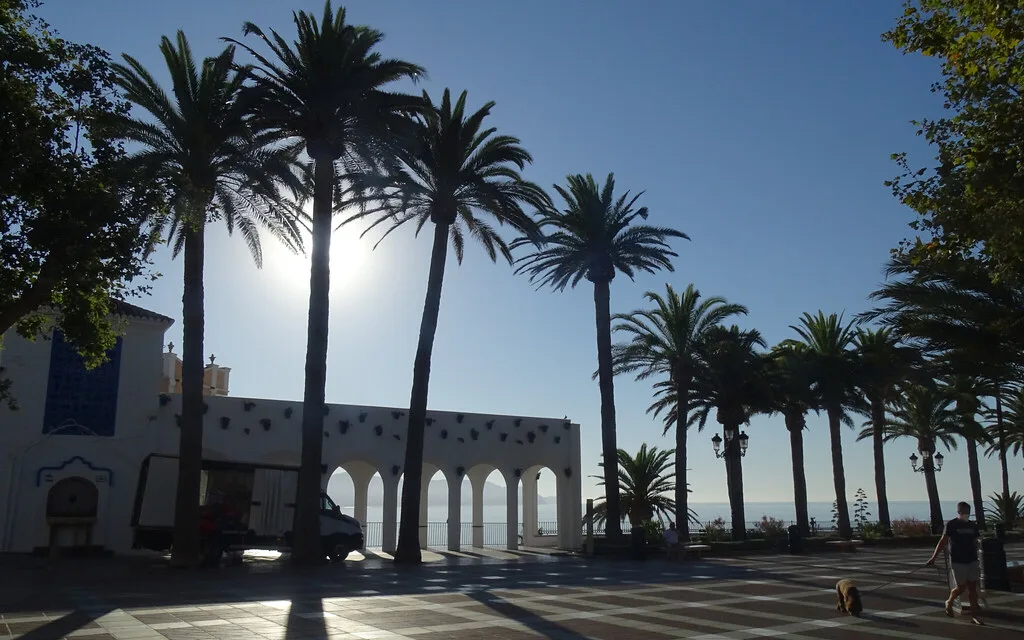
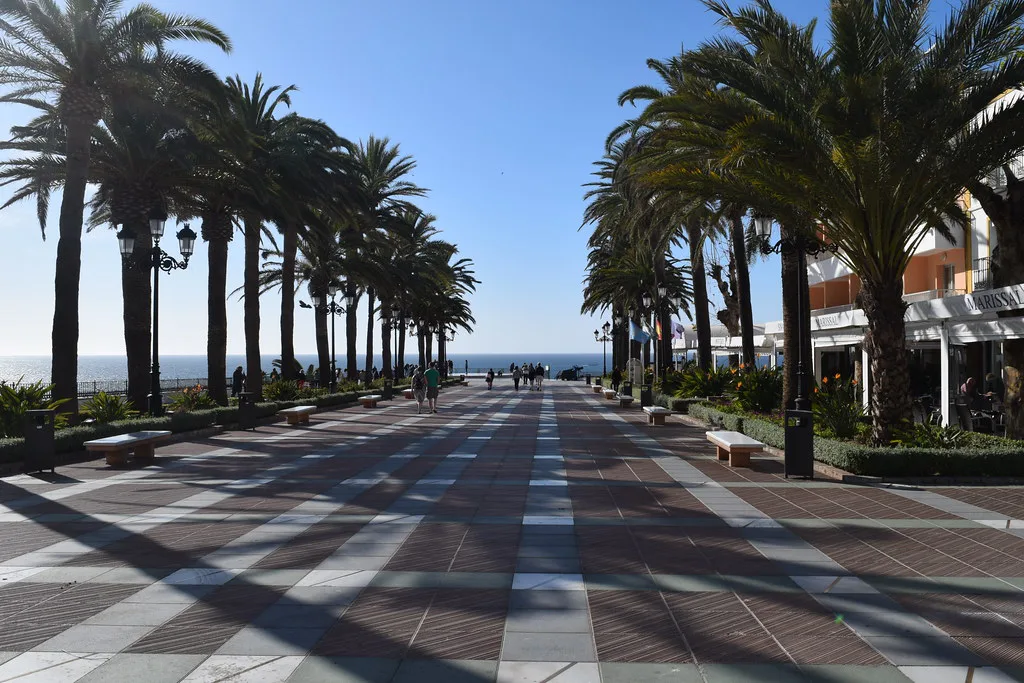
The Balcón de Europa is a palm-lined promenade that ends in a viewpoint on a rocky headland, with the Mediterranean wrapping around three sides and the mountains rising up behind the town. It's the heart of Nerja and the spot almost everyone starts with, and it sits in the pedestrianised centre of the old quarter, minutes from the squares and the central beaches.
Treat it as a viewpoint with a history rather than a destination in itself. A 9th-century Moorish watchtower once stood on the headland, later replaced by a coastal fort whose cannons still point out to sea, and the name comes from King Alfonso XII, who visited in 1885 and is remembered by a bronze statue on the balcony.
It doesn't need a ticket and doesn't fill a day. Plan under an hour on the balcony itself, then build the rest of the day around a swim at Playa Calahonda, a plate of fried fish at a nearby bar, or a wander through the whitewashed streets behind it. If you're weighing up how long to stay overall, see how many days in Nerja to plan around the balcony and the rest of the town, and our Nerja Neighborhoods guide helps you choose where to base yourself.
What the balcony actually is
The balcony is a public promenade and square rather than an enclosed attraction: benches, cafés and ice-cream shops line the approach, and the paved headland pushes out over the water so you can look back at the cliffs on either side. It's the busiest spot in town, with people hanging around all day, so it rewards a short, deliberate visit rather than an aimless loiter.
The layout is simple. Approach from Plaza Cavana and the Iglesia de El Salvador and the balcony appears at the end of the street; climb the steps and you're on the wide platform with the sea on three sides.
Where it sits in Nerja
Plaza Balcón de Europa anchors the old town, and almost everything in the centre is within a few minutes' walk of each other. The old town lanes, the main squares and the central beaches all sit close by, and the town itself is small and very walkable, so no car is needed to explore the heart of it.
For a holiday base, the area around the square is the obvious choice for first-timers, and the balconied streets and the wider choice of places to stay are worth comparing before you book. A car or a taxi only earns its place for the sights outside the centre, such as the cave and the aqueduct.
What to see on the headland
Start with the two cannons still mounted on the headland, leftovers from the coastal fort that once defended the beaches on either side. Inland, the mountains rise up behind the town, and at either end the cliffs drop to small coves: the views out over the Mediterranean are the main event, and they cost nothing.
The bronze statue of Alfonso XII marks the royal visit behind the name. The balcony's own history reads best in the company of the town's wider story, and the Nerja Attractions: 4 Visitor Guides collection sets the balcony alongside the cave, the museum and the church for anyone building a short break.
When to go: sunrise or the middle of the day
Come early for calm. Sunrise is the quietest moment on the balcony, with the square almost to yourself and the light coming up over the sea; by mid-morning the coach groups and day-trippers arrive, and the benches and cafés stay busy through the afternoon.
If you only want the view and not the crowd, walk a few minutes along the promenade to the Mirador de la Torrecilla, a flat, easy stroll past cafés to a platform overlooking Torrecilla beach and the ruins of an old watchtower. It's far less crowded than the Balcón and gives you the same coastline from a different angle.
Down the steps to Playa Calahonda
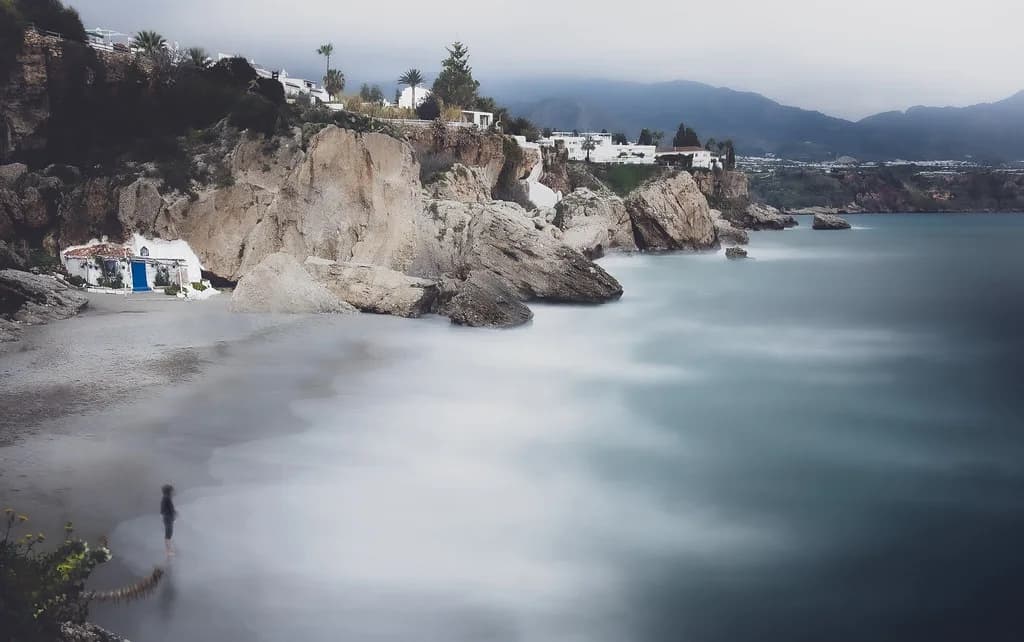
Right below the balcony is Playa Calahonda, a small cove framed by cliffs with fishing boats pulled up on the sand and pebbles. From the square, find the small arched passage on the eastern side called the Boquete de Calahonda, then take the zigzagging steps down the cliff; the descent takes a couple of minutes.
In the corner of the beach stands Casa de Don Ducano, a tiny old fisherman's house with white walls and blue doors built partly into the rock. Beaches of this kind are what draw people to this stretch of the Costa del Sol, and Calahonda is the most photogenic cove in the centre.
Come prepared. There's only a small snack bar down here, so bring water on a hot day, and Calahonda fills up fast because it sits right in the heart of town, so a mid-afternoon arrival in summer means hunting for space.
A short wander from the square
Behind the church, Calle Tajillo is the most flower-filled street in Nerja, with pots coating the walls, windows and cobblestones before the lane ends at a little viewpoint over the sea. It's central but easy to walk past, so keep an eye out for it just behind the Iglesia de El Salvador.
Near Plaza de España, look for the whitewashed archway under the town hall that frames a classic Andalusian photo; you'll likely pass through it anyway as you loop between the squares. On Saturdays a traditional outdoor market sets up in the plaza in front of the town hall, selling handmade goods and local products, which makes a low-key morning wander between beach time and lunch.
Museo de Nerja, a few minutes away
The Museo de Nerja sits on Plaza de España, just behind the town hall and a couple of minutes from the balcony, with several floors tracing the town from prehistoric settlement to the present. Its highlight is Pepita, the skeleton of a woman who lived more than 9,000 years ago, found inside the Cueva de Nerja, along with many of the artefacts uncovered there.
Entry is around 4 EUR, and a ticket to the Cueva de Nerja gets you into the museum free within 10 days, so it's worth timing the two together. The museum is small enough to see in under an hour, which makes it a sensible escape from the sun in the middle of the day.
Beyond the centre: the cave and the aqueduct
The Cueva de Nerja, just outside town near the village of Maro, is a huge system of chambers full of dramatic stalagmites and stalactites, and one chamber holds the widest natural column in the world, a giant 32 metres tall. Entrance is 18 EUR with timed slots that you can book online, worth doing in summer; you can reach it by car, by taxi or on the little tourist train from the centre.
Next to the cave on the road out towards Maro stands the Acueducto del Águila, a four-tiered brick aqueduct of 37 arches built around 1879 to 1880 to carry water to the San Joaquín sugar mill and still used for irrigation. Roadside parking sits near the base, with a short walk to the bottom for the best view; combined with the cave, it makes a good half-day out of the centre.
Where to eat around the balcony
Bar La Piqueta on Plaza de España is a good pick for a table slightly away from the crowds and a spread of tapas to share, while Restaurante El Náutico on the balcony square serves tapas and lunch with the view in front of you. For seafood at the edge of the balcony overlooking Playa Calahonda, Puerta del Mar is the one to book early if you want the best tables.
Dinner starts late here, so adjust: lunch typically runs 2–4pm and dinner doesn't begin until 9pm, with 10pm more common, and many kitchens shut between services. In practice that means a late breakfast, a proper sit-down lunch after the beach and a long evening meal, rather than eating at tourist hours.
Order the local things. Espetos de sardinas, fresh sardines skewered on sticks and grilled over olive wood fires on the beach, are the dish that defines this coastline, and the best are charred outside, tender within, served with coarse salt and lemon. Add ajoblanco, the chilled almond soup finished with Muscatel grapes, and boquerones en vinagre, cold marinated anchovies served as a tapa.
Cheap eats and a full beach lunch
For small bills rather than a set menu, Bar Redondo in the centre gives you a tapa with each drink: choose from the selection set out along the bar as you order, so a couple of drinks becomes a cheap meal. The same free-tapa-with-a-drink arrangement holds at Taberna de Pepe on Calle Hernando de Carabeo, where the tapas are generous and the atmosphere is pure Andalusian.
At the other end of the day, Ayo's on Burriana beach has been cooking huge pans of paella over an open fire since 1969, with prawns, rice, rabbit and clams, and it's a rough-and-ready affair with sand underfoot. It serves lunch only, so it fits as a beach day rather than an evening out, and Burriana is the longest and most popular beach in town.
How long to allow and what to pair with it
Budget under an hour for the balcony itself, plus beach or café time, and don't try to combine it with everything else in town on the same afternoon. A sensible day runs: sunrise or early walk on the headland, the old town lanes and the museum, a late lunch around 2pm, then the beach below the cliffs in the afternoon heat.
If you want to build a longer stay, Nerja sits at the eastern end of the Costa del Sol and is worth at least a night or two to see properly, with Frigiliana and the Caminito del Rey both feasible as day trips rather than add-ons to the balcony itself.
Plan Your Visit
The balcony is the easiest good thing to do in Nerja: no ticket, no queue to speak of at dawn, and a beach with a staircase down to it within sight of the cannons. Go early, pair it with the old town and the museum, and eat late the way the town does.
Opening hours and any seasonal closures for the museum and the cave change through the year, so confirm times on the Fundación Cueva de Nerja site or by phone before travelling out to Maro.
Frequently Asked Questions
What is the Balcón de Europa best known for?
For the view. It's a palm-lined promenade that ends in a viewpoint on a rocky headland, with the Mediterranean on three sides and mountains behind the town. The headland was a 9th-century Moorish watchtower site and later a coastal fort, and two old cannons still point out to sea.
Is the Balcón de Europa free to visit?
Yes. It's a public promenade and square in the pedestrianised centre of the old quarter, with benches, cafés and ice-cream shops, not a ticketed attraction. The cost of a visit is whatever you spend in the cafés around it.
How do you get down to Playa Calahonda from the balcony?
Find the small arched passage on the eastern side of the square called the Boquete de Calahonda, then take the zigzagging steps down the cliff. The descent takes a couple of minutes and brings you out on a small cove with fishing boats pulled up on the sand.
When is the Balcón de Europa quietest?
Early morning, and sunrise in particular, when the square is nearly empty. It's the busiest spot in town from mid-morning onwards, so come before breakfast or walk a few minutes to the Mirador de la Torrecilla for a quieter viewpoint over Torrecilla beach.
How long do you need at the Balcón de Europa?
Under an hour on the balcony itself is enough to see the views, the cannons and the statue of Alfonso XII. Build the rest of the day around a walk through the old town, the Museo de Nerja on Plaza de España or a swim at Calahonda below the cliffs.
What is there to eat near the Balcón de Europa?
Bar La Piqueta on Plaza de España and Restaurante El Náutico on the balcony square both do tapas, and Puerta del Mar at the edge of the balcony specialises in seafood with a view. Remember that lunch runs 2–4pm and dinner starts around 9pm.
Is it worth combining the balcony with the Cueva de Nerja?
Yes, if you have a car, take a taxi or use the tourist train from the centre. The cave runs timed-entry slots that you book online, and the current ticket price list sits on the Fundación Cueva de Nerja site; your cave ticket also gets you into the Museo de Nerja free within 10 days, which makes a sensible pairing.
How far is the Balcón de Europa from Málaga?
Nerja sits at the eastern end of the Costa del Sol, about a 50-minute drive from Málaga city. The balcony itself is in the pedestrianised centre of Nerja, a few minutes' walk from the old town lanes and the central beaches.