
Puente Nuevo, Ronda: Visiting the Bridge Over the Tajo

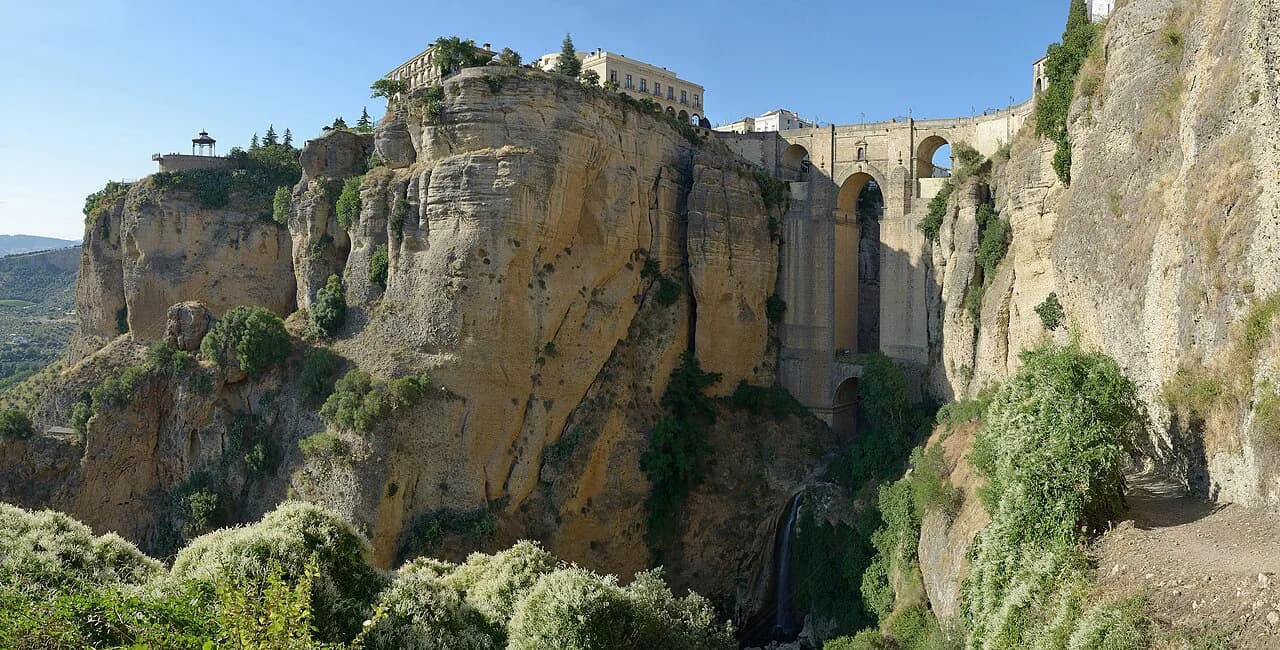
The Puente Nuevo is the stone bridge that carries Ronda across the Tajo, the gorge that splits the town in two, standing 98 metres above the river Guadalevín at its deepest point. Ronda has three bridges over the gorge and all three remain standing, so the "new" bridge is neither the only one nor the newest thing in town. What makes it worth a detour is the view from below and beside it, not the crossing itself.
Plan the visit around viewpoints rather than the bridge deck. Walking over is a means of getting from one half of Ronda to the other; the arch, the drop and the stone all reveal themselves from the miradores on either rim and from the paths down into the gorge. If you are weighing up which town on the route deserves a longer stop, it helps to compare these viewpoints with the things to do in Ronda beyond the bridge.
What the Puente Nuevo Actually Is
The bridge spans the Tajo at its deepest section, rising 98 metres from the base of the lower arch to the roadway above the Guadalevín, while the gorge itself reaches between 100 and 120 metres deep at that point. It links Ronda's historic centre with the newer side of town, and it has done so since the 18th century. Builders quarried its stone from the floor of the gorge itself, from the rubble of a collapsed earlier bridge, which is why the masonry blends into the rock rather than sitting on it.
Where It Is and How to Reach It on Foot
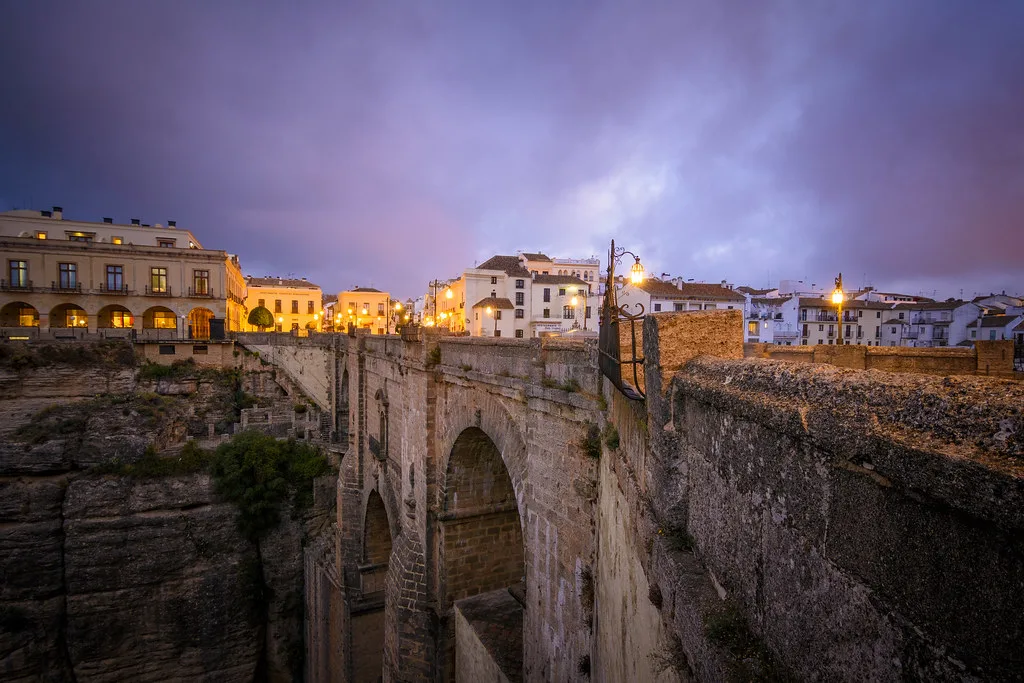
The bridge arrives at the Plaza de España on the old-town side, which makes that square the natural starting point for any visit. From the historic centre, everything is walkable: the church of Santa María la Mayor, the Palacio de Mondragón and the Casa del Rey Moro sit within a short stroll on the old-town side, while the bullring and the Alameda del Tajo are on the other.
If you are staying on the newer side of Ronda, cross towards Plaza de España and work back out to the viewpoints rather than treating the bridge as a standalone stop. It sits inside the historic centre, so the surrounding streets are the practical place to start.
Why the Top of the Bridge Is the Wrong Place to Look
Crossing the bridge is free and functions as an ordinary street, so there is no ticket, gate or queue to worry about. The catch is that from the roadway you cannot see the arch at all: the parapets block the drop and the structure disappears under your feet. Treat the crossing as a way of getting across the Tajo, and save the looking for the miradores on the rims.
The Viewpoints That Work
The Mirador de Aldehuela sits beside the bridgehead and gives the most direct panorama of the arch with the least effort, so start there if time is short. The balconies of the Plaza de España and the Parador show the bridge side-on, framing the span against the far wall of the gorge.
On the Paseo de la Alameda, a balcony known locally by a nickname rather than an official name gives the sudden, head-first view of the drop. It is a short walk from the bullring and the Alameda del Tajo, so pair the two.
Going Down into the Gorge
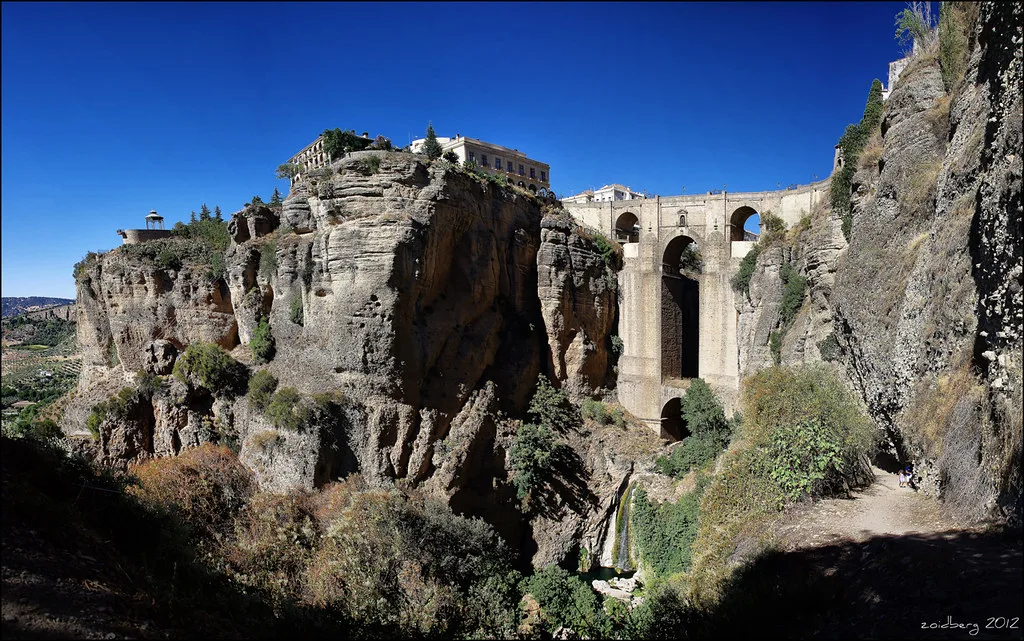
For the classic full-height view with the whole bridge above you, descend via the path at the Casa del Rey Moro or through the Jardines de Cuenca. Both drop you towards the floor of the Tajo, and both make you earn the photograph on the way back: the climb up is the hard part of the visit, not the descent. Allow more time for the return than you think you need, and wear shoes that grip on the stone.
Best Time of Day for Photographs
Early morning and sunset give the strongest contrast between the pale stone of the bridge and the shadow filling the gorge. At those hours the arch reads clearly against the rock rather than flattening into it. The gorge runs deep and narrow, so the middle of the day throws the walls into hard light and the span into shade.
Inside the Arch: the Centro de Interpretación
Look at the central arch and you will see a small window. Behind it is a chamber that has served as a store, a guardhouse, an inn and a prison, and during the Civil War it was used as a place of execution according to testimony from the period. It now holds the Centro de Interpretación del Puente Nuevo, reached from the Plaza de España through the old guardhouse, and you can look out of those same windows over the gorge.
This is a paid visit separate from the free crossing, and it keeps its own hours rather than following the bridge. Check the current times and admission at the entrance or on the town's visitor information before you build your day around it.
Bridge History Worth Knowing
An earlier bridge was built on the same spot in 1735 by the architects José García and Juan Camacho, a single 35-metre arch finished in only eight months. It collapsed in 1741, six years later, killing around fifty people, through lack of supports, poor closing of the arch and deficient workmanship. The current bridge was begun in 1759 and finished in 1793, thirty-four years in all, with Domingo Lois de Monteagudo leading the work until 1778 and building the lower third, and José Martín de Aldehuela taking over to complete it.
The Architect Suicide Story and Why It Is Not True
You will hear that José Martín de Aldehuela threw himself into the Tajo on finishing the bridge, either out of despair at never building anything greater or in an accident during an inspection. Neither version holds: he died a natural death in Málaga in 1802, nine years after the bridge was completed, and was buried in the convent of San Pedro de Alcántara. The story is good folklore and bad history, so enjoy it as a tale told on the bridge and do not repeat it as fact.
Ronda's Other Two Bridges Over the Tajo
The Puente Romano, despite the name, dates from the Muslim period, and the Puente Viejo was rebuilt in 1616 on earlier foundations; both still carry traffic and pedestrians across the gorge. The bridge that fell in 1741 was a fourth structure on the site of the present Puente Nuevo, not either of these two, which is why the story of a collapsed bridge sits oddly beside three that are still standing.
Birdwatching From the Gorge Viewpoints
The Tajo is a serious birdwatching spot, and the viewpoints sit at different heights on the cliff so you can watch birds flying below eye level. Peregrine falcons and jackdaws nest in the walls, and some viewpoints have telescopes trained on the nests. Go early in the day for the most activity, and bring binoculars if you have them.
What Is Nearby on Each Side
Cross into the old town and you reach Santa María la Mayor, the Palacio de Mondragón and the Casa del Rey Moro within a few minutes on foot, with the Arab Baths a slightly longer walk down towards the river. These are separate sights with their own entry arrangements, so treat them as add-ons to the bridge rather than part of the same visit.
On the other side, the Plaza de Toros de la Real Maestranza and the Alameda del Tajo sit close together, and the Paseo de la Alameda balcony is on the same walk. If you want a wider plan for the town, the full list of things to do in Ronda covers the rest of the centre.
How Long to Allow
Give the bridge a focused hour to see it from two or three viewpoints, and half a day if you add the descent into the gorge and the interpretation centre. The climb back from the gorge floor is the part that eats time, especially in heat. Build the visit around lunch or late afternoon rather than the middle of the day, when the light is flat and the paths are busiest.
Getting to Ronda From Málaga and the Costa del Sol
Ronda is about an hour and a half from Málaga, which makes it feasible as a day trip from the coast. Organised excursions avoid the parking problem in the historic centre, where space is tight and the streets around the bridge are not built for cars. If you drive, park on the edge of the old town and walk in rather than circling the centre.
Plan Your Visit
The Puente Nuevo rewards a little planning: cross it for free, then walk to the Mirador de Aldehuela and one of the lower paths to see why the bridge is worth the trip. Add the chamber inside the arch only if you have time, and check its hours before you go.
Frequently Asked Questions
What river runs under the Puente Nuevo in Ronda?
The Guadalevín runs through the bottom of the Tajo gorge beneath the bridge, and the Puente Nuevo stands 98 metres above it from the base of the lower arch to the roadway.
How tall is the Puente Nuevo?
It rises 98 metres from the base of the lower arch to the roadway, and the Tajo gorge reaches between 100 and 120 metres deep at that point.
When was the Puente Nuevo built?
Work began in 1759 and finished in 1793, thirty-four years in all. Domingo Lois de Monteagudo led the project until 1778 and built the lower third, and José Martín de Aldehuela completed it.
Can you go inside the Puente Nuevo?
Yes. The chamber above the central arch holds the Centro de Interpretación del Puente Nuevo, entered from the Plaza de España through the old guardhouse, with paid admission and its own hours separate from the free crossing.
Is the bridge free to cross?
Yes. The bridge functions as an ordinary street, so crossing costs nothing; only the interpretation centre inside the arch charges admission.
Where is the best view of the Puente Nuevo?
The Mirador de Aldehuela at the bridgehead gives the most direct view of the arch, and the paths down through the Casa del Rey Moro and the Jardines de Cuenca give the full-height view of the bridge from the gorge floor.
Did a bridge in Ronda collapse?
Yes. A single-arch bridge built in 1735 on the same site collapsed in 1741, killing around fifty people; the present bridge was built later, and its stone came from the rubble at the bottom of the gorge.
How many bridges does Ronda have over the Tajo?
Three: the Puente Romano, the Puente Viejo and the Puente Nuevo, all still standing. The bridge that collapsed in 1741 was a separate earlier structure on the Puente Nuevo's site.