Things to Do in Ronda: Bridges, Gorge Views and Where to Eat
Plan a Ronda visit with the Puente Nuevo bridge, gorge viewpoints, Arab baths and old-town squares, plus where to eat tapas and when to dodge the day trippers.
On this page
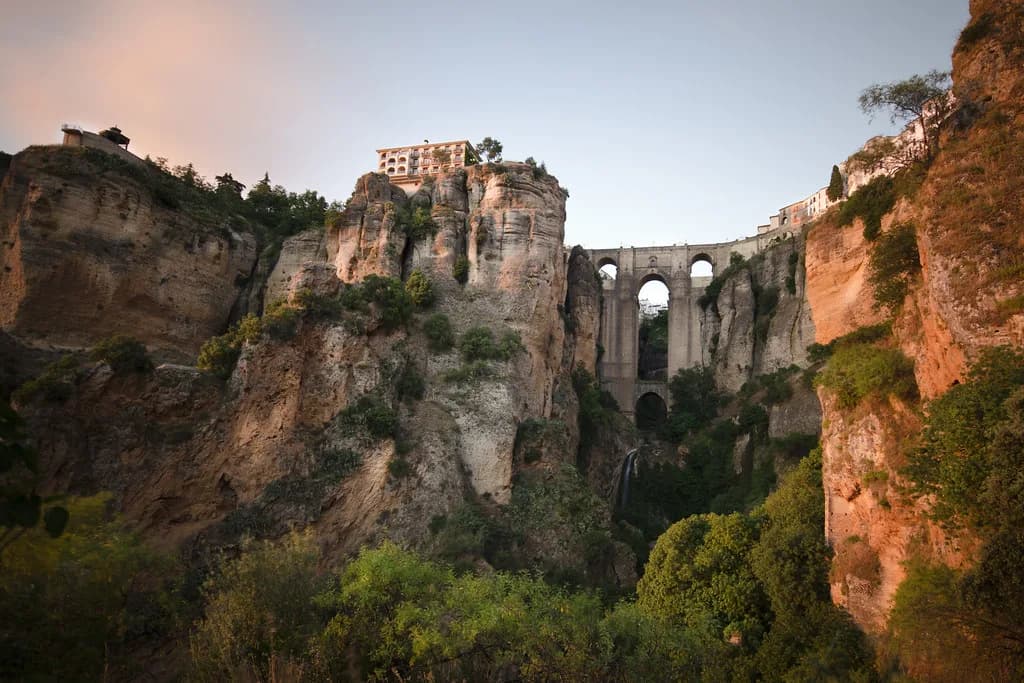
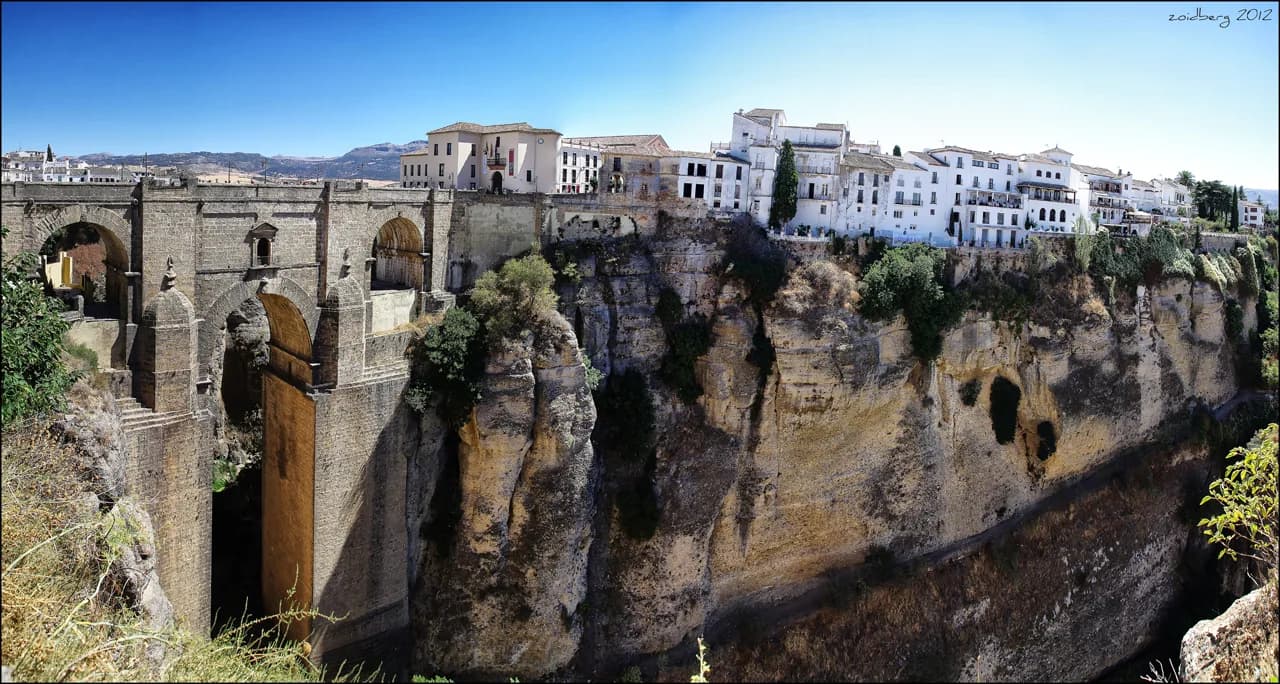
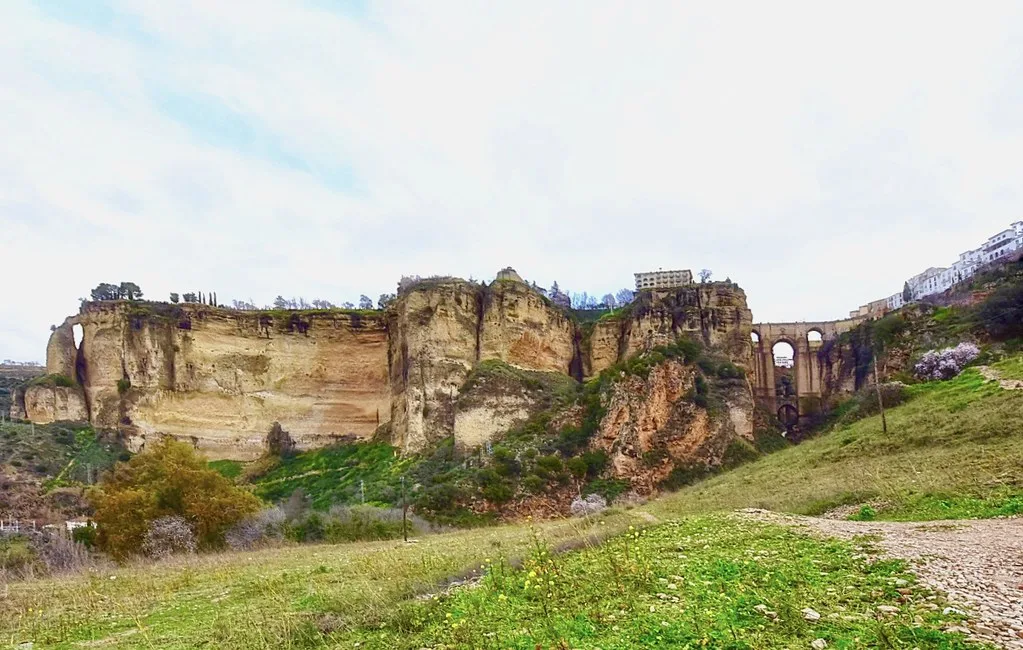
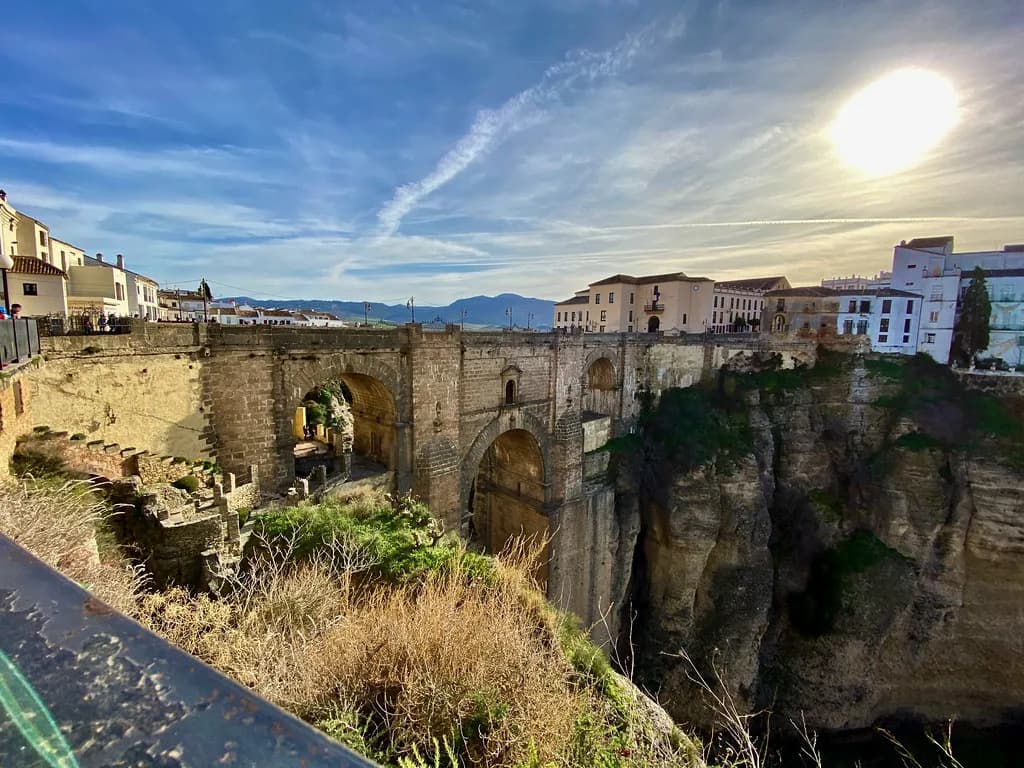
Ronda is the Andalusian white town with a gorge running through the middle of it, and the reason to come is the same as it has always been: the Puente Nuevo bridge hanging over the El Tajo drop, with the Guadalevín River far below. The town splits into La Ciudad, the old Moorish quarter, and El Mercadillo, the newer side with the shopping street and the bullring. Almost everything worthwhile sits within a walkable circuit, which is why so many visitors try to do it in a few hours.
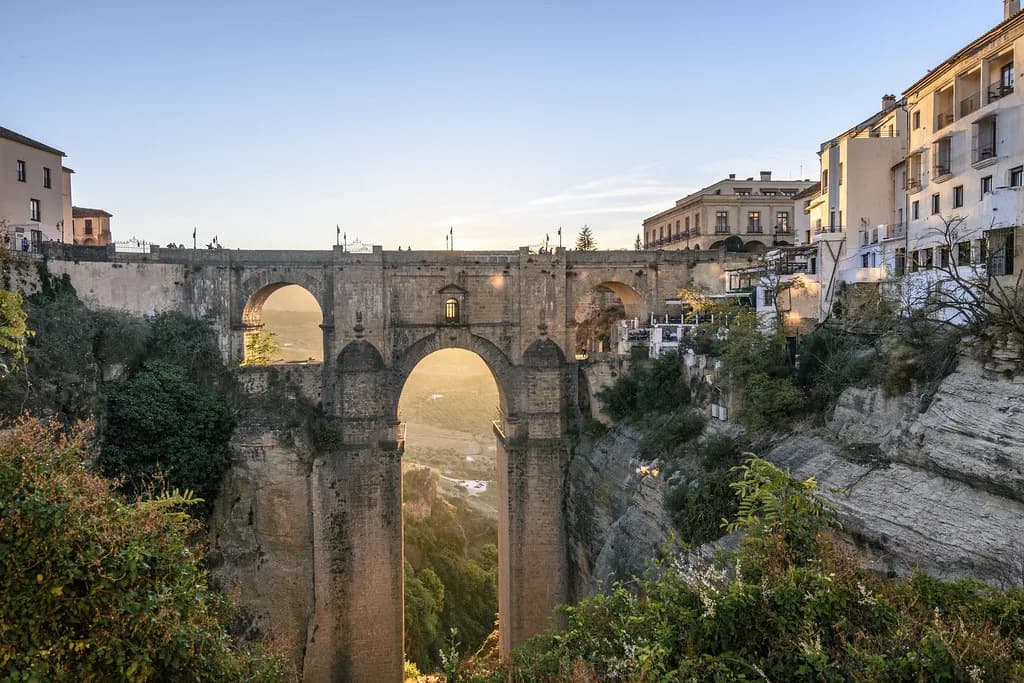
Doing it in a few hours is the mistake. Ronda is one of the most touristed destinations in Andalusia, and the coaches that disgorge day trippers are gone by early evening, leaving the viewpoints and old-town squares to people who booked a bed. Stay one night and you get the bridge at sunset and a proper dinner at Spanish time, from 8:30pm, instead of a rushed plate at midday.
Why Ronda Earns a Night, Not Just a Stop
Ronda sits on a rocky plateau above a gorge that drops around 100 metres, and the town is small enough that you can cover the centre on foot in a day without ever needing a bus. It is also popular: it ranks among the most touristic destinations in Andalusia, and the atmosphere changes sharply once the excursion traffic thins out. An evening walk across the bridge, or an early morning one, shows you a different town from the midday scrum.
The trade-off is simple. A day trip buys you the headline sights at their busiest; an overnight buys you the same sights with space to look at them, plus a dinner that is not squeezed into a 90-minute coach stop. If your dates are fixed around a single day, plan the walking order so the gorge viewpoints fall late afternoon. Our ronda itinerary sets out an order that does exactly that.
Give yourself at least two nights and you can add a winery visit or a half-day in one of the neighbouring white towns without cutting the centre short. If you are weighing up one night against three, the honest answer is that one full day covers the bridge, the old town and the baths, and anything beyond that is about pace rather than missing attractions.
Puente Nuevo: Crossing It, the Miradores and the Chamber Inside
The Puente Nuevo is the reason most people come. Construction began in 1759, the bridge was finished in 1793, and it rises close to 100 metres above the gorge floor, connecting La Ciudad with El Mercadillo. Walking across costs nothing and takes a couple of minutes, but the best views are from the sides: Mirador de Aldehuela sits right beside the bridge on the town side with no climbing involved.
On the far side, the Paseo de Kazunori Yamauchi runs along the cliff edge, and a small kiosk there sells tickets to the chamber built inside the central arch, once a prison and guardhouse. Entry was 2.50 EUR when this was checked, and the visit takes 20 to 30 minutes up a narrow staircase. Set your expectations: the exhibition is small, and the appeal is standing inside the structure rather than reading panels.
For the classic postcard angle from below, head for the paths that drop into the gorge. The walk down is short and steep, and the climb back up is the part people underestimate, especially in afternoon heat. Comfortable shoes matter more here than anywhere else in town.
Down into the Gorge: the Paid Walkway and the Free Viewpoints
Two options face you at the gorge. The Camino del Desfiladero del Tajo, which opened in 2024, is a built cliffside path leading down to the base of the bridge, with a helmet issued at the entrance and tickets booked in advance on the official site. It cost 5 EUR, and children under eight are not admitted. If you want to stand directly under the arches, this is how you do it.
The free alternative is the Arco del Cristo viewpoint, reached by continuing past the kiosk down the hill from Plaza María Auxiliadora. Many people rate it the finest view of the bridge anywhere in Ronda, and it costs nothing, but you pay for it with a longer, steeper climb back into town. For a strong photographer on a budget, the free path wins; for anyone with shaky knees or small children, the engineered walkway is the safer call.
A third, gentler option suits drivers: Mirador La Hoya del Tajo at the bottom of the gorge can be reached by road, though the bridge looks smaller from that distance. Whichever route you take, the paths start from Plaza María Auxiliadora and zigzag down.
Jardines de Cuenca and the Quiet Side of the Bridge
The Jardines de Cuenca are terraced gardens hanging over the gorge a few minutes from the bridge, with a lower viewpoint, Mirador de Cuenca, that gives you the bridge from the east with the Guadalevín below. Entry is free, and the gardens draw a fraction of the crowd that gathers at Mirador de Aldehuela. There are stairs between terraces, but less climbing than the gorge paths.
From the lower exit, walk on to the Puente Viejo, a sixteenth-century stone bridge at a much lower level, and the Arco de Felipe V, an eighteenth-century gate named after the king who ruled when it was built. A few steps further down, the Puente de las Curtidurías frames the old bridge neatly for photographs. This stretch is the quietest good walk in central Ronda.
Baños Árabes and the Old City Walls Walk
Treat the Arab baths and the walls as one loop rather than two separate sights. The Baños Árabes sit just below Puente Viejo, a thirteenth-century bathhouse with horseshoe arches and star-shaped openings in the ceilings, and a short film at the start explains how each room worked. Admission came to 4.50 EUR when checked, and the visit is quick, so it slots neatly into half an hour.
From the baths, a narrow stepped path beside La Ermita de San Miguel climbs along the medieval walls, through the Puerta de la Cíjara and up to the Puerta de Almocábar, the thirteenth-century gateway flanked by two towers. There is no charge, the walk takes 20 to 30 minutes, and the cobbles are steep in places. You will see Ronda from angles the bridge crowds never reach.
La Ciudad: Plaza Duquesa de Parcent and Santa María la Mayor
La Ciudad is the old Moorish quarter, a knot of whitewashed lanes and small squares that dates back centuries and stays notably calmer than the bridge area. Its centrepiece is the Plaza Duquesa de Parcent, lined with cafés and home to the town hall and the Iglesia de Santa María la Mayor, a mosque converted into a church with Renaissance, Gothic and Baroque layers.
The church is worth more than a glance because you can climb to the roof for one of the few aerial views of the town, and a small balcony inside lets you look down on the nave from ceiling height. Admission was 4.50 EUR when checked, and hours are limited. Even from outside, the square is the best place in Ronda for a mid-morning coffee.
Nearby, the Carmelite convent attached to the Iglesia de Nuestra Señora de la Merced sells baked goods through a rotating hatch, so you buy from nuns you never see. It is a small, strange pleasure rather than a sight, and it fits naturally into a slow morning in the old town.
The Bullring and Ronda's Bullfighting History
The Plaza de Toros de Ronda dates from 1785 and is the oldest bullring in Spain, a neoclassical building holding around 5,000 people, with a museum inside. Ronda is also the birthplace of modern Spanish bullfighting, where Francisco Romero first faced a bull on foot in the eighteenth century. You do not have to like the tradition to see that the town cannot be understood without it.
Tickets were 8 EUR, or 9.50 EUR with an audio guide, and seasonal opening ran from 10am to 6pm in winter, 7pm in March and October, and 8pm from April to September. Those hours shift with the season, so confirm before you build a day around it. If you only want the view, the rooftop terrace of the Hotel Catalonia Ronda looks down into the arena over a coffee.
Alameda del Tajo and the Cliffside Promenade at Sunset
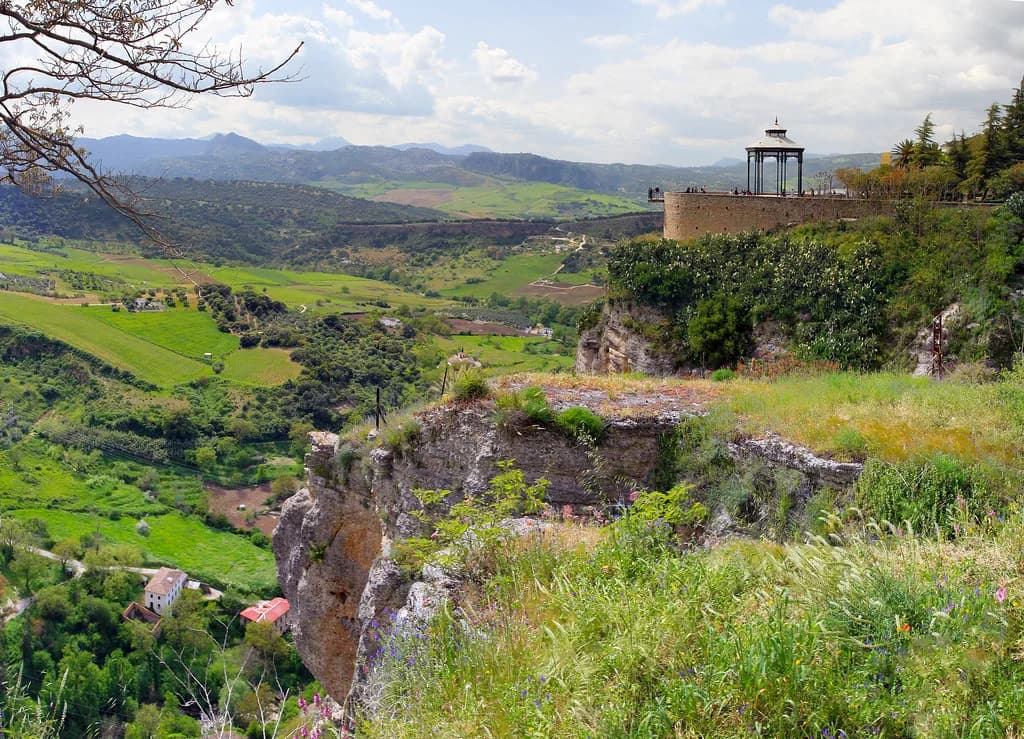
The Alameda del Tajo is a nineteenth-century park of tall trees, paths and benches on the El Mercadillo side, and it is where locals take their evening stroll. From the park the promenade continues along the cliff edge past viewpoints including Mirador de Ronda, with its bandstand, and out towards the Paseo de los Ingleses. The light on the surrounding hills late in the day is the point.
Come here after dinner rather than before, and you get the sunset without competing for space at the railings. In summer the shade in the park makes it a sensible afternoon refuge too.
Ronda's Food: Rabo de Toro, Queso Payoyo and Local Wine
Ronda sits on an official wine route, and the local reds and whites pair well with two dishes worth ordering by name. Rabo de toro, oxtail slow-cooked in red wine, is the classic plate of the town, and queso Payoyo, a tangy local cheese, works as a starter or a tapa with a glass of something local. Order both and you have eaten Ronda rather than generic Andalusia.
Timing matters as much as the menu. Lunch runs from about 1:30pm to 4pm and dinner starts around 8:30pm to 9pm, so a 6pm hunger pang means tapas or a late snack, not a full meal. In peak season the better places fill up, and booking by phone or online is the difference between eating well and settling for what is left.
Where to Eat: Tapas Bars and Restaurants Worth Booking
Several named kitchens make a short list easy. Arrabal Restaurante serves Andalusian cooking with gorge views; El Lechuguita is a cheap, busy local tapas favourite; Albacara pairs Mediterranean dishes with bridge views; Casa María cooks whatever is fresh that day with no fixed menu; Tragatá does creative tapas; and Bardal is the town's fine-dining address. Restaurante Pedro Romero near the bullring sticks to classic Spanish cooking, and Entre Vinos is a wine bar for simple plates.
For a shorter, cheaper evening, the tapas bars are the better value, and a crawl of two or three beats one long sitting. Reserve anything with a view at least a day ahead in high season. Our best tapas in ronda shortlist covers the smaller bars in more detail.
Wineries Around Ronda
The countryside around Ronda holds around 25 wineries, and the altitude, roughly 700 metres, gives the grapes a concentrated flavour. Bodega Joaquín Fernández is an organic family producer that dates to 2000, making about 50,000 bottles a year, including a white wine made from red grapes, Blanco de Uva Tinta, which keeps a faint pink tinge without being a rosé.
Visits typically combine a tour, a tasting of several wines and a plate of cold meats and cheese, and a winery lunch can easily take half a day. Book ahead and arrange transport, because the bodegas sit outside town and you will not want to drive after a tasting.
Getting There from Málaga and Sevilla, and When to Go
By car, Ronda is about an hour and a half from Málaga and an hour and forty-five minutes from Sevilla. Public transport is workable but slower: a direct train from Málaga takes around two hours and runs roughly once a day, with other services requiring a change at Antequera-Santa Ana, while buses from Málaga take about three hours with up to four departures daily. Check times for your date before committing to a day trip.
March to May and September to October give you good weather without the summer crush, and Ronda gets uncomfortably hot in midsummer despite its altitude. Winter is quiet and cold in the evenings. Whatever the season, the trade-off is the same: the shoulder months make the walking pleasant and the viewpoints manageable.
Day Trip or Overnight: An Honest Trade-off
A day trip works if you accept the compromise: bridge, a gorge viewpoint, the old town and a quick lunch, all at the busiest hours. Overnight visitors get the same circuit plus the evening promenade and a relaxed dinner, and they can spread the walking over two mornings instead of one long push. Ronda is compact enough that neither choice means missing the essentials.
The middle path is one night and a tight plan, which covers the paid gorge walkway in the morning before the crowds and the old town in the afternoon. Our guide to things to do in ronda across four focused itineraries is the place to build that schedule.
Nearby: Setenil de las Bodegas and the White Towns
Setenil de las Bodegas, a white town built into an overhanging rock gorge, makes the obvious half-day add-on, with streets tucked under the cliff face and bars built into the rock. It needs a car or a bus and a spare few hours, so it suits a two-night stay better than a single day. If you would rather trade inland rock for coastline, the things to do in alicante make an easy contrast with Ronda's gorge.
If you are continuing west or south afterwards, the same cliff-and-whitewash formula reappears across the region, but Ronda remains the one with the bridge. Build your route so you arrive here fresh rather than as the last stop of a long driving day.
Plan Your Visit
Book the night, walk the gorge in the morning and the old town in the afternoon, and eat late by Spanish clocks. The Camino del Desfiladero del Tajo needs advance booking if you want the view from under the arches, and the free Arco del Cristo path demands sturdier legs but costs nothing.
Confirm opening hours for the church, the bullring and the gorge walkway for your dates before you travel, since seasonal timetables change. Then leave room for a slow lunch of rabo de toro and a glass of local wine, because that is as much part of Ronda as the bridge.
Explore more Ronda guides
Frequently Asked Questions
What should I see in Ronda in one day?
Start at the Puente Nuevo, take a gorge viewpoint such as Arco del Cristo or Mirador de Aldehuela, then walk down to the Puente Viejo and the Baños Árabes. Spend the afternoon in La Ciudad around Plaza Duquesa de Parcent, and finish on the Alameda del Tajo promenade for sunset.
Why is Ronda so famous?
Ronda is known for the Puente Nuevo bridge over the El Tajo gorge, which drops about 100 metres through the town, and as the birthplace of modern Spanish bullfighting. Its Plaza de Toros dates from 1785 and is the oldest bullring in Spain.
Can you visit Ronda as a day trip?
Yes, but you will see it at its busiest. A direct train from Málaga takes around two hours and runs roughly once a day, and buses take about three hours, so check times carefully. Staying one night gives you the bridge and viewpoints after the coaches leave.
How many days do you need in Ronda?
One full day covers the bridge, the old town, the Arab baths and a gorge viewpoint. Two nights let you add a winery visit or a half-day trip to Setenil de las Bodegas without rushing the centre.
Is Ronda walkable?
Yes. The centre is compact and everything from the bullring to La Ciudad is on foot, though the gorge paths are steep and cobbled. Wear shoes with grip and allow time for the climb back up from the viewpoints.
What is the best time to visit Ronda?
March to May and September to October give good weather without the summer crowds and heat. Midsummer is busy and very hot, while winter is quiet but cold in the evenings.
What should I eat in Ronda?
Order rabo de toro, oxtail slow-cooked in red wine, and queso Payoyo, the local tangy cheese, with a glass from the Ronda wine route. Lunch runs from about 1:30pm to 4pm and dinner starts around 8:30pm to 9pm, so plan around those hours.
What is the prettiest part of Ronda?
The gorge viewpoints give the most dramatic views, particularly the free Arco del Cristo path below the bridge. For charm rather than spectacle, the whitewashed lanes of La Ciudad and the Plaza Duquesa de Parcent are the quietest and most rewarding.
Sources
Notes for eating well in Spain
Optional updates to our guides.
You might also like
Continue reading
More guides you'll find useful