
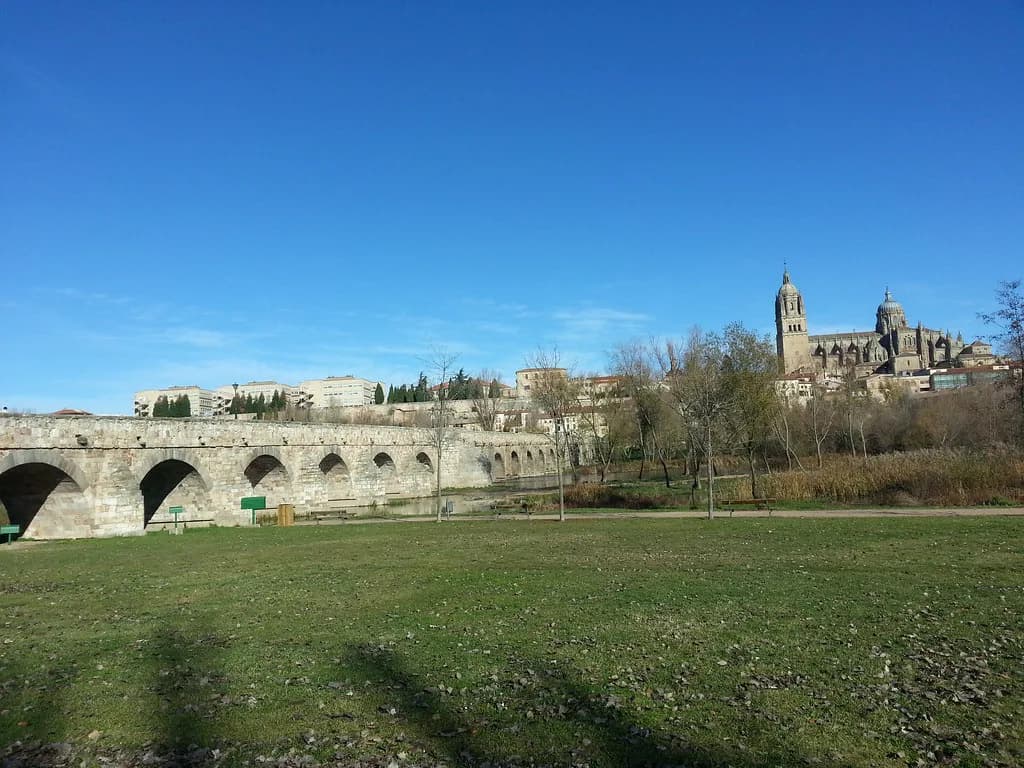
Puente Romano de Salamanca: A Visitor's Guide to the Roman Bridge
The Puente Romano de Salamanca is the long stone bridge that carries pedestrians over the River Tormes into the historic core of Salamanca in Castile and León. Locals also call it the Puente Mayor del Tormes, and it lines up the ancient Vía de la Plata with the twin cathedrals above the northern bank.
The visit is a walk, not a ticketed attraction: you cross a stone deck on arches, with open views back to the old town skyline. Allow it as a short outing combined with the streets and squares above the river rather than as a stand-alone day out.
What the bridge is and why it matters
This is an ancient stone bridge begun in the first century AD, tied to the imperial road network of Hispania. It crosses the Tormes on the southern side of Salamanca, forming the historic approach from the floodplain and the Arrabal district into the city.
Its importance is double: engineering and townscape. It carried the main road into Salamanca for centuries, and today it frames the city's stone façades from below, which is why the crossing rewards a slow walk rather than a quick photo stop.
Where the bridge is: the southern edge of Salamanca over the River Tormes
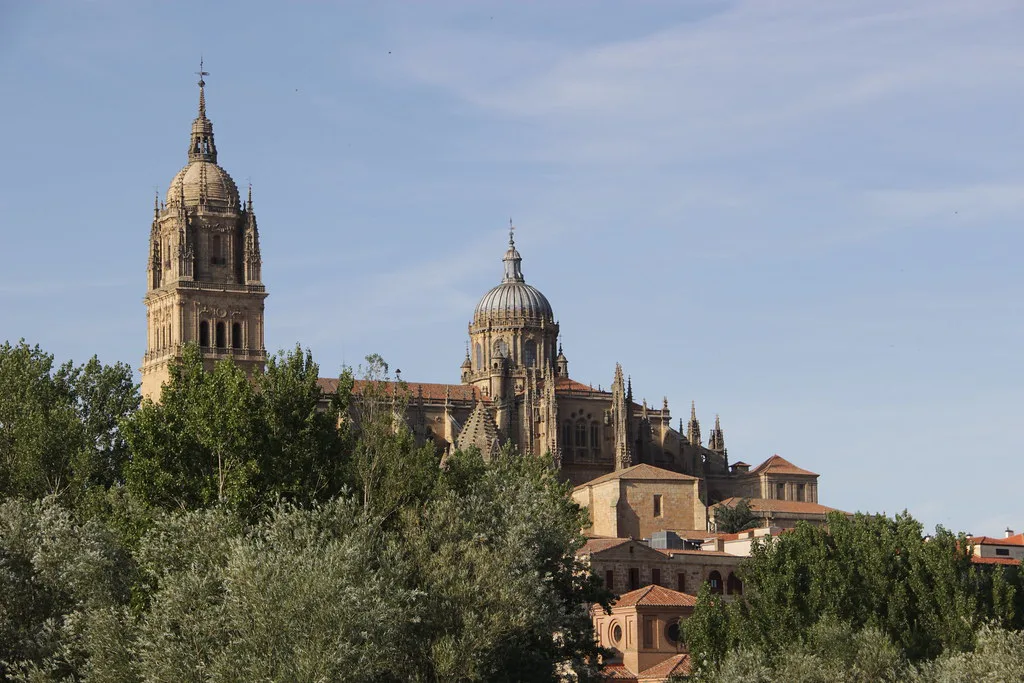
The bridge spans the Tormes just south of the historic centre, with the old town rising on the northern bank. From the deck you look up towards the Catedral Vieja and the later Catedral Nueva, which stand above the river on that side.
Approaching from the south, you come through the flat riverside ground beyond the Arrabal; approaching from the city, you drop down from the old streets to the northern end. Either way, the bridge is the fixed point to aim for in the landscape, not a hidden monument.
Getting there on foot from the historic centre
Walk it from the old town streets on the northern bank: the bridge sits at the bottom of the slope, so you head downhill from the cathedral quarter until you meet the stone deck. No transport is needed if you are already sightseeing in the centre, and the crossing itself is a short stroll.
If you are planning the rest of the day around the crossing, treat the bridge as the southern anchor of a walk that continues up to the university and the squares. That way you only climb the hill once, using the bridge as the low starting point. For a fuller itinerary, see these things to do in Salamanca.
The stone fabric: granite arches, the Roman section and later rebuilding
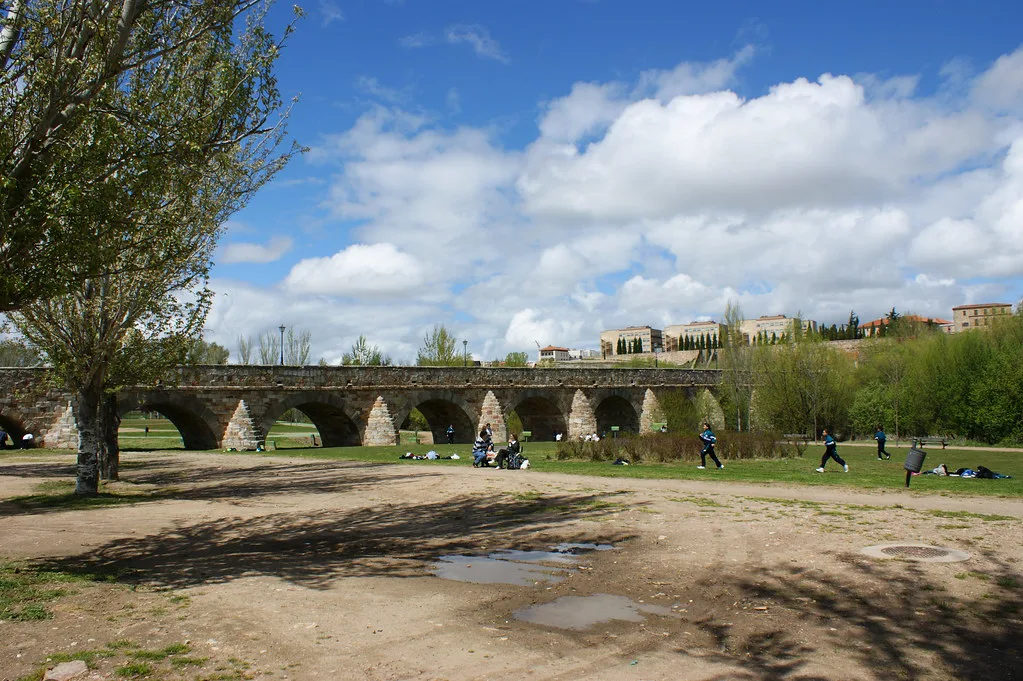
The bridge is built in dressed granite blocks laid in regular courses, forming a long sequence of arches across the river channel and the adjoining floodplain. The original Roman structure reached across the main flow of the Tormes, and that fabric survives closest to the city, where the bridge meets the northern bank.
Historical studies describe a Roman section of fifteen arches, attributed to the period between the reigns of emperors such as Augustus, Vespasian and Trajan. Beyond those spans, other arches belong to seventeenth- and eighteenth-century reconstructions after flood damage, rebuilt under the Spanish monarchy.
For a walker this ordering is the practical takeaway: the arches nearest the old town are the oldest part, and the further spans read as later engineering. Knowing that, the crossing becomes a lesson in how a Roman river crossing was patched and extended over centuries rather than a single intact antiquity.
The Vía de la Plata and the bridge's place on the Roman road network
The bridge forms part of the Vía de la Plata, the Roman Iter ab Emerita Asturicam that connected Mérida with Astorga and carried travellers and goods between the south and north of the peninsula. In that network the crossing at Salamanca was simply the ford-or-bridge point where the road met the Tormes.
That context is the reason to look north from the deck as well as down at the water: the road line continues towards the cathedral quarter and the old core, now as city streets. Reading the bridge as infrastructure, not scenery, explains why it sits exactly where it does.
Crossing today: a pedestrian bridge with views back to the cathedrals
The bridge spent centuries as the principal road bridge into Salamanca, and stayed the main crossing for heavy traffic until the twentieth century, when new bridges were built upstream and downstream. With that road infrastructure in place, it became a bridge for pedestrians, removing heavy vehicles from the deck.
The reward is the view back: a line of stone arches below, the Catedral Vieja and Catedral Nueva above, and the old core stacked between them. Go for that composition rather than for anything on the far bank, and the crossing earns its place on a sightseeing day.
How much time to allow and when to walk it
Plan on around half an hour for the crossing and the pauses for the view, or closer to an hour if you walk the full length slowly and stop at both ends. It is a short, exposed walk with a gentle gradient, so footwear matters more than fitness.
Time it around Spanish meal hours if you want the bridge as a between-meals leg: a late-morning walk before lunch at 1:30 to 4pm, or an early-evening crossing before dinner from about 8:30pm. Midday in summer is bright and shade-free on the deck, so carry water and a hat.
Heritage protection: Monumento Histórico-Artístico and Bien de Interés Cultural
The bridge was recognised early in the twentieth century with formal heritage protection as a Monumento Histórico-Artístico, and later as a Bien de Interés Cultural under Spanish law. That status explains the pedestrian-only deck and the careful stonework you walk on.
It sits within Salamanca's wider ensemble of historic monuments, alongside the university, the Plaza Mayor and the cathedrals, and acts as a foreground to the city's profile from the river. Treat it as part of that group of protected sights rather than as a separate ticketed site.
Nearby: the cathedrals and old town above the northern bank
From the northern end, the ground rises to the Catedral Vieja and Catedral Nueva, which stand above the river and make the obvious next stop. The university quarter and the Escuelas Mayores are a logical continuation if you want one compact run of historic sights.
The Plaza Mayor is a short walk further into the old town for a coffee or a plate of tapas once you have climbed from the river. If you are shaping a day, the Casa de las Conchas is another landmark in the same compact area worth slotting in. For a coffee stop in the same spirit, the historic Café Novelty is a classic choice on the square.
Beyond the bridge itself, the wider city has enough churches, cloisters and squares to fill a full day, so use the bridge as the low southern start point rather than the whole outing. It pairs naturally with a one-day route through the old town covered in this guide to things to do in Salamanca.
Practical checklist before you go
There are no tickets to buy for a public crossing, and lighting is not a fixed visitor service, so check locally on the day if you plan to walk after dark or want a particular view of the illuminations. The walk is outdoors and unsheltered; a light jacket and flat shoes make it comfortable.
If you need river-level access or an accessible route, the Salamanca tourist information office can tell you whether a path exists at the water; it is not something to assume. Pack the crossing into a wider route with the university and squares, and sort out any opening details for those buildings separately.
Plan Your Visit
The Puente Romano de Salamanca is best treated as a short, free walk with a strong view back to the cathedrals, grounded in a long history as the road crossing over the Tormes. Start from the northern bank, walk the deck, note the Roman arches closest to the city, and climb back into the old town for the rest of the day.
Check current opening details for nearby buildings and any access arrangements before you set out, then build the crossing into a morning or early-evening walk that ends at the Plaza Mayor. If you want the full day mapped out from the bridge to the squares, these things to do in Salamanca make a useful companion read.
Frequently Asked Questions
Where is the Puente Romano de Salamanca?
It crosses the River Tormes just south of Salamanca's historic centre, in Castile and León, Spain. The old town and the twin cathedrals stand on the northern bank above the river.
Is the bridge free to walk across?
Yes. It is a public pedestrian bridge with no ticket required, protected as a heritage monument rather than run as a paid attraction.
Which arches are the Roman ones?
The Roman fabric survives closest to the city, at the northern end. The spans beyond that belong largely to seventeenth- and eighteenth-century rebuilding after flood damage.
How long does it take to walk across?
Allow around half an hour for the crossing and the view back to the cathedrals, or closer to an hour if you stop at both ends and read the stonework.
Do I need to book a visit?
No. The crossing is open as a public right of way, and you simply walk it as part of a route through the old town.
What is the best time of day to walk the bridge?
Late morning or early evening fits Spanish meal times best and avoids the strongest summer sun. The deck is exposed, so carry water and wear a hat in hot weather.
Is the bridge accessible for wheelchairs or pushchairs?
The deck has a gentle gradient but is stone-paved and exposed. Ask the city's tourist information for current advice on step-free or wheelchair routes.