
University of Salamanca: What to See on a Visit
The University of Salamanca is worth an hour or two of any visit to the city, even if you have no interest in academia. The draw is the Escuelas Mayores, the old main building off the Plaza Mayor, where a carved sandstone façade hides a small frog and the courtyards open onto one of Spain's great Renaissance ensembles.
You can see the façade and the Patio de Escuelas from the street without paying anything; going inside the historic building is a separate decision, and ticket details belong on the university's own pages. Pair the visit with the Cathedrals and the Casa de las Conchas, all within a few minutes' walk in the old town.
What the University of Salamanca Is and Why It Is Worth a Visit
The historic university sits at the heart of a World Heritage old town, and its golden sandstone is the reason Salamanca is nicknamed the golden city. Spain's official tourism site treats the university as a core stop on a day in Salamanca, alongside the Plaza Mayor and the two cathedrals, which tells you how central it is to the city's identity. If you are deciding how to spend a single day here, our guide to things to do in salamanca places the university in the same old-town circuit.
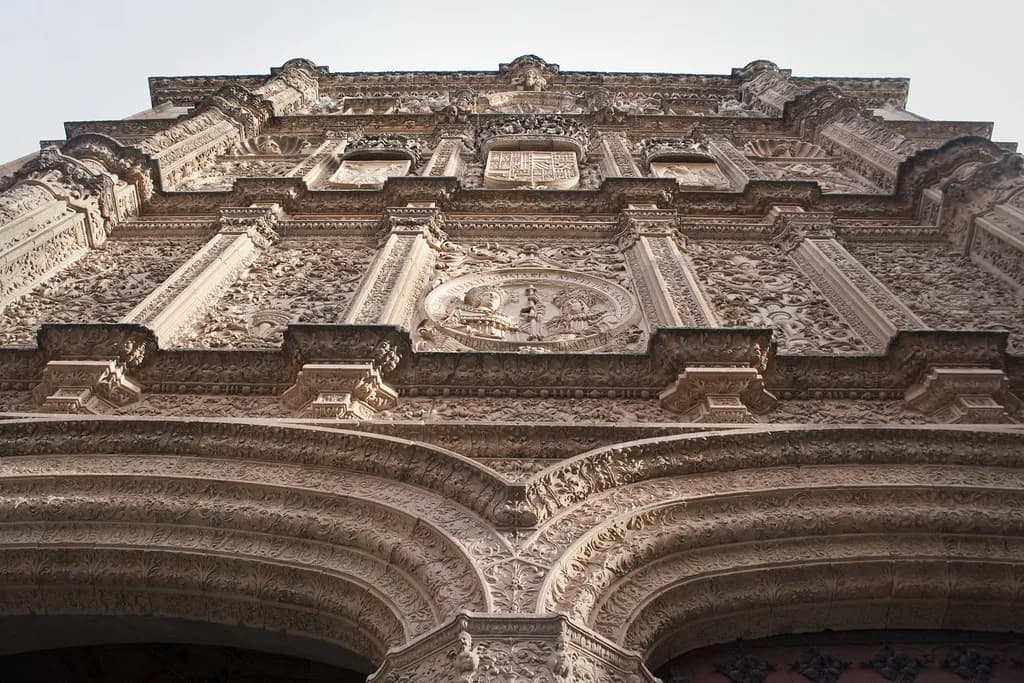
What makes it more than a photo stop is the carving. The main doorway is a dense Plateresque composition of religious scenes, coats of arms and mythological figures, and reading it takes longer than you expect. The building also houses the Cielo de Salamanca, a restored ceiling mural of the night sky painted in the fifteenth century.
Treat the Escuelas Mayores as the anchor of a short old-town walk rather than a half-day museum. For orientation across the rest of the centre, including the Roman bridge and the market, start with our Salamanca Attractions: 4 Visitor Guides.
Where It Is: the Escuelas Mayores Building off the Plaza Mayor
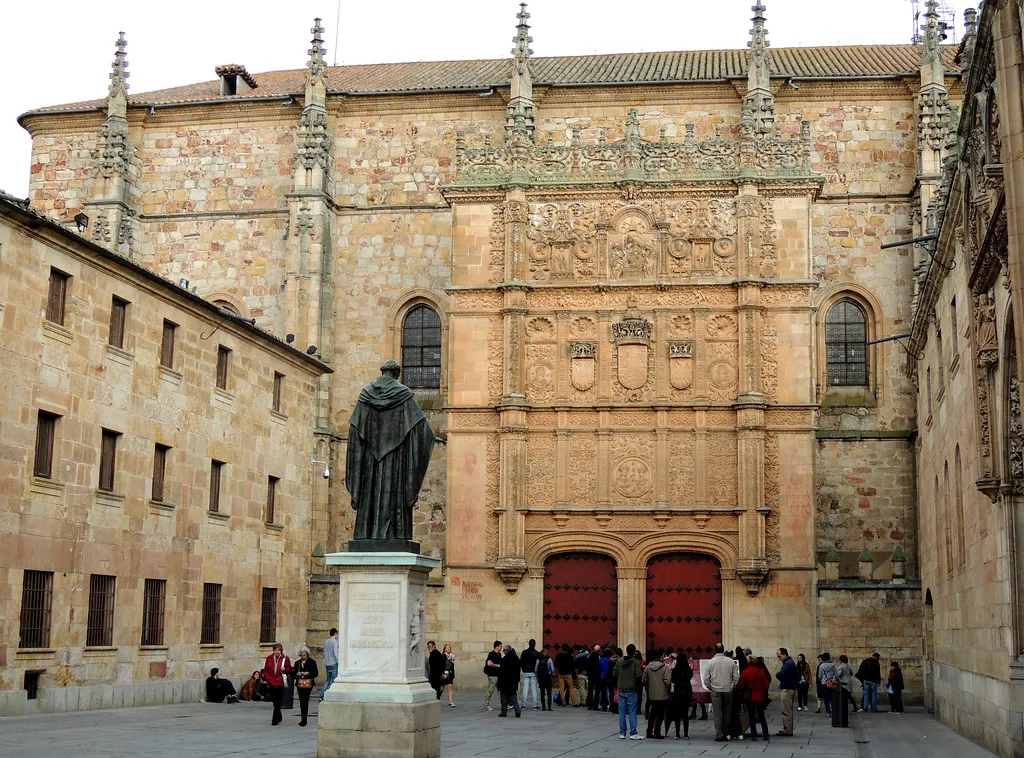
The historic university building, the Escuelas Mayores, stands in the old town between the Plaza Mayor area and the River Tormes. The Plaza de Anaya, with its gardens, is the square in front of the New Cathedral, and the university entrance is a minute or two from there on foot.
Because everything in the centre is close, you do not need transport between sights. Salamanca's old town is walkable and the main monuments sit within a compact area, so a pair of comfortable shoes does more for your day than any bus ticket.
If you are building a wider plan for the city, the neighbourhood around the university is the natural starting point; our things to do in salamanca guide covers the rest of the centre.
How to Get There on Foot from the Plaza Mayor
Start under the arcades of the Plaza Mayor and leave by the Rúa Mayor, the street that runs south from the square towards the Casa de las Conchas. The walk takes a few minutes and passes souvenir stalls on the Plaza del Corrillo, so it is an easy first stop of the morning.
From the Casa de las Conchas, the towers of La Clerecía and the Pontificia University rise just behind on the Calle de la Compañía, another historic thoroughfare lined with palaces. Continue to the Plaza de Anaya and the university doorway is right there.
If you arrive by train or bus, the old town is a straightforward walk or short taxi ride from the station side of the city; the route into the centre is level enough for most visitors. Our Casa de las Conchas, Salamanca page covers that stretch of the walk in more detail.
The Plateresque Façade: What Is Carved on It and How to Read It
The façade of the Escuelas Mayores is a tapestry in sandstone: religious scenes, coats of arms, and figures from myth and legend spread across the stone. Look for the medallion of the Catholic Monarchs, Ferdinand and Isabella, among the carved decoration.
The composition follows the Plateresque taste for dense ornament, so work from the centre outwards rather than trying to take in the whole wall at once. The Salamanca tourist board's own description calls the university's golden façade the ultimate expression of Plateresque architecture, which is a fair warning that the detail rewards patience.
Photograph the façade before you start looking for the frog, because once you are close to the stone the overall shape is lost. The carving faces into a courtyard with room to stand back, so a wide shot from across the Patio de Escuelas works better than a phone snap at arm's length.
Finding the Frog: The Legend and How Long to Allow
A small frog is carved somewhere on the university façade, and tradition says a student who spots it unaided will pass the year's exams. The Spain.info walking route describes it as the symbol of Salamanca and something every visitor tries to find.
The frog sits on a human skull, which is not obvious until someone points it out; the stone is a moral nudge about choosing learning over lust rather than a simple lucky charm. Allow ten to fifteen minutes for the hunt and be prepared to give up and watch where other visitors are pointing.
Local tradition attaches a second prize to the find, with good luck and marriage promised to those who spot it without help. Either way, the search is the point: it makes you look closely at carving you would otherwise walk past in thirty seconds.
The Patio de Escuelas and the Surrounding Courtyards
The Patio de Escuelas is the courtyard in front of the university, framed by side galleries and the old cloisters, and it separates the graduate school from the undergraduate buildings. It is free to walk through and is the best place to appreciate the façade from a distance.
Look for the carved medallions and coats of arms around the square, and note the university's role in the city: it occupies the space between the Plaza Mayor and the river and has shaped the streets around it. Spain.info's route through the old town treats this cluster of courtyards, colleges and palaces as one continuous walk.
Walls inside the university bear scratched victory marks, known as vítores, added by students at the end of each term. You may see them on the stonework as you move between the courtyard and the entrance.
The Cielo de Salamanca Ceiling Mural
Inside the university, a small room holds the Cielo de Salamanca, a vaulted ceiling painted by Fernando Gallego from around 1474 with the constellations and planets known at the time. Roughly a third of the original painting survives, showing the Sun, Mercury and fourteen constellations of the summer sky.
It is a short stop but a memorable one, and it rewards a few minutes of quiet looking rather than a quick glance. Photography is not allowed in the room, so put the phone away and take in the astronomy as a fifteenth-century student would have seen it.
Check whether the room is open on the day you visit when you buy your ticket, as access can be tied to the university's own visiting arrangements. The university's foundation publishes its services and activities online, which is a sensible place to start.
The Old Library: What You Can See from the Entrance
The university library sits on the upper cloister of the Escuelas Mayores, lined with antique books, wooden shelves and globes. It is not open to visitors, but you can walk up to the entrance and look in at the interior.
The appeal is the atmosphere as much as the contents: rows of old volumes in a historic reading room give a sense of the university's scholarly past. Budget a few minutes for the doorway view rather than expecting a guided tour of the collection.
If the library is your main reason for coming, confirm access arrangements with the university before you travel, since reading-room rules and visitor access are set by the institution rather than by the tourist office.
Tickets, Opening Hours and Booking: Where to Check
Admission to the historic Escuelas Mayores is ticketed, and the price and opening times change with the season and the academic calendar. Check the university's own site before you go rather than relying on an old blog post or a guidebook printed two years ago.
If you want to combine the visit with the cathedrals' Ieronimus tower tour, buy tickets separately or ask at the tourist office in the Plaza Mayor, which also stocks the free Salamanca Tourism guide with routes and an audioguide.
Some parts of the university's heritage, including the Cielo de Salamanca room, may be closed for academic use or restoration, so build flexibility into your day. If a particular room matters to you, ask at the ticket desk on arrival.
How Much Time to Allow and the Best Time of Day for Photos
Allow around an hour for the façade, the frog hunt, the courtyards and the Cielo de Salamanca, and add twenty minutes if you like reading the carved detail. If you are short of time, the façade and the Patio de Escuelas from outside the building give you most of the visual reward for free. Budgeting the wider day works the same way, as our things to do in salamanca guide sets out for the rest of the centre.
The golden stone of Salamanca is at its best in late afternoon and around sunset, when the light warms the façades and the city glows. The Spain.info route suggests ending the day by watching the buildings light up, so plan the university for the late-afternoon slot if you can.
Mornings are quieter for the frog hunt and the courtyard, since student groups and guided tours tend to arrive later. If you want photographs without crowds, go early and come back for the light at the end of the day.
Practical Tips for a Short Visit in a Busy University City
The university is a working institution, so expect students, staff and researchers moving through the streets around it during term time. Keep to the visitor areas and avoid walking into teaching buildings unless they are clearly open to the public.
Wear shoes that cope with cobbles and carry water in summer, when the inland Castilian heat builds through the afternoon. A hat and a short break in the shade of the Plaza de Anaya gardens will make the walk more comfortable.
If you are visiting the university as part of a longer trip, our Salamanca Attractions guide sets out the other monuments worth building into the same day, from the cathedrals to the river. For a step-by-step route instead of a list of sights, our things to do in salamanca guide fits the university into a full day on foot.
Nearby: the Cathedrals, Casa de las Conchas and La Clerecía
The two cathedrals are the obvious next stop, connected to one another and entered through the New Cathedral, where the lower door hides carved figures including an astronaut and a monkey eating an ice cream.
The Casa de las Conchas, a few minutes away, is a Gothic and Plateresque building decorated with more than 300 scallop shells and today houses the public library and an information office. The courtyard is a calm detour on the walk between the university and the Plaza Mayor.
La Clerecía, with its twin bell towers, sits on the Calle de la Compañía and can be admired from the street; the Spain.info route places it beside the Pontificia University on the same stretch.
Nearby: the Plaza Mayor for a Coffee or Tapas After Your Visit
The Plaza Mayor is the city's living room, a Baroque square of 88 porticoed arches with medallions of Cervantes, Charles I and other figures carved between them. Tourist information is available here, and the arcades are lined with cafés and restaurants.
For a coffee with history, the century-old Café Novelty in the square has a sculpture of the writer Torrente Ballester inside. Lunch in Salamanca runs from about 1:30pm to 4pm and dinner starts around 8:30pm to 9pm, so time your break accordingly.
The Spain.info route recommends tapas hopping around the Plaza Mayor for hearty sausages and cured meats, with the Calle Van Dyck in the newer part of town as another busy eating street. Both make a relaxed end to a morning at the university.
Where to Eat Near the University: Ham, Sausages and Roast Suckling Pig
Salamanca Province produces Guijuelo cured ham and embutidos, and the air of the nearby sierra is part of the curing story. Order a plate of jamón or a mixed board of sausages with a glass of local wine before you commit to a full meal.
If you want a sit-down lunch, roast suckling pig is the dish Spain.info points visitors towards in Salamanca, served in restaurants as well as in tapas bars. Portions are generous, so it suits a shared order or a single main course rather than a starter-plus-main routine.
The Central Market near the eastern entrance to the Plaza Mayor is a good stop for picnic supplies, with stalls selling ham, cheese, olives, bread and pastries. It is a market rather than a restaurant, so buy and eat elsewhere, or grab a snack and keep walking.
Making the University Part of a Longer Day in Salamanca
A workable day starts with the Plaza Mayor and the Casa de las Conchas, moves to the university façade and courtyards, then crosses to the cathedrals for the Ieronimus tower tour and the rooftops. That route keeps you in the old town and avoids doubling back. If you would rather build the whole day around the university, start from our things to do in salamanca walking guide.
End with the Roman bridge and the riverbank, the classic spot for sunset photographs of the city, before dinner in the centre. Our puente romano salamanca page covers what to see on the river side of town.
If you have a second day, the Sierra de Francia villages and Ciudad Rodrigo are within range of the city, but they need a car or a tour and a full day of their own. Keep the university for the day you are staying in the centre.
Plan Your Visit
The University of Salamanca rewards a visit built around the façade, the frog, the courtyards and the Cielo de Salamanca mural, with the Plaza Mayor and cathedrals within a few minutes' walk. Give it an hour, go in the late afternoon for the light, and check ticket details on the university's site before you set out.
Salamanca is a compact, walkable city, so the university fits naturally into a day that runs from the Plaza Mayor to the river. Start with our Salamanca Attractions: 4 Visitor Guides if you want the full set of monuments laid out in a single route.
Frequently Asked Questions
Is the University of Salamanca worth visiting?
Yes, if you enjoy architecture and a bit of a puzzle. The Plateresque façade, the frog carved on the stone, the Patio de Escuelas and the Cielo de Salamanca ceiling mural together make a rewarding hour, and the building sits a few minutes from the Plaza Mayor and the two cathedrals.
How long does it take to visit the University of Salamanca?
Allow about an hour for the façade, the frog hunt, the courtyards and the Cielo de Salamanca, plus twenty minutes if you like reading carved detail. Seeing the façade and courtyard from outside is free and much quicker, which suits a tight schedule.
Where is the famous frog at the University of Salamanca?
The frog is carved on the university's Plateresque façade, perched on a human skull. Tradition says that a student who finds it without help will pass the year's exams, so expect a small crowd staring at the stonework.
What can you see at the University of Salamanca?
The main sights are the carved façade with its medallion of the Catholic Monarchs, the Patio de Escuelas, the Cielo de Salamanca ceiling mural of the night sky, and the old library, which can be viewed from its entrance but is not open to visitors.
What should I eat near the University of Salamanca?
Look for Guijuelo cured ham and embutidos, and roast suckling pig if you want a sit-down lunch. The Plaza Mayor arcades and the Central Market are both close by for tapas, picnic supplies or a coffee.
What else is close to the University of Salamanca?
The two cathedrals, the Casa de las Conchas, La Clerecía and the Plaza Mayor are all within a few minutes' walk. The Roman bridge and the riverbank are a slightly longer stroll and make a good sunset finish.
Do I need to book tickets in advance for the University of Salamanca?
The historic building is ticketed, and arrangements vary with the season and academic calendar. Check the university's own website before travelling, and ask at the ticket desk about access to individual rooms such as the Cielo de Salamanca on the day.