Free Things to Do in Lanzarote: What to See First
Free things to do in Lanzarote, from Las Grietas lava canyons and Playa del Janubio's black sand to El Golfo, Los Hervideros and Teguise's Sunday market.
On this page
The best free things to do in Lanzarote are its volcanic landscapes: the Las Grietas lava canyon, the Los Hervideros blowholes, the green lagoon at El Golfo, the black sand of Playa del Janubio and the rock formations of the Stratified City all cost nothing to visit. Add Caletón Blanco in the north, two free-to-wander markets and the boardwalk at Playa Blanca, and a hire car for two or three days covers most of the island.
Skip the resort bubble for a day or two. Nearly every stop below sits on or near a main road, so you are driving short hops between car parks rather than committing to full-day excursions. The trade-off is that the famous paid attractions, Timanfaya's Fire Mountains above all, sit on the same routes and tempt you to spend.
Why a hire car beats resort life for free sightseeing
Lanzarote is small and drivable, and three days with a car is enough to see the stops in this guide, with the rest reachable on foot from a Playa Blanca base. Buses and tours exist, but the free sights are scattered across the centre and north, and a car turns a day of timetables into a string of short hops. If you would rather not drive, full-day island tours are an option, though they cost money and set your pace.
February to June and September to November give comfortable exploring temperatures, with February averaging around 20C and the odd windy day. Peak summer is the hottest, busiest and most expensive stretch, and the paid attractions suffer the worst queues then. Visiting in October or September keeps the car parks calmer and the walking pleasant.
Las Grietas: the free lava slot canyon
Las Grietas is a solidified lava tunnel that has opened into a narrow slot canyon, free to visit, with a large car park on the side of the road and a five to ten-minute walk to the rock formations. The car park sits slightly beyond the canyon itself: use it rather than stopping on the verge, where thoughtless parking has nearly caused accidents.
Wear closed-toe shoes with grip. The canyon floor is narrow, slippery and loose in places, and fifteen minutes covers the main crevices unless you carry on along the hillside trail. Most people cluster at the first openings; the crevice furthest from the car park is the one worth the extra few minutes.
Los Hervideros: the blowhole coast near El Golfo
Los Hervideros is a free stretch of coast where lava met the Atlantic and the sea now surges through collapsed tubes, throwing up spray that seems to boil. It sits about two kilometres from the green lagoon at El Golfo, so the two combine into one short outing. Come on a windy day, when the swell puts on the show.
The paths are exposed and the rocks are sharp-edged, so keep back from the edge and wear proper shoes rather than flip-flops. Early morning or just before sunset gives you the best light and the thinnest crowds.
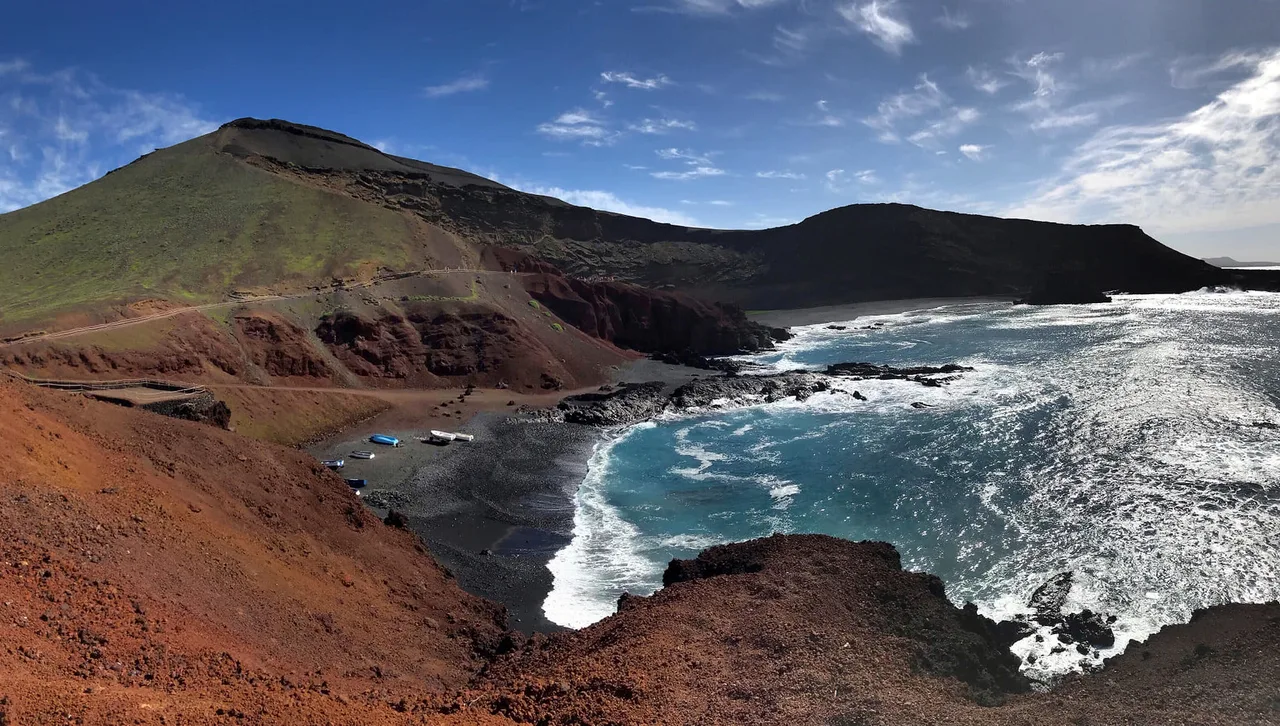
Charco de los Clicos (Lago Verde) in El Golfo
The Charco de los Clicos, known as Lago Verde, is a green lagoon inside a volcanic crater beside the ocean at El Golfo, and the viewpoint is free. The colour comes from phytoplankton, sulphur and minerals in the water rather than anything you can swim in: it is a protected area, and swimming and littering are forbidden.
Park at the free car park and take the short coastal walk to the viewing point. Arrive early: the car park fills within an hour of mid-morning. The black sand and crashing waves beside the lagoon make this one of the island's most photographed free stops.
Playa del Janubio: free black sand and the salt flats next door
Playa del Janubio is a black sand beach with a large free car park, about a 13-minute drive from Playa Blanca. It is wild and exposed, with the biggest waves of the beaches in this guide, so treat it as a place to look at and walk rather than a swimming spot.
The Salinas de Janubio next door are the largest salt flats in the Canary archipelago and a protected natural area. The viewpoint by the entrance and the visitor centre are free, and guided tours run at 10am, 12pm, 2pm and 4pm and include a 90-minute walk and tasting.
The Stratified City: free roadside rock formations
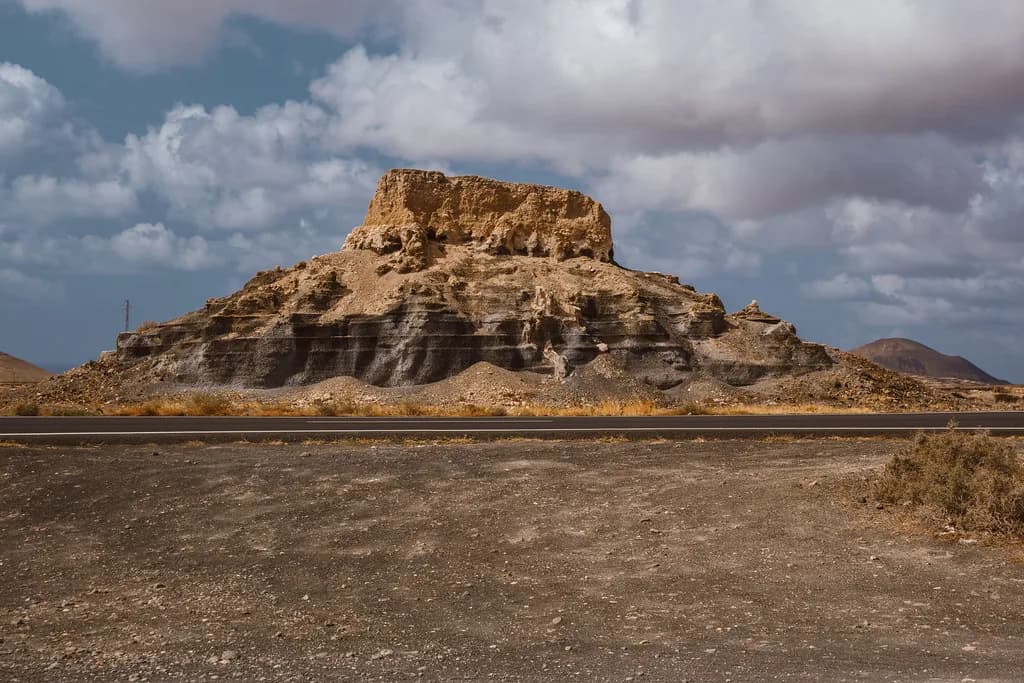
The Stratified City is an area of eroded volcanic rock on the side of the road near the Cactus Garden, with a large free parking area and no queue. Wind and rain have carved the formations into shapes you can wander between, climb and photograph in ten to twenty minutes. It rarely gets busy, which makes it an easy add-on rather than a destination in itself.
Caletón Blanco: free parking and shallow water in the north
Caletón Blanco sits on the north-eastern tip of the island, with free parking right off the road next to the beach and no entry charge. The bay is calm and shallow even when the wind is up, backed by mountains, and far quieter than the resort beaches at Playa Blanca.
The beach is fine pebble and shell rather than sand, with volcanic rocks scattered about, so water shoes make paddling more comfortable. Bring everything you need: this is a natural beach, not a serviced one.
El Golfo village: a slow afternoon at the end of the road
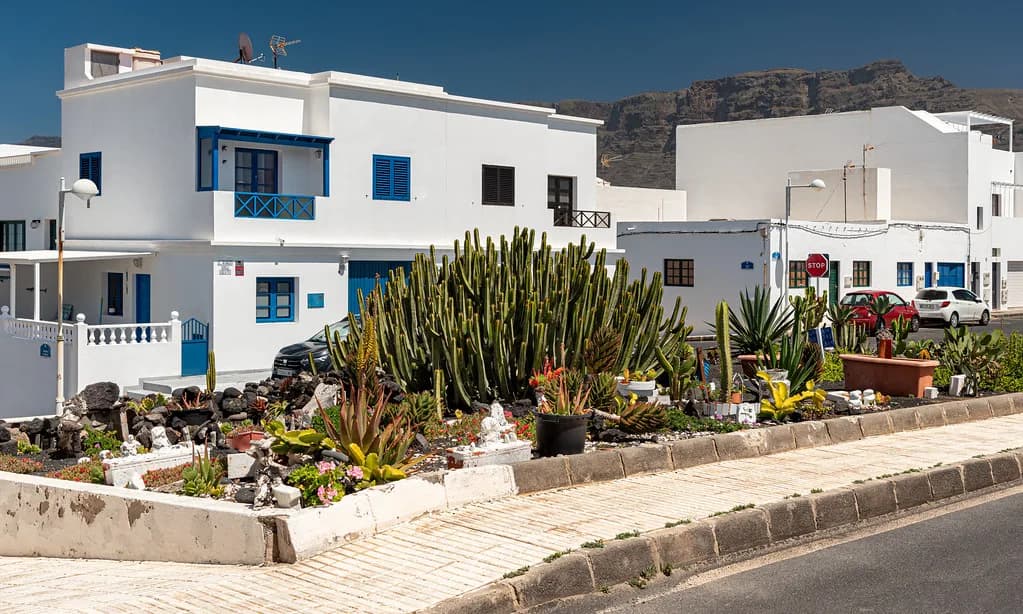
El Golfo is a small coastal village on the south-west coast where the road simply ends in a free car park beside a children's playground. Waterfront restaurants, bars and cafés line the shore, and the pace is slower and more local than Playa Blanca. Walking the coast and watching the Atlantic break costs nothing; eating and drinking is where your money goes.
Teguise market: Sunday stalls in the old capital
Teguise, the former capital, holds its big market on Sundays, when the quiet town fills with stalls selling clothes, bags, artisan crafts and Canarian food, plus live music. Wandering the cobbled square, whitewashed buildings and church costs nothing, and the surrounding streets have artisan shops and al fresco cafés. Keep an eye on your bag when it is packed.
Outside market day, Teguise is a calm stop for an hour with a coffee. If you are building a market-led day, compare the island's options before you commit a morning to one.
Marina Rubicón market: Wednesday and Saturday mornings
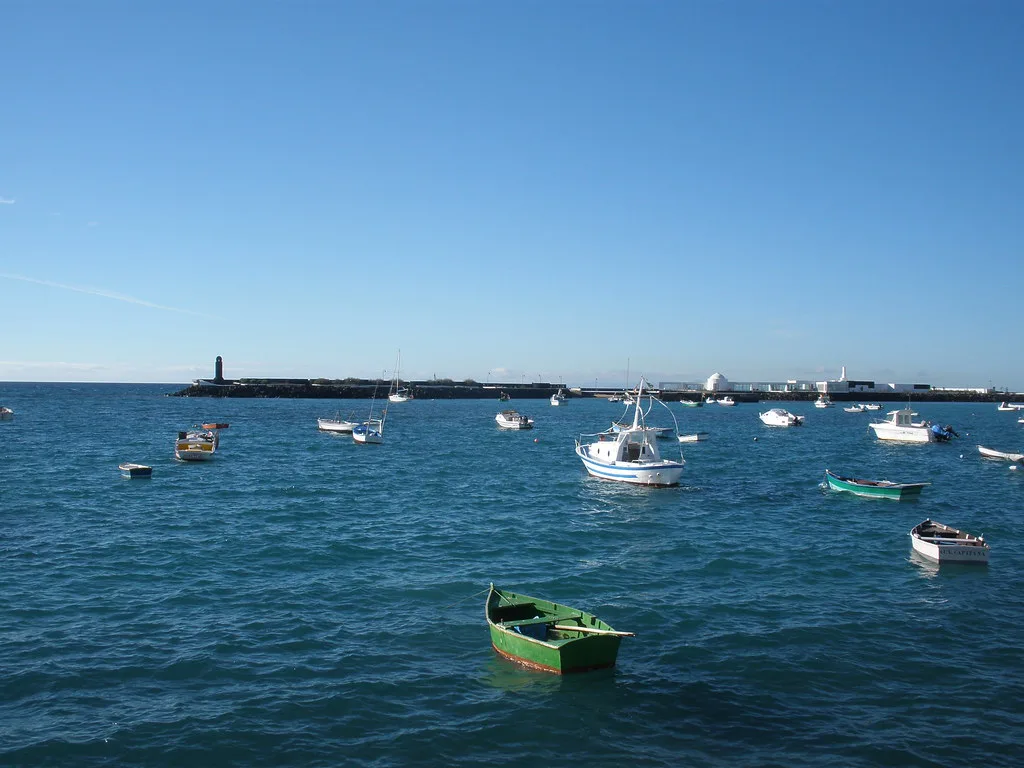
The Marina Rubicón market runs every Wednesday and Saturday from 9am to 2pm, with artisan crafts and souvenirs that go beyond the usual tat. Entry to wander is free, and the marina itself, with its restaurants, bars and yachts, is an easy walk along the boardwalk from Playa Blanca.
La Geria's zocos: free views of the vine walls
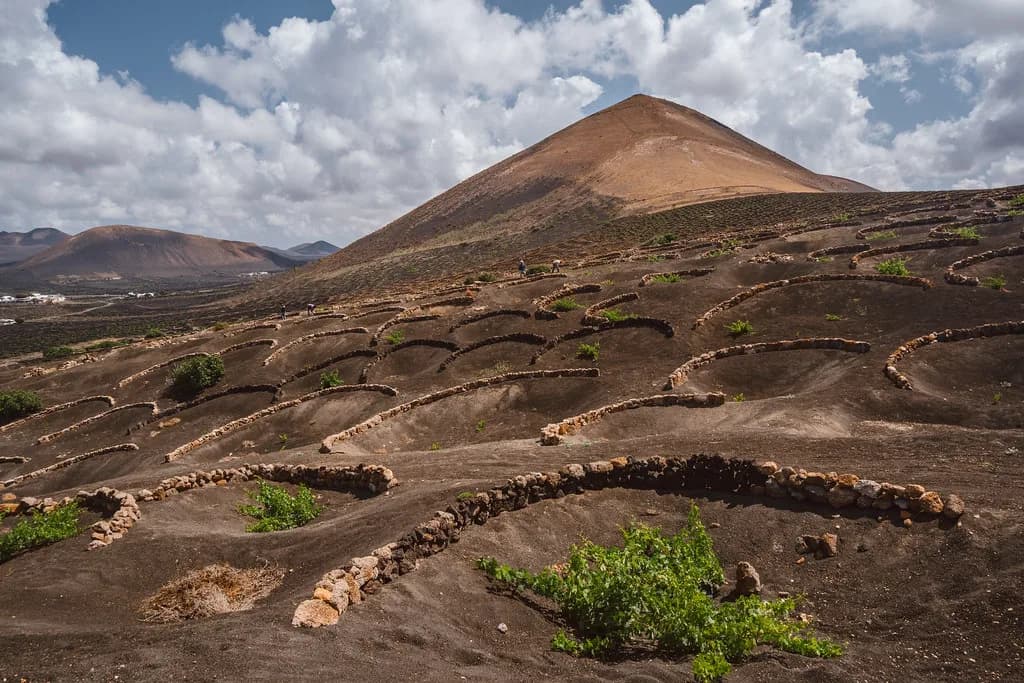
The La Geria wine region is covered in thousands of semi-circular stone walls called zocos, each shielding a single vine from the wind, and you can see them from the road for nothing. Bodega La Geria, on the LZ-30, has a large terrace where you can photograph the zocos and enjoy the landscape without paying to enter; tastings and the gift shop are optional extras. It is the easiest winery to stop at, with coaches regularly pulling in.
If you do taste, appoint a driver or book a wine tour rather than driving yourself. The wine route runs through the centre of the island and works naturally into a day heading north or back south.
Walking the Playa Blanca boardwalk and Playa Dorada
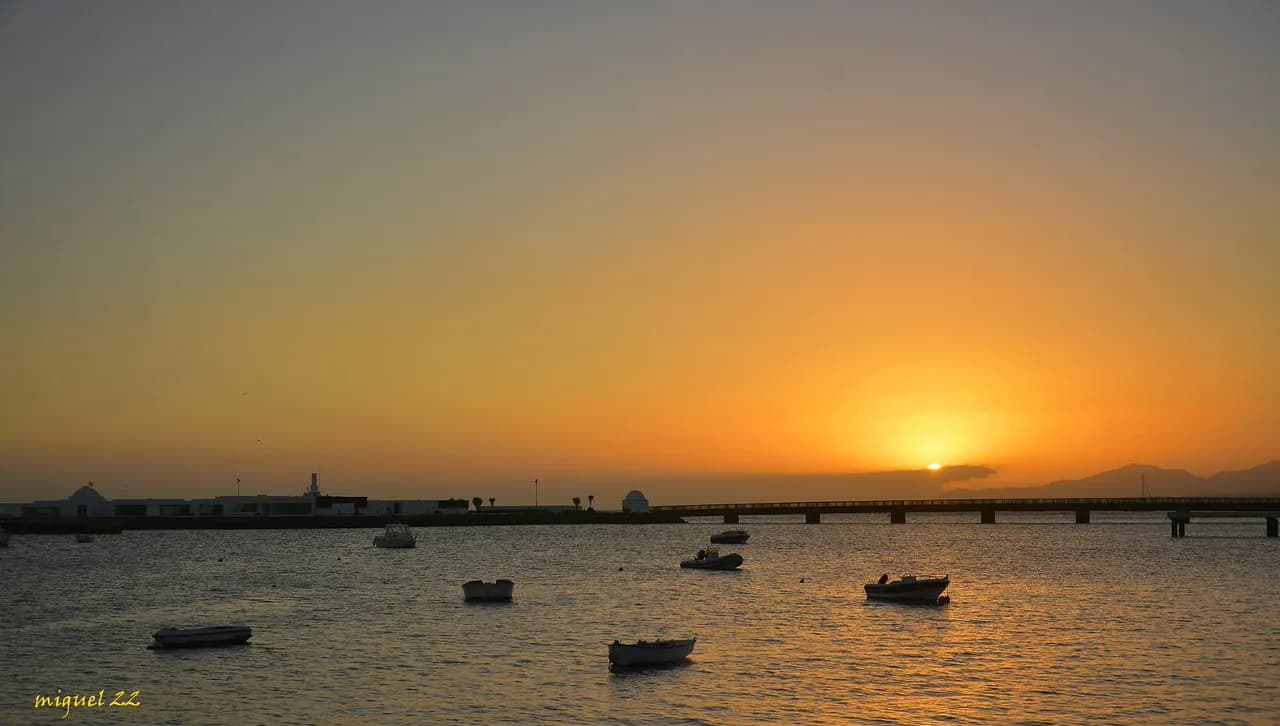
The coastal boardwalk between Playa Blanca town and Marina Rubicón is free and made for morning or evening walks. Playa Dorada, in a sheltered bay, is the beach to pick over the smaller, busier Playa Blanca beach: the water is calmer and the waves rarely amount to much.
Playa Blanca itself is short on sightseeing beyond eating, drinking and the beach, so use it as a base rather than the whole trip. The promenade restaurants face the sunset and the side streets hold small independent shops.
Free versus paid nearby: Mirador del Río, Timanfaya and the Cactus Garden
Timanfaya is not free. You can drive through the national park on public roads at no cost and see the black and red hills, but the Fire Mountains themselves are a paid area: you park, board a coach for a 14km route through the lava fields and cannot get off, so sit on the right-hand side for the views. Tickets are bought at the entrance, last entry is 3.45pm, and entry closes early if the park hits capacity, so aim for opening time or mid-afternoon rather than the crush in between.
The Cactus Garden, a César Manrique design inside an old quarry, charges adults 8.50 euros and children 4.25, with a windmill and terraces worth an hour; arrive at opening because the car park fills fast. Mirador del Río charges 8.50 euros per person, and a layby slightly lower down the road gives an almost identical view for nothing. The Cueva de los Verdes runs to 16 euros and the Jameos del Agua to 21.20 euros on the admission prices published for those sites, both best booked ahead.
Plan the paid stops deliberately rather than drifting into them. A single paid morning plus free afternoons keeps costs down, and one day is enough for the headline paid visits if you start early.
Practicalities: driving days, wind and timing your day
The island is windy year-round, which shapes your day: save exposed coasts such as Los Hervideros and Playa del Janubio for breezy weather when the waves are dramatic, and shelter inland at the Cactus Garden or in Teguise when you want calm. Lava terrain punishes thin soles, so bring closed-toe shoes with grip for Las Grietas and the Stratified City.
If rain interrupts, the caves and Manrique sites absorb a wet morning better than the coastal stops. Keep one wet-weather plan in reserve and swap the order of your days rather than cancelling.
Check opening times and tour slots for any paid site before you set out, and fill the car in advance so a free day stays free. A rough shape that works: Las Grietas and the Stratified City in the morning, then El Golfo, Los Hervideros and the salt flats into the afternoon.
What to skip when the budget is zero
Treat Mirador del Río, the Fire Mountains coach, the Cactus Garden, the caves and Jameos del Agua as paid stops and choose one at most if your budget is nothing at all. The free drive-through of Timanfaya's public roads still delivers the lunar landscape without the ticket.
Skimp on the paid viewpoint, not the parking: use official car parks everywhere, including Las Grietas, where verge parking has caused near-misses and local anger. Free sights stay free only while visitors behave.
Plan Your Free Days
Build your Lanzarote days around the free volcanic stops: Las Grietas early, Los Hervideros and El Golfo together, Playa del Janubio and the salt flats in the same afternoon, and a market morning at Marina Rubicón or Teguise. Add Caletón Blanco in the north when you have the car for a third day.
Pin down car hire dates, market days and any paid attraction tickets before you travel, then let the wind and tide decide the order of the rest.
Explore more Lanzarote guides
Frequently Asked Questions
What can you do for free in Lanzarote?
Las Grietas, Los Hervideros, the Charco de los Clicos viewpoint at El Golfo, Playa del Janubio, the Stratified City, Caletón Blanco and the Playa Blanca boardwalk all cost nothing. The Salinas de Janubio viewpoint and visitor centre are free, and the markets at Teguise and Marina Rubicón are free to wander.
Is Timanfaya National Park free to visit?
You can drive the public roads through the national park for free and see the volcanic scenery. The Fire Mountains area is paid: you park, board an official coach for a fixed route and cannot get off. Tickets are bought at the entrance, last entry is 3.45pm, and entry can close early when the park reaches capacity.
Where is Las Grietas and is it free?
Las Grietas is a lava-formed slot canyon with a large free car park on the side of the road and a five to ten-minute walk to the formations. The car park sits slightly beyond the canyon itself. Wear closed-toe shoes, as the floor is narrow and slippery in places.
Which Lanzarote markets are free to walk around?
Teguise holds its big market on Sundays, filling the old town's cobbled streets and square with stalls. Marina Rubicón runs its market on Wednesdays and Saturdays from 9am to 2pm. Both are free to wander; your spending is optional.
Do you need a car for the free sights in Lanzarote?
A car makes the free stops far easier, since they are scattered across the centre and north. Three days of hire covers the island comfortably, and tours are an alternative if you would rather not drive. Playa Blanca's boardwalk and Playa Dorada need no car at all.
When is the best time to visit Lanzarote for walking and exploring?
February to June and September to November give comfortable temperatures for exploring on foot. February averages around 20C with some windy days. Peak summer is hottest and busiest, which means longer queues at the paid attractions and fuller car parks.
What should you wear for the lava terrain?
Closed-toe shoes with grip are essential at Las Grietas and useful at the Stratified City, where the rock is loose and slippery. At Caletón Blanco, water shoes help on the pebble and shell beach. Bring layers for the wind, which blows year-round.
Sources
Notes for eating well in Spain
Optional updates to our guides.
You might also like
Continue reading
More guides you'll find useful