Málaga Seafood Restaurants: Where to Eat Fish and Espetos
Where to eat seafood in Málaga, from charcoal espetos and beach chiringuitos to fried fish, market bars and modern fish cooking in the historic centre.
On this page
Málaga eats its seafood in three distinct ways, and picking the right one matters more than chasing a single famous address. The beach chiringuitos along Pedregalejo and El Palo grill sardine skewers over charcoal, the market counter at Atarazanas sells a pork-filled bocadillo for breakfast, and the centre serves modern fish cooking within sight of the Alcazaba. Match the setting to the meal and the city makes sense quickly.
Spanish meal times run the day here: lunch from about 1:30pm to 4pm and dinner from 8:30pm or 9pm. Seafood places are busiest in that second window, especially from Thursday to Sunday, so a beach lunch or an early evening tapa usually means less waiting. Plan the big sit-down meal for lunch and keep dinner flexible.
What Málaga Seafood Looks Like: Espetos, Fried Fish and Counter Eating
The signature dish is the espeto de sardinas: sardines threaded onto a skewer and roasted over charcoal, traditionally in an old boat filled with sand and firewood along the coast. They arrive salt-crusted and soft, and a squeeze of lemon is all they need. Order one portion per person as a starter, then build the rest of the meal around fried fish and shared plates.
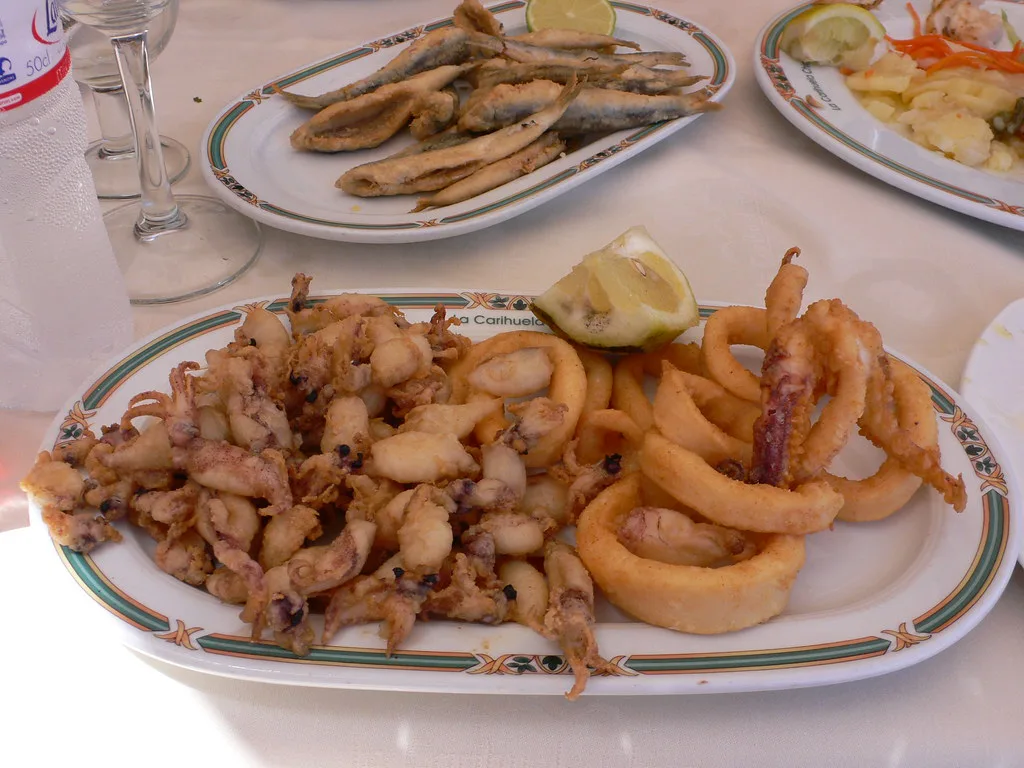
Fried seafood is the second pillar: fritura malagueña, a platter of mixed fried fish and seafood, plus boquerones and tortillas de camarones, the crisp shrimp fritters that Cadiz does so well. Expect the tortillas to be oily — that is part of the deal, not a fault. Pulpo a la brasa, grilled octopus with paprika and olive oil, shows up on most menus and is a good test of a kitchen.
Counter eating is the third style. At Mercado de Atarazanas, stalls sell meat, fish, fruit and spices, and the surrounding bars serve tapas to shoppers and visitors at outdoor tables. It is smaller than Barcelona's La Boqueria, which makes it easy to walk once and pick a counter on instinct rather than planning a route.
Espetos and Beach Chiringuitos Along the Eastern Seafront
The chiringuitos strung along the Paseo Marítimo Pablo Ruiz Picasso specialise in fish cooked over charcoal, and they compete openly on the price of a sardine skewer. At Chiringuito Nuevo Mediterraneo the skewer was €5 in 2026 — not the cheapest on the promenade, as the place itself admits — and two portions still feel essential. Go at sunset, when the beach tables are at their best and the grill is in full flow.
Further east, Pedregalejo and El Palo are the traditional seafood neighbourhoods, with beachfront restaurants that locals use for long lunches. Some Pedregalejo venues are described as temporarily closed while the seafront promenade is renovated, with reopening expected for the 2027 summer season, so check before you build a day around a specific address. The neighbourhoods themselves remain worth the trip for the atmosphere alone.
Seven Café in Limonar, just east of La Malagueta, is a strong breakfast stop before a beach day, with bocadillos that regulars order on multi-grain bread with tomato, manchego and olive oil. It is not a seafood restaurant, but it sets you up for one. Prices along this stretch vary more than in the centre, so compare a couple of chalkboards before sitting down.
El Tintero: The Auction-Style Seafood Feast
El Tintero works like a seafood auction: servers walk the open-air dining room calling out the names of freshly cooked plates, and you flag one down if it appeals. The format suits groups and families, because everyone ends up with something different and the table fills fast. It sits on Málaga's long beachfront, so it pairs naturally with an afternoon by the sea.
Order the pimientos asados, roasted peppers, alongside whatever fish is being shouted around the room, and treat espetos as the anchor of the meal. The place is about the experience rather than refined cooking, and that is the honest trade-off. Arrive hungry and early enough to enjoy the chaos rather than endure it.
Fried Fish and Cadiz-Style Seafood in the Centre
Er Pichi de Cai brings the flavours of Cadiz to Málaga, with four branches across the city. The tortillas de camarones are big enough to share between two — crisp, packed with shrimp and, by the kitchen's own admission, a little greasy. The pulpo a la brasa is impeccably tender with a paprika smokiness, and a chickpea and prawn stew delivers a deep shellfish flavour.
For a sit-down fried fish feast in the centre, El Cortijo de Pepe on Plaza de la Merced grills chorizo de Ardales and cumin-spiced pinchitos morunos over an open flame, and finishes pulpo a la brasa over the fire too, served on soft potatoes and peppers. It is an old-school tapas bar rather than a seafood temple, but the grill work is the reason to go. Pair it with a cold beer and keep the order simple.
Bar Málaga on Calle Santa María does excellent berenjenas con miel, fried aubergine with honey, and solid gambas pil-pil, so it works as a lighter seafood stop when you want vegetables alongside the fish. The old town is dense with these small traditional bars, and the best approach is to pick two or three and order one dish at each rather than committing to a full menu.
Market Seafood at Mercado de Atarazanas
Mercado de Atarazanas is Málaga's central food market, and the stalls sell everything from meat and fish to fruit and spices. It is not as large as Spain's biggest markets, but it is packed with good things, and the surrounding bars serve tapas to shoppers and visitors at outdoor tables. Go before lunch to see the fish counters at their best.
El Capricho inside the market is the practical pick: its pork shoulder bocadillo, well stuffed with juicy salty pork and nuggets of crackling, was €6 in 2026 and makes a great value breakfast or lunch. It is not seafood, but it is the market's most useful cheap meal and the queue moves quickly. Eat it standing at the counter and then go back for fish.
Modern Fish Cooking Near the Alcazaba
Taberna Uvedoble on Calle Alcazabilla sits a stone's throw from the Alcazaba, which makes it the obvious choice before or after a visit to the fortress. The squid ink vermicelli is the dish to order: toothsome noodles in a deep umami fish stock, topped with tender baby squid and potent alioli. The truffle-scented tortilla and jamon croquetas are also exemplary, and the kitchen is closed on Sundays.
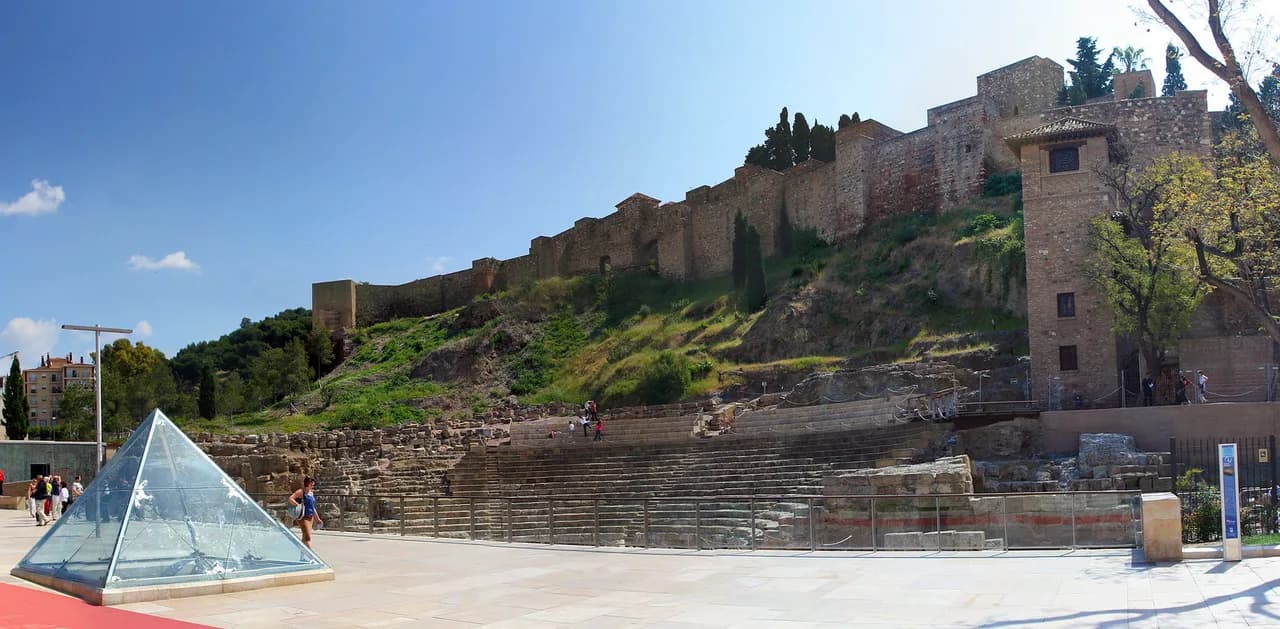
This is the best area for a seafood lunch that fits around sightseeing. The Alcazaba de Málaga, the Roman theatre and the Picasso Museum are all within a short walk, so a 1:30pm table at Uvedoble lets you eat well and still see the sights before they close. Book ahead for dinner, when the taberna fills with locals and visitors alike.
Seafood with a Peruvian or Mexican Edge
La Barria Inka on Plaza María Guerrero serves Peruvian cooking, and its white fish ceviche is the reason to go: buckets of fresh fish, texture contrast and a marinade that zings with citrus and spice. Pisco sours go down far too easily here, so pace yourself if you have a long afternoon planned. It is a useful break from the deep-fried seafood that dominates the centre.
La Guacamole on Calle Cárcer makes margaritas with a salty, citrusy, spicy Tajin rim, poured at the table over crushed ice, and the homemade nachos and guacamole are a fine snack. Neither is seafood, but together they make a good early-evening stop before a later fish dinner. Mexican food in Málaga is a growing scene, and this bar is one of its friendliest outposts.
Where to Eat Seafood Near Málaga's Sights
The historic centre is compact enough to combine seafood with sightseeing on foot. Plaza de la Merced has over a dozen restaurants and tapas bars around it, and Picas Bar Tapas on the square is one of the most highly rated, with plentiful tapas and vegetarian options for the non-fish eaters in the group. It is a practical lunch stop between the Picasso statue and the Alcazaba.
Near the Cathedral and Calle Larios, Casa Lola runs several tapas bars in the centre, including a branch on Calle Granada that is one of the most popular in the city. Expect a queue at peak times: arrive half an hour early if you want a table without a long wait. The ligeritas, small sandwiches, and the grilled tuna belly are the things to order.
For a seafood meal with a view, Batik sits on the top floor of a hotel on Calle Alcazabilla, ideal for watching the sunset over Gibralfaro Castle with a drink in hand. It is a bar rather than a restaurant, but the setting is the point. Follow it with a proper dinner at one of the nearby tabernas.
Menu Words to Know: Espeto, Fritura, Pulpo a la Brasa, Boquerones, Pitufo
Espeto means a skewer, usually sardines grilled over charcoal; fritura is a mixed fried fish platter; pulpo a la brasa is grilled octopus; boquerones are fresh anchovies, often fried; and a pitufo is a small breakfast roll, the Málaga equivalent of a bocadillo. Recognising these five words on a chalkboard is half the battle. The other half is knowing that a portion of espetos is usually one skewer per person, not a sharing plate.
Rice dishes are ordered for a minimum of two people in most Málaga restaurants, so do not try to order a single paella for one. If you are solo, stick to tapas and half-raciones. Fish is sold by weight in some places, so ask for the price before committing if the menu lists it per kilo.
Prices to Expect and How to Order Cheaply
Seafood in Málaga can be cheap or expensive depending on where you sit. Beach chiringuitos charge more for the view, while market counters and back-street tabernas are better value. At Chiringuito Nuevo Mediterraneo the sardine skewer was €5 in 2026; at El Capricho in Atarazanas the pork bocadillo was €6 in 2026; at La Nora, near María Zambrano station, two sandwiches and two drinks came to just over €11 in 2026. For a cheap seafood meal, order a single fritura to share, a plate of boquerones and a couple of drinks at a market bar, and skip the sit-down restaurants. Portions are generous enough that two people can eat well on three tapas. For a cheap alternative to fish, Hamburgesería Asador Padilla serves a whole rotisserie chicken with potatoes, salad, bread and beers for just over €20 in 2026.
Timing: Lunch, Dinner and When Seafood Places Get Busy
Lunch runs from about 1:30pm to 4pm, and dinner does not start until 8:30pm or 9pm. Many kitchens close between services, so a 5pm seafood craving will be hard to satisfy outside a chiringuito or market bar. Plan lunch as the main meal and keep dinner light or late.
Seafood places get busiest in the evening from Thursday to Sunday, especially in the centre. If you want to eat at Casa Lola or El Tapeo de Cervantes without a long wait, arrive half an hour before opening. El Tapeo de Cervantes serves lunch from 1pm to 3.30pm and dinner from 7.30pm to 11.30pm, Tuesday to Sunday, and is closed on Mondays.
Common Mistakes: Ordering Rice Alone, Skipping the Queue, Going Too Early
Rice dishes are for two or more, so ordering one solo is the most common error. Likewise, arriving at 7pm for dinner finds half the city still at home; the kitchen may be open but the room will be empty. And skipping the queue at a popular tapas bar usually means missing out — the wait is part of the system, and it moves quickly enough.
Another mistake is assuming every famous address is a seafood restaurant. El Pimpi is a Málaga institution for tapas and local wine, but it is not primarily a fish restaurant, and its queue is for the formal dining room while the tapas bars inside have high turnover. Go for the atmosphere and order the fritura malagueña if you want fish there.
How to Choose: Centre vs Beach vs Market
Choose the centre for modern fish cooking and sightseeing, the beach for espetos and a long lunch, and the market for a quick, cheap seafood fix. The centre is best for dinner, the beach for lunch, and the market for breakfast or an early lunch. If you only have one seafood meal, make it a beach lunch with espetos and a shared fritura. If you are weighing up another coastal city for the same kind of meal, compare these with the ibiza seafood restaurants before you commit.
If you are staying in the historic centre, the best tapas bars are within walking distance of the Cathedral and the Alcazaba. Consider a food tour if you want to cover several stops without planning the route. Otherwise, pick one neighbourhood per day and eat within it rather than crossing the city for a single dish.
Plan Your Seafood Crawl
Start with a beach lunch of espetos and fritura, spend an afternoon at the market, and finish with a modern fish dinner near the Alcazaba. That sequence gives you the three faces of Málaga seafood without repeating a single style. For a broader look at the city's food scene beyond fish, see the best restaurants in Málaga.
Book tables for dinner, arrive early for lunch, and check opening days before you set out: several kitchens close one or two days a week. That is the practical core of eating seafood well in this city.
Explore more Málaga guides
Frequently Asked Questions
What seafood should I try in Málaga?
Start with espetos de sardinas, sardines grilled over charcoal on a skewer, then try fritura malagueña, pulpo a la brasa and boquerones. Tortillas de camarones are worth ordering if you like shrimp fritters. The city's seafood is simple and salty, built around the grill rather than heavy sauces.
Where can I eat espetos in Málaga?
The beach chiringuitos along the eastern seafront, especially around Pedregalejo and El Palo, specialise in espetos. Chiringuito Nuevo Mediterraneo is one named option, and El Tintero offers a similar beachfront experience with a different service style. Go at lunch or sunset for the best atmosphere.
Where are the best seafood restaurants in Málaga old town?
Taberna Uvedoble near the Alcazaba serves excellent squid ink vermicelli, and Er Pichi de Cai brings Cadiz-style seafood to the centre. El Cortijo de Pepe on Plaza de la Merced grills pulpo a la brasa over an open flame. Market bars at Atarazanas are also within walking distance of the old town.
How much does seafood cost in Málaga?
Prices vary widely. Beach chiringuitos charge more for the setting, while market bars and back-street tabernas are cheaper. Some dishes have appeared at specific prices in recent years, but menus change; check the current price at the counter or on the menu before ordering.
Which Málaga seafood restaurants are on the beach?
Chiringuito Nuevo Mediterraneo is on the Paseo Marítimo, and El Tintero sits on the beachfront. Pedregalejo and El Palo have several more, though some may be affected by promenade works. Check locally before travelling to a specific address.
What is espeto de sardinas?
Espeto de sardinas is a skewer of sardines roasted over charcoal, traditionally in a boat filled with sand and firewood. The fish is salted and grilled until the skin crisps, then served with lemon. It is Málaga's signature seafood dish and the one to order first.
Where do locals eat seafood in Málaga?
Locals head to the beaches of Pedregalejo and El Palo for espetos, to the market bars at Atarazanas for a quick tapa, and to neighbourhood tabernas like El Cortijo de Pepe for grilled fish. The centre is busier with visitors, but the back streets still hold traditional bars.
What time do Málaga seafood restaurants serve lunch and dinner?
Lunch is typically from 1:30pm to 4pm, and dinner starts around 8:30pm to 9pm. Many kitchens close between services, so a late-afternoon seafood meal is best at a chiringuito or market bar. Check opening days: some restaurants close one or two days a week.
Sources
Notes for eating well in Spain
Optional updates to our guides.
You might also like
Continue reading
More guides you'll find useful