
Mercado Central de Alicante: What to See and Eat

Alicante's Mercado Central is worth one morning of your trip, not a whole day. It is the city's largest market, a working food hall where nearly 300 stalls sell produce over two floors of an early-20th-century building, and it sits at the end of La Rambla within walking distance of the Old Town and the seafront.
The market is not a ticketed attraction: you walk in, browse, buy fruit or a coffee, and leave. The main trade-off is timing, because a visit fits neatly before a Spanish lunch at 1:30–4pm rather than after it. Go early, take your time over the fish counters, and you can be sitting down to eat while the city is still waking up to lunch.
Why the Mercado Central de Alicante is worth an hour of your morning
This is a place to see daily life rather than a monument. The building is a beautiful early-20th-century hall full of fresh and manufactured products, and even travellers who are not obsessive about food tend to enjoy a wander through hundreds of stalls and the atmosphere that goes with it.
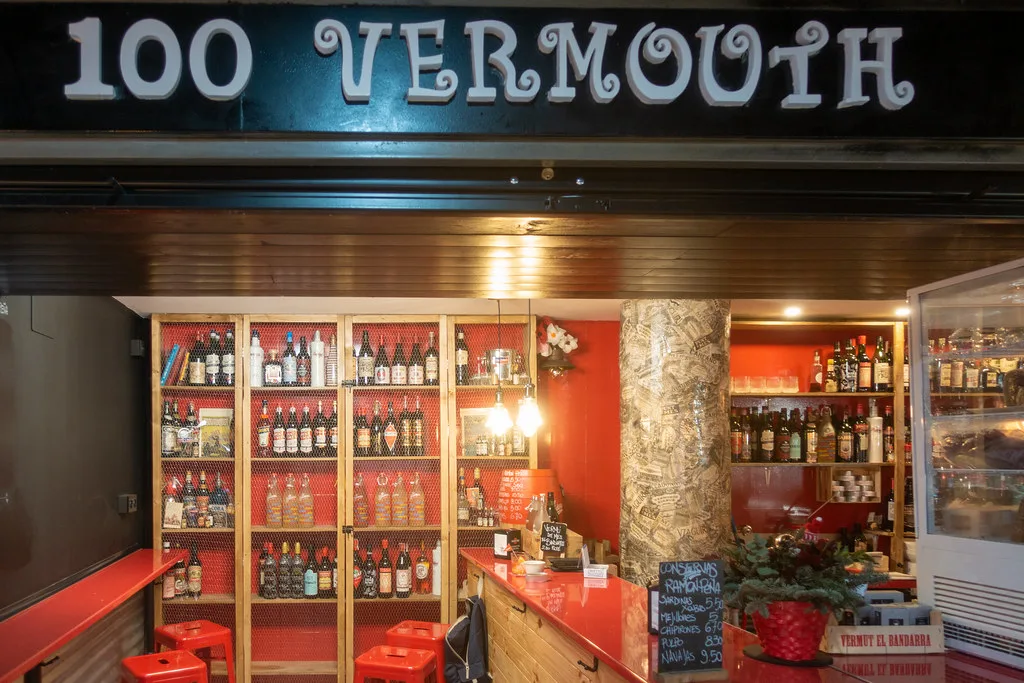
What makes it different from a generic food hall is the range on offer under one roof: Levantine orchard fruit, fish from the Mediterranean coast, meat and sausages, cheese, bread and pastries. You can buy a picnic for the beach or a handful of local produce to take home, then stop for a glass of vermouth at one of the bars that have replaced some of the older stalls.
It suits a short, unhurried visit on a weekday morning far better than a rushed stop on the way to somewhere else. Pick the stalls that interest you, sample what looks good, and keep the rest of the morning for the Old Town.
Where the market is: the end of La Rambla, Avenida Alfonso X El Sabio
The main historic market hall, the larger of the two in Alicante that are called central markets, sits on Avenida Alfonso X El Sabio at the end of La Rambla, on the edge of the Old Town. That location makes it easy to combine with a walk up La Rambla or down towards the Explanada de España and the seafront.
There is also a smaller covered food hall at Calle Vicente Inglada that trades under the same central-market name. The two addresses are separate, with different schedules and different stall counts, so check which one you are heading for before you set out.
Neither is a ticketed attraction. Entry is free because these are working markets, not museums, so you can step in and out as often as you like during the morning.
Opening hours and the Sunday closure
The market trades six days a week and closes on Sundays. At the Calle Vicente Inglada hall, the same pattern runs all year, from 9am to 2pm Monday to Saturday, with no afternoon session and no Sunday opening, so a 2pm close rules out any post-lunch browsing.
Because the market shuts in the early afternoon, the practical way to fit it into your day is before lunch. Spanish lunch runs from 1:30pm to 4pm, so a 9am to 11am visit leaves you the rest of the morning and then a proper sit-down meal afterwards.
Hours around public holidays and the market's own calendar can change, so check the current schedule on the market's own notices before you walk across town.
Getting there on foot from the Old Town and Explanada de España
Alicante's centre is compact enough to cover on foot. The market is a few minutes' walk from Explanada de España and from the Old Town, and several city bus routes run through the centre if you are coming from further out, with street parking in the surrounding streets.
For most visitors the best plan is to leave the car behind. Park near the seafront or the port, walk up through the Old Town, and treat the market as the midpoint of a morning loop rather than a separate trip.
Step-free entry at the Calle Vicente Inglada hall means a wheelchair or a shopping trolley gets in without a kerb, which makes it a straightforward stop for anyone with limited mobility.
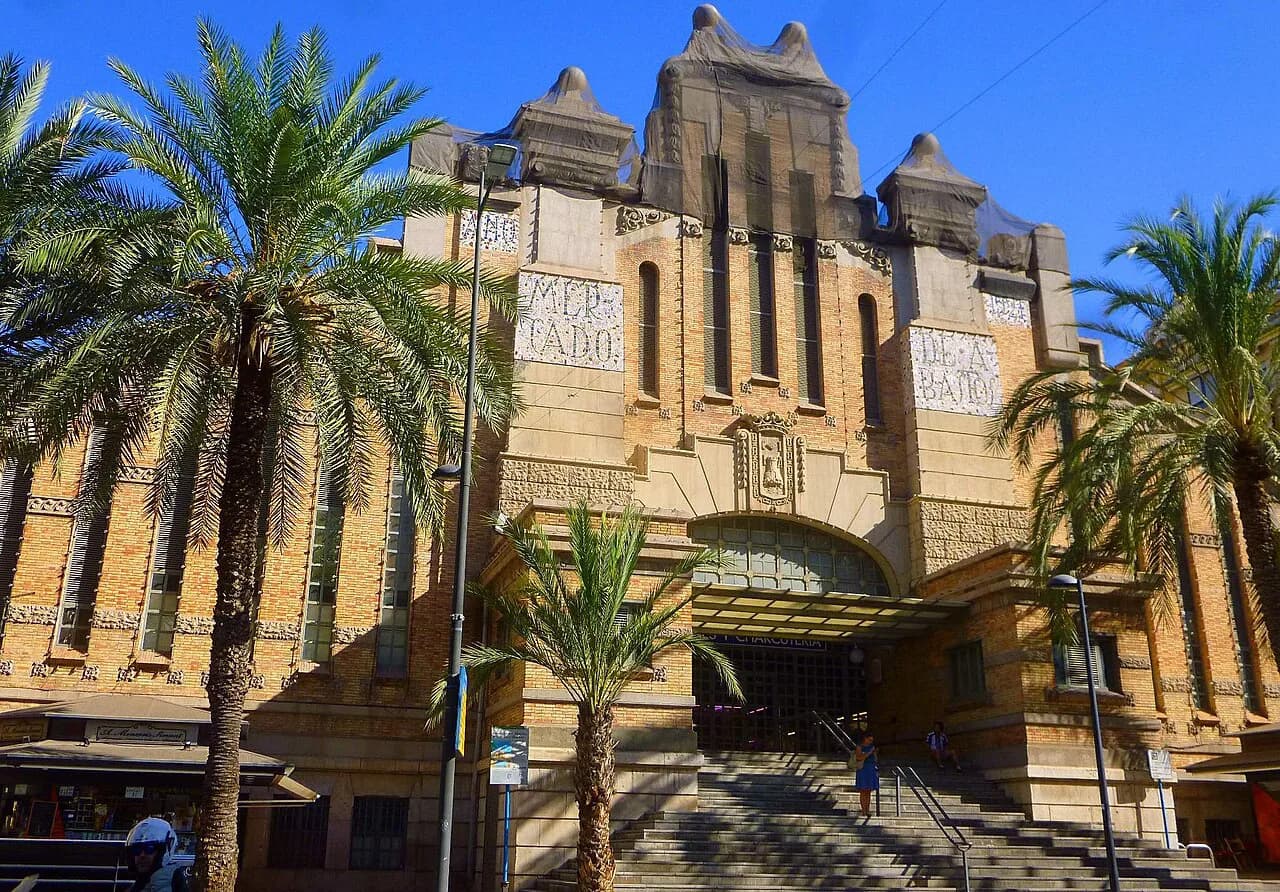
The building: early-20th-century brick, high ceilings and the Rotonda
The main hall was designed by Juan Vidal Ramos and Francisco Fajardo Guardiola at the start of the 20th century and replaces two smaller, less hygienic markets from the late 19th century. It is a rectangular building with large corridors and high ceilings, in the same family as the Valencia Central Market or Barcelona's Boqueria, and it borrows touches of Modernism and eclecticism.
Look up: large stained-glass windows under the roof give the hall its natural light, and the brick, gable roof and wide walkways make the space feel airy even when it is busy. The Rotonda, on one side of the main façade beneath a striking semi-spherical roof, is the most distinctive part of the exterior.
The full hall covers almost 11,000 square metres, with fish and seafood taking the lower floor and meat, poultry and eggs above alongside fruit and vegetables. A lap of the whole building is what makes the hour go by, so budget for a slow walk rather than a quick errand.
What to buy: Levantine fruit and vegetables, fish and seafood, meat, cheeses and bread
Produce stallholders sell the best fruits from the Levantine orchards and from the Mediterranean coast, plus a wide range of imported goods. This is the place to pick up tomatoes, citrus and whatever is in season if you are self-catering or heading for the beach.
The fish and seafood counters are the strength of the building, with fish arriving from the bays around Santa Pola and Villajoyosa. Plan your visit around the fish if you are serious about cooking, and bring a cooler bag if you are buying more than a single meal's worth.
The smaller hall on Calle Vicente Inglada stocks the everyday basics under one roof: fruit and vegetables, meat and poultry, fish and seafood, cheese and dairy, and bread and pastries. Stalls there take cash and mobile payments, so carry some notes as well as a phone rather than assuming every counter has a card reader.
Several stalls have been refurbished in recent years and now specialise in oils, coffees, wines and other gourmet products, alongside the traditional traders. That shift means a browse turns up presents and pantry items as easily as lunch.
The fish counters worth knowing: José Fuster and Juanelo
José Fuster is one of the best-known stalls in the market, praised for the quality of its bay fish and for generations of Alicante customers, including chefs. If you want one fish counter to start with, start there.
Juanelo is known for a strong selection of the best local and seasonal fish. Prices at Juanelo can be higher than at other market stalls, but the quality is what you are paying for, so treat it as the place to spend more on a smaller amount rather than your everyday stop.
Both are working counters rather than tastings, so go with a plan: a whole fish for the grill, a few fillets for a pan, or something to take back to an apartment kitchen. Ask what came in that morning and how you should cook it.
Seafood from Santa Pola and Villajoyosa at Juncal
Juncal is the market's seafood specialist, and much of what it sells comes from the nearby bays of Santa Pola and Villajoyosa. That short supply chain is the reason to buy shellfish here rather than in a supermarket, and the counters show what is genuinely local on the day.
If you are travelling without a kitchen, use Juncal as a prompt for what to order later. Shellfish from these bays turns up on restaurant menus across the city, and knowing the names of the catch makes it easier to pick a plate of the local speciality rather than something flown in.
Prices move with the day's catch, so there is no fixed guide to what a kilo costs. Look at the counter, ask for what is in season and buy what looks bright and fresh.
Coffee, tea and spices at Salzillo
Salzillo is the market's fragrant stop, with coffees of varying origins, exotic teas, infusions in all kinds of flavours and combinations, and plenty of herbs and spices. It is a good place to buy a small bag of something you cannot get at home.
For a traveller with hand luggage only, buy spices and teas rather than liquids, and ask for them to be sealed. A bag of ground coffee also makes a lighter souvenir than a bottle of wine.
Pair a stop here with the fruit stalls nearby and you have the makings of a picnic for the Explanada de España, a few minutes' walk away.
Eating in the market: Cafeteria Anamar and its generous sandwiches
Cafeteria Anamar is a good place for a quick bite, and portions may be larger than you expect. Scrambled egg sandwiches with ham and cheese are the kind of order that sets you up for a morning of walking.
Katana is one of the most surprising food experiences in the market, serving Peruvian, Mexican, Asian and Mediterranean fusion cooking built from produce sold at the stalls around it, a project from the Italian Davide Bersan. It is the sort of place to sit down for a proper lunch rather than a snack.
For a cheaper, quicker meal, use the bars and small restaurants that have taken over some of the traditional stall spaces. They are built for the market's tardeo habit, an aperitif with a beer, wine or vermouth shared with friends and family, so expect a lively crowd.
Katana and the newer bars behind the market's tardeo shift
The market has changed purpose for many residents. Instead of shopping there daily, more people now come for a midday or after-work aperitif, and some traditional stalls have given way to bars and small restaurants to serve that habit.
That shift suits visitors well: it means you can eat a light lunch or a late-morning snack without leaving the building. The trade-off is that the market is busier at social hours than at opening time, so choose between a quiet browse early and a lively drink later.
It also means you should not expect a hushed museum atmosphere. Come for the noise, the counters and the smell of coffee and fish, and treat the bars as part of the visit rather than an afterthought.
How much time to allow and when to arrive
An hour covers a full lap, a stop for coffee or a snack and a look at the fish counters without rushing. If you are shopping properly for a kitchen, or eating a sit-down lunch at one of the bars, allow two hours.
Arrive at opening time, when the hall is at its calmest and the fish is at its freshest. Late morning brings the social crowd and the bars fill up, which is fun in its own way but less pleasant if you actually want to buy produce.
Plan around the early closing and keep the market as your morning activity rather than trying to squeeze it in after lunch. If you want a longer day, put the market in the morning and save your sit-down meal for 1:30pm onwards.
Practical points: step-free entrance, cash and mobile payment
The hall on Calle Vicente Inglada is wheelchair accessible at the entrance, which is step-free. Inside, the layout is level, so a wheelchair or a pushchair moves around without difficulty.
Payment at the stalls is cash and mobile rather than universally by card. Carry some euro notes for smaller purchases and keep your phone charged for the counters that accept mobile payments.
There is no ticket or booking system: you turn up during trading hours and walk in. That also means no queue to plan around, so fit the market in wherever your morning has space.
Nearby: Alicante Old Town, Explanada de España and the seafront
The Old Town, El Barrio, is within easy walking distance, with tapas bars and the Basílica de Santa María among its draws. Use the market as a starting point, then head uphill through the lanes.
The Explanada de España and the seafront are a few minutes' walk in the other direction, and make an easy picnic spot with whatever you have bought. For a longer walk, the Castillo de Santa Bárbara rises above the city and gives you the whole of Alicante from above.
If you want more museum time, the marq museum alicante covers the province's archaeology and makes a good afternoon after a morning at the market.
Spanish meal times and fitting the market into your day
Spanish meal times shape a market visit more than any opening hour. Lunch runs from 1:30pm to 4pm and dinner does not start until 8:30–9pm, which puts the market firmly in the morning slot and leaves the afternoon free.
A sensible day starts at the market at 9am, follows with coffee and a walk through the Old Town, and ends with a proper lunch at 1:30pm or later. If you prefer a slower start, reverse it: lunch first, then the market the following morning.
That pattern also keeps you out of the afternoon heat in summer, when a midday walk uphill to the castle is better saved for a cooler hour.
Plan Your Visit
Treat the Mercado Central de Alicante as a morning, not a destination in its own right. Arrive early, walk the fish counters while the market is quiet, buy fruit or coffee, and leave the afternoon for the Old Town and the seafront.
Decide before you set out which hall you mean, larger historic one or the smaller food hall on Calle Vicente Inglada, because their hours and stall counts differ. One last check of the current schedule on the day is enough to avoid a wasted walk.
Explore more Alicante guides
Frequently Asked Questions
What time does Mercado Central de Alicante open?
The market opens in the morning and closes in the early afternoon, trading Monday to Saturday with no afternoon session. Because the closing hour is the part that catches people out, check the current schedule before you go and plan the market as your morning activity rather than an after-lunch stop.
Is Mercado Central de Alicante open on Sundays?
No, the market is closed on Sundays. Saturday morning is therefore your last chance of the week to see the fish, meat, produce and bakery counters before the hall reopens on Monday.
Where is the Mercado Central in Alicante?
The main historic hall sits on Avenida Alfonso X El Sabio at the end of La Rambla, on the edge of the Old Town and a short walk from the Explanada de España. A smaller covered food hall trading under the same central-market name is on Calle Vicente Inglada, so check which one you are heading for.
What can you buy at Alicante Central Market?
Fruit and vegetables from the Levantine orchards, fish and seafood from the bays around Santa Pola and Villajoyosa, meat, cheese, bread and pastries. Recent years have added stalls specialising in oils, coffees, wines and other gourmet products, and several bars and small restaurants.
Can you eat at Alicante Central Market?
Yes. Cafeteria Anamar covers quick bites such as scrambled egg sandwiches, Katana serves Peruvian, Mexican, Asian and Mediterranean fusion dishes, and the bars that replaced some traditional stalls are built for the tardeo aperitif. Expect the busiest tables at late morning and lunchtime.
How long do you need at Alicante Central Market?
An hour is enough for a full lap, a coffee and a proper look at the fish counters. Allow two hours if you plan to shop seriously for a kitchen or sit down for lunch at one of the bars.
Is Alicante Central Market wheelchair accessible?
The hall on Calle Vicente Inglada has a step-free entrance and a level layout, so a wheelchair or pushchair moves around without difficulty. Inside, the main corridors are wide enough for both shoppers and trolleys.