
Mercado Central de Zaragoza: What to See at the Lanuza Market
The Mercado Central de Zaragoza is the city's biggest market, housed in a modernist building on Avenida de César Augusto in the centre of Zaragoza. Locals also call it the Mercado de Lanuza, and it works as a food market first: 74 stalls plus four food spaces where you can eat on site.
It sits between the old town and the river, so it slots neatly into a morning of sightseeing rather than needing a trip of its own. Entry is free to browse the stalls, and you need roughly an hour unless you stop to eat.
What the Mercado Central is
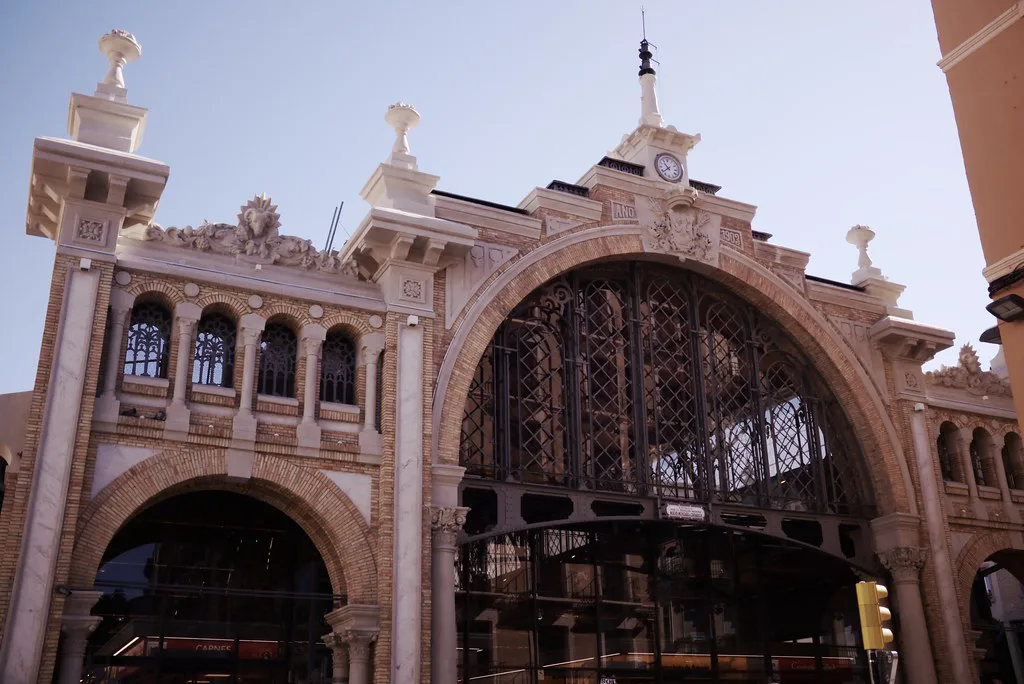
The market's own site calls it the largest market in Zaragoza and describes a modernist lonja from the early 20th century, restored in 2020. It is a working market, not a food-themed attraction: most of the building is produce retail, with a smaller eating area added alongside.
The building was designed in 1895 by an Aragonese architect and has been a national historic monument since 1978, a Bien de Interés Cultural since 1982. Look up at the structure as well as down at the counters.
Where it is and how to get there
The address is Avenida de César Augusto, 50003 Zaragoza, on the western edge of the old town and a short walk from the river. From the Basílica del Pilar and the Plaza del Pilar, it is a straightforward 10 to 15 minutes on foot along César Augusto.
Trams and buses run along the same avenue, which makes the market an easy stop between the centre and the station side of the city. If you are coming from the Aljafería Palace, allow around 20 minutes on foot across the centre.
Opening hours
Published hours are Monday to Friday 9:00–14:00 and 17:30–20:00, and Saturdays 9:00–14:30. That afternoon reopening on weekdays is the detail most visitors miss: the market shuts for lunch, then trades again for the evening shop.
Saturday afternoons are not an option, so plan a Saturday visit for the morning. Sunday hours are not listed on the market's site, so check before building a Sunday around it.
Spanish meal times matter here. A late lunch at 13:30 fits the weekday morning session or the Saturday morning, while an evening bite before 20:00 fits the weekday afternoon opening.
The building and its heritage
Heritage status is the reason to slow down inside. The market has been a national historic monument since 1978 and a Bien de Interés Cultural since 1982, and the 2020 restoration brought the modernist shell back into shape.
This is a market to walk end to end rather than a museum with exhibits. Give the aisles a full lap before you buy anything, so you see the fish counters, the cured meats and the flower stalls in one sweep.
What is sold across the 74 stalls
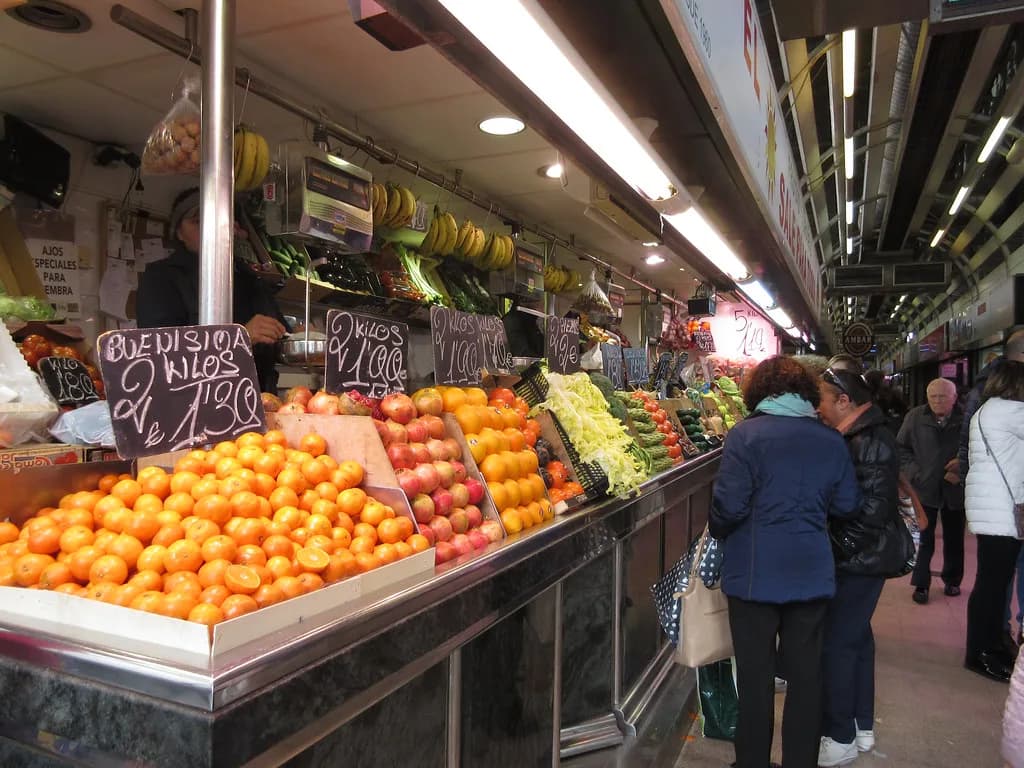
The 74 stalls cover fish and shellfish, bacalao, meat, embutidos, poultry, frozen goods, pickles, flowers, fruit and vegetables, nuts and bread. If you are self-catering or taking a picnic to the river, this is where to assemble it.
Aragón is the source region for much of the produce, and the market runs seasonal themed sessions tied to specific ingredients. Buy what looks good that day rather than shopping to a fixed list.
The four food spaces
Four food spaces sit alongside the stalls, which means you can eat inside the market rather than just shop. Treat them as a supplement to the produce halls: they are a small part of the building, not a food court that fills it.
Individual menus and counter hours are set by each stall, so check on the day rather than assuming a full evening service. Arriving around 13:30 for lunch fits the weekday and Saturday morning sessions. The food spaces are not open for an evening meal: the market's afternoon session on weekdays runs to 20:00 and closes then.
How long to allow
An hour covers a full lap of the 74 stalls, a closer look at the modernist building and a coffee stop. If you plan to eat at one of the food spaces, allow 90 minutes to two hours.
Weekday mornings between 9:00 and 11:00 are the quietest window for browsing, since the lunch rush builds later. Saturday morning is the busiest session, so come early if you want space at the counters.
Workshops and tastings
The market publishes a seasonal activity programme of evening workshops and tastings, mostly 19:00–21:00, plus a longer market visit with Cuban flavours running 11:00–14:00. Sessions are priced per person at €15 or €18 depending on the event, and several show as sold out.
Places are limited and booked through the market's site, so reserve ahead if a session matches your dates. Check what each session includes before paying, since the format varies between tastings and guided visits.

Nearby after your market stop
The Basílica del Pilar is the obvious next stop, 10 to 15 minutes east along César Augusto, with the Puente de Piedra crossing the Ebro just beyond it. Pair the market with the basilica for a compact half-day in the centre.
La Seo and the Museo Goya sit in the same old-town grid, so a market morning can run into an afternoon of churches and art without any transport. Our wider guide to things to do in Zaragoza helps you sequence them.
If you are comparing Spanish markets, the Mercado Central de Alicante is a much larger food hall with a very different character. In Zaragoza, the appeal is the combination of a working produce market and a heritage building.
Who the market suits
Shoppers, architecture fans and families all get something here, and it is a genuinely useful indoor stop when the weather turns. The covered halls mean rain does not cancel the visit.
It suits anyone who wants to see how Zaragoza actually eats rather than only how it looks. Food-led visitors should also look at the city's other options through Zaragoza Attractions: 6 Visitor Guides before planning the rest of the day.
Plan Your Visit
Build the Mercado Central into a morning: arrive between 9:00 and 11:00 on a weekday, walk the 74 stalls and the modernist halls, then eat at one of the four food spaces or carry on to the Basílica del Pilar. Allow an hour for browsing, two if you stay for lunch.
Confirm the published hours before you travel, especially around public holidays, and book workshop places in advance through the market's site.
Frequently Asked Questions
What are the opening hours of the Mercado Central de Zaragoza?
The market publishes Monday to Friday 9:00–14:00 and 17:30–20:00, with Saturdays 9:00–14:30. It closes for lunch in the middle of the weekday, so a midday arrival may find the stalls shut. Check the market's site before you travel, and note that Saturday afternoons are not available.
Is the Mercado Central de Zaragoza open on Saturday afternoon?
No. Saturday trading ends at 14:30, so plan a Saturday visit for the morning. If you want an afternoon session, use a weekday, when the market reopens from 17:30 to 20:00.
What can I buy at the Mercado Central de Zaragoza?
The 74 stalls sell fish and shellfish, bacalao, meat, embutidos, poultry, frozen goods, pickles, flowers, fruit and vegetables, nuts and bread. It is a working market, so stock follows the season and the day rather than a fixed catalogue.
Who designed the Mercado Central de Zaragoza?
The building was designed in 1895 by an Aragonese architect and is a modernist structure from the early 20th century. It has been a national historic monument since 1978 and a Bien de Interés Cultural since 1982, and it was restored in 2020.
Where can I eat at the Mercado Central de Zaragoza?
Four food spaces operate alongside the produce stalls, so you can eat inside the market rather than only shop. Each operator sets its own menu and service times, so check on the day; arriving around 13:30 for lunch or after 20:00 for dinner fits Spanish meal times.
How long do you need at the Mercado Central de Zaragoza?
Allow about an hour to walk the stalls and look at the building, or around 90 minutes to two hours if you eat at one of the food spaces. Weekday mornings from 9:00 to 11:00 are quietest, while Saturday mornings are the busiest session.
How do I get to the Mercado Central de Zaragoza?
The market is on Avenida de César Augusto in central Zaragoza, a 10 to 15 minute walk from the Basílica del Pilar and the Plaza del Pilar. Trams and buses run along the same avenue, and the Aljafería Palace is around 20 minutes away on foot.
Does the Mercado Central de Zaragoza run workshops and tastings?
Yes. The market publishes a seasonal programme of evening workshops and tastings, mostly 19:00–21:00, plus a longer market visit with Cuban flavours, all booked per person through its site. Places are limited and some sessions sell out, so reserve ahead.