
Betancuria: Fuerteventura's Old Capital and What to See There
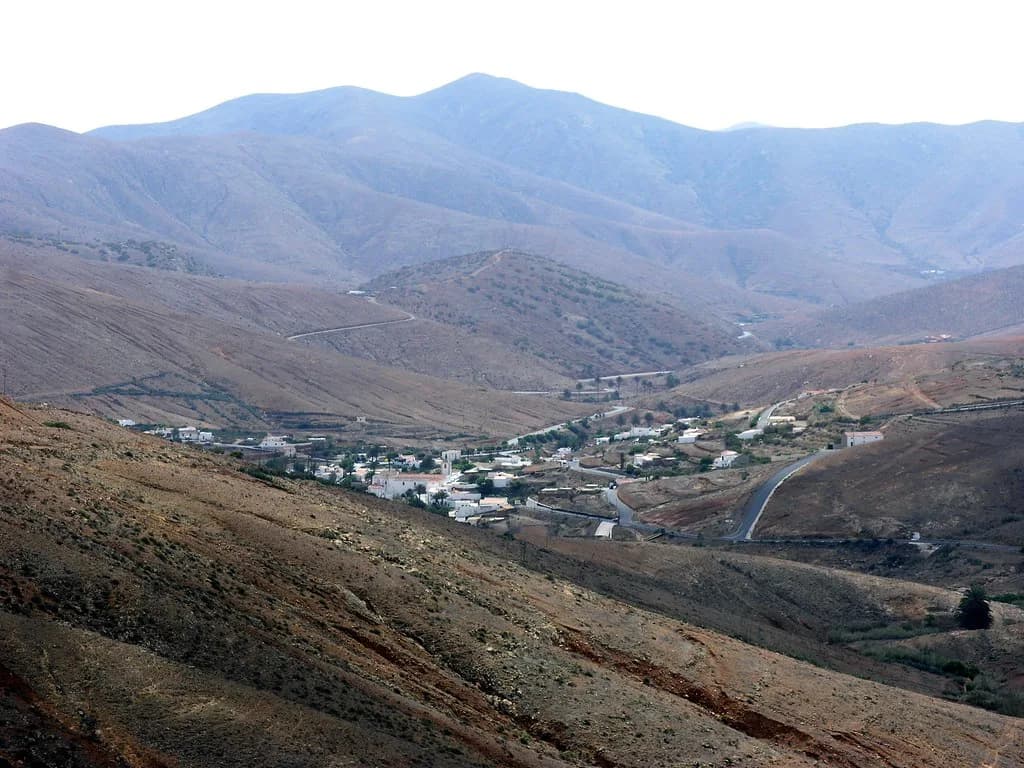
Betancuria is worth a half-day of any Fuerteventura trip: a town of around 800 people in the valley of the Macizo de Betancuria, holding the church, museum, convent ruins and viewpoints that once made it the island's most important settlement. Founded in the fifteenth century by Jean Béthencourt, it sits inland among ochre crags rather than on the coast, so treat it as a morning and lunch stop, not a beach day.
Where Betancuria is and why it matters
Betancuria lies inland in the Macizo de Betancuria, in the west of the island, and its valley setting is the reason the town exists where it does. The town keeps roughly 800 residents and is described as the most important place in Fuerteventura in artistic terms, despite having neither long beaches nor grand monuments. It was founded in the fifteenth century by Jean Béthencourt, and the historic quarter still reads as the old capital rather than a resort.
Think of the visit as a compact loop: church and museum in the centre, convent remains a short walk away, then the Guise viewpoint and Morro Velosa on the surrounding heights. This is one of four stops in our Fuerteventura Attractions: 4 Visitor Guides, and the only one that is inland and historical rather than coastal. If you would rather plan around the water, our things to do in fuerteventura guide covers the coast instead.
Getting there and getting around
Betancuria is reached by road, and the approach climbs through the rural park into the massif, so expect winding driving rather than a straight run. Parking in a town of around 800 people is limited, and the streets of the historic quarter are narrow, so park once and walk. Fuerteventura Neighborhoods: 3 Area Guides helps you place Betancuria against the island's coastal bases before you set out.
Start in the centre: the church of Santa María
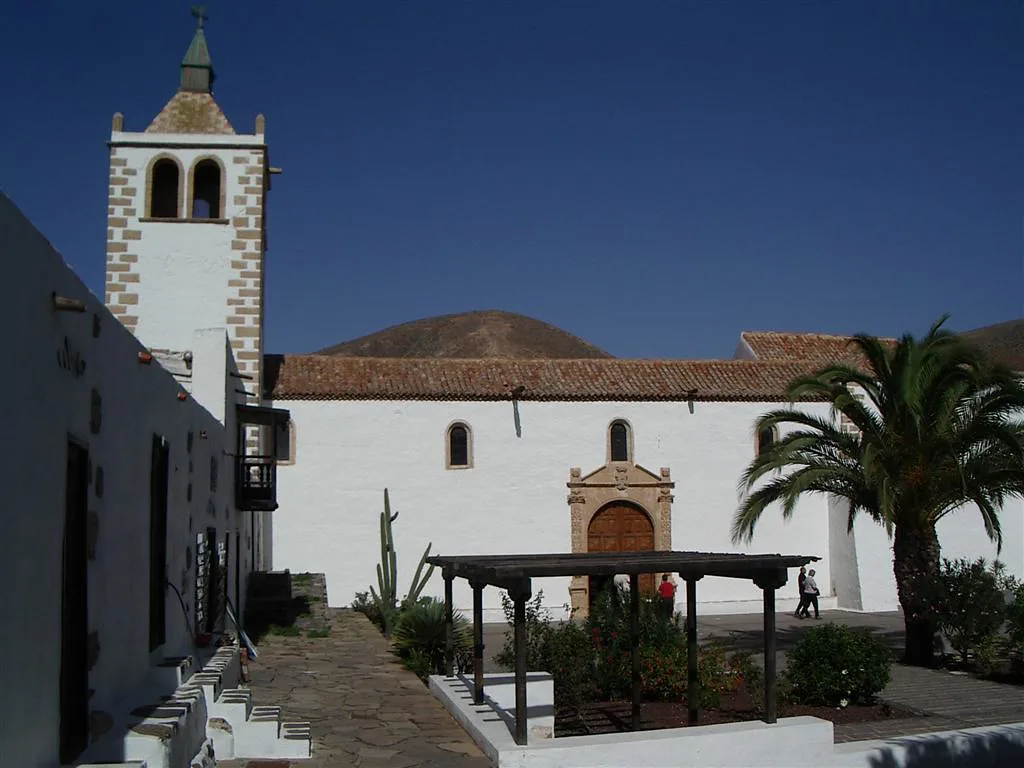
The church of Santa María began in the fifteenth century as a small chapel and became the first cathedral in Fuerteventura, despite its modest size. Inside, three naves are separated by round arches, and the square tower was built by Pedro de Párraga; look for the Renaissance-inspired façade as you approach. The parish house also holds a museum of paintings and sculptures brought from other churches on the island.
The Archaeology and Ethnography Museum
The Archaeology and Ethnography Museum occupies a traditional Canarian house in the centre and runs to three rooms: two given over to archaeological pieces and one to ethnographic objects. The exhibition that earns the most attention explains the first European expeditions to the Canary Islands and how islanders lived and worked at the time. Allow around half an hour here and check opening times and any entry charge at the door or through the town's visitor information on arrival.
The Guise viewpoint
Two large statues of the fifteenth-century kings Guise and Ayose preside over the Guise viewpoint, marking the division of Fuerteventura into two kingdoms. Stand level with the figures and the panorama opens into a desert landscape running from ochre to yellow. Come here before or after the town centre rather than doubling back, and combine it with the Morro Velosa stop on the same height.
Remains of the convent of Saint Bonaventure
The remains of the convent of Saint Bonaventure belong to the first convent founded in the Canary Islands, home to Franciscan monks who supported the local population as well as spreading the faith. The site was also the burial place of Don Claudio de Lila, a royal engineer. It is a short, quiet stop rather than a full visit, so fold it into your walk through the historic quarter.
Eating in Betancuria: La Sombra
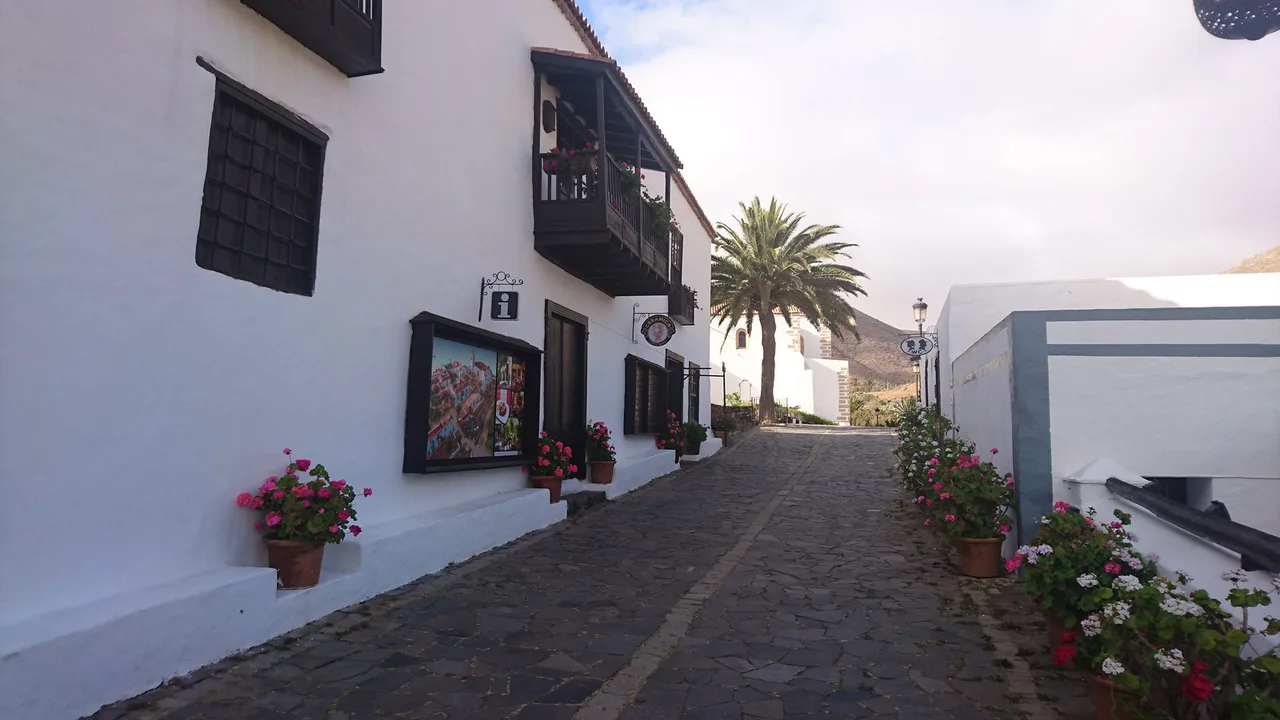
La Sombra sits in the heart of Betancuria and serves rustic cooking built on local produce, with hamburgers and tapas at affordable prices. The courtyard began as a gathering place for the owners and their friends before the restaurant opened, and the decoration gives it the feel of an oasis in the middle of the island. It suits an easy lunch after the church and museum; arrive at the start of the Spanish lunch window rather than in the dead afternoon.
Casa Santa María: a sit-down meal opposite the church
Casa Santa María occupies a restored seventeenth-century house in the historic quarter, directly opposite the church of Santa María. Chef Dusan Sekerik blends tradition and creativity in set menus, and the oven-roasted kid goat is the dish to order, backed by a substantial wine list. The restaurant has been awarded a Michelin star on several occasions; treat that as history and check the current listing yourself if it matters to you.
Timing your visit around Spanish meal times
Spanish lunch runs from about 1:30pm to 4pm and dinner starts around 8:30pm to 9pm, which shapes an inland day neatly: see the church, museum and convent in the morning, then sit down for lunch as the town quiets. Outside those windows, Betancuria is a place to walk and look rather than to eat. Check restaurant opening days before you commit, since small kitchens on the island often close one or two days a week.
Morro Velosa viewpoint
Morro Velosa viewpoint has a terrace for coffee with the broadest views over the Betancuria massif, a good pause between the town and the road back down. Pair it with the Guise statues in one sweep of the heights so you are not retracing the same bends twice. The viewing points of Betancuria are catalogued by the island's tourism board if you want to plot the sequence before driving.
Betancuria Rural Park and the massif
Betancuria Rural Park is the brown, craggy terrain around the town, scientifically interesting for protected plants such as nicotiana glauca and for endemic species including balsam spurge and the Canary Island daisy. Birdlife gathers around the Las Peñitas and Los Molinos dams and the cliffs, which shelter birds of prey. The massif itself has yielded oceanic sediment and marine animal fossils, and palm trees and tamarix canariensis have been recorded here since the fifteenth century.
Nearby: Ajuy and the coast
The Natural Monument of Ajuy, on the coast west of the massif, holds the oldest rocks in the whole archipelago and makes a natural end to an inland day. If you would rather stay in the water, the island's natural pools are mapped by the tourism board, but check conditions on the day before swimming. For a very different Fuerteventura, Isla de Lobos is a short boat trip from the north and a fine contrast to Betancuria's dry hills.
How much time to allow, and what to skip
Give Betancuria a half-day: roughly an hour for the church and museum, twenty minutes at the convent remains, and the rest for lunch and one viewpoint. If you are short on time, drop the convent remains and the parish house museum first and keep the church, the Guise statues and a proper lunch. The island's other headline landscapes, the corralejo dunes in the north, are a separate day rather than an add-on to this one, and if you are choosing how to spend your remaining days, our guide to things to do in fuerteventura sets them out side by side.
Practical trade-offs
The heat is the main constraint: this is a semi-desert valley, and the walk between church, convent and viewpoints is exposed, so go early and carry water. The winding roads into the massif make the drive slower than the map suggests, and parking in a town of around 800 people fills quickly once coach parties arrive. None of this is a reason to skip Betancuria, but it is a reason to arrive before midday and leave after a late lunch.
Plan Your Visit
Betancuria rewards a simple plan: arrive mid-morning, see the church of Santa María and the three-room archaeology museum, walk to the convent remains, then eat at La Sombra for tapas or Casa Santa María for the oven-roasted kid goat. Finish with the Guise statues and a coffee at Morro Velosa before heading down. Check current opening hours, entry charges and restaurant closing days before you drive out, since they are not fixed island-wide.
Explore more Fuerteventura guides
Frequently Asked Questions
Is Betancuria worth visiting in Fuerteventura?
Yes, if you want the island's history rather than another beach. Betancuria was founded in the fifteenth century by Jean Béthencourt and holds the church of Santa María, the island's first cathedral, an archaeology and ethnography museum, convent remains and two viewpoints over the massif. It works best as a half-day inland stop with lunch attached.
What is there to see in Betancuria?
The core sights are the church of Santa María with its square tower and Renaissance-inspired façade, the three-room Archaeology and Ethnography Museum in a traditional Canarian house, the remains of the convent of Saint Bonaventure, and the Guise viewpoint with its statues of the kings Guise and Ayose. Morro Velosa viewpoint and the rural park are on the surrounding heights.
Where should you eat in Betancuria?
La Sombra in the town centre serves rustic local produce, including hamburgers and tapas, and suits an easy lunch. Casa Santa María, in a restored seventeenth-century house opposite the church, is the sit-down option, with set menus and oven-roasted kid goat from chef Dusan Sekerik. Reserve the second for a proper meal and check opening days before you go.
How long do you need in Betancuria?
Allow about half a day. An hour covers the church and museum, the convent remains take twenty minutes, and lunch plus the Guise and Morro Velosa viewpoints fill the rest. If time is tight, keep the church, one viewpoint and lunch, and skip the convent remains and parish house museum.
What is the Guise viewpoint in Fuerteventura?
The Guise viewpoint is a lookout near Betancuria marked by two large statues of the fifteenth-century kings Guise and Ayose, recalling the division of the island into two kingdoms. From the level of the statues the view opens across ochre-to-yellow desert landscape, and it pairs naturally with a stop at Morro Velosa.
Do you need a car to visit Betancuria?
Betancuria is an inland hill town reached by road, and the approach winds through the rural park, so a car gives you the most flexibility. Parking in a town of around 800 people is limited once coach parties arrive, so arriving before midday helps. Transport options are listed through the island's visitor information.