Things to Do in Fuerteventura: Beaches, Dunes and Villages
Plan things to do in Fuerteventura with our guide to the Corralejo dunes, Cofete and El Cotillo beaches and inland villages, plus what to know.
On this page
Fuerteventura delivers beaches, dunes and long empty horizons, not a dense historic city. The strongest days here pair one stretch of coast with one inland stop, so you spend less time crossing the island and more time on the sand.
The island rewards a slower pace. Expect earthy, dry inland scenery by day and a steady breeze on the coast, and plan your beach time and meals so they do not collide.
Why Fuerteventura Rewards a Slower Pace
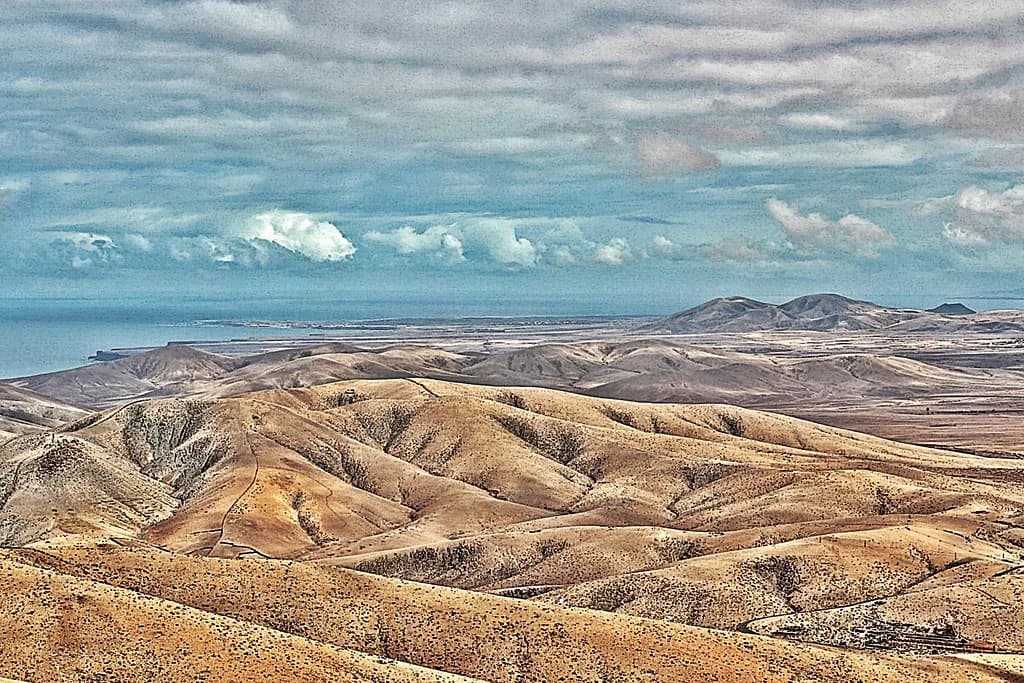
Fuerteventura is the oldest of the Canary Islands, formed roughly 20.6 million years ago and heavily eroded since, which explains the dry, brownish-grey plains you see on the drive between the southern tip and the northern shore.
The island's strongest suits are miles of golden sand, turquoise water and a breeze that makes watersports fun. Do not come expecting lush greenery, palm groves or colourful Mediterranean villages; the appeal is wilder and quieter than that.
In 2009 UNESCO declared the whole island a Biosphere Reserve, and in 2015 it became a Dark Sky Protected Area. Both designations point to the same thing: the open, unbuilt character of the interior and the night sky are part of the trip, not filler between beaches.
Treat a week here as beach time with add-ons. Pick two or three coastal bases of activity and let the rest of the days stay loose.
Where the Island Splits: Maxorata and Jandía
Fuerteventura stretches almost 100 kilometres from north to south-west, and at its narrowest point it is only about 5 kilometres wide. That pinch marks the border between Maxorata in the north and the Jandía peninsula in the south, which is where most tourist centres sit.
Jandía has the long white sandy beaches and the reliable wind that suits windsurfing, so it works for water-sports days and long walks. The north around Corralejo has the dunes and easier access to the short ferry crossing to Lanzarote, about 11 kilometres away.
Use this split to plan days rather than zig-zagging. If you are based in the north, keep the dunes, El Cotillo and Corralejo for one half of the trip and save Cofete and Pico de la Zarza for a southern day or two.
For a first visit, work out your night count before booking anything, then match bases to it. Our guide to how many days in Fuerteventura sets out realistic splits for a short break versus a full week, so you can see where the dunes, beaches and villages fit.
Parque Natural de Corralejo and Its Shifting Dunes
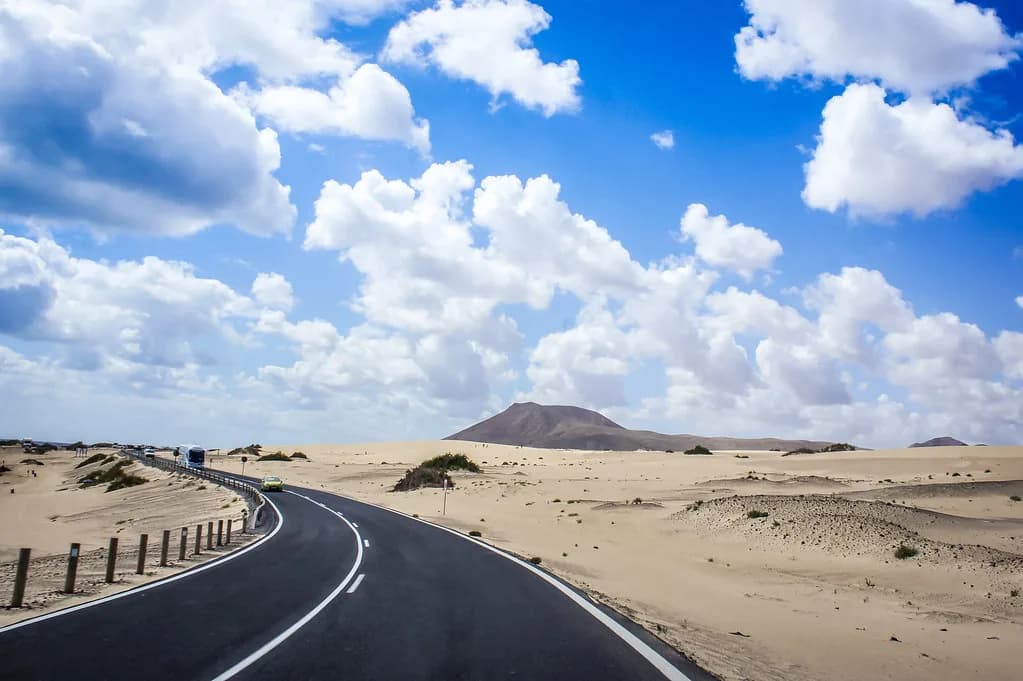
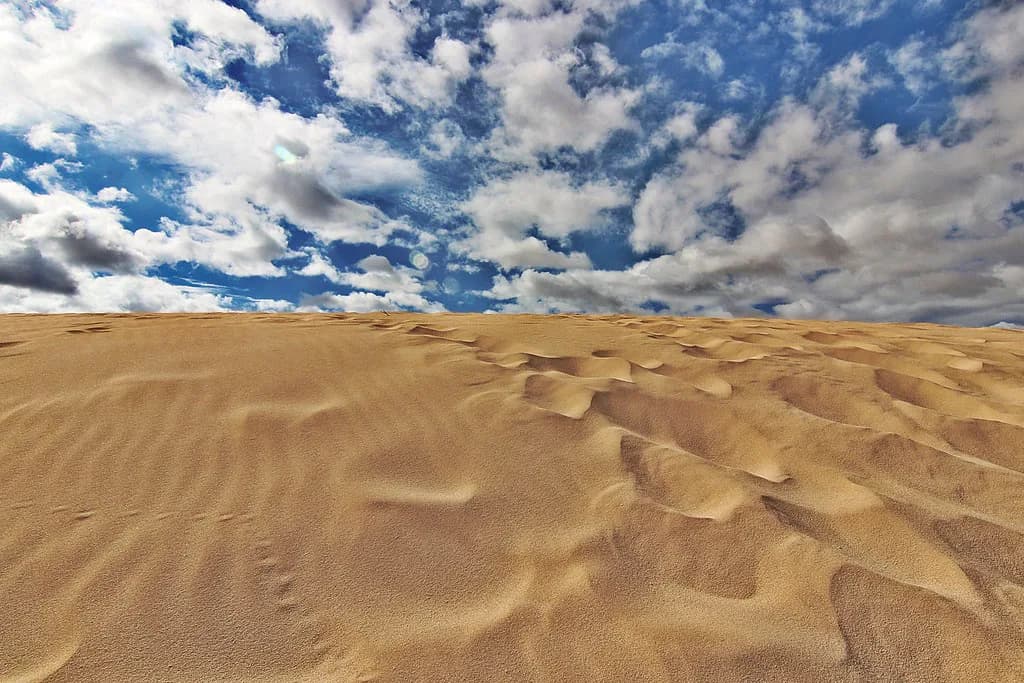
The Parque Natural de Corralejo in the north-east holds gigantic shifting dunes, and the sand is largely made of ground shells from sea animals such as mussels and snails. That shell origin is why the dunes read almost white under a blue sky rather than the yellow of desert sand.
Come for a walk and a swim rather than a checklist. The dunes shift with the wind, so the paths and the best sheltered spot change; a beach towel and shoes you can shake out matter more than a plan.
Wind is the constant here. It keeps temperatures bearable on the sand, but it also whips sand into your face and legs on exposed stretches, so a light layer and sunglasses earn their place in your bag.
October remains warm and busy enough that booking a bed ahead is sensible; our Fuerteventura in October guide covers what the month feels like on the ground.
Playa de Cofete: Remote Jandía Sand
Playa de Cofete sits on the Jandía peninsula and is one of the island's marquee sights for its scale and isolation. It is a remote beach, reached on a mountain road, so treat the journey as part of the day rather than a quick hop from a resort.
The swimming warning here is real. On Jandía's north-west coast the currents are dangerous for swimmers even though the beaches look calm and empty. Keep to the sand, walk the shoreline and leave the water to stronger swimmers or skip it altogether.
Families with young children should think twice about Cofete as a swimming day. Use it for a picnic and a walk, and keep the actual paddling for a sheltered bay elsewhere.
El Cotillo and La Concha: Calmer Water for Families
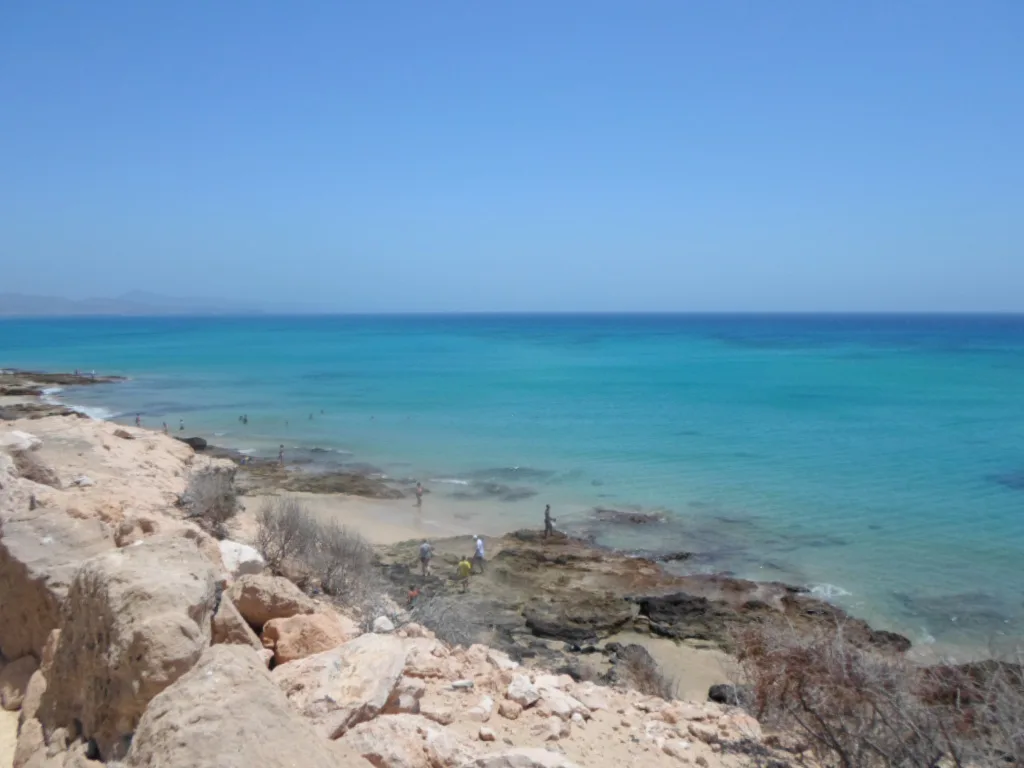
La Concha beach in El Cotillo is protected from the waves by a natural reef, which leaves calm turquoise water and white sand for children to splash about in. That makes it the obvious choice when you want a beach day without watching the swell.
El Cotillo also works as a base if you want sunsets and a quieter village feel rather than the busier north. Our El Cotillo eating guide covers where to point your evening meal once the beach day ends.
The trade-off is exposure. The west coast catches the wind and the Atlantic swell, so even on a reef-sheltered bay check conditions on the day and keep an eye on the water; the calm of El Cotillo's La Concha does not extend to every stretch of coast.
Water Sports and the Constant Breeze
The breeze is the reason windsurfers and kitesurfers come to Fuerteventura, and Jandía's beaches are the heart of it. You can bathe and swim safely in many spots despite the wind, but the coast is not uniform, so read the water before you commit.
If you are new to board sports, book a lesson rather than hiring kit cold; the wind here is strong enough to turn a casual afternoon into a swim back to shore. Keep a dry bag for phones and a warm layer for the ride home.
Couples often split the day: one on the water, one walking the dunes. Plan a meeting point on the beach, because phone signal along the wilder stretches is not something to rely on.
Inland Fuerteventura: Betancuria and the Majorero Story
The island's original inhabitants, the Majoreros, lived in two dominions divided by a wall running across Fuerteventura. At the turn of the 15th century the French nobleman Jean de Béthencourt set up trading posts, and Betancuria became the island's administrative centre.
Come inland for the story rather than for grand monuments. The settlement pattern, the dry inland landscape and the island's North African links give context to everything you see on the coast, and it makes a good half-day when the wind is up.
Inland also offers a break from the beach routine for anyone travelling with children who need a change of scene. Pair Betancuria with a village stop and keep the drive short.
Pico de la Zarza and Walking in Jandía
Fuerteventura's highest point is Pico de la Zarza at 807 metres, located in Jandía. It gives walkers a genuine objective away from the sand, with views over the peninsula and the long beaches below.
Walking here means exposure. Take water, a hat and a windproof layer, start early and turn back if the wind picks up on the ridge. The dryness of the terrain is the point, but it also means no shade on the way.
For non-walkers, the same area delivers long shoreline strolls without the climb, so a mixed group can split up and meet later.
Choosing a Base: Corralejo or El Cotillo
Corralejo suits anyone who wants the dunes on the doorstep and easy connections north, including the ferry to Lanzarote. It is the livelier choice for eating out and for water-sports operators.
El Cotillo suits families and anyone who values reef-sheltered water and sunsets over nightlife. Both bases put you within reach of the same day trips if you drive, so the decision comes down to evenings rather than geography.
Caleta de Fuste is the third common choice, sitting within reach of the airport and family-friendly beaches; our Fuerteventura in July guide sets out how it feels in high summer.
Getting Around Without a Car
The bus network on Fuerteventura is not as close-meshed as on Gran Canaria or Tenerife, but it is still possible to visit most places comfortably by public transport. That works well between the main resorts and towns; the wilder beaches and inland villages are where the coverage thins out.
If you are relying on buses, build days around one destination and check the return times before you set off, because services to remote stretches are limited. A car gives you the freedom to chain Cofete with a southern base and to stop for lunch on your own clock.
Wherever you base yourself, keep your plans flexible in August, when Spanish holidays and island visitors both peak; our Fuerteventura in August guide explains what that does to the roads and beaches.
What to Eat, and How Spanish Meal Times Shape Your Day
Fuerteventura is for sea and sand rather than a heavy food pilgrimage, but the daily rhythm still organises your trip. Take your main meal at lunch and keep the evening simple, especially if you have children or a long drive back from a remote beach.
Take your main meal at lunch and keep the evening simple, especially if you have children or a long drive back from a remote beach. A late lunch also means you avoid the worst of the midday sun on exposed sand.
Souvenir shopping inland and in the resorts covers aloe vera cosmetics, which remain a sought-after buy. Aloe cultivation has been significant on the island, and brand piracy and cheap imports have hit the native product, so check labels and buy only from shops you trust.
How Long You Need
A long weekend is enough for one area: the Corralejo dunes plus El Cotillo, or a Jandía stay with Cofete and Morro Jable. Trying to cover both halves in that time means spending most of it in the car.
A full week lets you take in both halves without rushing. Our suggested Fuerteventura itinerary sequences the north and south so you are not crossing the island every day.
September is a sensible middle ground when you want beach weather without the school-holiday crush; our Fuerteventura in September guide explains the shift.
Honest Trade-Offs
Expect a dry island. Much of the interior is brown and grey plains with a few palms and goats, closer to the Moroccan hinterland than to a green Mediterranean postcard. If you want lush scenery, Fuerteventura will not deliver it.
The coasts are exposed and the breeze is constant. That is a gift for water sports and a nuisance for sunbathing, so pack a windproof layer, secure loose items and choose sheltered bays like La Concha when the wind is strong.
Some inland driving is long and dull, and the bus network does not reach everything. Accept those hours, or trim your list to one half of the island.
Plan Your Visit
Work out your nights first, then decide whether you are a north or a south traveller. From there, build days around one coast or one inland stop, and set your lunch time so it does not eat into your best beach hours. If you are still weighing an island break against a mainland city, our things to do in alicante guide offers the same day-by-day approach applied to a very different coastline.
Keep the wind and the exposure in mind when packing, choose sheltered water when travelling with children, and let Fuerteventura's dry, open landscape be what it is rather than what a brochure promises. That is the island at its best.
Explore more Fuerteventura guides
- Best Restaurants in Fuerteventura
- Fuerteventura in August
- Fuerteventura in July
- Fuerteventura in October
- Fuerteventura in September
- Fuerteventura Itinerary
- Fuerteventura Markets
- How Many Days in Fuerteventura Do You Need?
- Shopping in Fuerteventura
- Best Tapas in Fuerteventura
- What to Eat in Fuerteventura
Frequently Asked Questions
Is there a lot to do in Fuerteventura?
There is plenty if you like beaches and open space. The headline draws are the Corralejo dunes, the long Jandía beaches including Playa de Cofete, the reef-sheltered water at La Concha in El Cotillo, and the inland story around Betancuria. It is not a city-break island, so set expectations toward sand and landscape rather than museums.
What are the top things to do in Fuerteventura?
Start with the Parque Natural de Corralejo and its shell-sand dunes, then head south for Playa de Cofete and the Jandía beaches. Add La Concha at El Cotillo for calm water, Betancuria for the island's history and Pico de la Zarza for a walk with views.
Do you need a car in Fuerteventura?
A car helps if you want to reach remote beaches like Cofete and inland villages at your own pace. Public transport reaches the main towns and resorts, but it is not as close-meshed as on Gran Canaria or Tenerife, and it thins out on the wilder stretches.
Are Fuerteventura's beaches safe for swimming?
Not all of them. On Jandía's north-west coast the currents are dangerous for swimmers despite the empty, calm-looking sand. Reef-sheltered La Concha at El Cotillo is the safer family option. Check conditions on the day and stay out of the water where the current is strong.
How many days do you need in Fuerteventura?
A long weekend covers one half of the island. A full week lets you combine the north around Corralejo with the south around Jandía without zig-zagging. Two weeks is not necessary unless you want long stays on the beach.
Is Fuerteventura cheap to eat and drink?
Prices vary by resort and by what you order, so check menus before you sit down. Let the Spanish rhythm guide you: lunch is served roughly from 1:30pm and dinner from about 8:30pm to 9pm. Compare the day's menu del día boards with evening à la carte prices.
What should I be careful of in Fuerteventura?
The main risks are wind, sun and currents. The breeze hides how strong the sun is, so take water and a hat, and keep hold of hats and towels on the dunes. Strong currents affect parts of Jandía's coast, so swim where the water is sheltered.
When is the best time to visit Fuerteventura?
Much depends on whether you want quiet or warm water. July and August are peak and busy, September is a calmer middle ground, and October is still warm. Check local conditions and event calendars as your dates approach, and book accommodation earlier in summer.
Sources
Notes for eating well in Spain
Optional updates to our guides.
You might also like
Continue reading
More guides you'll find useful