
Corralejo Dunes: A Visitor's Guide to the Sand Dunes and Grandes Playas
The Corralejo dunes are a protected sand belt on the north coast of Fuerteventura, wrapped inside the Parque Natural de Corralejo and running alongside more than 10 km of continuous beach. You come for two different days out: walking the pale sand itself, and settling on one of the Grandes Playas where the sand meets the water.
The park is easy to reach from Corralejo town and sits on the road in from the airport, so it slots into a holiday without a tour. Plan around one hard fact: in summer the sand gets very hot in the middle of the day, so an early arrival makes the walking far more comfortable.
Where the Corralejo dunes are
The dunes lie in the north of Fuerteventura, in the municipality of La Oliva, just outside Corralejo town. The Parque Natural de Corralejo was established in 1994, covers almost 2,700 hectares and includes more than 10 km of continuous beach along its western edge; our Fuerteventura Neighborhoods guides cover the surrounding resort areas.
The most striking approach is by road from the airport: the FV-1 runs through the park, and at points you have dunes on both sides with the Atlantic and the view towards Isla de Los Lobos on your right. If you are staying in Corralejo, the dunes are a short hop south of town rather than a day trip across the island, and you can pair the visit with other things to do in Fuerteventura nearby.
Getting there by car
Driving is the simplest way to see several sections in one go. Follow the FV-1 north from the airport or south from Corralejo, and you will pass a sign marking the entrance to the park; there are kilometres of parking space along the road, so you can stop where the view appeals. Picking your stop matters less than you might think, because the landscape and access shift from section to section, and our guide to Fuerteventura Neighborhoods helps you orient the surrounding resorts.
Where the road runs close to the beach you only need a few steps from the car to the water; elsewhere you cross the big dunes to reach the ocean. If it is your first visit, stop at two or three points along the way rather than committing to the first car park, because the landscape shifts noticeably from one section to the next.
Getting there by bus
Bus 06 links Corralejo with the big hotels along the beach, with departures about every 30 minutes and a journey of 10 to 15 minutes; the ticket costs around 1,30 euros each way. That puts the dunes within reach if you are not hiring a car, though you are then tied to the timetable for the return.
Check the current Tiadhe timetable on the bus company's own site before a bus day, and note the stop nearest the beach section you want to reach. For an early start in summer, the first departures matter more than the fare.
The sand itself
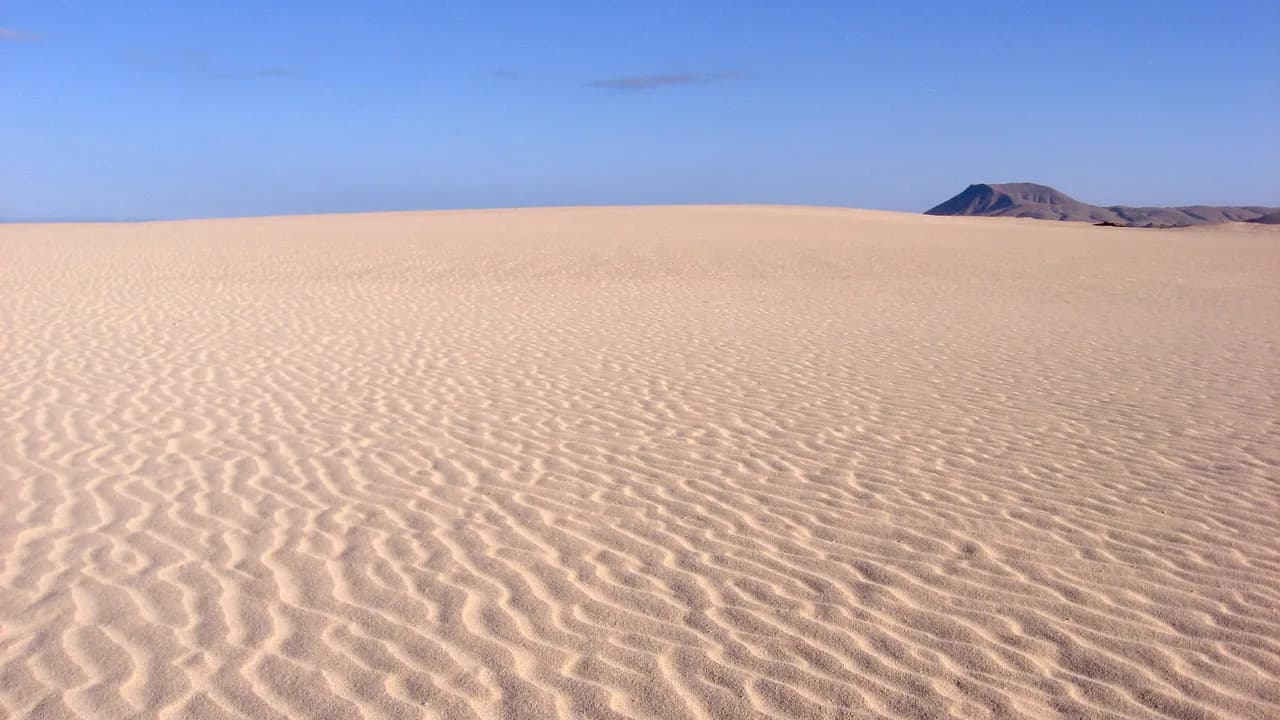
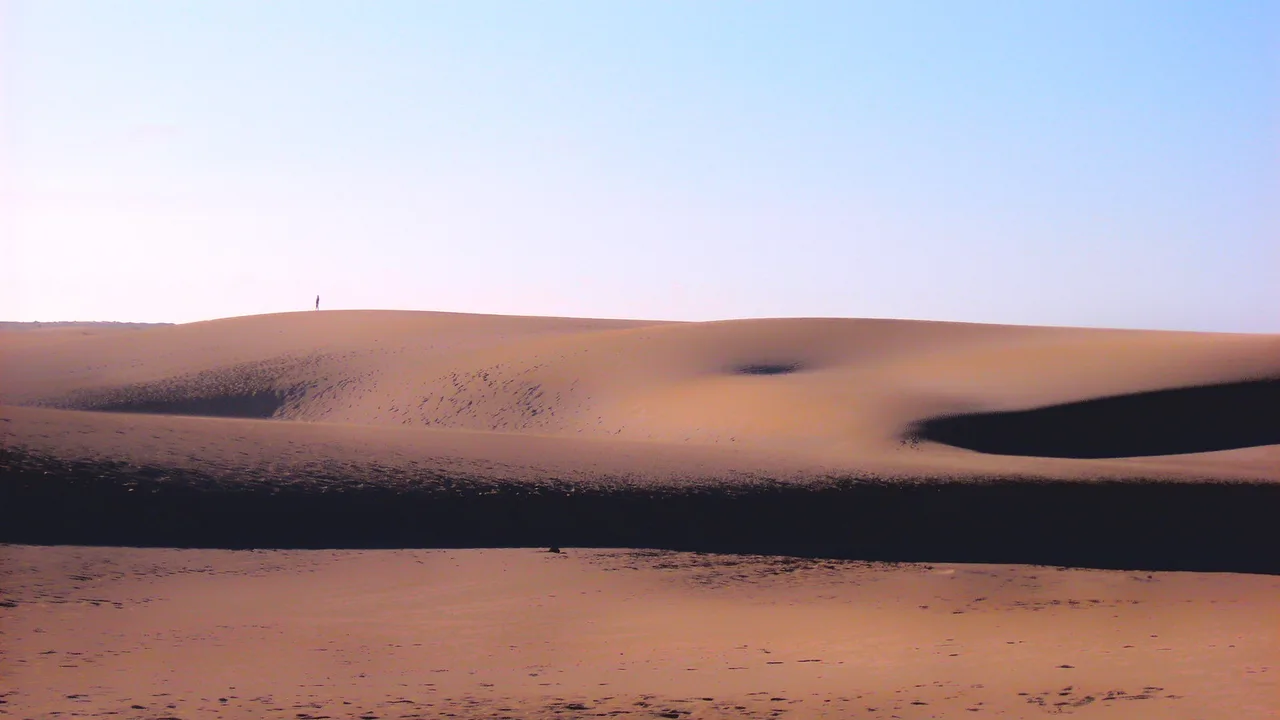
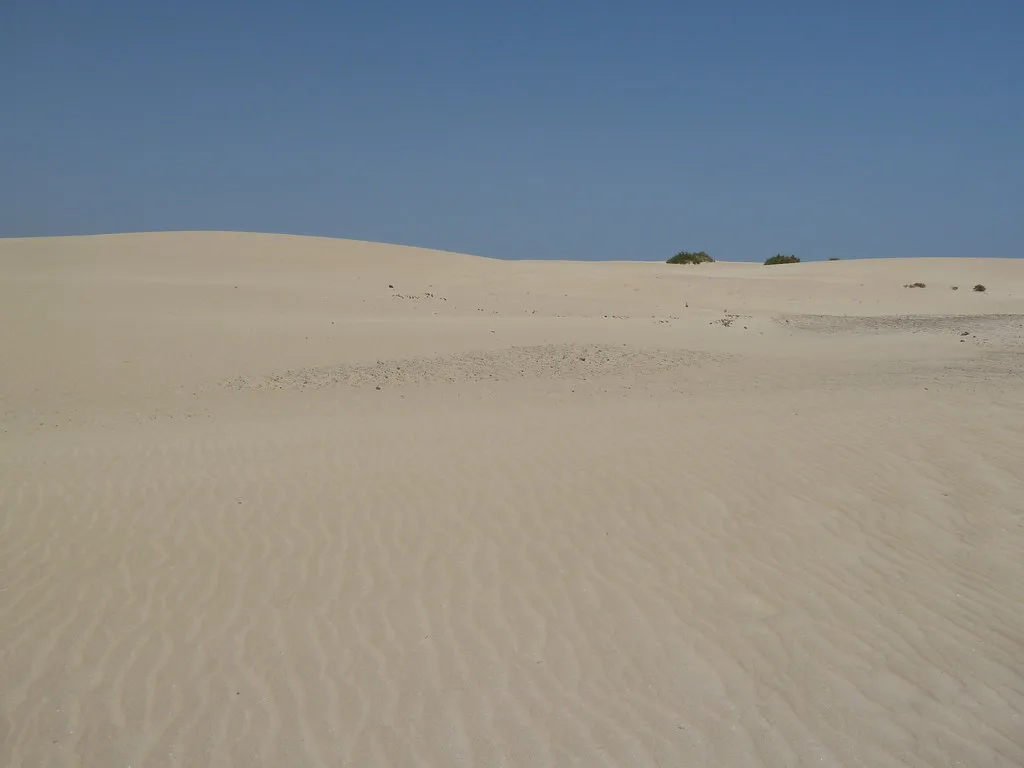
The sand is fine and very light, giving an almost white look in strong sun, and it forms Sahara-style dunes that roll straight down to the Atlantic. That pale surface is also why the middle of the day bites in summer: the sand gets very hot, and walking across it barefoot at midday is uncomfortable rather than romantic.
Arrive before noon if you plan to walk the dunes rather than just sit on the beach, and take shoes you can slip on for the crossings. Barefoot is fine on the wet sand at the water's edge; it is the inland dunes that catch people out.
The Grandes Playas: seven beaches in one long stretch
The Corralejo Grandes Playas are the beaches outside town that back onto the dunes, and the whole set measures more than 10 km. They break down into seven named beaches: El Medano, El Viejo, El Bajo Negro, Los Martos, El Dormidero, El Moro and Alzada.
The first three, El Medano, El Viejo and El Bajo Negro, are wider than the rest and sit in the northern part closer to Corralejo town, so they suit a short taxi, bus or even a walk from your accommodation. From this stretch you get the best view of Lanzarote and Isla de Los Lobos together, which is the photo most visitors want.
Occupancy is low even in a popular resort, so you can usually find a quiet patch. The trade-off is that the further you walk from the serviced section, the more you carry in and out with you.
Flag Beach: windsurfing and kitesurfing
Flag Beach is the best-known section of the Grandes Playas, home to a windsurf and kitesurf centre and the north of the island's hub for both sports. The water is typically turquoise over light, fine sand, and even non-sailors come to watch the boards and take in the view towards Isla de Los Lobos.
It suits beginners as well as spectators: the school there is close to Corralejo and easy to reach. If you want a quiet sunbathing day, pick another section of the Grandes Playas and leave Flag Beach to the people with harnesses.
Facilities: what exists and where
Facilities are concentrated in the section next to the RIU hotels, where you find sunbeds, umbrellas, rubbish bins, public toilets and showers. Hotel Riu Palace Tres Islas and Club Hotel Riu Oliva Beach Resort sit right on the beach there, which is why this stretch is the busiest and the easiest for a low-effort beach day.
On the other beaches that make up the Grandes Playas there are no sunbeds or umbrellas, so bring your own parasol or chair if you plan to stay for hours. Bars on the beach are few, so pack water and snacks rather than counting on buying lunch from a lounger.
What to bring
Treat the dunes as a carry-in, carry-out day: shade, water, food and something to sit on. Beyond the serviced section by the hotels, there is no hire of umbrellas or loungers, and refreshments are limited, so a soft cooler and a proper parasol make the difference between a few hours and a full day.
Add footwear for the sand crossing, high-factor sun cream and a bag for your rubbish. The bins are in the hotel section; elsewhere you take everything back with you.
Naturism on the Grandes Playas
Nudism is allowed here, and you will mostly see naturists in the more secluded spots, particularly towards the southern end of the Corralejo beaches. On Fuerteventura, naturism is permitted on all beaches outside towns and resorts, so it is part of the normal mix rather than a marked zone.
If you are visiting with children or prefer a busier atmosphere, stay near the hotel section and the northern beaches. If you want space, walk south along the sand until the crowds thin out.
Wildlife and protecting the dunes
This is a protected natural space, not a beach that happens to have sand. The dunes and Isla de Los Lobos together are designated an Important Bird Area, supporting species including Calonectris diomedea and Charadrius alexandrinus, so keep to the open sand and avoid the vegetated edges where birds nest.
The rules that catch photographers out are simple: do not leave props behind, do not alter the landscape, and do not take sand away from the beach or the dunes. No entrance fee or opening hours are published for the park, so plan by daylight rather than by a gate timetable.
Photography on the sand
The light-coloured sand makes the dunes one of the island's most photographed locations, and couples regularly use them for engagement, pregnancy and anniversary shoots. The pale surface bounces light beautifully, so early morning and late afternoon give you softer shadows and fewer footprints.
Shoot with the water and Isla de Los Lobos in the frame from the northern beaches, and keep props to what you can carry out. The park's protection rules apply to professional shoots as much as to a phone snap.
How long to allow
Give the dunes half a day if you want to walk a stretch and swim, and a full day if you are settling on one of the Grandes Playas with shade and food. Walking the dunes and lying on the beach need different shoes, different shade and different timing, so decide which one leads your day.
An early start lets you cross the sand before it heats up, then swim and eat through the afternoon. In a taxi or hire car you can move between sections; on the bus, pick one beach and stay put.
What's nearby
Corralejo town is the obvious base and the place to eat afterwards, with the dunes a short drive or bus ride south. Isla de Los Lobos sits just offshore and is visible from most of the beach; the crossing is by boat from Corralejo harbour, and timetables and fares should be checked with the ferry companies.
Inland, Betancuria gives you a complete change of scene, with the old capital's streets and the Macizo de Betancuria hills replacing sand and sea. Allow a separate day for it rather than bolting it onto a beach morning.
If you are building a wider island plan, Montaña de Tindaya and the other Fuerteventura Attractions are worth slotting around your beach days. Staying in the north keeps the dunes within easy reach; the Fuerteventura Neighborhoods guides help you choose between Corralejo and the southern resorts, and if the water is your priority, our guide to things to do in Fuerteventura covers the beaches and dunes beyond Corralejo.
Practical checklist before you set off
Pack water, snacks, a parasol, footwear for hot sand and a bag for rubbish. Decide whether you want the serviced section by the hotels or a quieter beach further along, and check the bus 06 timetable if you are going without a car.
Go early in summer, keep off the vegetated dunes, and take nothing but photographs. Photographers should leave the props at home and crop tightly instead.
Plan Your Visit
The Corralejo dunes reward a little planning: choose between a dune walk and a beach day, match your transport to the section you want, and carry what you need beyond the hotel stretch. Confirm bus times, boat crossings and any tour details before you travel.
Frequently Asked Questions
Where are the Corralejo dunes?
They sit in the north of Fuerteventura, in the municipality of La Oliva, just outside Corralejo town and on the road in from the airport. The Parque Natural de Corralejo covers almost 2,700 hectares with more than 10 km of beach along its edge.
How do I get to the Corralejo dunes without a car?
Take bus 06 from Corralejo towards the big hotels along the beach, with departures roughly every 30 minutes and a journey of 10 to 15 minutes. Timetables vary by season.
Is there parking at the Corralejo dunes?
Yes. The FV-1 runs through the park and there is kilometres of parking space along the road, so you can stop and walk into the dunes or down to the beach from several points.
Can you swim at the Corralejo dunes beaches?
The Grandes Playas have clear, turquoise water over fine sand with no rocks, and swimming is the main draw on the calmer sections. Flag Beach is the windier spot, popular with windsurfers and kitesurfers rather than swimmers.
Are there sunbeds and toilets on the Corralejo dunes beaches?
Only in the section next to the RIU hotels, where you find sunbeds, umbrellas, bins, public toilets and showers. Elsewhere in the Grandes Playas you bring your own shade, water and snacks.
How long do you need at the Corralejo dunes?
Allow half a day to walk part of the dunes and swim, or a full day to settle on one of the Grandes Playas with food and shade. An early start in summer lets you cross the sand before it heats up.
Which beach is best for windsurfing near Corralejo?
Flag Beach is the windsurf and kitesurf hub in the north of the island, with a surf centre and conditions that suit beginners as well as experienced riders.
Is naturism allowed on the Corralejo beaches?
Yes. Naturism is allowed on beaches outside towns and resorts in Fuerteventura, and on the Grandes Playas it concentrates in the more secluded southern stretches.