
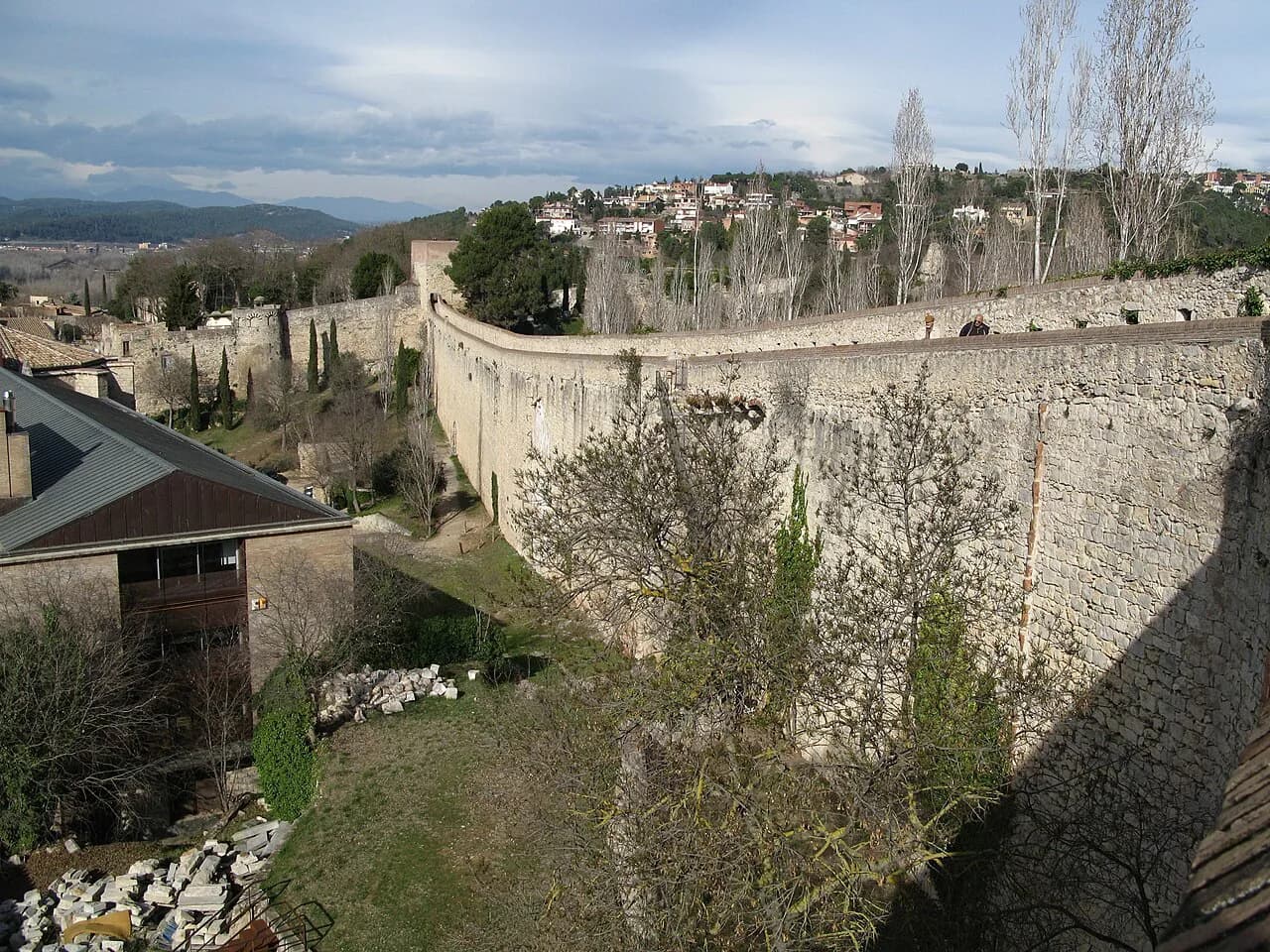
Girona City Walls: What to See on the Passeig de la Muralla

The Girona city walls are a free, walkable circuit of ramparts above the old town, and the Passeig de la Muralla is the path that runs along the top. You join at one of four access points, walk above the rooftops, and drop back into the streets whenever you have had enough. It is the single best way to understand how Girona fits together before you start eating your way around it.
The walk is not a museum: it is an exposed, uneven stone walkway with steps in places, so it rewards sensible shoes and a little planning rather than a full afternoon. Allow more time than the distance suggests if you want to stop at the towers and the gardens.
What the Girona city walls actually are
The first enclosure was built in the 1st century BC, when the Romans founded Gerunda, and later centuries added to it. The Carolingians carried out major rebuilding in the 9th and 10th centuries, when Girona sat on the border between their empire and Arab territory. In the 14th century the medieval wall went up: the old Roman core, known as the Força Vella, was consolidated as a fortress, and new walls were thrown around the growing town outside it.
What you walk on today is largely that medieval extension, which lets visitors follow a walkway along some of the longest surviving sections. The walls are protected as a cultural heritage site and a national heritage asset.
Where the walls are and how they sit around the old town
The ramparts wrap around the historic centre, climbing from the level of the old town up to the highest ground behind the cathedral. The Onyar river runs along the western edge of the centre below you, with the modern city on the far bank. That geography is why the walk works so well as an orientation exercise: you see the old town as a whole before you go back into it.
The walkway connects naturally with the lanes of the Jewish Quarter and the streets around the cathedral, so most people walk a stretch and come down into the old town rather than treating the walls as a separate outing. If you are building a day around the centre, it slots in easily as the first or last thing you do, and it is worth weighing up how many days in Girona to set aside for the old town as a whole.
Getting your bearings: the four access points
There are four access points onto the ramparts, which is the key practical detail: you decide where to get on and where to get off rather than committing to a single entrance. The nearest one depends on which side of the old town you are coming from, so check the access points before you set off rather than walking to the far side first.
Coming from the cathedral end, the walkway picks up near the top of the old town; from the lower streets around the Onyar, you approach from below and gain height quickly. Either way, expect stairs and sloping stone underfoot at the entry points themselves, not just along the top.
The walk itself: about 3 km along the ramparts
The route along the walls is roughly 3 km, which sounds short but takes longer than a flat city stroll. You are constantly gaining and losing a little height, stopping at towers for photographs, and the surface is old stone rather than pavement. Let your own pace and the number of stops set the time rather than aiming for a fixed duration.
The gardens tucked along the walkway are the main reason a straightforward walk turns into a longer one, and some of them are easy to miss if you keep your head down. Treat the wall as a series of short stretches with detours rather than one route with a fixed finish. If your time in the city is tight, a single stretch between two access points gives you the views without the full 3 km. Working out how many days in Girona to allow makes that trade-off easier, since the walls pair naturally with a morning or afternoon in the old town below.
What you see from the towers
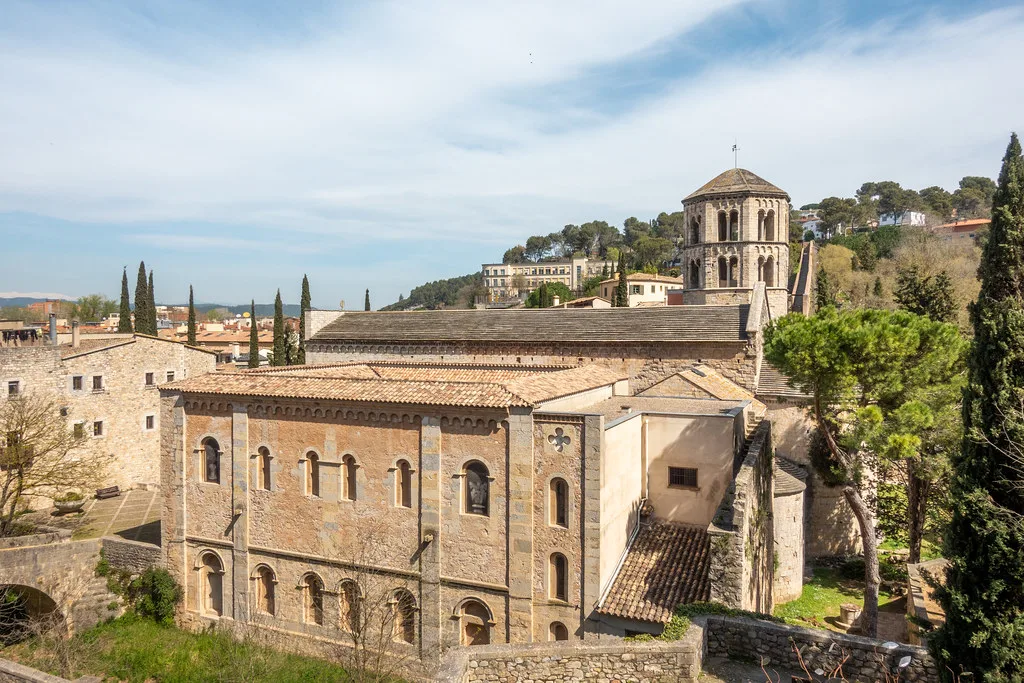
From the towers you look down on the cathedral, the Onyar river, the Jewish Quarter and the bell tower of Sant Feliu, with the rooftops of the old town in between. The cathedral is the landmark that anchors the view from most of the route, and seeing its scale from above makes the streets below easier to read when you return to them.
The river side gives you the long view across the water to the newer city, including the iron bridge that links the two banks. From up here the Onyar reads as the line that divides old Girona from the rest, which is useful context for an evening walk later.
The Jardins de la Muralla
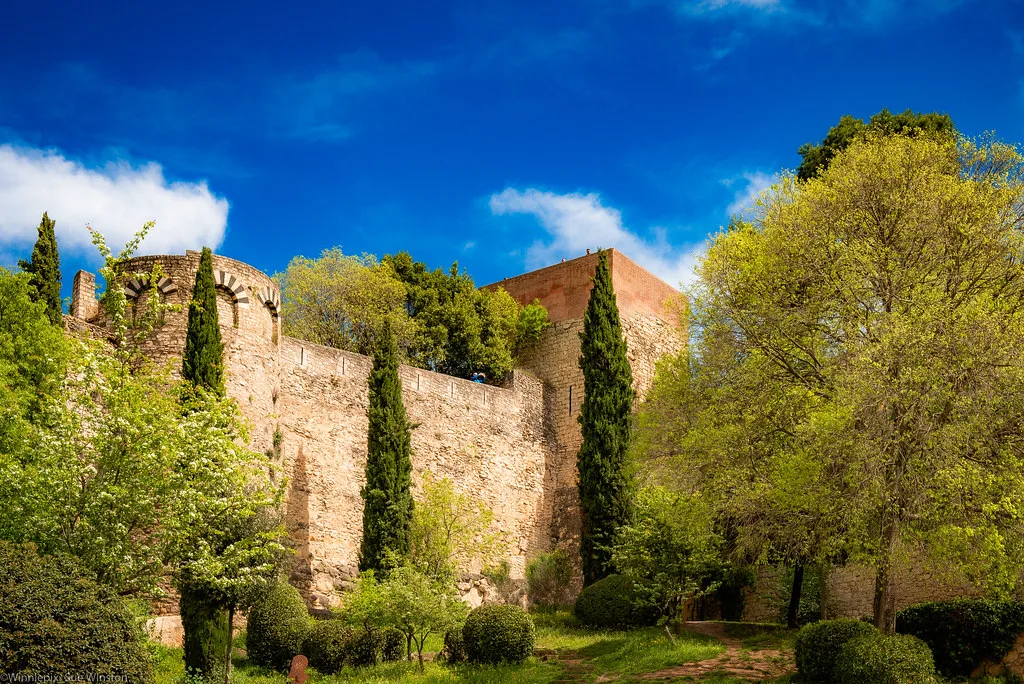
Several gardens sit along the walkway itself, some of them quite hidden from the main path. They are the quietest part of the walls and a good place to slow down between towers. Because they are easy to walk past, look for the turns off the rampart rather than assuming the route only goes straight on.
For a different kind of interior stop afterwards, the Girona Art Museum occupies the Episcopal Palace near the cathedral and makes a calm contrast to the open, sun-exposed ramparts. It is a sensible pairing if you want one indoor stop on a hot day.
Tickets, opening hours and guided tours
Entry to the walls is free, but the ramparts can only be walked during the established opening hours, so check those before you plan an early or late crossing. The Girona City Council tourism page is the place to confirm current times and any access restrictions.
You can walk the walls on your own without difficulty, but the local guided option adds the history of the different building phases and points out the hidden gardens. The main guided tour combines the walls with the Jewish Quarter, the Arab Baths and Sant Pere de Galligants, so it is a fuller half-day rather than a quick ramble.
Best time of day and what to wear
The walkway is exposed, with little shade along the open stretches, so early morning or late afternoon is more comfortable than the middle of the day. Spanish lunch runs from about 1.30pm to 4pm, which makes the early afternoon a natural time to be off the walls and at a table instead.
Wear shoes with grip: the surface is uneven stone with steps, and the ramparts are not a place for smooth soles or flip-flops. Carry water, and in summer add a hat, because the towers give views but not shelter.
What is nearby when you come down
Step off at the cathedral end and you are at the Plaça de la Catedral, facing the broad Gothic nave and the steps up to it. It is the obvious next stop and the building you have just been looking down on.
The Arab Baths sit a short walk away in the old town, a Romanesque building with a central plunge pool and changing light through its lantern. It is small, so it works well as a short stop between the walls and lunch. The Jewish Quarter lanes fill the space between the two.
If you have time for one more museum, the Cinema Museum Girona covers the history of moving images and sits in the old town, making it a good wet-weather alternative to the ramparts. Otherwise, follow the Onyar down to the Pont de Sant Feliu and the riverside streets for the classic view of the coloured houses.
Practical checklist before you go
Decide your entry and exit points first, then check the day's opening hours on the council page, since access is limited to those times rather than open around the clock. Build in a stop at the gardens and one tower rather than racing the full route.
Take water, grip-friendly shoes and a light layer for the wind on the towers. Keep the walk to a half-day at most, and leave the rest of the day for the old town below, where the eating is better than anything you will find on the ramparts.
Plan Your Visit
The Girona city walls are the best free introduction to the city: four access points, roughly 3 km of walkway, and views that make sense of everything you will do afterwards. Go early or late, wear proper shoes, and treat the gardens as part of the route rather than an optional extra. Confirm the day's opening hours before you climb, then come down and eat.
Explore more Girona guides
Frequently Asked Questions
How do you access the Girona city walls?
There are four access points onto the ramparts, so you can join the walkway from different sides of the old town. Pick the one closest to where you are staying or eating and plan your exit point at the same time, because the route is a line rather than a loop.
How long does it take to walk the Girona walls?
The route along the top is about 3 km, but the height changes, steps and photo stops make it slower than a flat city walk. Set aside more time if you want to detour into the gardens or linger at the towers.
Are the Girona city walls free to visit?
Yes, entry to the walls is free. You can only walk them during the established opening hours, so check the current times with the city council tourism service before you plan your day.
What can you see from the Girona city walls?
From the towers you look over the cathedral, the Onyar river, the Jewish Quarter and the bell tower of Sant Feliu, with the old town rooftops in between. It is the clearest view of how the historic centre is laid out.
Where are the gardens on the Girona wall walk?
The Jardins de la Muralla sit along the walkway itself, and several of them are tucked away from the main path. Look for the turns off the rampart so you do not walk straight past them.
Is a guided tour of the Girona walls worth it?
A guided tour adds the history of the different building phases and points out the hidden gardens you might otherwise miss. The main option combines the walls with the Jewish Quarter, the Arab Baths and Sant Pere de Galligants, so it takes up a good part of a day.
When is the best time to walk the Girona city walls?
Early morning or late afternoon is more comfortable, because the walkway is exposed with little shade. Avoid the middle of the day in summer, and remember Spanish lunch runs from about 1.30pm to 4pm.