
Eiffel Bridge Girona: A Visitor's Guide to the Pont de les Peixateries Velles
The Eiffel Bridge in Girona is a red iron pedestrian bridge over the River Onyar, and it is free to walk across at any hour. It links the old city bank with the newer town, so you cross it rather than queue for it. The honest catch is that the structure itself is small and plain; its value comes from the view of the painted riverside houses and its position on a walk through the old town.
Allow 15 to 30 minutes, which covers a slow crossing, a few photographs from both banks and a look back at the ironwork. Treat it as one stop on a route through Girona rather than a half-day outing, and check the official Girona tourism site for any access changes before you travel.
What the Eiffel Bridge is
The Pont de les Peixateries Velles is a red iron bridge over the Onyar, and its ironwork follows the same structural style as the Eiffel Tower. It was built by the team of Gustave Eiffel, not commissioned personally from him, so describe it as the work of his engineering firm. The bridge connects the new city with the old city, which makes it a natural seam in any walk.
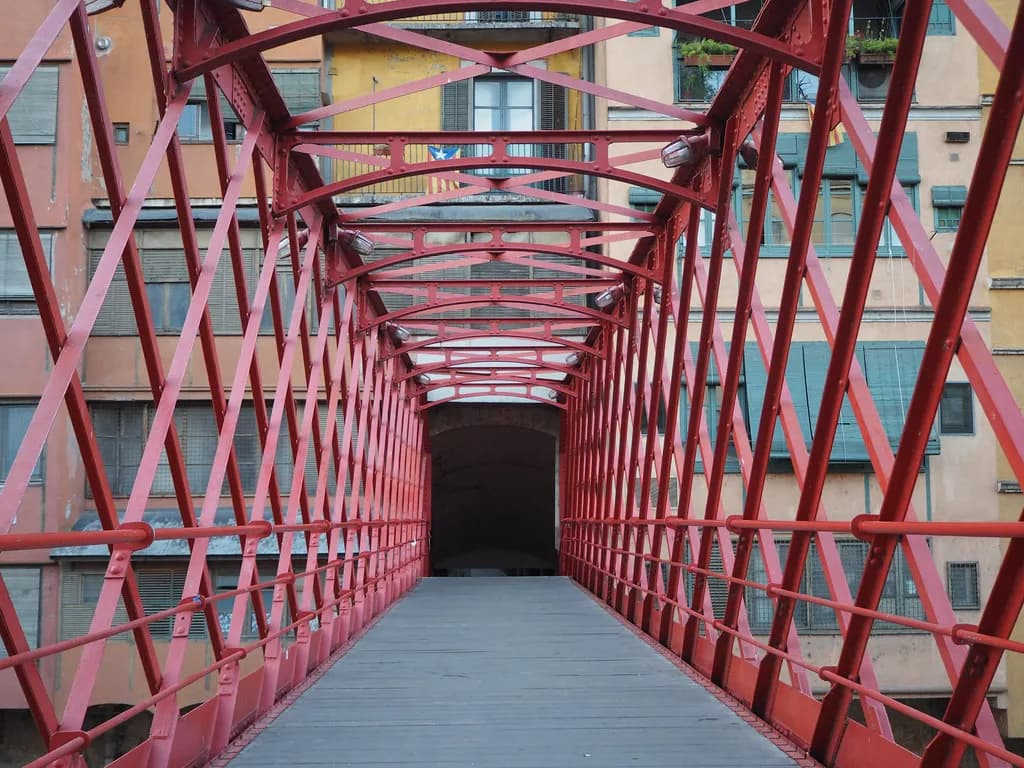
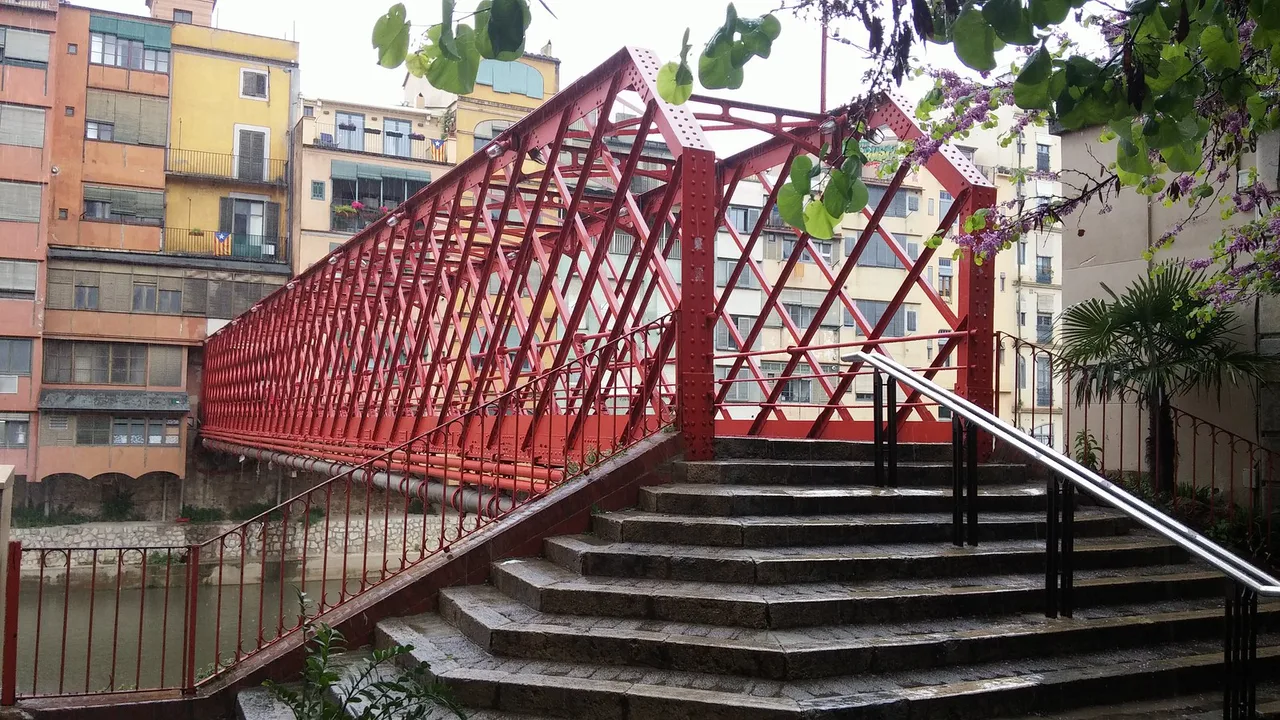
Construction photographs and records describe the bridge as the work of Gustave Eiffel's team over the Onyar in Girona. The red colour and the lattice bracing are what most visitors notice first; the span is short, and you will be across in under a minute if you simply walk.
Where it is in Girona
The bridge stands at Carrer del Riu Onyar, 17004 Girona, on the riverside stretch where the painted facades face each other across the water. Use the riverside houses as your landmark: walk along the Onyar and you will meet the bridge. It is a pedestrian crossing only, so you approach on foot.
From the old town, come downhill through the lanes towards the river and join the walkway on the old bank; from the newer town, head for the Onyar and cross towards the cathedral side. The bridge is open all day, so there is no opening time to plan around.
This is one of six places covered in our Girona Attractions: 6 Visitor Guides, which is worth reading if you are building a day around the river and the old town rather than visiting the bridge alone.
What you actually see
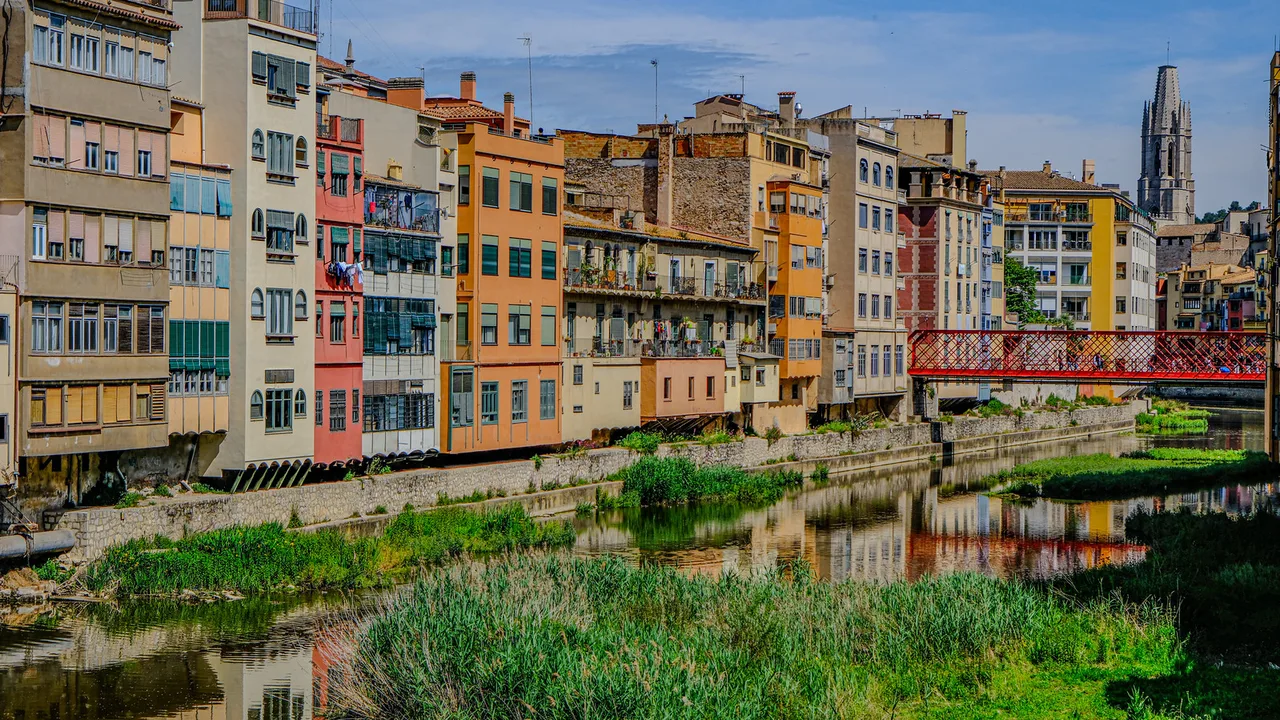
Look up and along the banks rather than down at the deck. The red ironwork frames the painted facades on both sides of the Onyar, and the river runs beneath the span. Photographs taken from a few metres back on either bank show the bridge, the water and the houses in one frame.
Visitors who cross it tend to describe the bridge as simple and ordinary in itself, with the coloured houses and the river doing much of the visual work. That is a fair expectation to set: come for the composition and the crossing between two halves of the city, not for a monument to explore.
How long to allow and when it is busiest
Plan on 15 to 30 minutes, which is enough for both banks, a crossing and a few photographs. That is the recommended sightseeing time for the bridge, and it fits neatly between two other stops in the old town.
Because it is a through route between the old and new town, the bridge sees steady foot traffic rather than crowds gathered at a single viewpoint. Cross early in the day if you want the ironwork without people in the frame, and accept that the riverside bars fill up around Spanish lunch, roughly 1:30 to 4pm, and again from about 8:30pm.
Best light for photographs
Morning light falls on the riverside facades from the old-town side, which gives the painted walls and the red ironwork a clean, even look. Late afternoon brings warmer, lower light on the opposite bank, and the colours of the houses deepen as the sun drops. Shadows in the narrow riverside street shift through the day, so try both banks before deciding where to stand.
There is no timed entry and no ticket to book, so you can return at a different hour without planning. Carry a phone or compact camera rather than a tripod: the bridge is a working pedestrian crossing and the walkway is narrow.
What to see nearby
The old Jewish quarter, The Call, sits about 193 metres away and is free to enter, which makes it the easiest add-on to a bridge stop. Walk uphill from the river into its narrow stone lanes and you are in the medieval core within a few minutes.
Girona Cathedral stands around 356 metres from the bridge and charges for entry, so it works as the next proper sight rather than a quick glance. Read our guide to the Catedral de Girona before you go, since the ticket and the climb to the Plaça de la Catedral are the two things worth planning.
For a longer walk, Parc de la Devesa lies roughly 759 metres away along the river and gives you trees and open ground after the tight old-town streets. The Arab Baths Girona (Banys Àrabs) are another old-town stop that pairs well with the cathedral and The Call on the same loop.
If you want a wider plan for the day, the city walls and the Passeig de la Muralla give you a high route above the rooftops, and the Girona Art Museum in the Episcopal Palace fills a wet hour near the cathedral. Both slot into the same old-town circuit as the bridge.
Our things to do in Girona page lists the rest of the old-town stops, including the Pont de Sant Feliu further along the Onyar, if you want to follow the river rather than climb.
Where to eat after the bridge
Two named restaurants sit within a few minutes of the bridge: Draps, about 144 metres away, and Divinum, about 262 metres away. Both appear as Western cuisine in the riverside listings rather than as tapas bars, so treat them as sit-down options rather than a quick plate at the counter.
Ask for the menú del día at lunch rather than ordering à la carte, and confirm the price at the door before sitting down; it changes with the season and the day. Reserve for dinner in the old town, where tables are limited and the evening only starts properly from about 8:30pm.
For a film stop on a wet afternoon, the Cinema Museum Girona (Museu del Cinema) is in the old town and a short walk from the river. Check its opening days and ticket price directly before setting out.
The honest trade-off
The bridge is a small, simple structure, and crossing it takes less than a minute. Build it into a river-and-old-town walk with The Call, the cathedral and a meal nearby rather than making a special trip for the bridge alone. Two hours along the Onyar and through the lanes covers it comfortably, which is worth weighing against how many days in girona you have set aside for the old town.
Plan Your Visit
Cross the Eiffel Bridge in the morning for clean light, walk up into The Call while the lanes are quiet, then time lunch for 1:30 to 4pm and dinner from about 8:30pm. The bridge needs no ticket, so the only thing to plan is where you eat and what you see either side of it. The official Girona tourism website is the place to check for any change to access along the river.
Frequently Asked Questions
Where is the Eiffel Bridge in Girona?
It stands at Carrer del Riu Onyar, 17004 Girona, on the riverside where the painted facades face each other across the Onyar. Use the riverside houses as your landmark and approach on foot; the bridge is a pedestrian crossing between the old town bank and the newer town.
How long do you need at the Eiffel Bridge?
Allow 15 to 30 minutes for a crossing, a few photographs from both banks and a look at the ironwork. Most visitors fold it into a longer walk through the old town rather than treating it as a stand-alone stop.
Is the Eiffel Bridge in Girona free to visit?
Yes. It is a public footbridge over the river rather than a ticketed attraction, and it is open all day. There is nothing to book and no entry gate, so you simply walk across.
Did Gustave Eiffel build the bridge in Girona?
The bridge was built by the team of Gustave Eiffel, not commissioned personally from him. Its red ironwork follows the same structural style as the Eiffel Tower, which is where the name comes from.
What is there to see near the Eiffel Bridge in Girona?
The Call, the old Jewish quarter, is about 193 metres away and free to enter, and Girona Cathedral is around 356 metres away with a paid ticket. Parc de la Devesa is roughly 759 metres along the river for a longer walk.
Where can you eat near the Eiffel Bridge?
Draps, about 144 metres away, and Divinum, around 262 metres away, are the closest named restaurants. Both are sit-down places rather than tapas counters, so check the menú del día price at the door and book ahead for dinner from about 8:30pm.
When is the best time to photograph the bridge?
Morning gives even light on the facades from the old-town side, while late afternoon warms the opposite bank and deepens the house colours. Try both banks before choosing your spot, and cross early if you want the ironwork without people in the frame.