How Many Days in Nerja? 1, 2 or 3 Days Explained
Two days covers Nerja's beaches, the Balcón de Europa and the caves. Use three days to add Frigiliana or a mountain hike, and stay longer for day trips.
On this page
Two days is the right answer for most first visits to Nerja. That gives you one day for the Balcón de Europa, the old town streets and Calahonda beach, and a second for the Nerja Caves plus Burriana or Torrecilla beach. A third day only earns its place if you want Frigiliana, Maro or a hike in the mountains behind town.
Nerja sits at the eastern end of the Costa del Sol, roughly 58km from Málaga airport, and it is a compact beach town rather than a city with a checklist of monuments. The pleasures are clustered: coves below the balcony, a whitewashed centre, chiringuitos along the sand and a cave system a few kilometres inland.
One day is enough to see the headline sights but leaves you choosing between the caves and a proper beach afternoon. Five days or more starts to make sense for hikers and for travellers using Nerja as a base for Almuñécar, Torre del Mar and Vélez-Málaga.
How many days in Nerja: the short answer
One day: the Balcón de Europa, the old town and one beach. This is a taster, and it works best for people passing through between Málaga and the Costa Tropical.
Two days: add the Nerja Caves and a second beach, either Burriana or Torrecilla. This is the plan most visitors should book, because the caves sit 4km outside town and eat a half-day once you count the journey each way.
Three days: add Frigiliana, Maro or a hike in the Sierras de Tejeda, Almijara and Alhama Natural Park. Four or five days suits hikers and anyone using the town as a base for the coast east and west.
Why two days suits most first visits
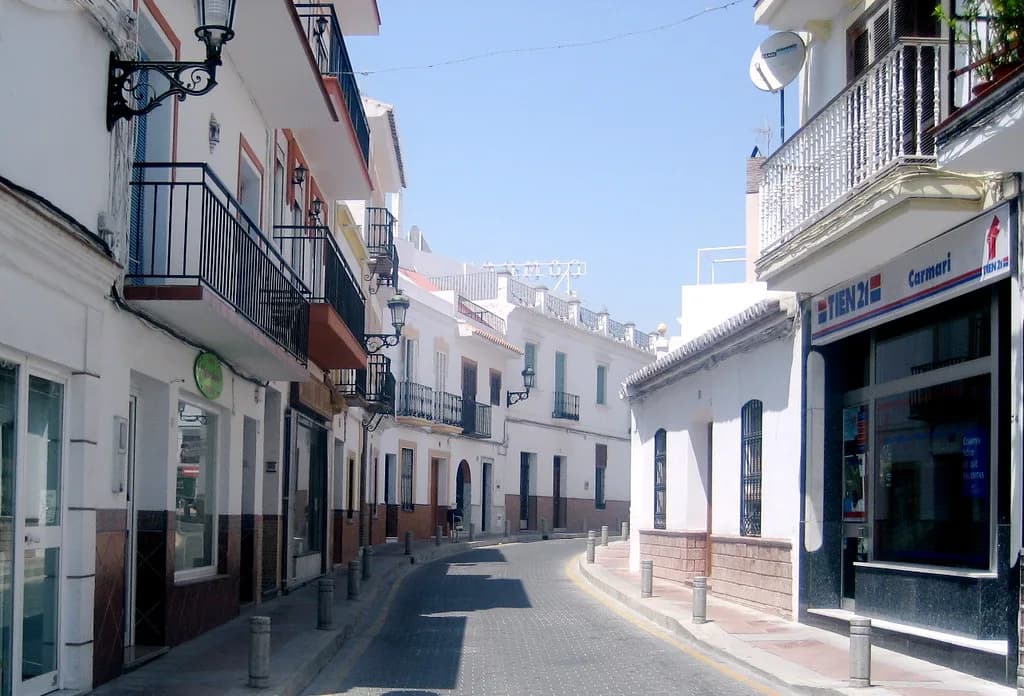
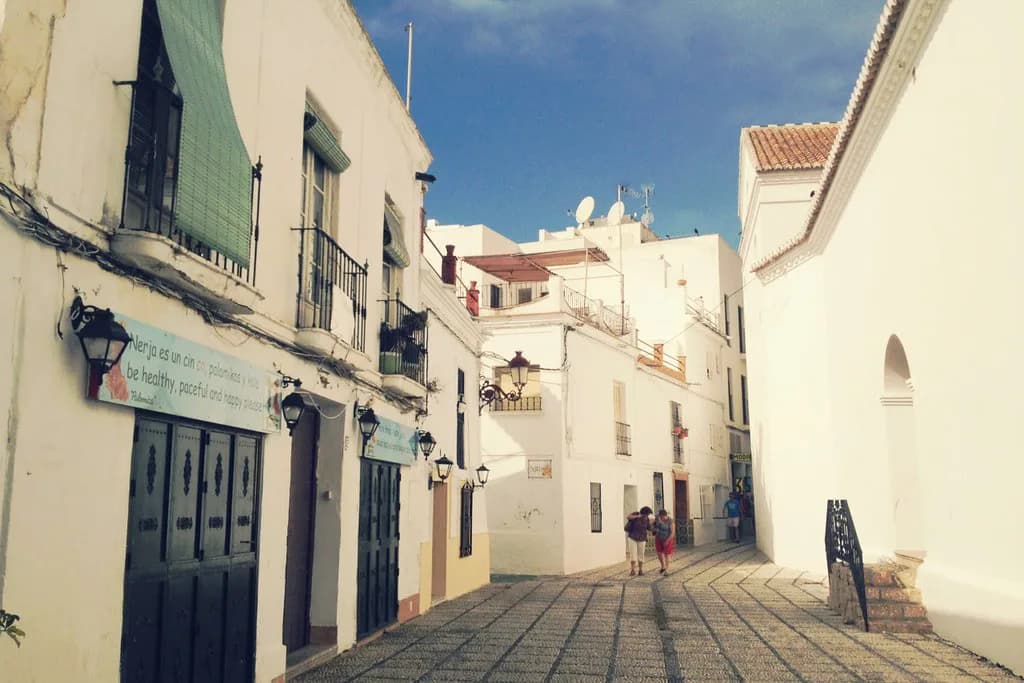
Nerja rewards slow mornings and late evenings rather than hard sightseeing. The town's own draws — the balcony, the old town triangle of Calle del Almirante Ferrándiz, Calle Gloria and Calle Pintada, the beaches in their coves — fill a relaxed day without a car.
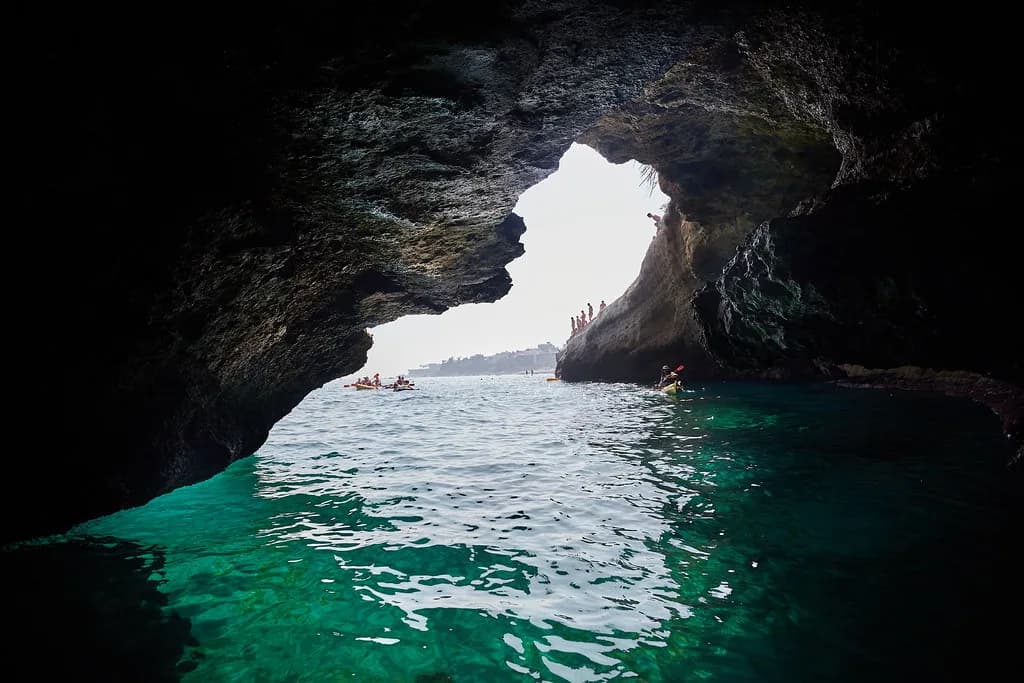
The second day is what makes the trip feel complete, because the Nerja Caves are genuinely a half-day outing. The cave system runs over 4km, about a third of it open to visitors, and the Hall of the Cataclysm — a column of stalagmites joining floor and roof — is the sight people remember.
There is a neat piece of budgeting logic here: entry to the Museum of Nerja is free within 10 days of buying a cave ticket, and the museum covers the Neanderthal cave paintings in sections the public cannot enter. Seeing the caves first and the museum second gives you both for one outlay.
If you are weighing Nerja against a longer Spanish city break, a two-night stay here is closer in shape to a beach stop than to a multi-day city plan such as How Many Days in Alicante Do You Actually Need? That comparison matters when you are splitting a fortnight between coast and cities.
Day 1: Balcón de Europa, the old town and Calahonda beach
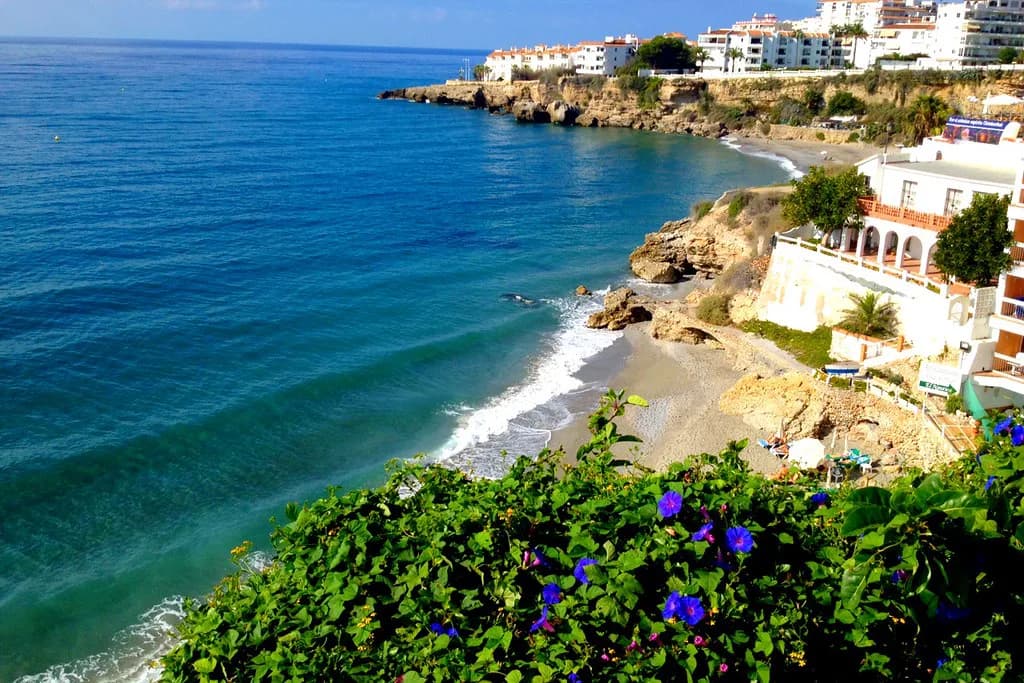
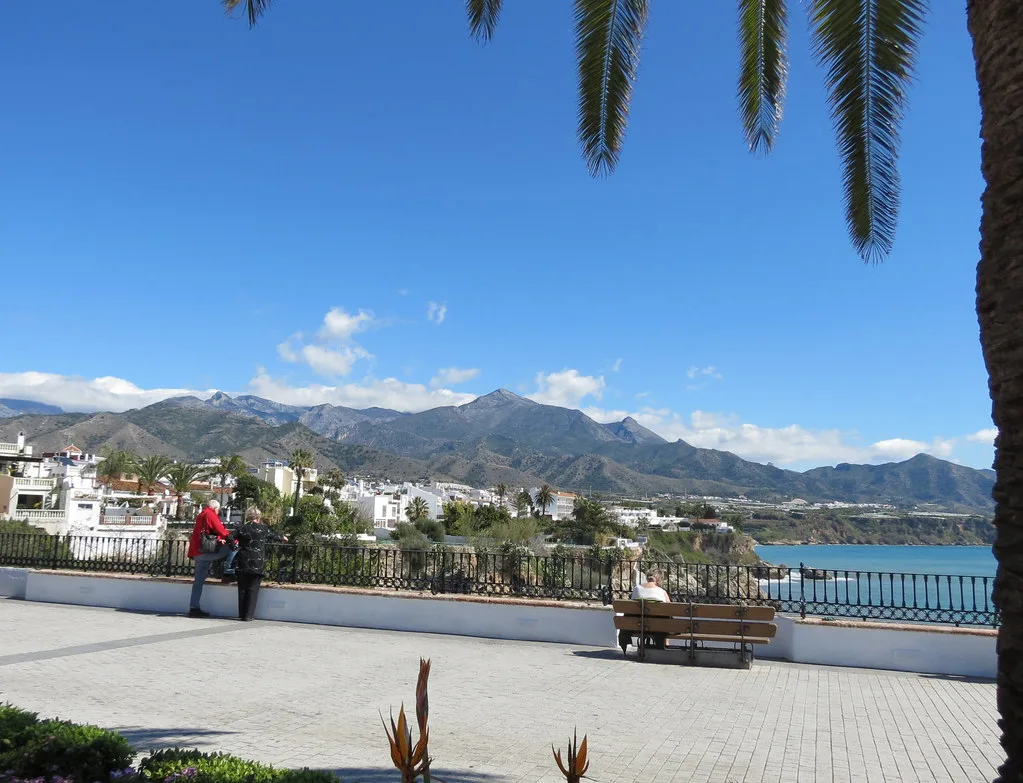
Start at the Balcón de Europa, the palm-lined promenade and viewpoint jutting out over the sea, with the Sierra de Tejeda mountains behind the town and Calahonda beach directly below. It is the most photographed spot on this stretch of coast, and the plaza behind it holds Iglesia El Salvador.
Walk down through the Boquete de Calahonda beside the Moorish-style fountain. A left turn takes you behind Calahonda beach for views back up to the balcony, while going straight puts you under the balcony itself with the Caletilla beach in front of you.
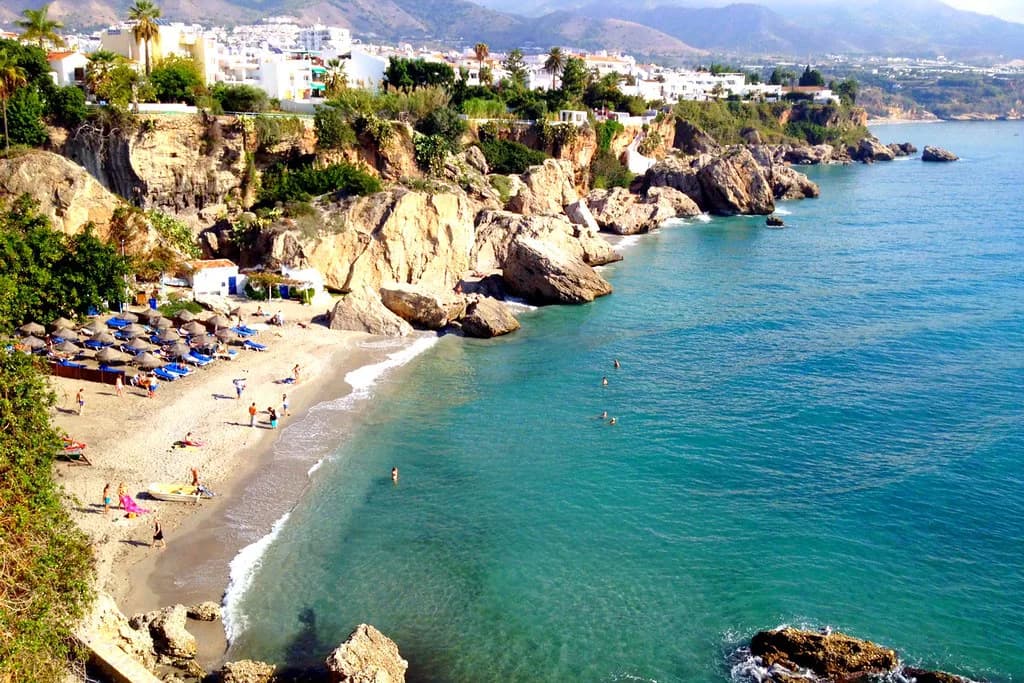
Spend the afternoon on Calahonda, the small sheltered cove beneath the balcony, which has showers, toilets and a snack stand. It is a fraction of the size of Burriana, so arrive early if you want sand rather than a towel spot on the rocks.
For a longer walk, follow Calle Hernando de Carabeo towards the Mirador del Bendito, passing a series of viewpoints above the beaches, then continue to the Parador de Nerja for coffee and the view down over Burriana. It is the second-best outlook in town after the balcony.
Day 2: Nerja Caves plus Burriana or Torrecilla beach
Go to the caves in the morning. The tourist train leaves from Plaza de los Cangrejos and takes 20 to 30 minutes to the cave entrance, running every 30 minutes in summer, though the caves are also reachable on the Alsa bus in about 15 minutes or on foot in roughly 45 minutes.
A free 9:30am weekday visit exists, but the conditions are strict: tickets must be booked online 48 hours ahead and the offer applies to European Union members only. Treat it as a bonus for planners, not an assumption, and buy online or at the tourist train stop otherwise.
Spend the afternoon at Burriana Beach, the long, wide, most popular stretch, with plenty of restaurants and bars and a section set aside for beach sports. Torrecilla is the alternative: a wide, flat boardwalk that suits walking and jogging as much as sunbathing, with every facility you need.
In August the beaches fill early and stay busy, so plan the caves for the morning and the sand for late afternoon, when the light softens and the Spanish dinner hour approaches.
Day 3 options: Frigiliana, Maro or a Sierra hike
Frigiliana is the easiest add-on: a white village of steep, narrow streets, flower pots and a church on a hill, about ten minutes away by bus. It is touristy, but a few hours of wandering is time well spent.
Maro sits across from the caves, a small pretty hamlet you can pair with a cave visit; its beach, a 20-minute walk from the village, is often called one of the most beautiful on the Costa del Sol. Buses take about 15 minutes, or you can walk it in around 40.
Hikers should choose the mountains instead. Guided walks in the Sierras de Tejeda, Almijara and Alhama Natural Park run five to eight hours in groups of 15 to 20 and were priced at 30–40 euros, with transport from central Nerja included.
Do not count on the Chillar river walk to Frigiliana. Ask locally whether the river route has reopened before you build a day around it, and fall back on El Fuerte from Frigiliana or El Cielo above town if it has not.
What one day in Nerja covers, and what it leaves out
A single day gives you the Balcón de Europa, a wander through the old town streets and one beach, probably Calahonda because it is right under the balcony. Add coffee at the Parador or a drink on the plaza and the day is full.
What it leaves out is the caves, which need a bus or train ride and a couple of hours underground, and any sense of the beaches beyond the centre. That is the trade-off: one day is a snapshot, two days is a visit.
Day-trippers arriving by car should know parking is limited in the centre; a reservable car park on the town's edge cost €1.90 per hour and sits about 15 minutes' walk from the resort centre along the promenade.
Where to base yourself: old town, Plaza de los Cangrejos or Burriana
The old town around Plaza del Balcón de Europa puts the balcony, the church and the tapas streets on your doorstep, which suits a two-day stay where you walk everywhere. Hotel Balcón de Europa sits in the heart of town overlooking the Mediterranean, and Hotel Puerta del Mar is a central boutique option.
Plaza de los Cangrejos is the practical choice for cave visitors: the tourist train leaves from there, the park leads down to Torrecilla beach, and a strip of restaurants runs alongside. You trade old-town atmosphere for easier logistics.
Burriana suits beach-first travellers. The Parador de Nerja sits just outside the centre in a setting above Burriana with the best views in town after the balcony, and the beach itself has the widest choice of bars and restaurants.
Getting around on foot, by tourist train and by bus to the caves
You do not need a car for a two- or three-day stay. The centre, the balcony and the central beaches are walkable, and the coastal bus network covers Frigiliana, Torrox Costa and Almuñécar; Alsa runs roughly one bus an hour between Málaga and Nerja, sometimes direct and sometimes via Torre del Mar and Torrox Costa.
For the caves, the tourist train from Plaza de los Cangrejos is the simplest option, running every 30 minutes in summer, with the Alsa bus a faster alternative at about 15 minutes. A taxi or the 45-minute walk covers the same 4km if timings do not suit.
A car helps for the wider coast — Torrox Pueblo has weak bus links, with roughly one service an hour from Torrox Costa — and for reaching trailheads in the Sierra. Arriving from Málaga airport by public transport takes around two hours against 45 minutes by road.
Timing your day around Spanish meals and beach crowds
Lunch runs from about 1:30pm to 4pm and dinner starts around 8:30pm to 9pm, so a cave visit or a hike fits neatly into the morning and early afternoon. Eat late, then take the beach in the late afternoon when the fiercest sun has passed.
Beach crowds build through the morning in high summer, and Calahonda in particular is small enough to fill quickly; Burriana and Torrecilla absorb far more people. If you are in town during a heatwave month, plan indoor hours for the middle of the day.
Shoulder months change the balance: fewer people on the sand, shorter queues at the caves and cooler walking, which makes a third day of hiking more appealing than it is in midsummer.
Who should stay longer: hikers and day-trippers to Almuñécar, Torre del Mar and Vélez-Málaga
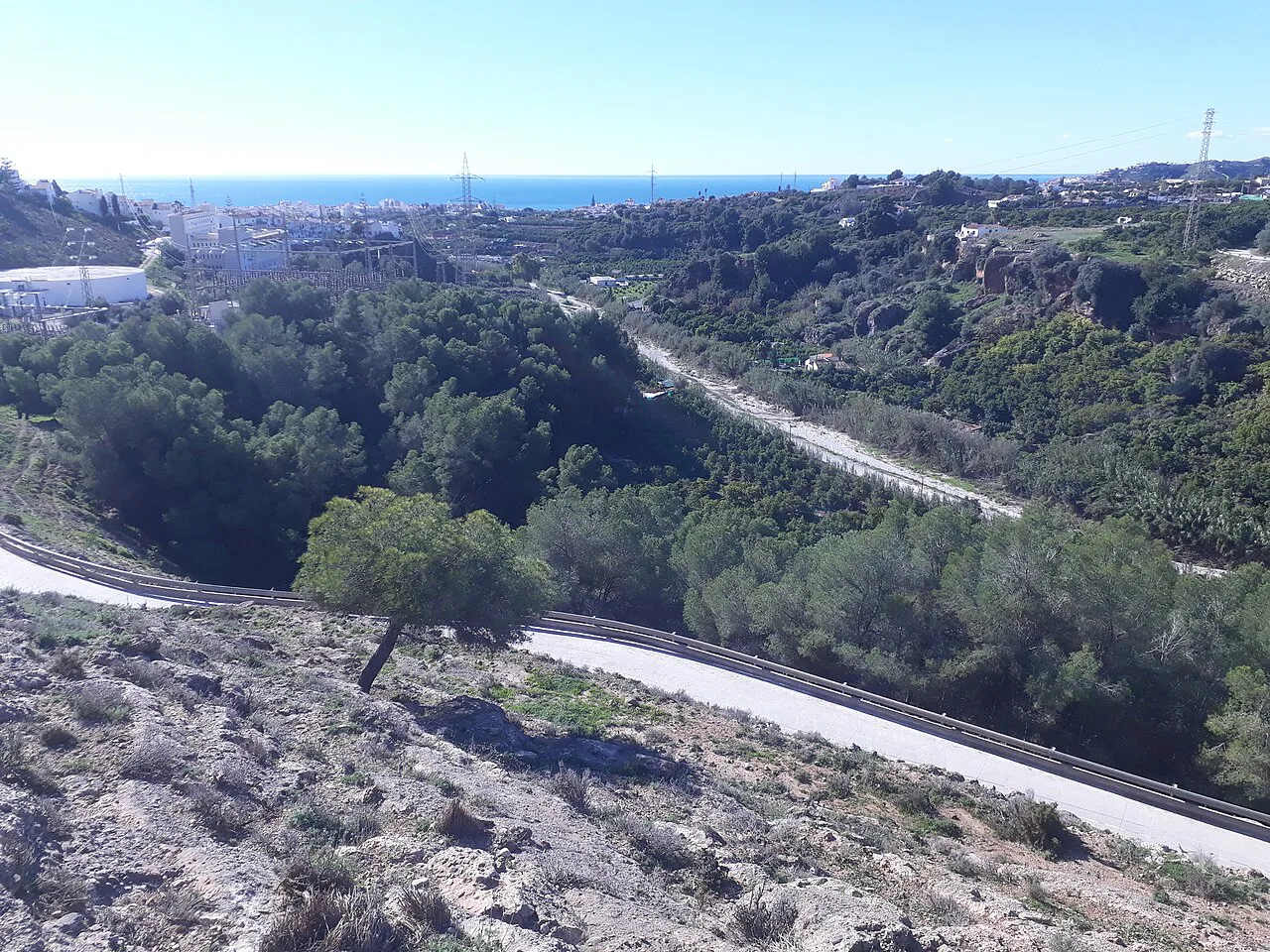
Hikers should book four or five nights. The Sierra trails range from the easy El Fuerte out of Frigiliana to El Cielo, the highest peak visible from town, and a guided day out can take five to eight hours, which leaves little room for anything else.
Almuñécar is 30 minutes east by bus in Granada province, with a fortress, the Peñón del Santo outcrop and Roman aqueducts, and the water there has a turquoise colour you do not see in Nerja. Torre del Mar, the largest coastal town between Nerja and Málaga, has a 4km promenade and a long beach.
Vélez-Málaga holds the region's strongest cultural sights — churches, museums and fortress remains above the city, with Cervantes having lived there in 1594. Each of these is a half- or full-day outing, so add nights rather than cramming them into a two-day stay.
If you are comparing Andalusian bases of a similar size, How Many Days in Girona Do You Actually Need? applies the same logic: a compact centre takes a day, and the surrounding countryside decides the rest.
Where to eat and drink in town
Tapas and seafood are the order of the day. El Pulguilla is known for both, Meson Patanegra serves Andalusian dishes, and La Bottega Food & Wine covers Mediterranean cooking; Restaurante Oliva works for a special-occasion meal, and Pizza Bar Naturale and Coffee Mar handle casual lunches and breakfast.
For sea views in the centre, Balcon de Pico is the simple pick. Elsewhere, chiringuitos along the sands serve grilled seafood through the beach day, which suits a late lunch after a morning at the caves.
The busiest dining streets form a triangle around Calle del Almirante Ferrándiz, Calle Gloria and Calle Pintada, with bars and restaurants lining all three. Evening trade starts late, so book nothing before 8:30pm unless you want an empty room.
Common planning mistakes
Booking one night and expecting both the caves and a beach day is the classic error. The caves sit outside town, and the round trip plus the visit takes a good half-day.
Underestimating the walk to Frigiliana's upper streets is another; the car park at the foot of the village is followed by a steep climb. And treating a summer stay as a city break is a third: this is a beach town, and the rhythm is sand, late lunch, siesta, dinner.
Finally, leave room for the museum if you visit the caves, since free entry within 10 days of a cave ticket turns a spare hour into one of the better afternoons in town.
Plan Your Visit
Two days is the sensible default for Nerja: the balcony, the old town and Calahonda on day one, the caves plus Burriana or Torrecilla on day two. Add a third only for Frigiliana, Maro or the Sierra, and stretch to four or five if you plan coastal day trips or serious hiking.
Book the cave ticket online, check the free-visit conditions before you rely on them, and organise bus times for Alsa and the tourist train when you arrive. Cave, museum and tour arrangements change seasonally, so check current details with the Nerja tourist office before you travel.
If your trip falls in late summer, read up on nerja in october and the shoulder-month trade-offs before you fix dates: quieter beaches and easier hikes, but cooler evenings.
Explore more Nerja guides
Frequently Asked Questions
Is two days enough for Nerja?
Yes for most first visits. Two days covers the Balcón de Europa, the old town and Calahonda beach on one day, then the Nerja Caves with Burriana or Torrecilla beach on the other. It is only if you want Frigiliana, Maro or a mountain hike that a third day becomes worth booking.
What can you do in Nerja in one day?
Focus on the Balcón de Europa, a wander through the old-town streets around Plaza del Balcón de Europa, and one beach, most likely Calahonda directly below the balcony. A drink or coffee at a terrace with sea views fills the late afternoon. The caves need a separate half-day, so one day means choosing between them and a full beach afternoon.
Is Nerja worth visiting for a week?
A week works for hikers and for travellers using Nerja as a base. The Sierra trails behind town range from easy routes out of Frigiliana to El Cielo, and coastal day trips reach Almuñécar, Torre del Mar and Vélez-Málaga. If you mainly want beach and town, two or three days is enough and a week will feel slow.
Do you need a car in Nerja?
No for a two- or three-day stay. The centre and central beaches are walkable, buses link Frigiliana, Torrox Costa and Almuñécar, and the tourist train runs to the caves. A car helps for Torrox Pueblo, where buses are sparse, for trailheads in the Sierra, and for reaching the town faster from Málaga airport.
How do you get to the Nerja Caves without a car?
Take the tourist train from Plaza de los Cangrejos, which runs to the cave entrance and takes 20 to 30 minutes. The Alsa bus is quicker at about 15 minutes, and the walk takes around 45 minutes each way. Book cave tickets online in advance, and check the free-visit conditions if you hope to use them.
Which is better for a day trip from Nerja, Frigiliana or Maro?
Frigiliana has more to explore: steep white streets, flower pots, craft shops and a church, reached in about ten minutes by bus. Maro is smaller and pairs naturally with the caves across the road, and its beach, a 20-minute walk from the village, is a strong draw. Choose Frigiliana for a half-day of wandering, Maro for a shorter stop combined with the caves.
Sources
Notes for eating well in Spain
Optional updates to our guides.
You might also like
Continue reading
More guides you'll find useful