
Alcázar de Segovia: A Visitor's Guide to the Castle

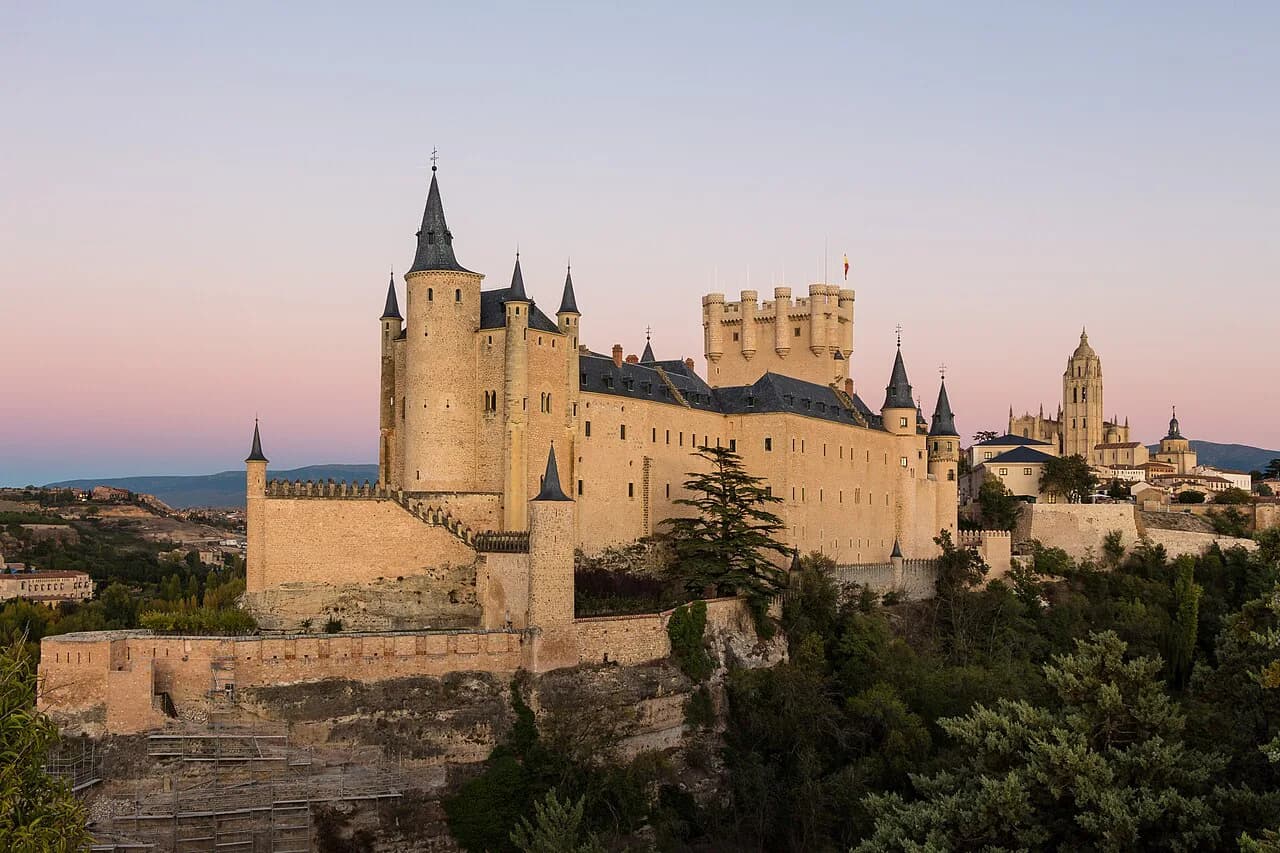
The Alcázar de Segovia is the castle that closes the old town at its western tip, perched on rock above the meeting of the Eresma and Clamores rivers. You reach it on foot through the historic centre, not by driving to the door, which makes it the natural end point of a walk up from the aqueduct.
It has served as fortress, royal residence and state prison, and the interior you walk through today is the Palacio de los Reyes de Castilla plus the artillery museum. Allow 40 to 45 minutes for the palace and museum at an easy pace, and treat the tower as a separate decision rather than an automatic add-on.
What the Alcázar de Segovia actually is
The building sits on a promontory between the Eresma and Clamores, a position that explains its long life as a fortress. It became a royal residence in the 13th century and took on its Gothic appearance under John II and Henry IV, before a serious fire in 1862 nearly destroyed it and reconstruction began in 1882.
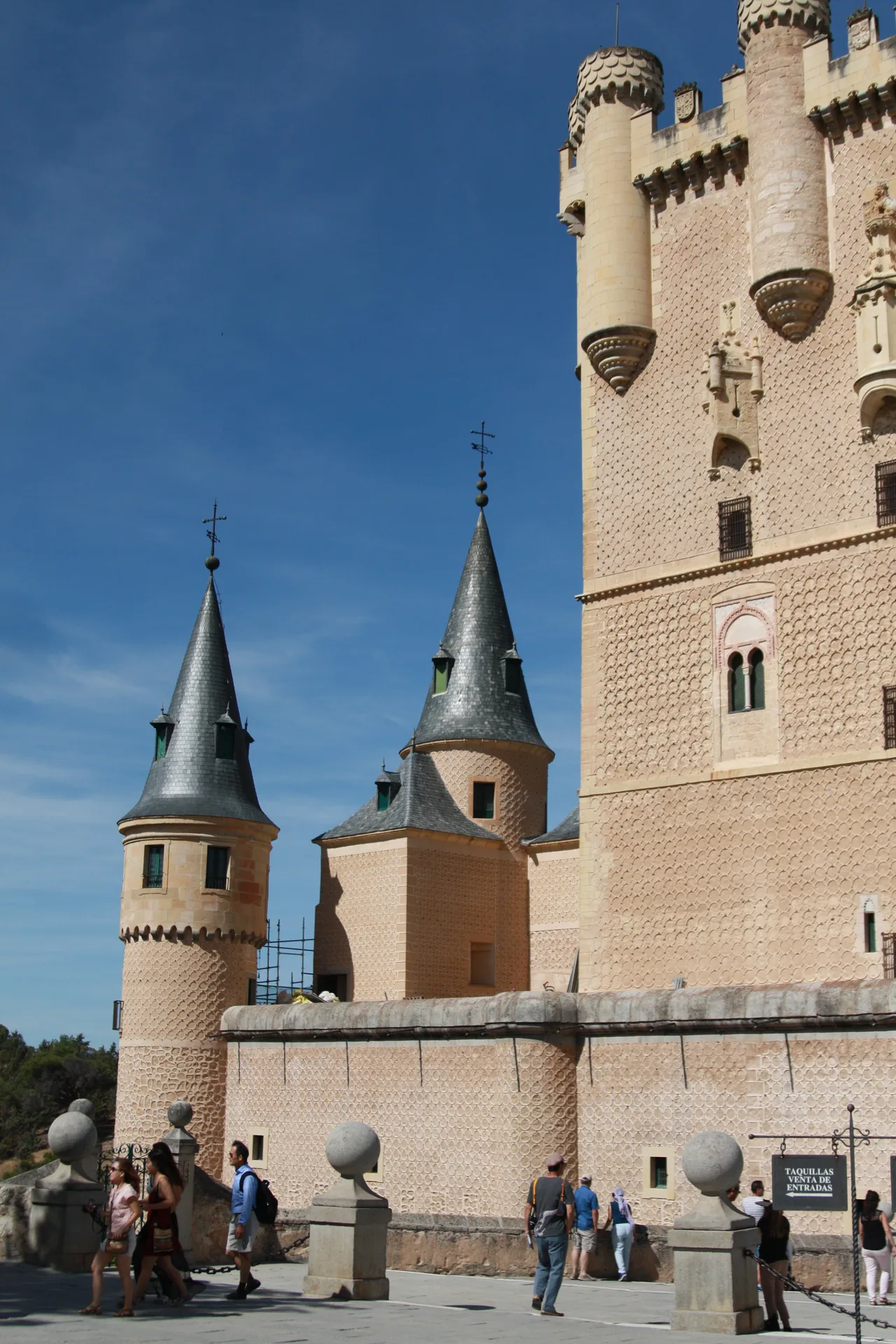
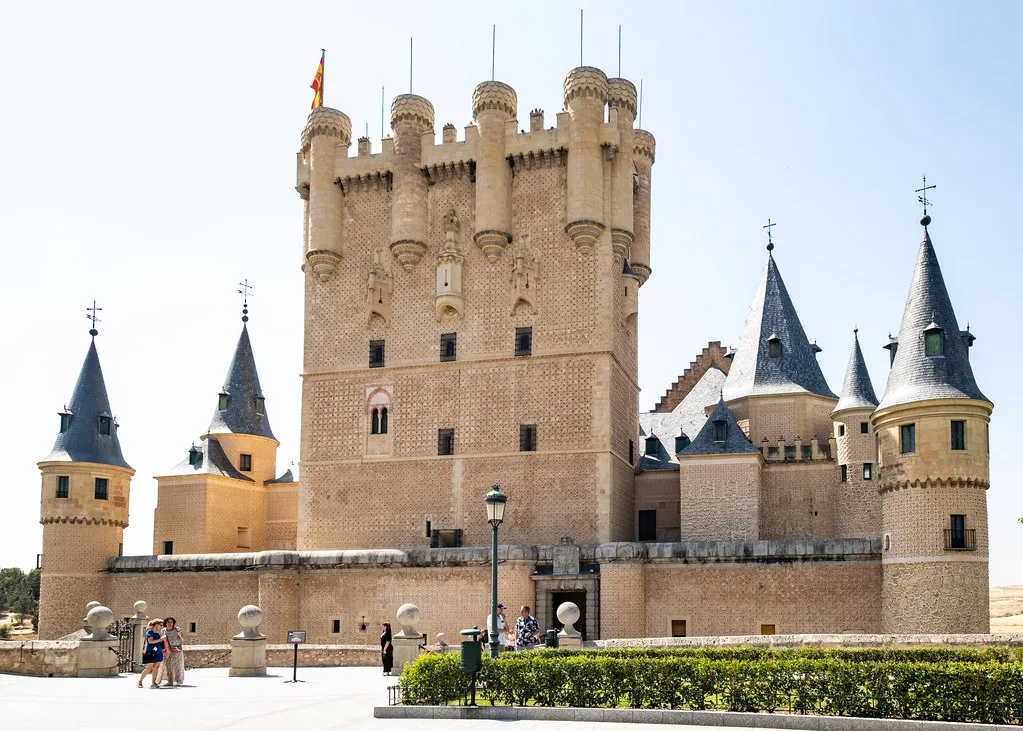
The silhouette is dominated by the 80-metre Torre de Juan II, with its sgraffito decoration and twelve turrets. Inside, the palace rooms hold carved ceilings, friezes and altarpieces that the Patronato del Alcázar has been restoring for decades.
The castle is the symbol of a city whose old town and Roman aqueduct entered the UNESCO World Heritage list in December 1985. That status is the reason the walk up through the streets is part of the visit rather than just the approach to it.
Where it is and how to get there
The address is Plaza de la Reina Victoria Eugenia, at the western edge of the old town. The gardens of that plaza sit in front of the castle and are free to enter, typically from 08:00 to 22:00 in both winter and summer, which gives you a place to sit before or after the ticket slot.
From Madrid, the high-speed train from Chamartín reaches Segovia-Guiomar in a little under 30 minutes. That station is about 6 km from the centre and connects by urban bus lines 11 and 12 or by taxi, so build the transfer into your timing. There are no stops within walking distance of the walls.
Arriving by coach is the easiest public-transport option for the old town, because the bus station is a five-minute walk from the aqueduct. The castle itself has no car park, surrounding spaces are scarce and much of the centre is pedestrian or residents-only, so leave the car below and walk up.
On foot, the classic route climbs from the aqueduct through the old town to the castle, passing the cathedral on the way. It is a steady uphill walk on stone streets, so wear shoes with grip and give yourself longer than a map app suggests.
Opening hours through the year
The castle opens every day of the week without a midday break. From 1 November to 31 March it runs 10:00 to 18:00, and from 1 April to 31 October 10:00 to 19:30.
Ticket sales at the box office and admission to the castle both stop 30 minutes before closing, and rooms begin to clear ten minutes before the end. Arriving inside that final half-hour means you will not get in, so plan the visit around the published closing time rather than the hour you reach the plaza.
The official calendar lists exceptions in 2026: special hours on 2 October, 6 November, 24 December and 31 December, and full closure on 25 December. The Patronato reserves the right to change opening days for institutional events or force majeure, so confirm the date you plan to travel on the official site before booking transport.
Tickets, free-entry slots and booking ahead
Buy online in advance rather than queueing at the box office, especially at weekends, on long weekends and on public holidays. Tickets that include the Torre de Juan II routinely sell out, and the total number of entries per day is capped.
Free entry to the Palacio and Museo runs on Tuesdays from 14:00 to 16:00, excluding national, regional and local holidays. It applies to European Union citizens buying individual tickets at the box office during that window and is subject to capacity, so it is a saving for a flexible afternoon, not a plan for a tight schedule.
Guided groups follow a separate booking channel through a dedicated portal, and professional guides must use radio-guide equipment inside the rooms. Independent visitors are not affected by that rule, but it does mean school parties and tours move through in blocks, which is another reason to hold a timed ticket.
Inside the Palacio de los Reyes de Castilla
The palace is arranged around the Patio de Armas and the Patio del Reloj, with the Palacio de los Reyes de Castilla forming the main core on the right and the artillery rooms on the left. The courtyard is also used for chamber music concerts, so occasionally part of the route is dressed or screened for an event.
The Sala de Reyes is the room to slow down in: a gilded ceiling of hexagons and diamonds above a frieze of 52 seated figures running from Don Pelayo to Juana la Loca. The Throne Room has a Mudéjar ceiling made by Xadel Alcalde, and the Galera's coffered ceiling has been reconstructed since the fire.
The chapel holds a Castilian altarpiece from the first quarter of the 16th century and a painting of the Adoration of the Magi dated 1600. Look also for the Cámara Regia and the Queen's Dressing Room on the same circuit, which are easy to rush past on the way to the tower stairs.
The Museo de Artillería and the Real Colegio de Artillería
The rooms to the left of the courtyard belong to the Colegio de Artillería, founded inside the castle in 1764 under Carlos III and possibly the oldest officer-training centre still running anywhere. The Museo de Artillería keeps that military thread going with armour and weapons displays.
The museum sits in the same building and on the same ticket circuit as the palace, so it is not a separate outing. It is the part most visitors skip when time is short; if armour and artillery are your interest, take the museum first and the state rooms second.
Climbing the Torre de Juan II
The tower climb is 152 steps up a spiral staircase, rewarded by a view over the city, the San Marcos district, Zamarramala and the quarry that supplied stone for the cathedral. It is not accessible for visitors with reduced mobility, and access is not allowed for under-16s without an adult.
Time in the tower is capped at 25 minutes, separate from the 40 to 45 minutes estimated for the palace and museum on a self-guided visit. The spiral is narrow and busy at peak times, so anyone uneasy with confined stairs or heights should spend the time in the state rooms instead.
How long to allow
Budget roughly 40 to 45 minutes for the palace and museum, then 25 minutes on top for the tower if you are climbing it. Add time for security, ticket checks and the walk across the courtyards, which puts a comfortable visit at around an hour and a quarter.
The busiest stretch is usually 11:00 to 13:30, so a slot at opening or in the late afternoon is calmer. If you are in Segovia for a single day, the castle works best as the first or last stop of the walk, not squeezed between the aqueduct and a lunch booking.
What to see nearby on the same walk
The Aqueduct of Segovia is the obvious starting point, a Roman structure that dominates the plaza below the old town and is free to walk under at any hour. From there, the climb through the centre passes shops and churches before reaching the cathedral square.
Segovia Cathedral stands on the highest part of the old town, a short walk from the castle route, and is worth an hour on its own. If you want a third indoor stop, the Museo de Segovia adds local history without pulling you far off the centre.
Outside the walls, paths along the Eresma lead down towards the Vera Cruz church and the Fuencisla sanctuary, with views back up at the castle. The walk down and back takes longer than it looks, so keep it for a day when the castle is not your only fixed booking.
Practical points before you go in
The palace and the Museo de Artillería are reached by ramps, but the tower is not. Wheelchairs can be borrowed free of charge from the access control staff, with two available, and there is an adapted toilet in the Casa de la Química opposite the ticket desks.
There is no cloakroom or left-luggage service, so carry only what you want to hold for an hour. Eating and drinking inside the castle is not allowed, tripods are banned, and pets other than guide dogs are excluded from the monument and the plaza gardens.
Visitor information is staffed at the Patio de Armas, with free leaflets and QR codes for digital versions. If you need to ask about access or timings before travelling, the visitor line is 921 210 515.
Eating after the visit
Segovia's table is built around roast cochinillo and cordero asado, with judiones de La Granja, sopas de ajo and ponche segoviano for the sweet finish. These are heavy dishes, which suits a lunch after a morning in the castle better than a late dinner before a train.
Spanish lunch service runs roughly 1:30pm to 4pm and dinner from about 8:30pm, so a visit finishing mid-morning leaves a comfortable gap before restaurants fill. Many places close one or two days a week, so check the day's opening before you set your heart on a specific table.
Plan Your Visit
Book the castle for a slot either side of the 11:00 to 13:30 peak, decide before you travel whether the 152 tower steps are for you, and leave the car below the walls. The palace and museum fit into 40 to 45 minutes, which leaves the rest of the day for the aqueduct, the cathedral and a long lunch.
Opening hours, 2026 exceptions and ticket availability are all published on the official site, and the tower sells out first on busy days. If your trip also takes in other fortified cities, the Alcázar de Toledo makes an instructive comparison on how a castle is presented to visitors.
Explore more Segovia guides
Frequently Asked Questions
How long does it take to see the Alcázar de Segovia?
Allow 40 to 45 minutes for the Palacio de los Reyes de Castilla and the Museo de Artillería on a self-guided visit. The Torre de Juan II is capped at 25 minutes on top of that, so a full visit including the tower takes around an hour and a quarter once you add security and courtyard time.
Is the Torre de Juan II worth climbing?
Climb it if you want the view over the city, San Marcos and Zamarramala, and you are comfortable with 152 steps on a narrow spiral staircase. Skip it if stairs or confined spaces are a problem, or if you are visiting with someone who cannot manage the climb, since the tower is not accessible for reduced mobility. The state rooms alone fill the palace time comfortably.
When is entry to the Alcázar de Segovia free?
Free entry to the palace and museum runs on Tuesdays from 14:00 to 16:00, excluding national, regional and local holidays. It applies to European Union citizens buying individual tickets at the box office in that window and is subject to capacity, so it works best for a flexible afternoon rather than a fixed itinerary.
Do you need to book Alcázar de Segovia tickets in advance?
Booking ahead is strongly advised, particularly at weekends, on long weekends and on public holidays, when tickets including the Torre de Juan II commonly sell out. Daily entry numbers are limited, and buying online avoids the box-office queue and the 30-minute cut-off before closing.
What can you see inside the Alcázar de Segovia?
The circuit covers the Palacio de los Reyes de Castilla, including the Sala de Reyes with its gilded geometric ceiling and frieze of 52 monarchs, the Throne Room with its Mudéjar ceiling, the Galera, the chapel and the royal chambers. The Museo de Artillería and the rooms of the Real Colegio de Artillería sit on the same route.
How do you get to the Alcázar from the Segovia aqueduct?
Walk up through the old town from the aqueduct, passing the cathedral on the way; it is a steady climb on stone streets. From Madrid, the high-speed train reaches Segovia-Guiomar in under 30 minutes, and bus lines 11 and 12 or a taxi cover the 6 km into the centre.
What is the best time of day to visit the Alcázar de Segovia?
The busiest period is usually 11:00 to 13:30, so a slot at opening or in the late afternoon is calmer. Remember that ticket sales and admission stop 30 minutes before closing, and rooms start clearing ten minutes before the end.
Is the Alcázar de Segovia accessible for wheelchair users?
The palace and the Museo de Artillería are reached by ramps, and two wheelchairs can be borrowed free of charge from the access control staff. An adapted toilet is available in the Casa de la Química opposite the ticket desks. The Torre de Juan II is not accessible because of its spiral staircase.