
Segovia Cathedral: What to See Inside Spain's Last Great Gothic Cathedral
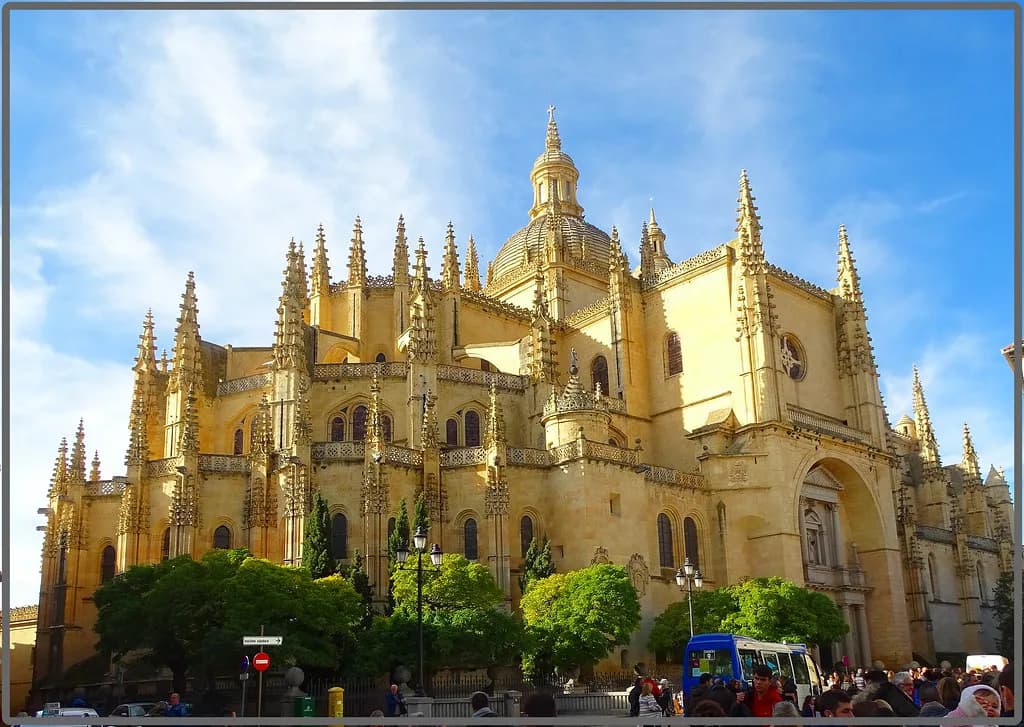
Segovia Cathedral is the last of Spain's great Gothic cathedrals, a late Gothic building that dominates the highest part of the old town and carries the nickname the Lady of Cathedrals. Give it between an hour and ninety minutes: enough to walk the four interior galleries and the chapels, and to slow down in the rear courtyard.
The entrance sits on Calle Marqués del Arco, at the cathedral's front door, so aim for that street rather than circling the building looking for a side gate. This guide covers the cathedral itself; other Segovia sights are noted only as things to pair with your visit.
What Segovia Cathedral is and why it's worth your time
This is the cathedral that closes the great age of Spanish Gothic, and GetYourGuide bills it as one of the last great Gothic cathedrals built in Spain. The interior is not a single nave to glance at and leave: it holds four galleries and 21 chapels, plus substantial collections of Flemish and Castilian painting and two sets of tapestries.
If you have already seen Seville or Toledo, come here for a different reason. The draw is the light, the breadth of the chapels and the art hanging inside them, not sheer scale, so the visit rewards slow walking rather than a quick photo from the west doors. If you are comparing Gothic cathedrals across Spain, the Málaga Cathedral guide sets out the same dilemma of scale versus detail on another city's waterfront.
Where the cathedral sits in Segovia and how to reach it
The cathedral stands in Segovia's old town, a short walk uphill from the Plaza Mayor, with its main entrance on Calle Marqués del Arco. Segovia's station is outside the centre, and the old town climbs steeply from the aqueduct end, so wear shoes that cope with cobbles and allow extra minutes if you arrive by train.
Coming from the aqueduct, the natural route is straight up Calle Real and through the plaza: it delivers you to the cathedral square without a map. Read up on the aqueduct beforehand so you know what you are looking at on the way, then treat the cathedral as the second stop of the same walk.
Getting in: entrance, tickets and what they include
The standard entrance ticket covers the cathedral and the Episcopal Palace of Segovia, which you visit on your own. It does not include tower access, a guided tour or a brochure, and those extras are booked separately, so decide before you arrive whether the tower is part of your plan.
Tickets are sold as timed products, so check availability for your date on the operator's page rather than assuming you can walk in at any hour. For current entry prices and opening times, look at the cathedral's own published information, since these change by season.
Buying a pre-reserved ticket makes sense if your Segovia day is tight, because it removes the queue decision from your morning. If your schedule is loose, the trade-off is flexibility: an unreserved arrival lets you linger at the aqueduct first and reach the cathedral when you are ready.
The building itself: late Gothic architecture and the 'Lady of Cathedrals' nickname
The epithet Lady of Cathedrals is the phrase used to promote the building, and it fits the late Gothic character: tall, slender and ornamental rather than heavy. Look up at the vaulting and the windows before you start on the chapels, because the verticality is the point of the architecture.
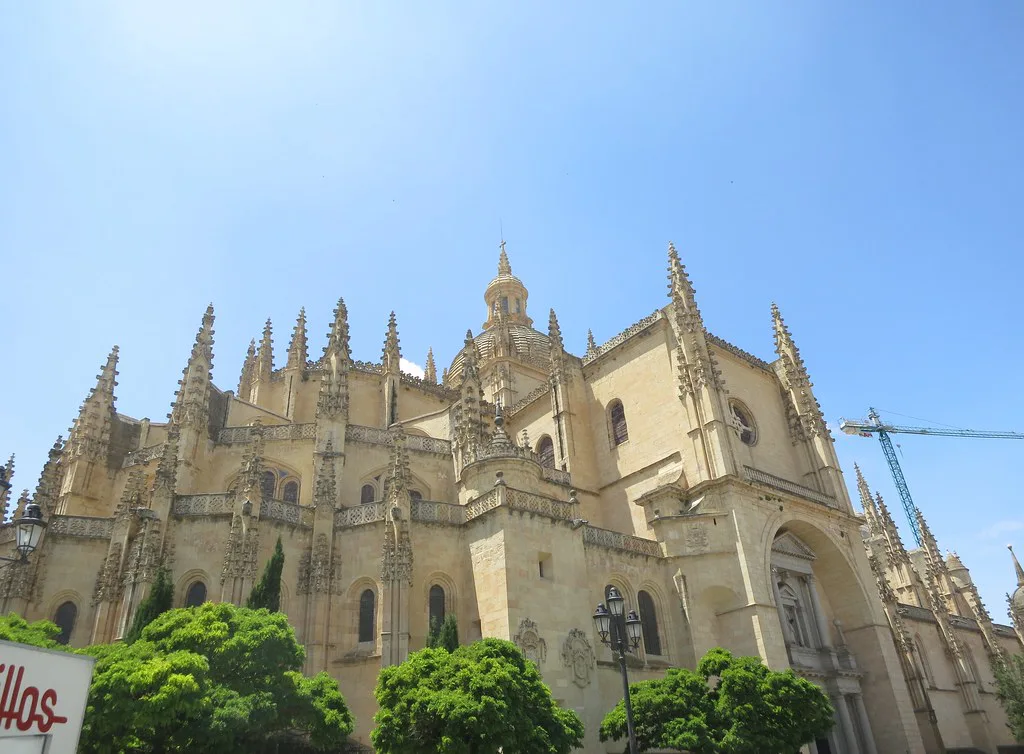
Step outside to the western facade and the rear courtyard to see the exterior properly; the courtyard gives you a calm view back at the west front, away from the tourist traffic on the entrance side. Build that loop into your route rather than finishing at the exit door.
What to see inside: the chapels, galleries and art collections
Plan the interior by collection rather than by aisle. The 21 chapels hold the painting collections of Flemish and Castilian work, and the cathedral also displays two tapestry collections, so pick two or three chapels to study properly instead of ticking off every one.
The four interior galleries give you a circuit, and each gallery opens onto a different set of chapels; use them to keep your bearings. Retables and carved stonework reward a slower pace than the paintings, so budget your attention accordingly.
The cloister and rear courtyard
The tranquil rear courtyard is where you get the clean view of the western facade, and it is the part of the visit most people rush. Treat it as a deliberate pause halfway through, not an afterthought on the way out, and you will come away with the photograph that makes the cathedral legible.
How long to allow and when to go for quieter aisles
Allow an hour for the cathedral and palace at a steady pace, or ninety minutes if you want to read the chapel labels and sit in the courtyard. Add the tower separately if you have booked it, because it is not part of the standard ticket.
Spanish eating hours shape a Segovia day well here: the cathedral is busiest in the late morning and early afternoon, when day-trippers arrive from Madrid. A visit after the 1.30pm to 4pm lunch window often means fewer people in the galleries, and it sets you up for an evening at the aqueduct or the Alcázar.
Practical points: tower access, guided tours and what the ticket excludes
Tower access is not part of the standard entrance, and neither is a guided tour; both are separate arrangements. The activity is also not subject to the right of withdrawal under EU consumer rules, so a booked ticket is money spent if plans change, and the supplier's cancellation policy applies.
Mobile vouchers with instant confirmation are the format sold online, which suits travellers arriving by train with limited time. If you want a brochure or commentary, arrange it with the cathedral directly rather than expecting it in the standard admission.
What's nearby: the aqueduct, Alcázar and old town streets
The Alcázar de Segovia sits at the far end of the old town, a fair walk from the cathedral but on the same sightseeing loop. Pair it with the cathedral if you want Segovia's two big interiors in one day, and give the castle its own slot rather than squeezing it between chapels.
The old town streets between the cathedral and the plaza are worth wandering without a target: this is where Segovia's everyday life happens around the monuments. Keep the aqueduct for the end of the day, when the light hits the stone and the crowds thin.
Where to eat after your visit
Segovia is roast suckling pig and hearty Castilian cooking territory, served at lunch from about 1.30pm and at dinner from 8.30pm or 9pm. Book a table for the afternoon sitting if you are visiting the cathedral in the morning, because the good places fill up with day-trippers rather than staying quiet for walk-ins.
For a cheaper, faster meal, look to the streets around the Plaza Mayor, where bars serve raciones and tapas at the counter. Prices vary by venue, so read the board outside before you sit down.
Common mistakes and honest trade-offs
The most common mistake is assuming the tower or a guided tour comes with admission, then discovering otherwise at the door. Check what your ticket includes before you pay, and remember the activity is non-refundable under the Catedral de Segovia's terms.
The second is trying to do the cathedral, the Alcázar and the aqueduct in a single rushed half-day. If time is short, give the cathedral its hour and see the aqueduct from outside; the castle deserves a return visit rather than a ten-minute dash.
Plan Your Visit
Segovia Cathedral fits neatly into a day built around the old town: entrance on Calle Marqués del Arco, an hour or ninety minutes inside, then the courtyard for the west facade and a walk on to the Alcázar. Check the cathedral's own pages for current prices and opening hours before you travel, since they vary by season.
If you are weighing the cathedral against Segovia's other sights, the honest answer is that it earns a proper slot rather than a passing stop. Build the day around it, eat a late Castilian lunch, and let the aqueduct close the afternoon.
Explore more Segovia guides
Frequently Asked Questions
How long does it take to visit Segovia Cathedral?
Allow about an hour at a steady pace for the cathedral and the Episcopal Palace, or ninety minutes if you want to read the chapel labels and sit in the rear courtyard. Tower access is separate and adds time on top.
Do you need to book Segovia Cathedral tickets in advance?
Tickets are sold as timed products, so booking ahead removes uncertainty if your day in Segovia is tight. If your schedule is loose, arriving without a reservation keeps you flexible. Check availability for your date before you commit.
What is Segovia Cathedral known as?
It is promoted as the Lady of Cathedrals and is described as one of the last great Gothic cathedrals built in Spain. The nickname reflects its late Gothic, vertical character rather than any official title.
What does the entrance ticket include?
The standard ticket covers the cathedral and the Episcopal Palace of Segovia, visited on your own. Tower access, a guided tour and a brochure are not included and are arranged separately.
Is Segovia Cathedral worth visiting?
Yes, if you care about late Gothic architecture and interior art. The four galleries, 21 chapels, Flemish and Castilian paintings and two tapestry collections make it more than a quick photo stop.
What can you see inside Segovia Cathedral?
You can walk four interior galleries and 21 chapels, see Flemish and Castilian paintings and two tapestry collections, and step into the tranquil rear courtyard for the view of the western facade.
Can I visit the cathedral on the same day as the Alcázar?
Both fit into one day if you give each a proper slot, but not if you are rushing between them. The Alcázar is a fair walk from the cathedral, so plan the route and leave time to eat between the two.