
Alcázar de Toledo: what to see at Toledo's hilltop fortress
The Alcázar de Toledo is the stone fortress that crowns the highest ground in Toledo, and today it holds the Army Museum. It is the one sight in the city where the building itself — Roman site, imperial palace, Civil War ruin, post-war reconstruction — is as much the attraction as anything displayed inside it.
Plan it as a single stop of two to three hours rather than a half-day in itself: the exterior and viewpoints take about half an hour, and the museum collections fill the rest. Because the fortress sits at the top of the old town, the walk up is part of the visit and worth building into your timing.
What the Alcázar de Toledo is
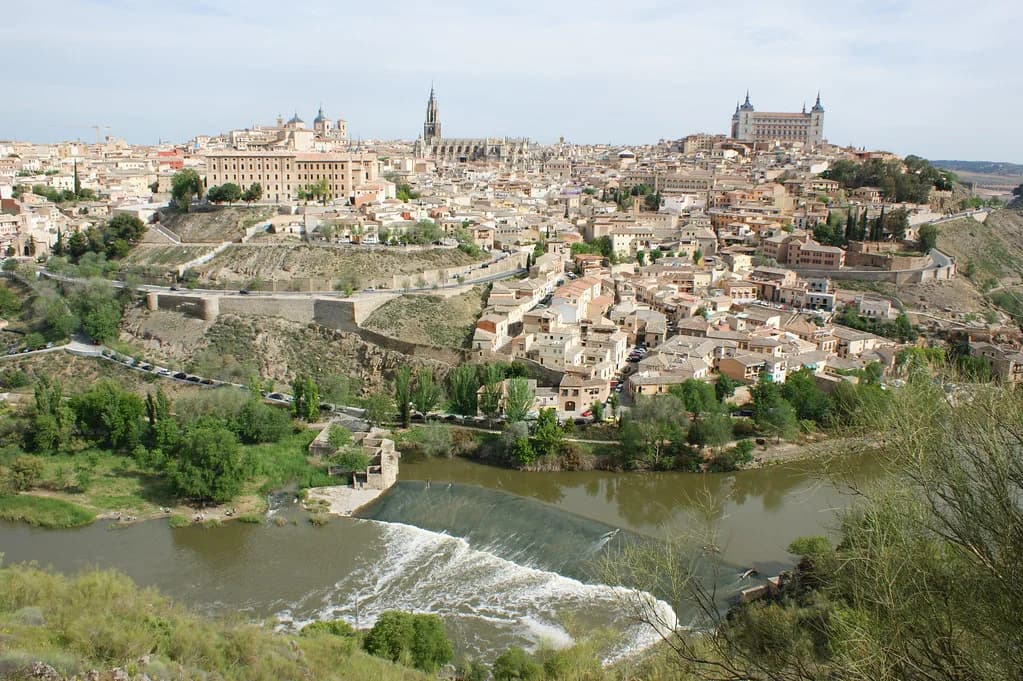
The Alcázar is a stone fortification on the highest part of Toledo, and that elevated position gives it a wide view over the city and the surrounding countryside. Its history is one of repeated destruction and rebuilding rather than a single construction date, which is why the walls you see are a mix of periods.
Since reconstruction, the castle has served as the site of the Army Museum. Treat the visit as two things in one building: the architecture and terrace outlook on the outside, and the museum collections within. A guide to the city's other sights is in our Toledo Attractions: 5 Visitor Guides if you want to build a fuller day around it.
Where it sits above the old town
The fortress occupies the crest of Toledo, above the tangle of streets that makes up the old town. That hilltop siting is what shapes the approach: whichever direction you come from, the last stretch to the Alcázar is uphill, often on cobbles and through narrow lanes.
Build the climb into your plans rather than treating it as an afterthought. If you are visiting in summer, do the ascent earlier in the day and keep the museum for the hottest hours, when the galleries give you shade and something to look at while you cool down.
Getting there from Toledo and from Madrid
The Alcázar is reachable by public transport, from Toledo itself or from Madrid. If you are coming from Madrid, take the train into Toledo and then continue on foot or by local bus up to the fortress rather than attempting the whole journey in one leg.
Once in the old town, most of the approach is walking, and the gradient increases as you near the top. Comfortable shoes matter more here than in flatter cities, and anyone travelling with a pushchair or limited mobility should plan the final stretch carefully and consider a taxi to the upper town.
The building's layers: Roman palace to 1940 reconstruction
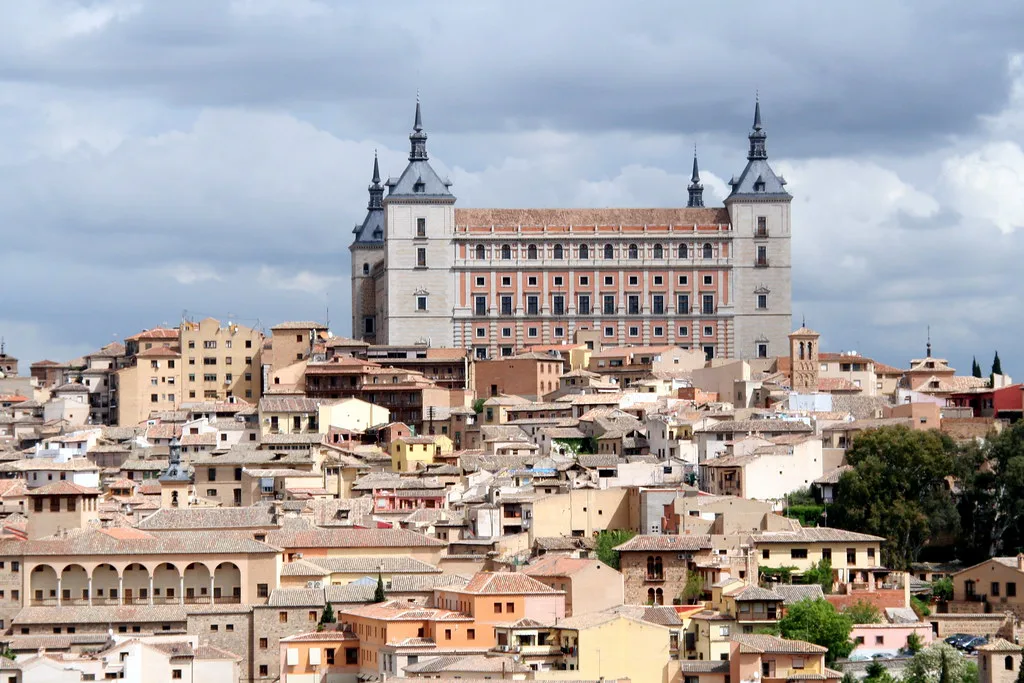
The fortress stands on the site of a third-century Roman palace, and the structure has been destroyed and rebuilt repeatedly across the centuries. In the sixteenth century Carlos V had it completely rebuilt as a Renaissance-style royal palace, which is the layer most visible in the facade's imperial proportions.
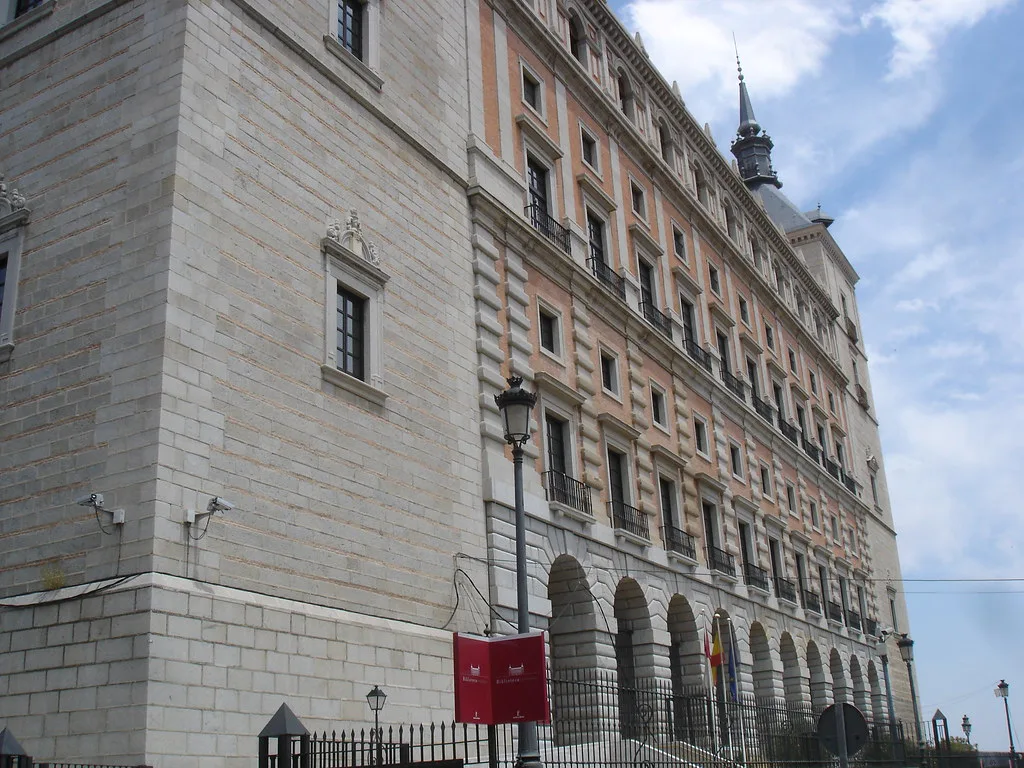
In 1936, during the Civil War, the building was heavily destroyed again; reconstruction began in 1940 and produced the facade seen today. Knowing this changes how you read the building: much of what stands is twentieth-century work rebuilt on older foundations, not an untouched medieval castle.
The structure carries Roman, Islamic, medieval and imperial layers, with the post-Civil War rebuilding superimposed on them. Keep that sequence in mind as you walk the exterior and the contrast between old stone and reconstructed sections becomes easier to spot.
What to see inside: the Army Museum
Inside, the Alcázar houses the Army Museum, so the collections cover Spanish military history rather than the palace interiors Carlos V would have known. Allow the bulk of your time here if military history interests you; if it does not, the exterior, the climb and the views justify the trip on their own.
Exhibits and temporary displays change, and the museum sets its own room-by-room layout. Check the museum's own information on arrival for what is open that day rather than relying on older descriptions of the galleries.
Opening hours and closure days
The Alcázar keeps a fixed weekly schedule and closes on certain public holidays. Hours are set by the museum and can change with the season and the calendar, so confirm them on the official site before you travel rather than trusting a third-party listing.
Toledo is an easy day trip from Madrid, which means many visitors arrive without checking the day's schedule. If your trip hinges on seeing the museum interior, confirm the opening times the day before.
Tickets and entry rules
Admission is ticketed, with the price, concessions and any booking requirement set by the museum. Buy through the official channel where possible and check whether timed entry applies on the date you plan to visit, since popular slots fill in high season.
Do not rely on prices quoted in older travel write-ups: admission figures go out of date quickly. Confirm the current rate and any reduced categories on the museum's own pages before you set your budget for the day.
How much time to allow
Budget around half an hour for the exterior, the approach and the viewpoints, and two hours or more for the museum if you want to do it properly. A short visit of an hour works only if you skip most of the collections and concentrate on the building and the outlook.
Because the site sits at the top of the city, it pairs well with a slow walk back down through the old town rather than a rushed return to the station. Leave buffer time for the descent, which is easier than the climb but still takes longer than the map suggests.
Accessibility and the climb
The uphill approach is the main practical constraint: steep lanes, steps and cobbles on the final stretch. Visitors with limited mobility, small children or heavy luggage should consider a taxi to the upper town and save their energy for the museum.
Once inside, the museum spreads over multiple floors, so even with lift access you will be on your feet for a while. Wear shoes you can walk in for two hours and carry water in summer, when the climb is genuinely exerting.
What's nearby
The Alcázar sits within easy walking distance of the cathedral and the Plaza del Ayuntamiento, so the obvious pairing is a fortress visit followed by the cathedral. Our Toledo Cathedral guide covers what to see there and how to time entry around services.
If you have a full day, the Museo del Greco in Toledo is a short walk away and makes a natural second stop for anyone interested in the painter's vision of the city. For a broader shortlist of what to do in Toledo beyond the fortress, see our Things to Do in Toledo, Spain. If you want to weigh Toledo's fortress against another hilltop castle on a Madrid day trip, our segovia alcazar guide covers that comparison.
Fitting the visit around Spanish meal times
Lunch in Toledo runs from about 1.30pm to 4pm and dinner rarely starts before 8.30pm or 9pm, so the museum slot fits most comfortably in the late morning or the mid-afternoon gap. A visit starting around 10am leaves you free for a proper lunch afterwards without rushing the galleries.
If you arrive from Madrid for the day, take an early train, see the Alcázar first and eat lunch late, Spanish-style. That order avoids the worst of the midday heat on the climb and puts you in the old town when the kitchens are actually open.
Plan Your Visit
The Alcázar de Toledo rewards visitors who treat it as a single, focused stop: come for the hilltop position, the layered history and the Army Museum, and allow two to three hours including the climb. Confirm the day's opening hours and admission details on the official site before you go, and book the museum slot around a late Spanish lunch.
Explore more Toledo guides
Frequently Asked Questions
What is the Alcázar de Toledo?
It is the stone fortress on the highest ground in Toledo, rebuilt after the Spanish Civil War and now home to the Army Museum. Visitors come for the building, the collections and the views over the city.
When was the Alcázar of Toledo built?
There is no single date. It stands on the site of a third-century Roman palace, was rebuilt as a Renaissance royal palace under Carlos V in the sixteenth century, was heavily damaged in the Civil War in 1936 and was reconstructed from 1940.
Is the Alcázar de Toledo open every day?
No. The museum keeps one weekly closing day and also shuts on certain public holidays. Check the official site for the current schedule before you travel, especially if you are making a day trip from Madrid.
How do you get to the Alcázar de Toledo from Madrid?
Take the train from Madrid to Toledo and continue on foot or by local bus up to the fortress. The final stretch through the old town is uphill, so allow extra time and wear comfortable shoes.
How long does a visit to the Alcázar de Toledo take?
Allow around half an hour for the exterior and viewpoints and two hours or more for the Army Museum. A rushed hour only works if you skip most of the collections.
What is inside the Alcázar de Toledo today?
The Army Museum occupies the building. The collections cover Spanish military history, while the facade and terraces show the reconstructed fortress itself; temporary displays change, so check what is open on the day.