
Málaga Cathedral: A Practical Visitor Guide

Málaga Cathedral earns about an hour of your day, and more if you climb to the roof. It is the city's headline church, built over centuries in Gothic, Renaissance and Baroque layers, and it sits in the middle of the old town rather than on its edge, so it slots easily between breakfast and lunch.
Where Málaga Cathedral is
The cathedral faces Plaza del Obispo, with its main visitor entrance on Calle Molina Lario, the street that runs down towards the port. The address given by ticket platforms is C. Molina Lario, 9, 29015 Málaga, which places you roughly halfway between Calle Larios and the waterfront.
Treat Plaza del Obispo as your meeting point. From there, the Picasso Museum and the Alcazaba are short walks rather than taxi rides, and the orange-tree courtyard in front of the west façade gives you a shaded spot to get your bearings before going in. This is one of six stops we cover in our Malaga Attractions: 6 Visitor Guides, which maps the old town sights against each other.
How to get to Málaga Cathedral on foot, by bus or by metro
Walking is the obvious way in from anywhere in the historic centre: from Calle Larios allow five to ten minutes, and from Muelle Uno along the port roughly fifteen. Buses 1, 3, 14 and 15 stop at Plaza del Obispo, which drops you at the door, and metro line 1 stops at El Perchel, a longer walk or short taxi ride away.
Drivers can use the car park under the cathedral on Calle San Agustín, the simplest option if you are coming in for the day. In practice, though, the old town streets around Molina Lario are one-way and tight, so most visitors arrive on foot from a hotel nearby and leave the car parked.
A short history: mosque site, 1528 foundations and the 1588 halt
A mosque built in 1360 stood on the site before Málaga was reconquered in 1487, after which it was converted into a cathedral. The decision to build a new cathedral just to the south came in 1524, with foundations laid in 1528 to a Gothic design attributed to Diego de Siloé.
Money ran out in 1588, when Bishop Luis García de Haro stopped construction and the transept was walled off and consecrated. For the next century only the choir and the four columns flanking it went up, which is why the building reads as a patchwork of periods rather than a single design.
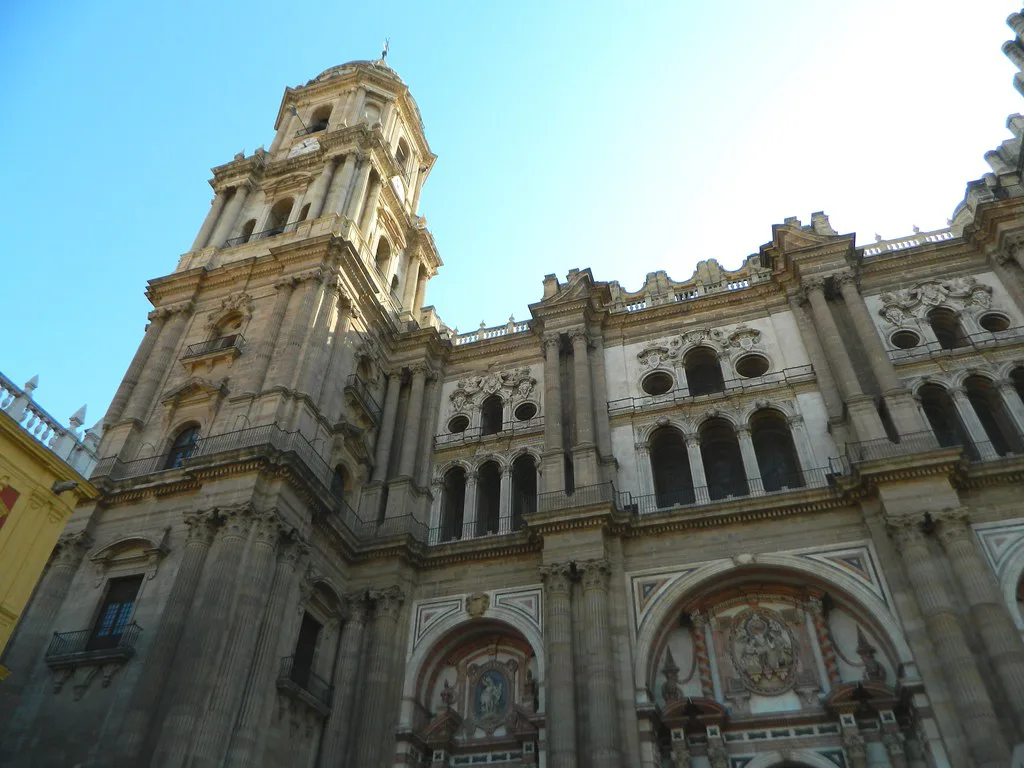
An earthquake in 1680 weakened the outer wall and forced work to restart, and in 1720 José de Bada began the new façade. Antonio Ramos followed, roofing the choir by 1768 and completing the north tower at 84 metres, second in Andalusia only to Seville's Giralda.
Why it is called La Manquita
The south tower was never finished, and a roof designed by Ventura Rodríguez was never added; further work was banned by Royal Decree in the late eighteenth century. That missing arm gives the cathedral its nickname, La Manquita, the one-armed woman.
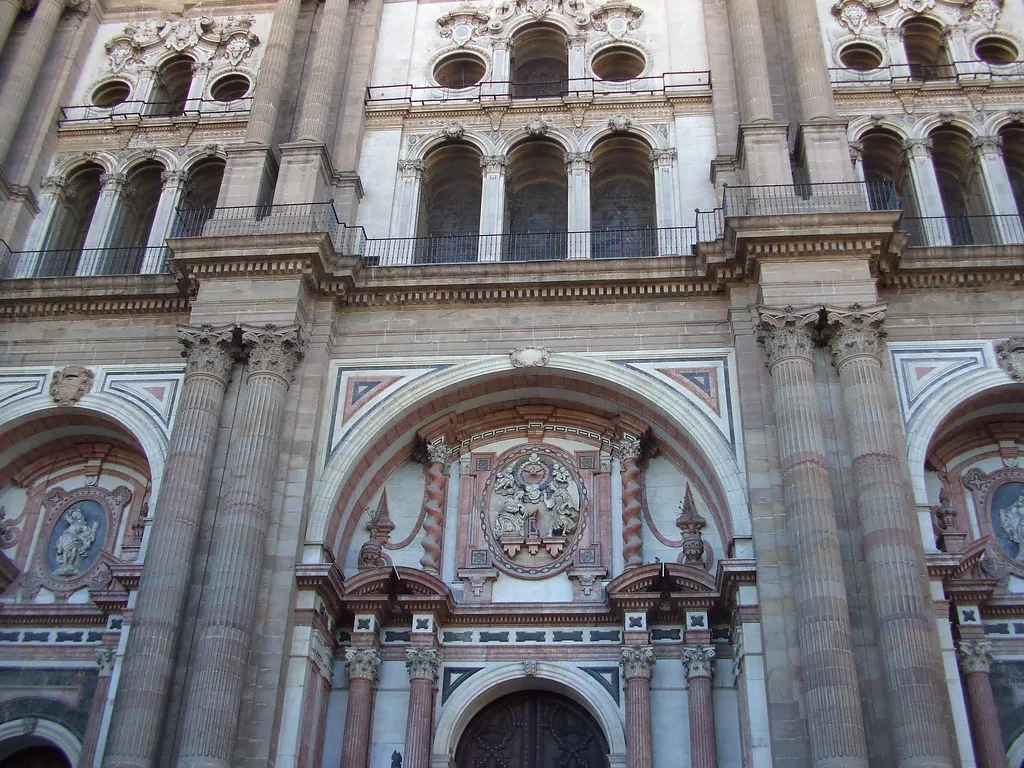
Look up before you go in. The outer walls still carry the worked stone intended for the south tower, and the columns rise like fingers where the upper structure should have continued, which is the detail that makes the skyline legible once you know the story.
What to see inside Málaga Cathedral
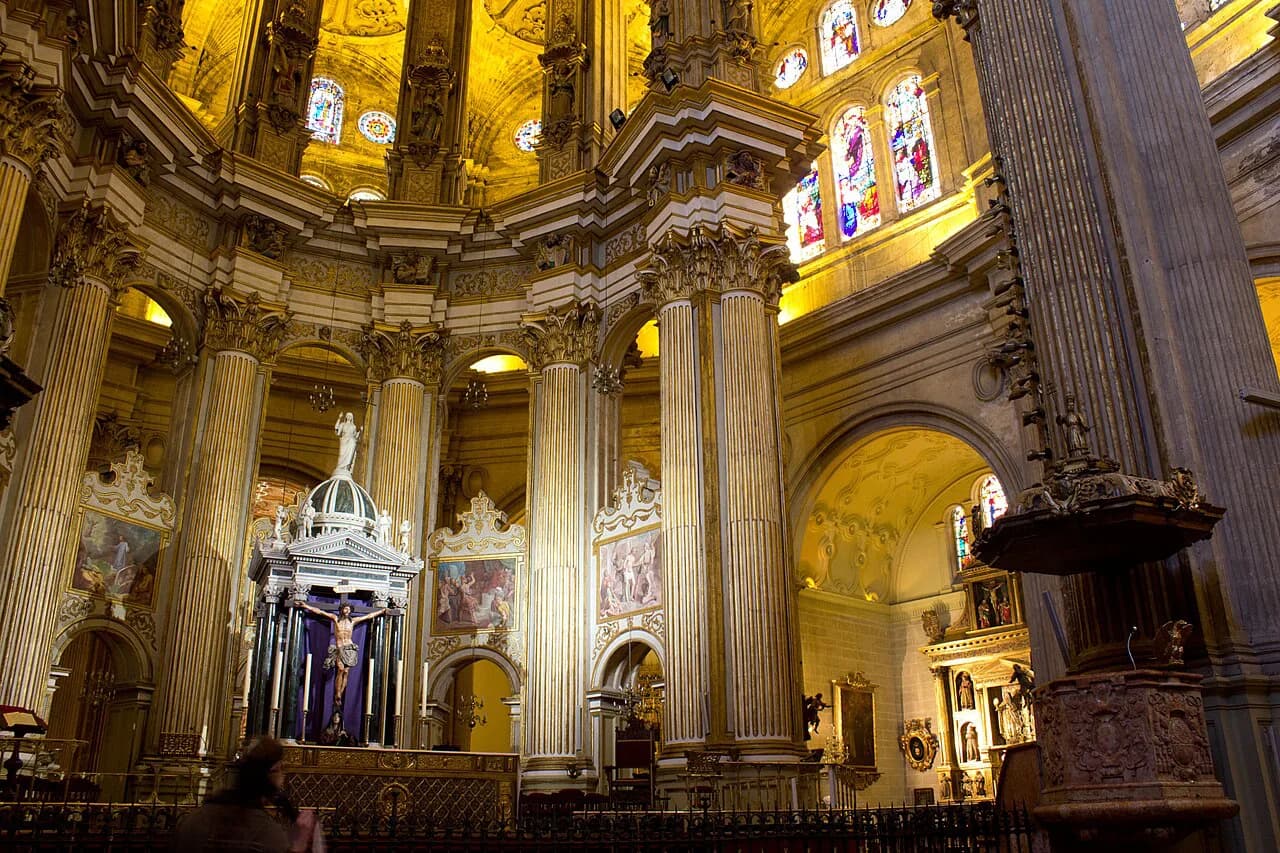
The choir stalls are the interior highlight: cedar wood carved by Pedro de Mena between 1659 and 1662, with religious figures and scenes cut in relief. Give them ten minutes rather than a glance, because they are among the finest Baroque carving in Spain.
The sacristy holds religious artworks including Alonso Cano's The Immaculate Conception, alongside silver and gold vessels and a small religious library. The cathedral museum, on the first floor up a staircase just outside the shop, displays chalices and monstrances dating back to the sixteenth century and the original plans for the building.
The roof terrace and its 200-odd steps
Access to the roof terrace was opened in 2016 via more than 200 steps inside one of the towers, and it is the reason many people rate the visit. It is run as a guided visit at set times rather than a free wander, and from April 2024 roof visits were stopped for works expected to last three years.
Check the cathedral's own site before you build your day around the climb. If it is running, the terrace gives you views over the city and the Mediterranean and a close look at the unfinished south tower; if it is not, the interior and museum still fill an hour comfortably.
Tickets and opening hours
Online ticket platforms list general admission at eight euros for adults, six for seniors and students and four for children under twelve, with family and group discounts, and separate tickets that add the museum and roof terrace. Treat those as platform pricing rather than the cathedral's own tariff and confirm the current rate at the ticket office.
Opening hours are published differently by different outlets, and ticket platforms list closures on 1 January, Good Friday, Easter Sunday, 1 May, 15 August and 25 December. Compare the published hours against the day you plan to travel before you set out, because holidays and feast days shift the timetable.
The most granular timetable available gives Monday to Friday 10.00 to 18.30, Saturday 10.00 to 18.00 and Sunday 14.00 to 16.00, with last entry 45 minutes before closing. It also records free entry for tourists early in the morning and tickets at the door or through the official website. These windows are the kind of detail that changes, so phone or check the official site on the morning you plan to go.
How long to allow
A cathedral-only visit runs about an hour, which covers the nave, chapels, choir stalls and a look at the sacristy. Add the museum and you are closer to ninety minutes, and if the roof terrace is operating allow another half hour for the climb and the guided slot.
Pairing the cathedral with the old town is where the morning disappears. A combined guided tour of the cathedral and historic centre takes around two hours, and one covering the cathedral, Alcazaba and Roman theatre runs about three, which is a sensible shape if you only have one full day in Málaga.
Dress, photography and practical notes
There is no strict dress code, but visitors are asked to dress respectfully, which means no shorts, tank tops or beachwear; that matters more in July and August, when you may be coming straight from the port. Photography is allowed without flash.
Lockers, toilets, free wi-fi and baby-changing facilities are listed, and audio guides in several languages can be rented at the cloakroom. Guided tours in various languages can be booked in advance, which is worth doing if you want the history explained rather than read off a plaque.
What is nearby
Plaza del Obispo itself is the immediate draw, with its fountain and orange trees, and Calle Larios is two minutes away for a coffee. The Alcazaba and the Roman theatre at its foot sit a short walk east, and both work well as an afternoon after a morning in the cathedral.
The Museo Picasso Málaga is a few minutes further into the old town, and the Carmen Thyssen Museum and Gibralfaro castle are each within a twenty-minute walk. Muelle Uno, the waterfront promenade with shops and restaurants, is a straightforward stroll downhill from Molina Lario.
Is it worth going inside?
Yes, if you have any interest in church architecture or carving. The Pedro de Mena choir stalls justify the entry on their own, and the layered Gothic, Renaissance and Baroque construction is far easier to read once you have walked through it than from the plaza.
If your time in Málaga is down to a single afternoon and you are choosing between the cathedral and the Alcazaba, the fortress and its views win for most people. The cathedral is the better pick on a hot day, in the morning, or when you want an indoor hour between meals.
Where to eat afterwards
Old-town tapas around Molina Lario and Plaza del Obispo starts filling at lunch from about 13.30 and again from 20.30 or 21.00 for dinner, so time your visit for late morning and eat after. Order a caña and two or three small plates at the bar rather than committing to a full menú del día if you want to keep moving.
Expect a proper sit-down lunch to take the best part of two hours, which is the local rhythm rather than slow service. If you are visiting in August, keep a short list of two or three options rather than relying on a single address, since old-town kitchens rotate their holidays through the month.
Plan Your Visit
Málaga Cathedral fits neatly into a morning: arrive at Plaza del Obispo for opening, see the choir stalls and sacristy, and be out in time for a late lunch. Build the rest of the day around whether the roof terrace is running, since that is the variable that changes the length of your visit most.
Check the current hours, ticket price and roof access on the cathedral's official site the day before you go. Everything else — the unfinished tower, the carving, the location — is fixed, and it is what makes the building worth an hour of a short city break.
Explore more Malaga guides
Frequently Asked Questions
What are the opening times for the Catedral de Málaga?
Opening hours are published differently by different outlets. One detailed timetable gives Monday to Friday 10.00 to 18.30, Saturday 10.00 to 18.00 and Sunday 14.00 to 16.00, with last entry 45 minutes before closing. Confirm the day you plan to visit on the cathedral's official site, since last entry is usually earlier than closing.
How much are Málaga Cathedral tickets?
Online ticket platforms list adult general admission, concessions for seniors and students, and a child rate, with separate tickets that add the museum and roof terrace. Those are platform prices rather than the cathedral's own tariff, so check the ticket office or official site for the current rate.
How long does a visit to Málaga Cathedral take?
Allow about an hour for the cathedral itself, covering the nave, chapels, choir stalls and a look at the sacristy. Add the museum for roughly ninety minutes, and another half hour if the roof terrace is running, since the climb is a guided visit at set times.
Why is Málaga Cathedral called La Manquita?
The south tower was never completed and the planned roof was never added, and further work was banned by Royal Decree in the late eighteenth century. The missing arm gives the cathedral its nickname, La Manquita, meaning the one-armed woman.
Can you climb the roof of Málaga Cathedral?
Access was opened in 2016 via more than 200 steps inside one of the towers and runs as a guided visit at set times. From April 2024 roof visits were stopped for works expected to last three years, so check before planning your day around the climb.
Is there free entry to Málaga Cathedral?
One detailed timetable records free entry for tourists early in the morning, on weekdays and at the weekend before normal opening. These windows change, so confirm on the official site before turning up early.
Is it worth going inside Málaga Cathedral?
Yes, particularly for the cedar choir stalls carved by Pedro de Mena between 1659 and 1662, and for seeing how Gothic, Renaissance and Baroque phases sit together. If you have one afternoon and must choose, the Alcazaba and its views appeal to most visitors.
What is there to see near Málaga Cathedral?
Plaza del Obispo and Calle Larios are on the doorstep, the Alcazaba and Roman theatre are a short walk east, and the Museo Picasso Málaga is a few minutes further into the old town. Muelle Uno is a straightforward downhill stroll towards the port.