
Tarragona Amphitheatre: A Practical Visitor Guide
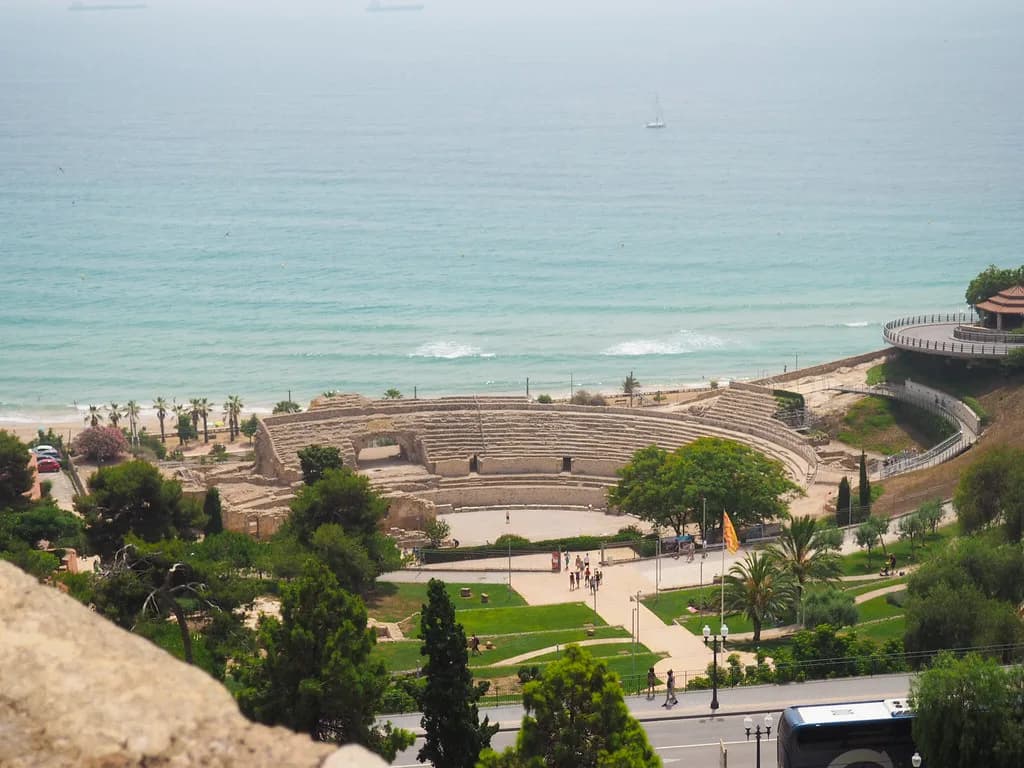
The Tarragona Amphitheatre is the Roman arena at the foot of the city, close to the beach and just off the route of the old Via Augusta. It is the third of Tarraco's entertainment buildings, alongside the theatre and the circus, and the one that gives the clearest sense of a spectacle space built on the shoreline.
Entry to the site runs through the Museu d'Història de Tarragona (MHT), the municipal museum service that manages the amphitheatre and the city's other Roman monuments. Prices and hours are set on the MHT pages rather than fixed on site, so check the museum's opening and ticket information before you set out.
Tarragona Amphitheatre: the short answer
Come for a single, compact monument rather than a museum: you are here to walk the arena, look up at the seating cut into the rock and see where the Christian martyrs died. The building belongs to the early second century AD, and the MHT records that it was paid for by a provincial flamen, an imperial priest whose name is not known.
Its appeal is the setting as much as the masonry. The arena was deliberately placed just outside the built-up city but steps from the beach, where animals for the shows were unloaded, and near the Via Augusta before the road entered Tarragona.
Where the amphitheatre is and how to reach it
The address is Parc de l'Amfiteatre romà, 43003 Tarragona, on the lower edge of the old town by the sea. From the railway station or the modern city centre it is a short walk down towards the coast, and it makes an easy first or last stop if you are arriving or leaving by train.
Because the site sits below the old town, you can reach it on foot from the cathedral end of the city without a bus, though the climb back up is the part that takes the effort. Pair the amphitheatre with the Catedral de Tarragona or the Roman Circus Tarragona and you avoid repeating the walk up the hill. If you are deciding where to base yourself for these climbs, see our guide to Tarragona Neighborhoods.
What you are looking at: arena, podium and cavea
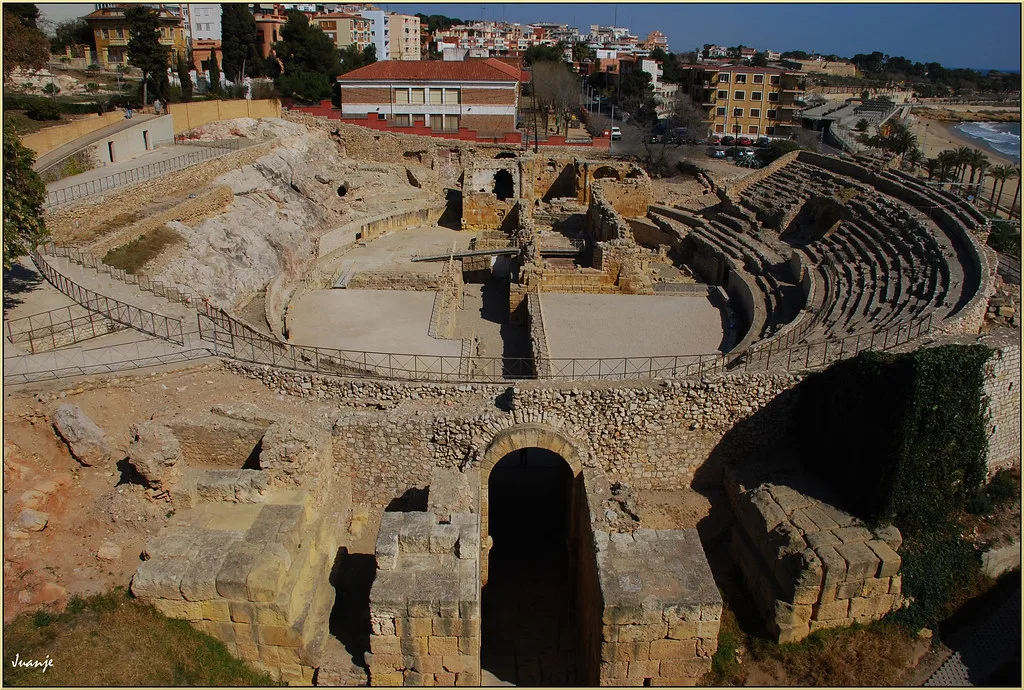
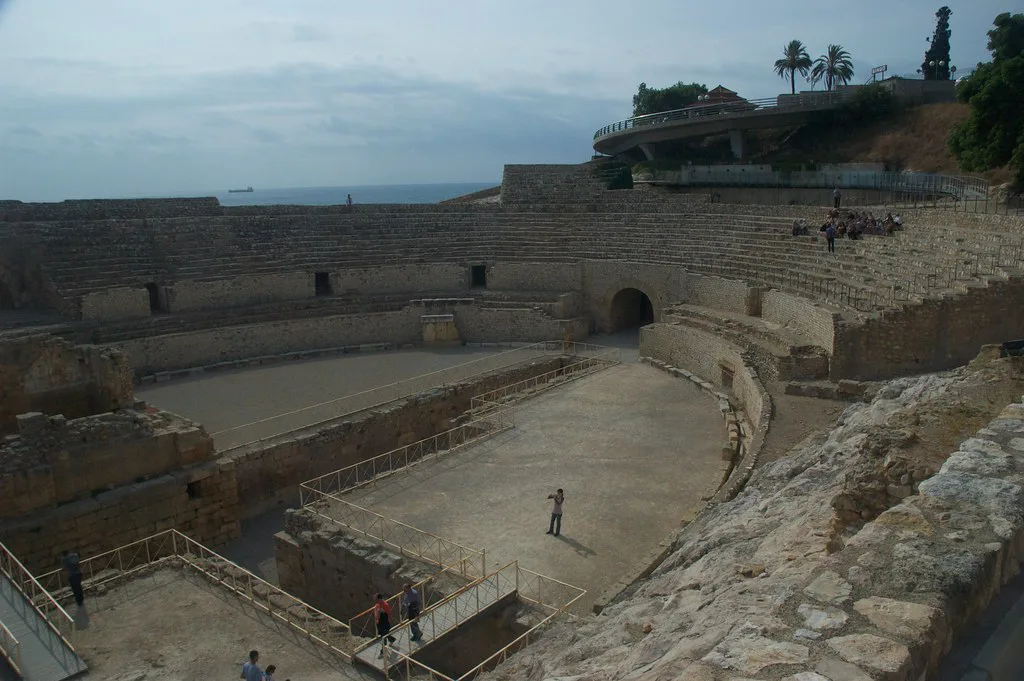
The elliptical arena in the middle is the measure of the building: 62.50 by 38.50 metres, big enough for the processions and combats staged on it. Across the arena you can still see the horizontal slot of the fossae, the service trenches cut into the floor.
A podium wall 3.25 metres high separated the arena from the lowest seating, a barrier almost exactly the height of a tall door. Above it, the cavea was divided into three maenianae, or blocks of seating, built by cutting back the natural rock on the northern side and supporting the rest on vaults.
The broader footprint, given as 130 by 102 metres and a capacity of up to 15,000 spectators, comes from reference accounts rather than the municipal page, and it conveys how much of the structure has gone. Enough survives to read the plan, but treat the ruins as an outline rather than a standing amphitheatre.
Gladiators, wild-beast hunts and executions
Two kinds of show filled the arena: munera, the gladiatorial fights, and venationes, the hunts and fights with wild beasts. The same space was also used for executions of people condemned to death, which makes this a more sombre place than a simple sports venue.
A small chapel-like room at the monument held a wall painting of Nemesis, the goddess who protected gladiators. Look for it in the interpretation: it is the detail that ties the building's religion to the contests staged on the sand.
The building was in use for generations, not for a single festival season. It was reformed in 221 under the emperor Elagabalus, which shows the arena was maintained as a working spectacle venue well into the third century.
The martyrdom of Fructuosus and the church on the sand
On 21 January 259, Bishop Fructuosus and his two deacons, Augurius and Eulogius, were burned alive in the arena. That date turns the amphitheatre into one of the key Christian sites of Roman Spain, and it explains why the monument's story does not end with the games.
In the sixth century a basilica was built over the place to honour the martyrs, and during the twelfth century the Romanesque church of Santa Maria del Miracle was raised on the earlier Christian basilica. You are therefore reading two histories in one footprint: the Roman arena and the church that followed it.
How much time to allow
An hour is a sensible allowance for the amphitheatre alone. That covers the arena, the podium, the surviving seating and the later church remains, with time to read the panels that explain the building's phases.
Add thirty to forty-five minutes if you plan to sit with the sea view or take photographs from the upper levels, because the site is small but the setting invites lingering. Travellers with a tight schedule should treat it as a focused stop rather than a half-day outing.
Tickets and opening hours
The MHT publishes separate pages for horaris and for preus i venda d'entrades, and those are the pages to consult for current opening times and admission charges. The museum also sells a combined Tarragona pass, listed among its ticket options, which is worth comparing if you plan to see several Roman monuments.
Check the same official pages before making the trip, since hours can differ by season and the site is managed alongside the museum's other monuments. If you are building a Roman day around the amphitheatre, the Pont del Diable Tarragona sits outside the city centre and needs separate transport planning.
What to see nearby in Tarragona
The Roman Circus Tarragona is the obvious companion sight, since it was the chariot-racing venue that completed the city's entertainment buildings with the theatre and the amphitheatre. Between them they map the city's Roman leisure life in a way few places can. If you want to line up the rest of the day beyond the ruins, our guide to things to do in Tarragona covers the Old Town and the Serrallo.
Climb into the old town for the cathedral, whose site and fabric layer medieval Tarragona over the Roman city. The Part Alta around it is where you will find most of the city's historic streets and the best place to stop for lunch after a morning at the arena. If you are weighing this arena against other Roman ruins before committing the day, our guide to things to do in Tarragona sets out the alternatives.
Plan the day around Spanish meal times: lunch runs roughly 1.30 to 4pm and dinner starts around 8.30 to 9pm, so a late-morning amphitheatre visit fits neatly before a long lunch. The Costa Daurada beaches are within walking distance if you want to break up the sightseeing.
Practical tips for the visit
Wear shoes with grip, since the site includes uneven stone, steps and sloping ground cut from the rock. Sun protection matters in summer because the arena is open and the seating is exposed.
Allow time for the interpretation boards before rushing into the arena. Understanding the maenianae, the podium and the church phases makes a small site feel considerably larger.
Plan Your Visit
The amphitheatre rewards a short, focused visit: an hour on the sand, the podium wall and the later church remains, with the sea and the old town as the backdrop. It works best as one part of a Roman morning or afternoon rather than a destination in itself.
Confirm the MHT's published hours and ticket options the day before you go, then build the rest of your walk around the circus and the cathedral so that one climb serves several stops.
Frequently Asked Questions
Is the Tarragona Amphitheatre free?
The Museu d'Història de Tarragona manages entry to the amphitheatre and lists admission information on its own pages, including a combined Tarragona pass. Check the museum's current ticket page for prices.
How old is the Tarragona Amphitheatre?
The building dates from the early second century AD, built with money from a provincial flamen whose name is unknown. It was reformed in 221 under the emperor Elagabalus, and in 259 Bishop Fructuosus and his deacons were killed in the arena.
What was the Tarragona Amphitheatre used for?
It hosted gladiatorial combat and hunts or fights with wild beasts, and it was also used for executions of people condemned to death. A chapel room with a painting of Nemesis, the gladiators' protecting goddess, survives from this phase of use.
How long does it take to visit the Tarragona Amphitheatre?
Allow about an hour for the arena, the podium wall and the later church remains. Add time if you want to linger for photographs, and note that the walk back up into the old town is the most strenuous part of the outing.
What is there to see near the Tarragona Amphitheatre?
The Roman Circus and the cathedral in the old town are the natural companions, both a short climb from the site. The Pont del Diable aqueduct lies outside the city centre and needs separate transport planning.