Things to Do in Tarragona: What to See and Plan
Plan Tarragona with the Roman amphitheatre, Santa Tecla cathedral, the old town squares, the Balcón del Mediterráneo and the Serrallo fishing quarter.
On this page
Tarragona rewards a full day because two cities sit on top of each other: Roman Tarraco, founded in 218 BC, and the working Catalan city that grew over it. The amphitheatre, the cathedral and the old-town squares are close enough to walk between, so you can cover the historic core on foot and finish with fish and rice in the fishing quarter. This guide sequences the sights so the uphill work happens early and lunch lands at the right end of the walk.
Why Tarragona rewards a full day
Tarraco was established by the Romans more than 2,000 years ago, in 218 BC, and each later period left its mark, so crossing a street can move you through several centuries. That density is what makes the city worth more than a rushed stop: the Roman remains are not fenced off in a single park but threaded through streets people still use.
The practical consequence is that you can build a single walkable route from the amphitheatre up through the old town to the viewpoint on Rambla Nova, then drop to El Serrallo for a late lunch. If you are weighing up how long to allow, our guide to how many days in Tarragona helps you decide between a half day and a full one.
Start at the Roman Amphitheatre, then work uphill
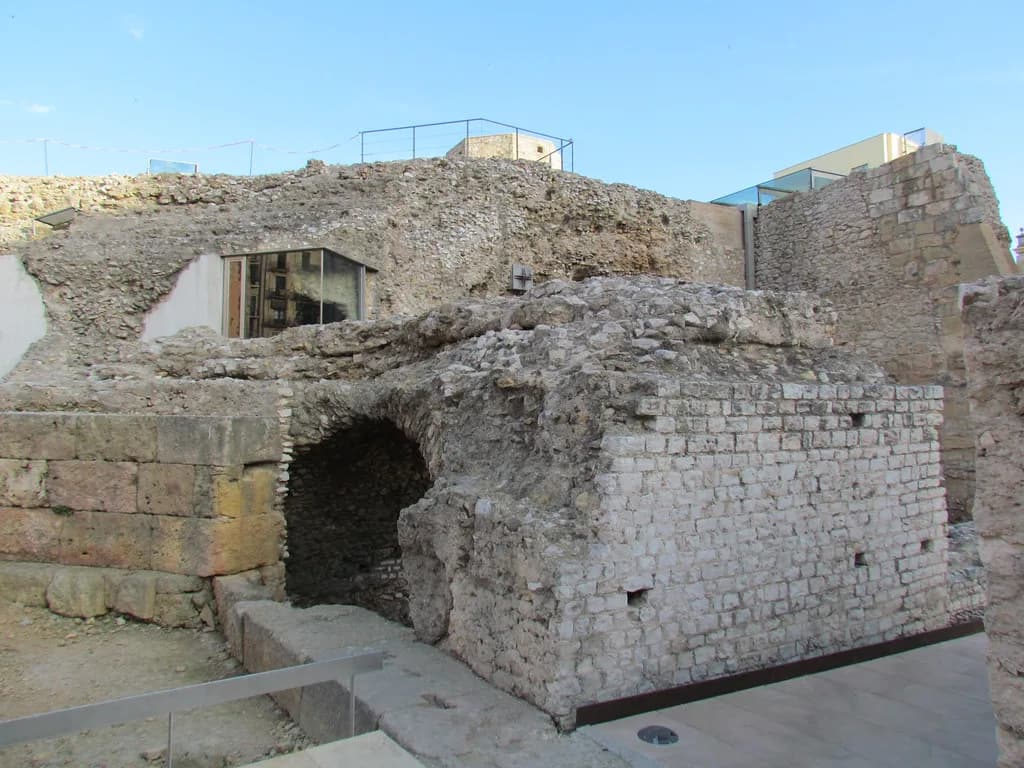
The Roman Amphitheatre was built in the 2nd century AD and held 14,000 spectators for gladiator fights, battles with beasts and executions. Most of the arena and the seating steps are still conserved, which makes it the strongest single introduction to Tarraco.
Begin here rather than at the cathedral, then climb into the old town. The gradient between the amphitheatre and the upper city is the main physical trade-off of the day, so schedule the ascent for the morning and keep the flat Rambla for later.
Tarragona Cathedral on the high point
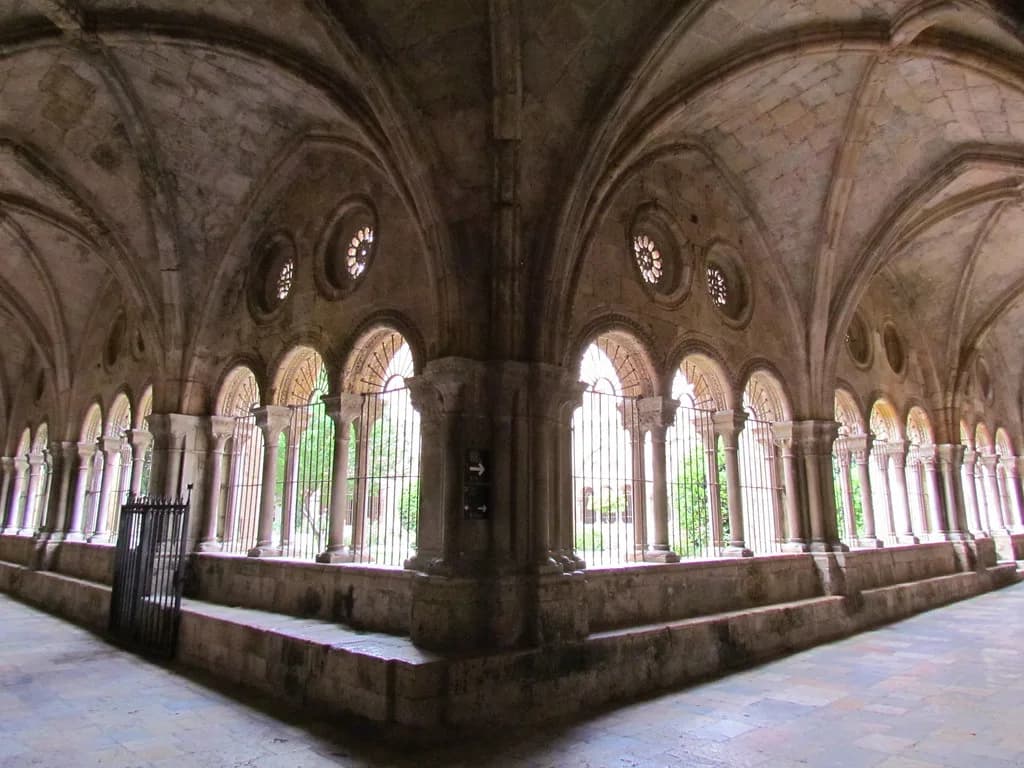
Santa Tecla cathedral sits at the highest part of the city, on the ruins of a Roman temple dedicated to Emperor Augustus. Knowing what lies underneath changes how you read the building: you are standing on the layer where the Roman city gave way to the Christian one.
Arrive here after the amphitheatre and before the squares, since the cathedral is the top of the climb. Visiting hours and entry terms are managed by the cathedral itself, so check the official cathedral information before you set out.
Three squares, three centuries
Plaça del Fòrum was the site of the Roman Forum, and a large stretch of one of its walls is still visible today. Plaça de la Font was the centre of the Roman circus, and Plaça del Rei holds the Pretoria Tower and the National Archaeological Museum.
Treat the three as one continuous stop rather than separate sights: what you are looking at is a forum, a circus and an administrative centre, each now a city square. Plaça de la Font is the largest and the obvious place to sit down for a coffee between the cathedral and the museum.
The Pretoria Tower and the National Archaeological Museum
Both stand in Plaça del Rei, which puts the museum and the tower in the same stop. The museum is the place to make sense of the Roman layers you have been walking over, so visit it after the amphitheatre and the forum wall rather than before.
Museum opening days, times and ticket terms are set by the museum, so confirm them on the official museum site before travelling. Build the rest of the route around that slot rather than the other way round.
Rambla Nova to the Balcón del Mediterráneo
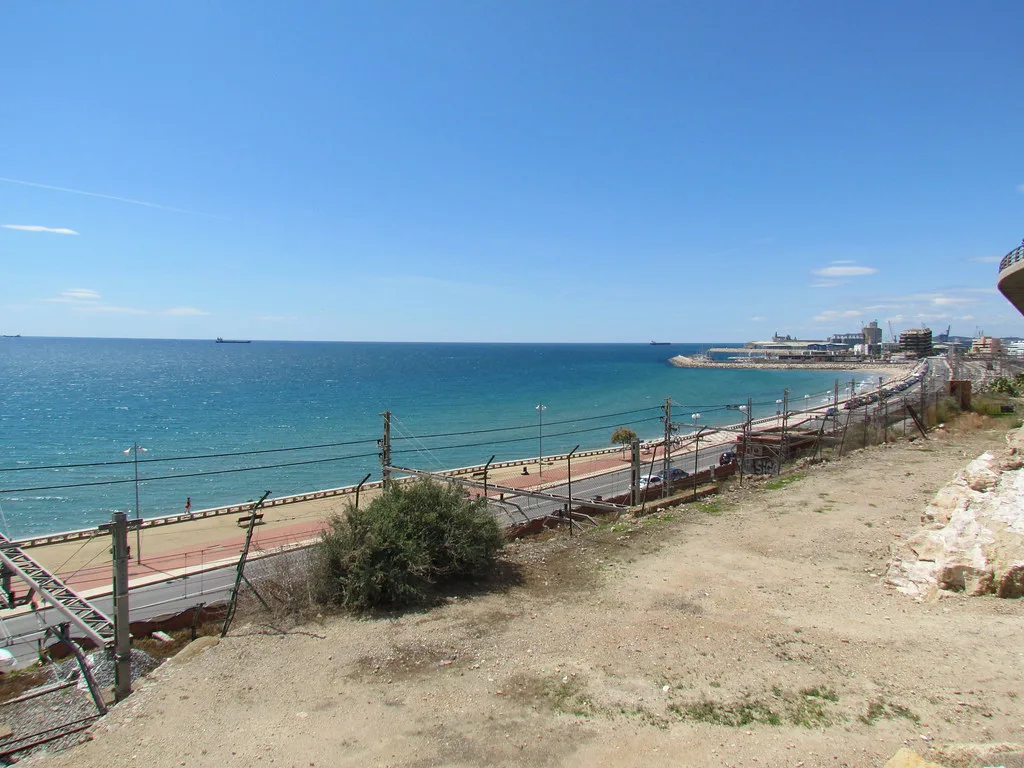
Rambla Nova carries more than 150 years of history and is lined with shops, restaurants and bars, along with sculptures including the Castellers monument and the Font dels Elefants. Finish the stroll at the Balcón del Mediterráneo, a viewpoint 40 metres above ground looking over the Roman amphitheatre, the port and out to sea.
This is the flat, easy end of the day and the natural place to pause before eating. If the shops along the way are part of the plan, our shopping in Tarragona guide covers what is on this stretch.
El Serrallo: the fishing district for fish and rice
El Serrallo is Tarragona's old fishing district, a good place to stroll and to eat fresh fish and rice dishes. Placing it at the lunch end of the route works because it follows the viewpoint and sits away from the uphill old town.
For named addresses and what to order, our pick of the best restaurants in Tarragona covers the quarter in detail. Menus, prices and closing days change by venue, so confirm them with the restaurant before you rely on a particular one.
Beaches at the foot of the city
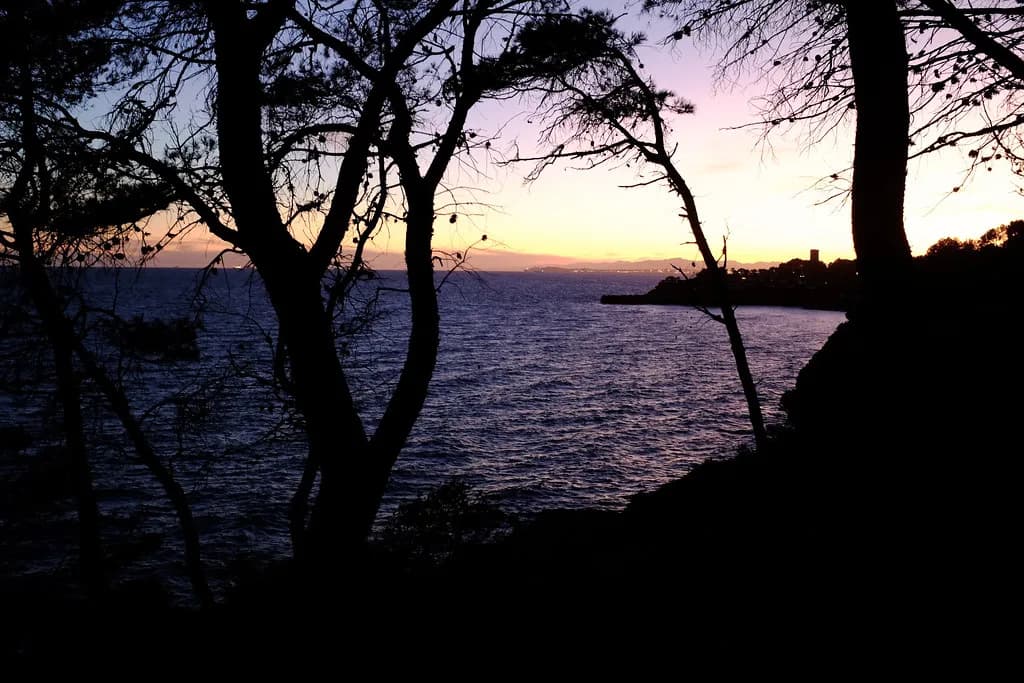
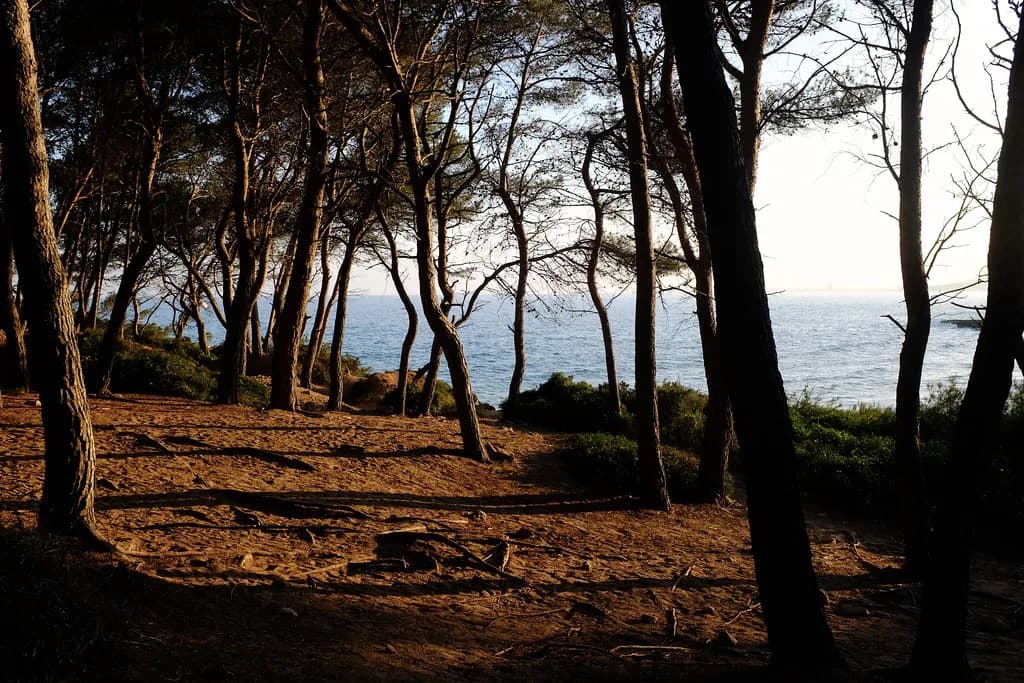
The beach waits at the end of the visit, below the city rather than out of town. After a morning of ruins, that makes a swim a realistic part of the same day rather than a separate excursion.
Keep the beach as the flexible final block: if the museum or the cathedral runs long, cut the swim rather than the old town. Sand, facilities and lifeguard cover vary by season, so check locally on the day.
Eating in Tarragona: fitting lunch and dinner around Spanish meal times
Spanish lunch runs roughly 1:30–4pm and dinner from about 8:30–9pm, so a morning of ruins should end at El Serrallo rather than in the old town. That timing also keeps the uphill walking in the cooler part of the day.
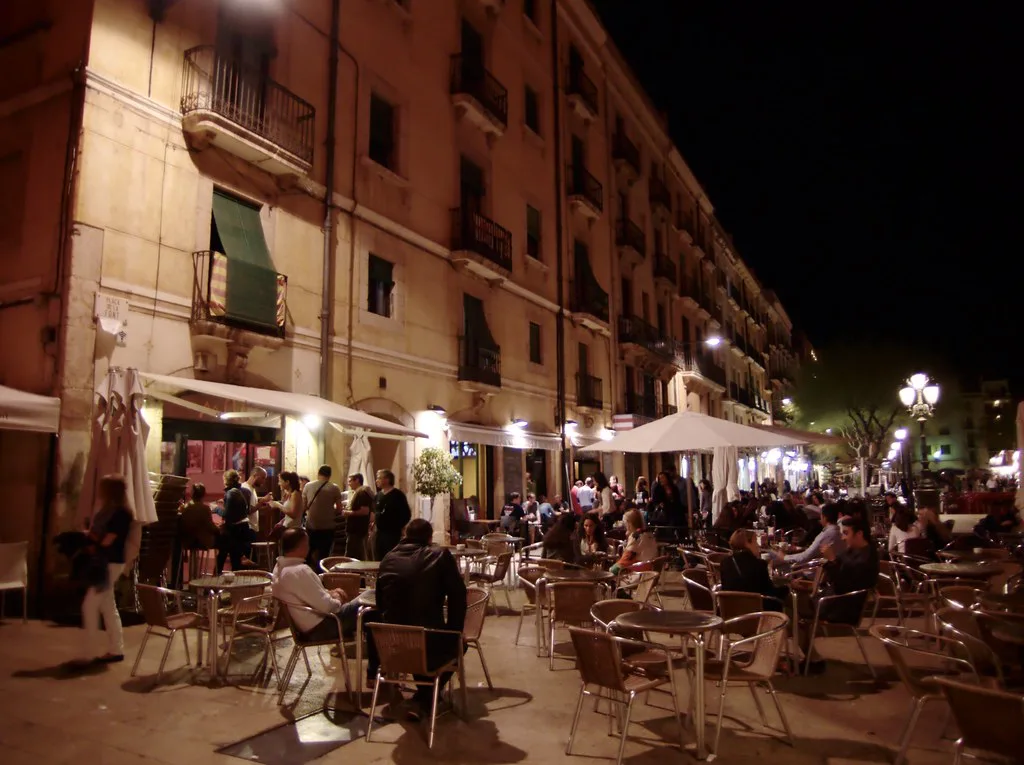
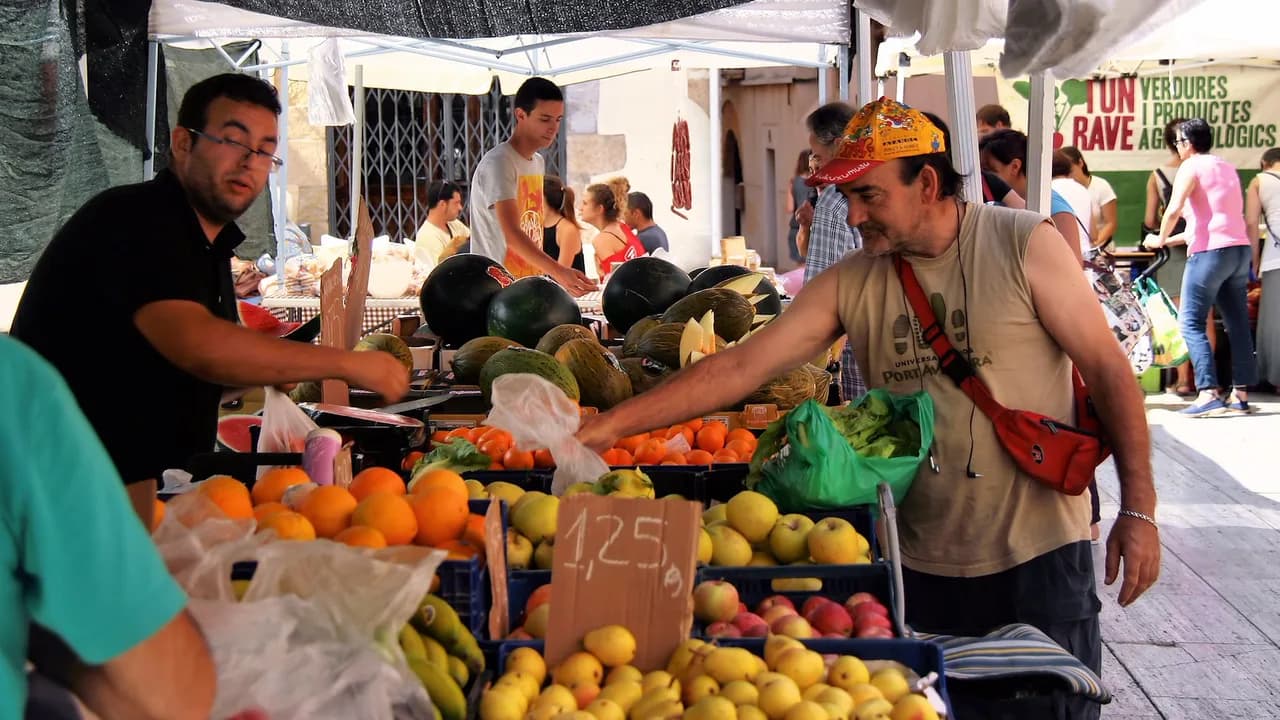
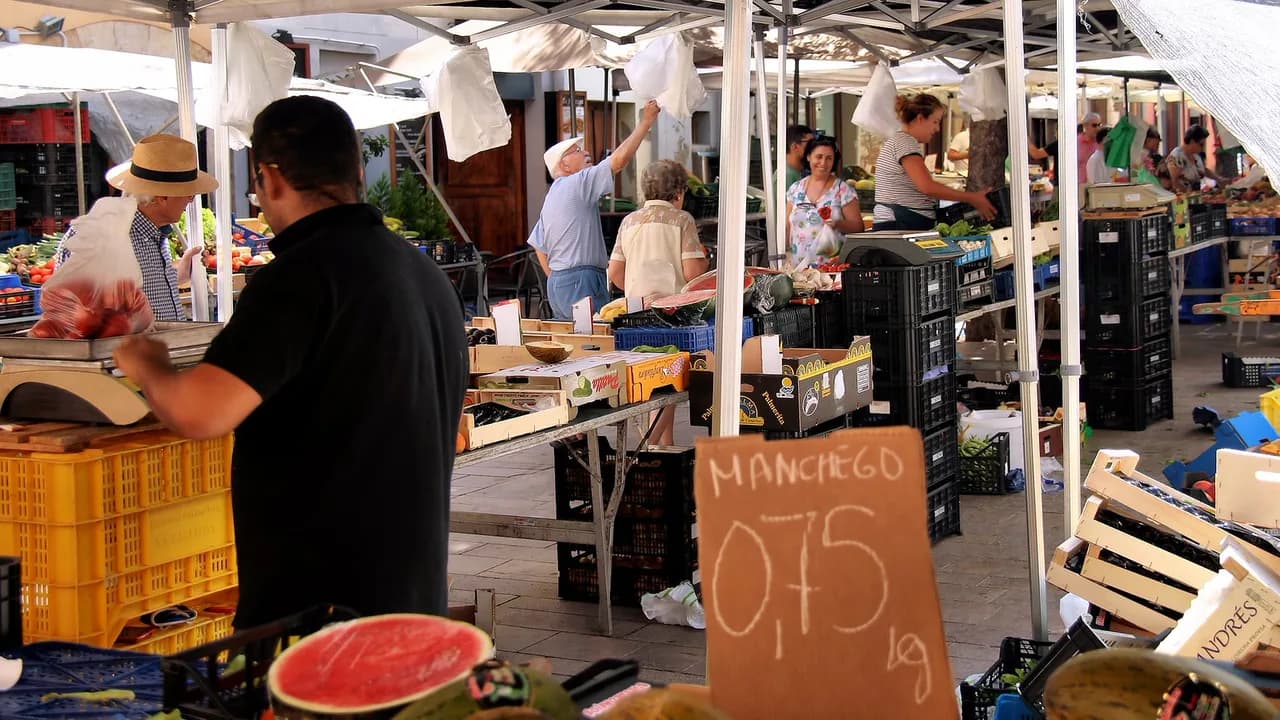
For a lighter stop, the market hall is the obvious daytime option, and our guide to Tarragona markets explains what to expect. In the evening, Rambla Nova and the streets around Plaça de la Font keep you close to bars and restaurants after the sights close.
Half-day versus full-day plan
With a full day, the order is amphitheatre, cathedral, the three squares, the museum and tower, Rambla Nova and the Balcón del Mediterráneo, then El Serrallo for a late lunch. With half a day, keep the amphitheatre, the cathedral and the viewpoint, and drop the museum and the beach.
The itinerary guide sets out the same route stop by stop if you want timings laid over it. The attraction hub collects the individual sight guides in one place.
Practical trade-offs: heat, gradients and timing
The uphill old town is the main physical cost of the day: the amphitheatre sits low and the cathedral sits at the very top. Walk up early, use the squares as rest stops and save the flat Rambla and the beach for the afternoon.
Summer heat makes that climb harder, so shift the start earlier and keep the middle of the day for the museum or a long lunch. Check the current opening arrangements for the cathedral and the museum before you go, since those are the two stops that fix your schedule.
Where to go next on the Costa Daurada
Tarragona is the capital of the Costa Daurada, which makes it a natural base for the wider coast rather than a single-stop city break. Roman Tarraco is the reason to give it a full day, but the surrounding coast fills the days either side.
If you are comparing Spanish city breaks, our guide to things to do in Alicante shows how a comparable day works elsewhere on the same coastline logic, and things to do in Fuerteventura covers the Canarian alternative. Further up the same Catalan coast, Things to Do in Sitges: Beaches, Old Town and Where to Eat sets out the same day-trip decision with its own beaches and old town.
How far back does Tarragona's history go, and what survives from it
Tarragona's history is unusually deep: the city began as Tarraco, established by the Romans over 2000 years ago, in the year 218 BC to be exact. Because the settlement was founded so early and stayed important, each period of history has left its mark, and you can explore many different centuries just by crossing from one street to another.
The Roman remains are the most visible layer. The Roman Amphitheatre was built in the 2nd century AD and held a capacity of 14,000 spectators; it hosted battles between gladiators and beasts as well as executions, and the majority of the arena and the steps are still conserved today. The Santa Tecla cathedral stands on the ruins of an old Roman temple dedicated to Emperor Augustus, while the Plaza del Fòrum was the location of the Roman Forum, where a large part of one of the walls can still be observed.
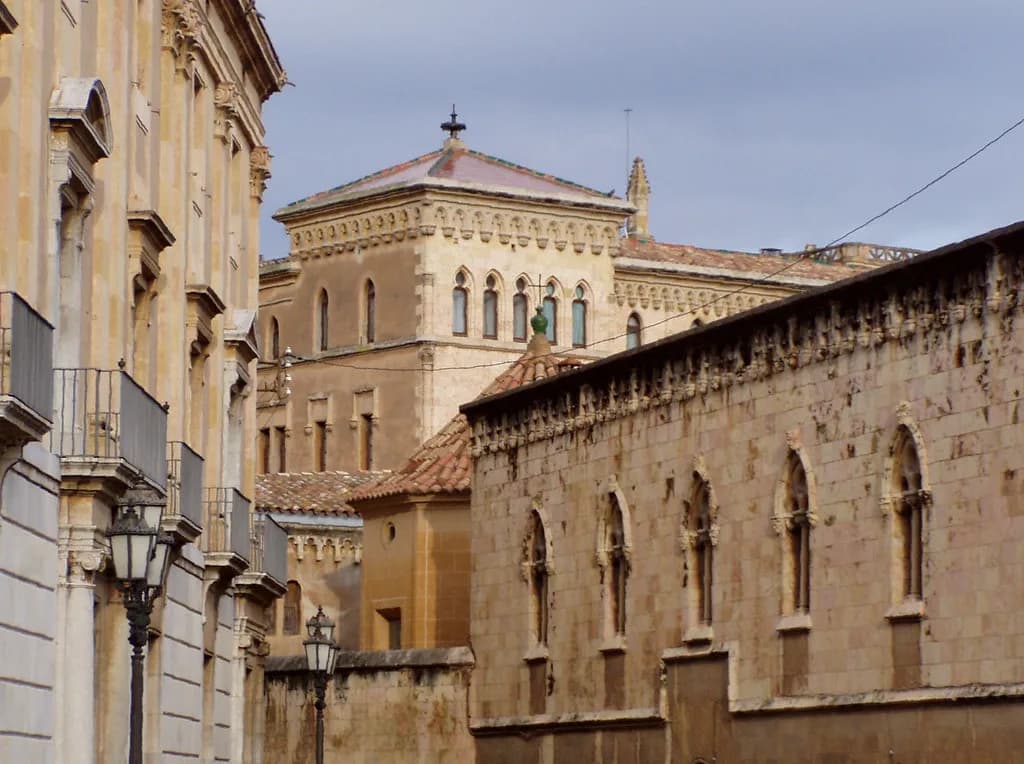
Two more squares carry Roman origins into the present townscape. Plaça de la Font, an enormous plaza, used to be the centre of a Roman circus, and Plaça del Rei is the home of the Pretoria Tower and the National Archaeological Museum. Later centuries add their own monuments to the same compact area, among them the Rambla Nova, which contains more than 150 years of history and brims with shops, restaurants and bars, including picturesque sculptures such as the Castellers monument and the Font dels Elefants.
Layering this much history into one place has a practical consequence for planning: the story moves from the amphitheatre below to the cathedral on the high point, so a route that follows it also moves uphill through the old town.
Plan Your Visit
The workable shape of a Tarragona day is fixed: amphitheatre first, cathedral at the top, the three squares and the museum in between, the Balcón del Mediterráneo for the view, and El Serrallo for a late lunch. Walk the climb in the morning and leave the flat Rambla and the beach for the afternoon.
Confirm current opening days and times for the cathedral and the National Archaeological Museum, and check restaurant closing days directly, before you lock the route in place.
Explore more Tarragona guides
Frequently Asked Questions
What are the must-see things to do in Tarragona?
Start with the Roman Amphitheatre, built in the 2nd century AD for 14,000 spectators, then climb to Santa Tecla cathedral on the site of a Roman temple to Augustus. Between them sit Plaça del Fòrum, Plaça de la Font and Plaça del Rei, the last holding the Pretoria Tower and the National Archaeological Museum. Finish on Rambla Nova at the Balcón del Mediterráneo, a viewpoint 40 metres above the amphitheatre, port and sea, then eat in El Serrallo.
How long do you need in Tarragona?
A full day covers the amphitheatre, cathedral, three squares, museum and tower, the viewpoint and a late lunch in El Serrallo, with the beach as a final flexible block. A half day fits the amphitheatre, cathedral and viewpoint if you drop the museum and the swim. The uphill old town is the main constraint on how much you squeeze in.
Is Tarragona worth visiting from Barcelona?
Yes, if you want Roman remains rather than another city street. Tarraco was founded in 218 BC and the amphitheatre, forum wall, circus square and cathedral layer the history into one walkable core. The trade-off is the climb from the amphitheatre to the cathedral, so arrive early and treat the flat Rambla as the afternoon.
What is the old town of Tarragona like?
It is the highest part of the city, built around Santa Tecla cathedral on the ruins of a Roman temple to Augustus. Three squares mark three Roman structures: the Forum wall in Plaça del Fòrum, the circus in Plaça de la Font and the Pretoria Tower and museum in Plaça del Rei. Expect steps and slopes between them rather than level streets.
Where should you eat in Tarragona?
El Serrallo, the old fishing district, is the natural lunch stop for fresh fish and rice dishes, and it sits at the end of the walk from the viewpoint. For lighter daytime stops, the market hall works well, and Rambla Nova and Plaça de la Font keep bars and restaurants close in the evening. Lunch runs about 1:30–4pm and dinner from 8:30–9pm.
What can you see at the Balcón del Mediterráneo?
The viewpoint stands 40 metres above ground at the end of Rambla Nova, looking over the Roman amphitheatre, the port and the sea. The Rambla itself has more than 150 years of history, with shops, restaurants and sculptures including the Castellers monument and the Font dels Elefants along the way. It is flat walking and a good place to pause before lunch.
Sources
Notes for eating well in Spain
Optional updates to our guides.
You might also like
Continue reading
More guides you'll find useful