
Tarragona Cathedral: Visiting the Catedral de Tarragona
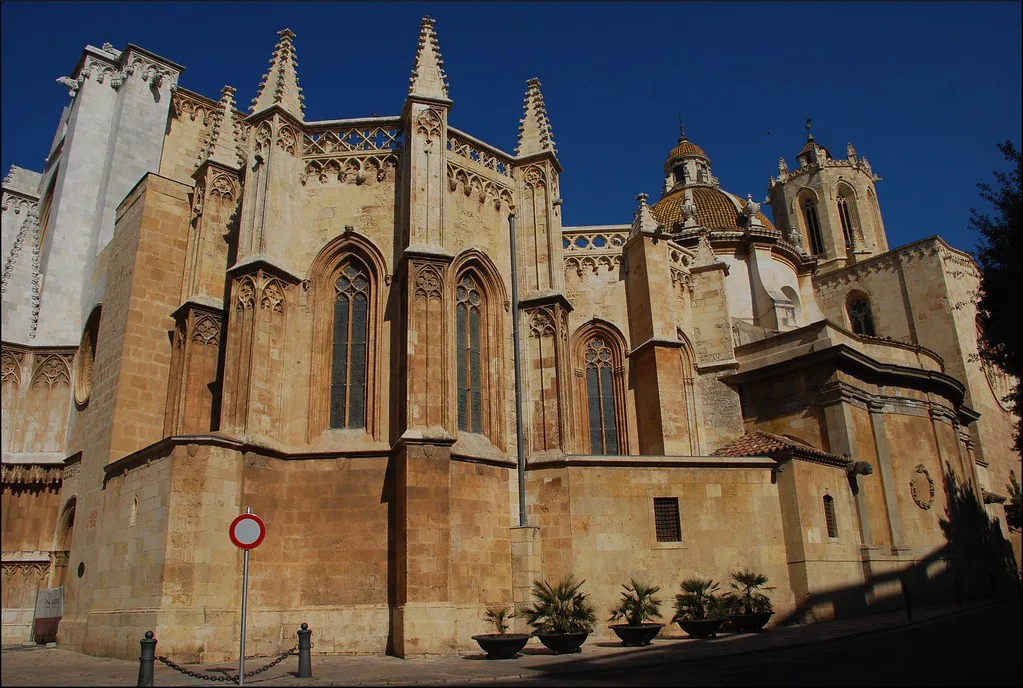
Tarragona Cathedral, the Catedral de Tarragona, is the city's Santa Tecla cathedral, standing on the highest part of the old town on the site of a Roman temple dedicated to Emperor Augustus. It is the anchor of the Part Alta, the upper city, and the obvious starting point for a morning among the medieval streets.
A visit covers more than the nave: the ticket also includes the cloister, the rooms of the Diocesan Museum and the archaeological route. Budget roughly an hour to ninety minutes if you read the panels and walk the cloister garden, or a quick forty minutes for the highlights.
Why Tarragona Cathedral Is Worth Your Time
Tarragona was Roman Tarraco, established in 218 BC, and the cathedral stacks the city's later centuries directly on top of that Roman past. The building was raised between the 12th and 14th centuries over a temple to Augustus, with a Visigoth cathedral and a Moorish mosque also occupying the site before it, so one visit covers several layers of the city's history.
Its position is part of the appeal. From the cathedral square you can walk down through the medieval centre to the Roman circus, the forum squares and the sea in a single morning, which makes the cathedral a sensible first stop rather than a separate excursion. If you only have a day in the city, start here and work downhill.
Where the Cathedral Sits in the Old Town
The cathedral stands in the Part Alta, the upper town, at the top of the climb from Rambla Nova. From Tarragona station, exit, turn right, and take the stone staircase a few metres up on the left, which brings you out near the Balcó del Mediterrani and Rambla Nova; from there it is a steady walk uphill through the old streets to the cathedral.
Allow fifteen to twenty minutes for the climb, more in heat. The route is cobbled and stepped in places, so wheeled luggage and heels are a poor match; leave bags at your accommodation if you can. The streets around the cathedral are a labyrinth, so pick a landmark such as Plaça del Rei or the cathedral square itself and navigate by that rather than by street names.
The Building: Romanesque and Gothic Fabric
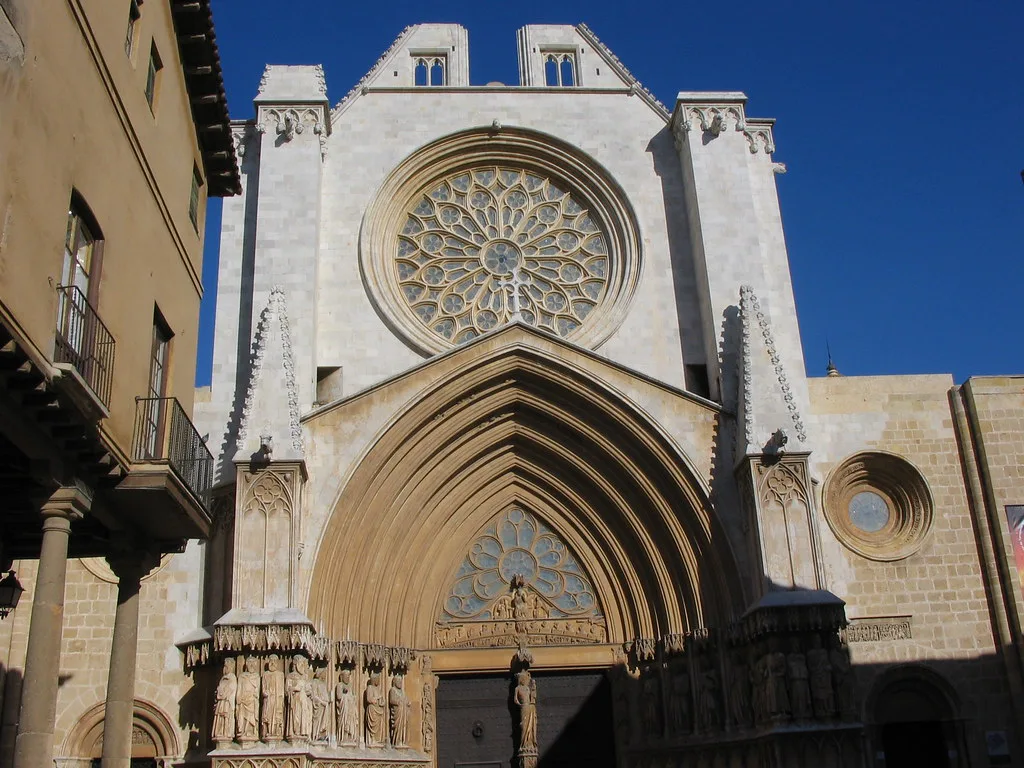
The cathedral mixes Romanesque and Gothic work, with a carved Gothic façade and a large stained glass rose window among the features to look for. Inside, the collection of religious art includes sculpture, painting and textiles, and the rectangular cloister with its garden is a calm contrast to the nave.
Look for the altar dedicated to Santa Tecla, the city's patron saint, whose festival fills Tarragona for ten days around 23 September. If your trip coincides with Santa Tecla, expect human towers, fire runs and processions in the streets below the cathedral, and plan the visit for the morning before the crowds build.
What to See Inside: Cloister, Museum and Archaeological Route
The standard visit runs through the cathedral, the cloister, the various rooms of the Diocesan Museum and the archaeological route, so one ticket covers all four. That combination is what justifies the time: the museum rooms hold the religious art, while the archaeological route takes you into the older strata beneath and around the church.
Walk the cloister slowly. The garden and the arcades are where most visitors take the best photographs, and the light is better in the morning than in the flat of midday. Check the cathedral's own site for the current list of what the ticket includes before you set out, since temporary exhibitions and route sections change.
Tickets, Hours and What to Confirm
Tarragona Cathedral publishes its visit information, including which spaces the ticket covers, on its own website. Ordinary admission has been reported at five euros for adults, with reduced rates for students, pensioners and children and a small extra charge for an audio guide, but treat those as reported figures rather than today's prices.
Mass times and any closures for services vary, and the cathedral publishes its own schedule; do not assume the doors open to visitors during worship. Several of the city's Roman sites and Casa Castellarnau are covered by the MHT pass, sold at participating attractions, which has been reported at around seven and a half euros for four sites and eleven for all of them. That pass does not include the cathedral, so keep the two budgets separate.
How Long to Allow, and When to Go
Give the cathedral an hour if you want the cloister and museum without rushing, ninety minutes if you read the displays. Add the climb up and back down and you have used a good part of a morning. It pairs naturally with a coffee in one of the old-town squares afterwards, before the Spanish lunch window of roughly 1.30 to 4pm.
Go early. The Part Alta is quieter before midday, the cloister photographs better, and you will be down in the lower town in time for lunch rather than climbing steps in the afternoon heat. October days in Tarragona average around 22°C at their warmest, which makes the uphill walk far more comfortable than in high summer.
Practical Points: Steps, Cobbles and the Climb
The old town is built on a hill, and the approach to the cathedral is steep in places, with uneven cobbles and short flights of steps. Wear shoes with grip, carry water in summer, and allow older members of your group a slower pace with a stop in a square partway up. The area is not comfortably accessible for wheelchairs or pushchairs beyond the main square.
Dress for a working church rather than a beach: shoulders and knees covered is the safe default. Bags are best kept light, and large rucksacks are awkward in the cloister and museum rooms. If you are combining the cathedral with the beach later, carry a change of shoes rather than wearing sandals up the hill.
What Is Nearby: Roman Circus, Praetorium and the Forum Squares
The Roman circus, built in the first century AD for chariot races with a capacity for around 30,000 spectators, lies largely beneath the medieval streets between the cathedral and the lower town. The site includes the Praetorium tower, which gives panoramic views over Tarragona and is worth the climb on a clear day.
Plaça del Fòrum keeps a stretch of the Roman forum wall and hosts a food market on Saturday mornings, with bars and restaurants around it for a drink or a leisurely meal. Plaça de la Font was the centre of the Roman circus and Plaça del Rei holds the Pretoria Tower and the National Archaeological Museum, so the walk down from the cathedral passes three squares with fragments of history in them.
The Roman amphitheatre, cut into the hillside above the beach, held around 14,000 spectators and staged gladiator contests and executions. It is the best-known of the city's Roman remains and a natural pairing with the circus if you are buying the MHT pass.
Where to Eat After the Cathedral
El Serrallo, the old fishing district by the harbour, is where locals go for seafood and rice dishes, and it is a short walk down from the lower town rather than back up the hill. Go for lunch rather than a late dinner so you eat at the same time as the fishing families and the rice is at its best.
For vegetarian and vegan options, El Vergel on Carrer Major in the medieval centre is a fully vegan restaurant serving Mediterranean dishes, pressed juices and locally produced vegan wines. L'Espiga d'Or on Carrer Antoni Rovira i Virgili is a health food shop with a small restaurant at the back, so check the shop's own opening hours before you set out for lunch there.
If you want meat, Filosofía Restaurante on Plaça d'en Ripoll is popular and worth reserving ahead at weekends. Both the old-town squares near the cathedral and the lower town fill up for the 1.30 to 4pm lunch service, so eat by two or accept a wait.
Combining the Cathedral With the Rest of Roman Tarragona
The efficient loop is cathedral first, then downhill through the circus and Praetorium, across the forum squares and out to the amphitheatre and the Balcó del Mediterrani, finishing at the beach at Platja del Miracle. That order keeps the climbing to the start of the day and puts you near the sea when the afternoon warms up.
If you have a second day, take the bus or walk the four kilometres to the Pont de les Ferreres aqueduct, which supplied the city's water until the 18th century. It is the one major Roman sight that sits outside the city centre, so give it its own half-day rather than squeezing it in.
Who Should Skip It, and Who Should Not
Skip the cathedral if your interests are Roman engineering and ruins, or if you are travelling with small children who will not last a museum and cloister. Spend the time on the amphitheatre, the circus and the aqueduct instead, which are outdoors and easier to walk through quickly.
Do not skip it if you want to understand how Tarragona works as a city rather than a collection of ruins: the cathedral is where the Roman, Visigoth, Islamic and medieval layers meet, and the climb through the old town is part of the experience. If you like church architecture, compare it with the Catedral de Girona further up the coast, which has a very different nave and cloister.
Plan Your Visit
Plan the cathedral for the start of your day, check the official site for what the ticket covers and current admission before you travel, and use the walk downhill afterwards to see the circus, the forum squares and the amphitheatre in one sweep. Eat lunch at Spanish hours, either in El Serrallo or in an old-town square, and the day fits together without backtracking.
Explore more Tarragona guides
Frequently Asked Questions
Where is Tarragona Cathedral?
It stands at the top of the Part Alta, the upper old town of Tarragona, on the site of a Roman temple to Augustus. From the station, exit right and take the stone staircase near the Balcó del Mediterrani up to Rambla Nova, then walk uphill through the medieval streets to the cathedral square.
How much does it cost to visit Tarragona Cathedral?
Admission has been reported at five euros for adults, with reduced rates for students, pensioners and children, and a small extra charge for an audio guide. Treat those as reported figures rather than today's prices, and confirm the current rate and inclusions on the cathedral's own website before you go.
What does the cathedral ticket include?
The visit includes the cathedral itself, the cloister, the various rooms of the Diocesan Museum and the archaeological route. Check the cathedral's site for the current list, since route sections and temporary displays change.
How long should I allow for the visit?
Allow an hour for the highlights and ninety minutes if you read the museum displays and walk the cloister properly. Add fifteen to twenty minutes for the climb up from Rambla Nova, and go in the morning to avoid climbing in the afternoon heat.
Do I need to book tickets in advance?
Booking is generally not necessary for the cathedral, but check the official site for any booking requirement or group arrangement before travelling. If you plan to eat at one of the popular old-town restaurants afterwards, reserve that instead, especially at weekends.
What is there to see nearby?
The Roman circus and Praetorium, the forum squares including Plaça del Fòrum with its Saturday food market, the Roman amphitheatre and the Balcó del Mediterrani are all within a walk downhill from the cathedral. The Pont de les Ferreres aqueduct is four kilometres outside the centre and needs its own half-day.
Is Tarragona Cathedral worth visiting?
Yes, if you want to see how the city's Roman, Visigoth and medieval layers stack on one site. Skip it if your priority is Roman ruins outdoors, in which case the amphitheatre, circus and aqueduct will use your time better.