
Basílica de Nuestra Señora de la Candelaria: A Visitor's Guide

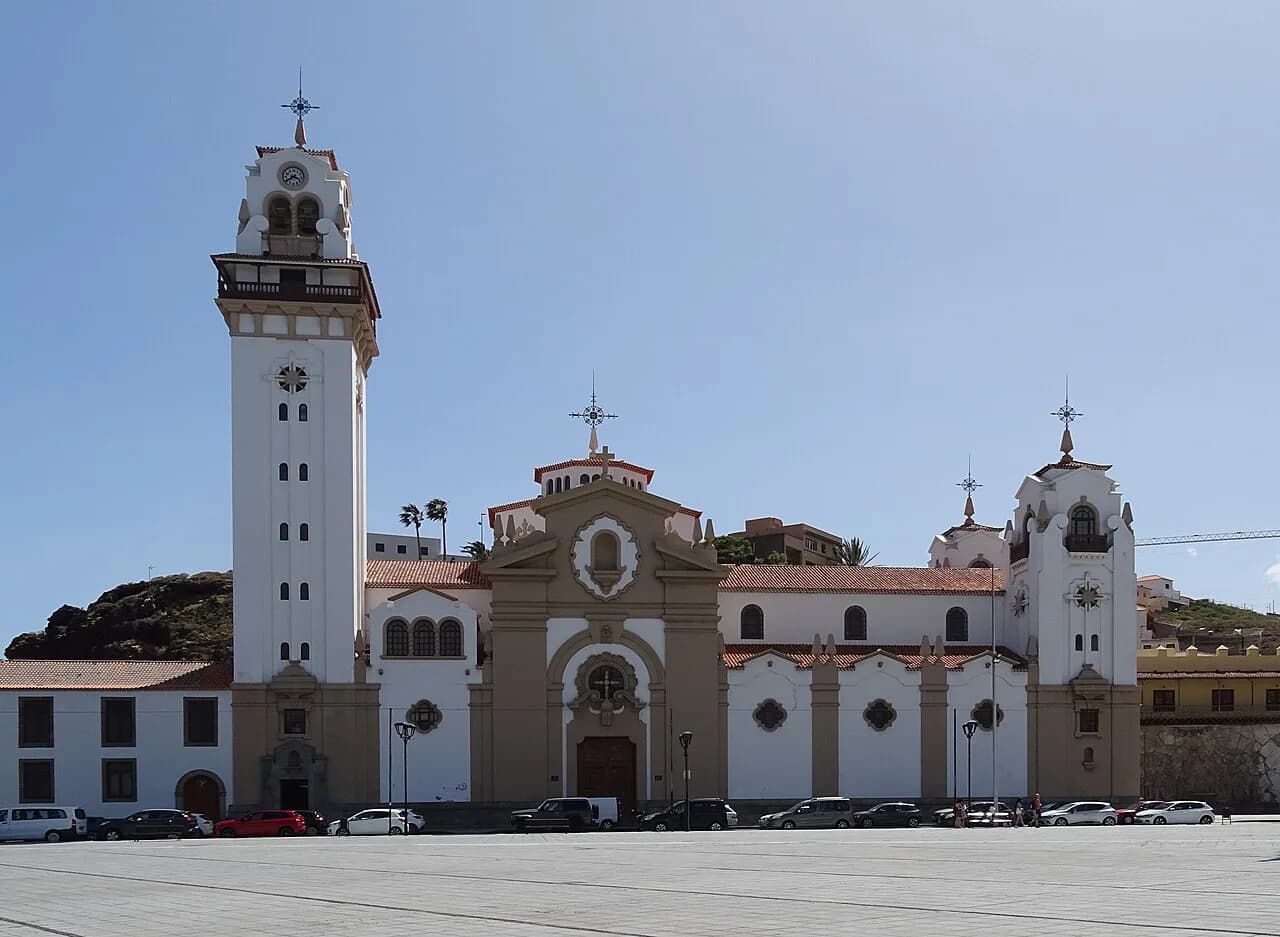
The Basílica de Nuestra Señora de la Candelaria is the shrine of the Canary Islands' patron saint, standing on the Plaza de la Patrona in the town of Candelaria on Tenerife's south-east coast. Entry is free, and a visit fits easily into half a day alongside the town's old streets and black-sand beach.
What surprises first-time visitors is that the church is modern: the present building was finished on 1 February 1959, after the earlier sanctuary was destroyed by fire in 1789. The draw is not age but scale and colour — a 5,000-capacity interior dominated by José Aguiar's murals and the carved Virgin above the main altar.
What the Basílica de Candelaria is and why it draws visitors
This is the first Marian shrine of the Canary Islands, consecrated to the Virgin of Candelaria and raised to the status of minor basilica by Pope Benedict XVI in 2011. It is also a listed Site of Cultural Interest, so the visit works on two levels: a working pilgrimage church and a piece of mid-twentieth-century Canarian architecture.
The architect was the Canary Islands-born Enrique Marrero Regalado, who designed an eclectic building that borrows from several styles found across the archipelago. Look for Doric capitals along the central nave and a polychrome ceiling whose colours echo the Virgin's vestments.
Candelaria sits roughly 20 km from Santa Cruz, which makes the basilica an easy add-on to a day in the island's capital rather than a cross-island expedition. If you are building an island itinerary around it, the wider selection of Tenerife Attractions: 6 Visitor Guides shows what else is worth the journey, and it is worth reading how many days in Tenerife to allow before you commit to a half day here.
Where it is: Plaza de la Patrona in Candelaria
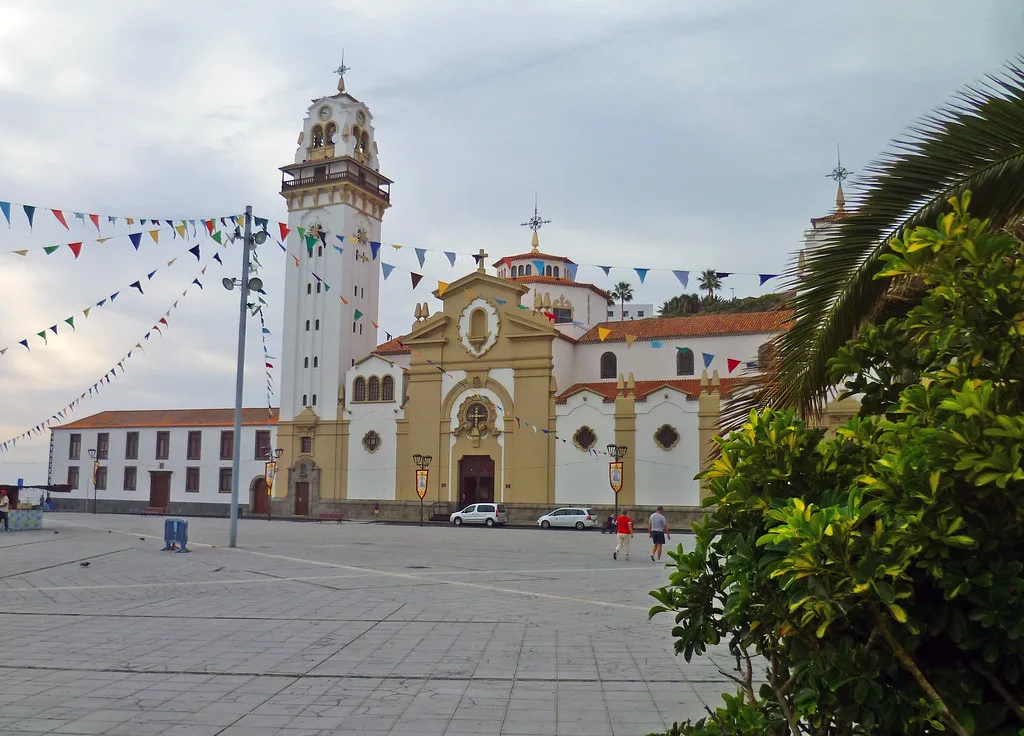
The address is Plaza de la Patrona, 38503 Candelaria, with the basilica facing the square that opens onto the seafront. The town itself is small enough to walk end to end, so you can arrive by bus or car and leave the vehicle for the rest of the visit.
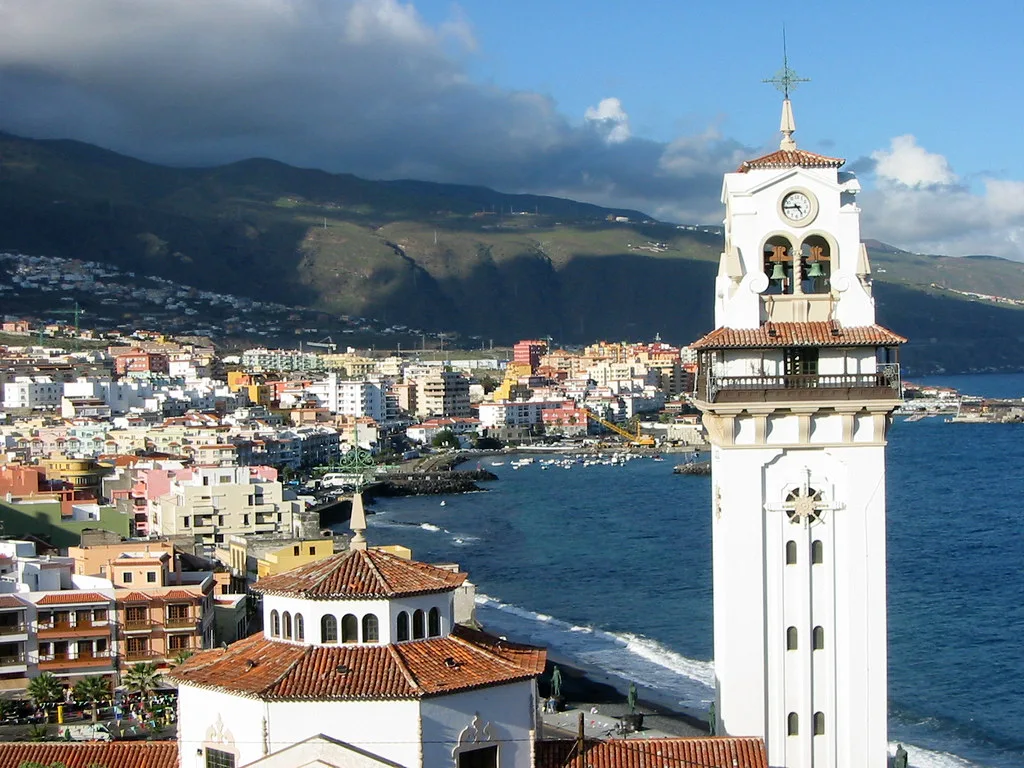
Because the church fronts a public plaza rather than a walled compound, it is easy to combine with the old town lanes and the dark volcanic sand of the beach a few minutes away. Plan your arrival for the basilica first and the seafront afterwards, when the light on the square softens.
How to get there from the south and north of the island
Candelaria lies on the TF-1 motorway corridor east of the southern resorts and south of Santa Cruz, and intercity buses on the capital–south route stop in the town. Allow for a walk of a few minutes from the stop to the plaza, and check the current timetable with the bus company before you set out.
Drivers should expect street parking around the centre rather than a dedicated basilica car park, so arrive earlier in busy periods. If you are coming from Santa Cruz, it is worth making a day of it: Parque García Sanabria, Santa Cruz makes a green, shady contrast to the exposed seafront at Candelaria, and the Auditorio de Tenerife Adán Martín is on the same side of the city.
Opening hours and free entry
Entry to the basilica is free. As published, the church opens Tuesday to Sunday from 7:30 am to 7:30 pm, and on Mondays from 3:00 pm to 7:30 pm, which makes Monday morning the one slot to avoid if the basilica is your priority.
The Lady Chapel keeps separate, much tighter hours: Tuesday to Friday from 11:30 to 12:00, excluding organised group visits, plus daily after the 6:00 pm mass and, on Sundays, after the 10:00 am mass. If seeing the Virgin close up matters to you, build the day around that window.
The Virgin of Candelaria and the story behind the shrine
The legend places the original image in the fourteenth century, found on the beach at Chimisay by two Guanche shepherds; the candle she carried gave her the name Candelaria. Before the Castilian conquest the image was venerated as Chaxiraxi, and it was later moved to the Achbinico cave.
That original carving was lost in 1826, when a storm washed it out to sea, and the figure venerated today was carved the following year by Fernando Estévez del Sacramento. Keeping the building's history separate from the image's legend explains why the 1826 flood matters so much to the shrine's story.
What to see inside: the main altar mural, the Virgin's carving and the paintings
The main altar is backed by a huge mural by the painter José Aguiar, and the Virgin stands in front of it on a wooden throne with gilded plant motifs, flanked by angels and with a crescent moon at her feet. The image is the work of Estévez del Sacramento, made after the 1826 loss of the original.
Aguiar's other paintings inside the church reference two Canary Islanders of note: a scene of the Jesuit missionary Joseph of Anchieta above the chapel door, and St Brother Peter on the sacristy door. Either side of the main entrance hang two works by Manuel Martín González showing the place where the holy image was found.
Look up into the Lady Chapel for Aguiar's Multiplication of the Loaves and Fishes, one of his strongest pieces. Murals at the votive candle racks are by the Candelaria painters Juan Ruano and Dimas Coello, and the Chapel of the Blessed Sacrament carries a work finished by Waldo Aguiar.
The Lady Chapel and seeing the Virgin up close
The Lady Chapel is the space set aside for coming face to face with the Virgin, and it opens daily around the published slots rather than all day. Group visits can take priority during the Tuesday-to-Friday midday window, so the after-mass openings are often the calmer option.
If your schedule is tight, treat the chapel as the fixed point and the rest of the church as flexible — the nave, aisles and murals can be seen whenever the basilica is open. Keep the two sets of hours separate when you plan, because they do not run in parallel.
Mass times and when to visit for quiet
Mass is held on working days, Saturdays and days before public holidays, and on Sundays and holidays of obligation at 8:00, 10:00, 12:00 and 6:00 pm. Visitors are welcome, but dress modestly and keep to the edges during services rather than walking the nave.
For quiet looking, aim for the middle of a weekday morning before the chapel queue builds, or the late afternoon slot after the church reopens on Monday. The trade-off is straightforward: pilgrimage dates bring atmosphere and crowds in equal measure, so pick which you want.
How long to allow and the best time of day
Give the basilica itself 45 minutes to an hour if you read the murals and sit for a while; add 15 minutes for the Lady Chapel when it is open. That leaves time for the square and the seafront without rushing, which is the realistic way to see Candelaria in a half day.
Mornings are cooler and better for the interior's colours, while late afternoon suits the square and the beach. On Mondays the basilica only opens at 3:00 pm, so a morning arrival there means seeing the town first and the church second. If this timing shapes your trip, it helps to know how many days in Tenerife to set aside around it.
What's nearby in Candelaria: the old town and the black-sand beach
Candelaria's centre is compact: the basilica, the plaza and the seafront sit within a short walk of each other, with dark volcanic sand on the town beach. The Basilica of Candelaria is described as the first church in the Canaries dedicated to the Virgin Mary, which helps place the town's identity.
If you have a car and a full day, the obvious extension inland is Teide National Park, Tenerife, where the volcanic landscape is the opposite of the coast. Closer to Santa Cruz, the Mercado de Nuestra Señora de África, Santa Cruz is the place to pick up picnic supplies, and the Castillo de San Cristóbal, Santa Cruz sits under the Plaza de España for a short history stop. If the mountain is the main reason for your trip, compare the wider things to do in Tenerife before settling the route.
Practical tips: dress, crowds and feast days
The basilica is a consecrated church and a pilgrimage destination, so cover shoulders and avoid beachwear inside; the seafront is a minute away for changing your plans. The busiest periods coincide with the Virgin's feast days and pilgrimage dates, when the square fills early and the Lady Chapel becomes hard to reach.
Telephone the basilica on +34 922 500 100 for the day's arrangements if you are travelling for a specific service or chapel slot. For everything else on the island, from mountain walks to city stops, the wider things to do in Tenerife collection fills in the gaps around this visit, whether you are adding a half day here or weighing up how many days in Tenerife to spend.
Plan Your Visit
Candelaria rewards a half day rather than a flying stop: the basilica's murals and the carved Virgin are the core, and the plaza, old town and beach give the visit a natural shape. Check the basilica and Lady Chapel hours shortly before you travel, since the chapel window is short and the Monday opening is late.
Go on a weekday morning for quiet, or accept the crowds on a feast day for the full pilgrimage atmosphere. Either way, entry is free and the visit slots neatly between Santa Cruz and the southern resorts.
Explore more Tenerife guides
Frequently Asked Questions
Is entry to the Basílica de Candelaria free?
Yes. The basilica is free to enter, and no ticket is needed for the church itself. The Lady Chapel keeps its own limited opening times, so check those separately before you travel.
What are the opening hours of the Basílica de Candelaria?
As published, it opens Tuesday to Sunday from 7:30 am to 7:30 pm, and on Mondays from 3:00 pm to 7:30 pm. Mass times and the Lady Chapel slots are different, so confirm them with the basilica before a special trip.
What can I see inside the basilica?
The main altar mural by José Aguiar, the carved Virgin by Fernando Estévez del Sacramento, paintings of Joseph of Anchieta and St Brother Peter, and works by Manuel Martín González either side of the main entrance. The Lady Chapel holds Aguiar's Multiplication of the Loaves and Fishes.
What is the story of the Virgin of Candelaria?
The original image was found on the beach at Chimisay by two Guanche shepherds and venerated as Chaxiraxi before the conquest. It was lost in a storm in 1826, and the figure now in the basilica was carved the following year by Estévez del Sacramento.
How long should I allow for a visit?
About 45 minutes to an hour for the basilica, plus 15 minutes for the Lady Chapel when it is open. Add time for the plaza, the old town and the black-sand beach to make a comfortable half day.
When is the quietest time to visit?
A weekday morning before the chapel slot fills is the calmest, or late afternoon after the Monday reopening. Feast days and pilgrimage dates bring far bigger crowds and a very different atmosphere.
What is there to see nearby?
The old town and seafront are a short walk from the plaza. With a car, Teide National Park is the natural full-day extension, while Santa Cruz offers the Parque García Sanabria, the Auditorio and the Castillo de San Cristóbal.
How do I get to Candelaria?
Candelaria sits on the TF-1 corridor about 20 km from Santa Cruz, with intercity buses stopping in the town and a short walk to the plaza. Drivers should expect street parking rather than a dedicated basilica car park.