
Monastery of San Juan de los Reyes, Toledo: A Visitor's Guide
The Monastery of San Juan de los Reyes is an Isabelline-style Franciscan monastery in Toledo, founded by the Catholic Monarchs and standing on Calle de los Reyes Católicos in the city's Jewish quarter. It works best as a 30-minute stop folded into a walking day, not as a half-day destination on its own.
Its position is the practical advantage: the Synagogue of Santa María la Blanca sits on the same street, and the Synagogue of El Tránsito with its Sephardic Museum is a few minutes away. Plan the cluster together and you get three of Toledo's most distinctive interiors in one unhurried stretch of the afternoon.
What the Monastery of San Juan de los Reyes Is
This is a Franciscan house founded by the Catholic Monarchs, Ferdinand and Isabella, in the Isabelline style — a late-Gothic Spanish manner named after the queen herself. The foundation commemorated their victory at the Battle of Toro and the birth of their son, which is why the building carries a royal, commemorative weight rather than the everyday feel of a parish church.
The monarchs themselves are said to have thought the result was small, which is worth remembering as you walk in: the scale is human, not cathedral-sized. That is good news for a tight itinerary, because you can see the essentials without committing an afternoon.
Where It Is and How to Get There
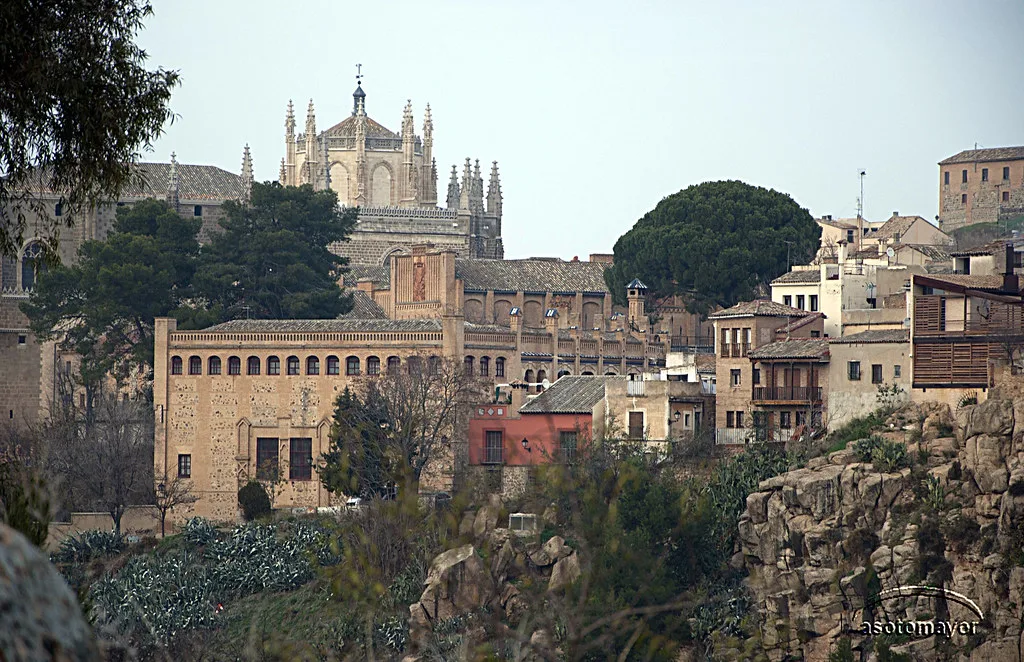
The monastery faces Calle de los Reyes Católicos in the Jewish quarter, south-west of the cathedral and a short walk from the Plaza del Ayuntamiento. From the cathedral, head down towards the Santo Tomé area and follow the street signposted for the synagogues.
If you arrive from Madrid by train, the station sits outside the centre; trains run roughly hourly from Atocha and take around half an hour, and buses 5, 511, 61 and 62 connect the station area with Plaza de Zocodover. From Zocodover it is a 15- to 20-minute uphill walk through the old town.
Walking up from the river side is the steep option. The Safont escalators at Plaza del Granadal cut out the worst of the climb into the historic centre, which matters if you are carrying a day pack or visiting in summer heat.
The Church and the Cloister
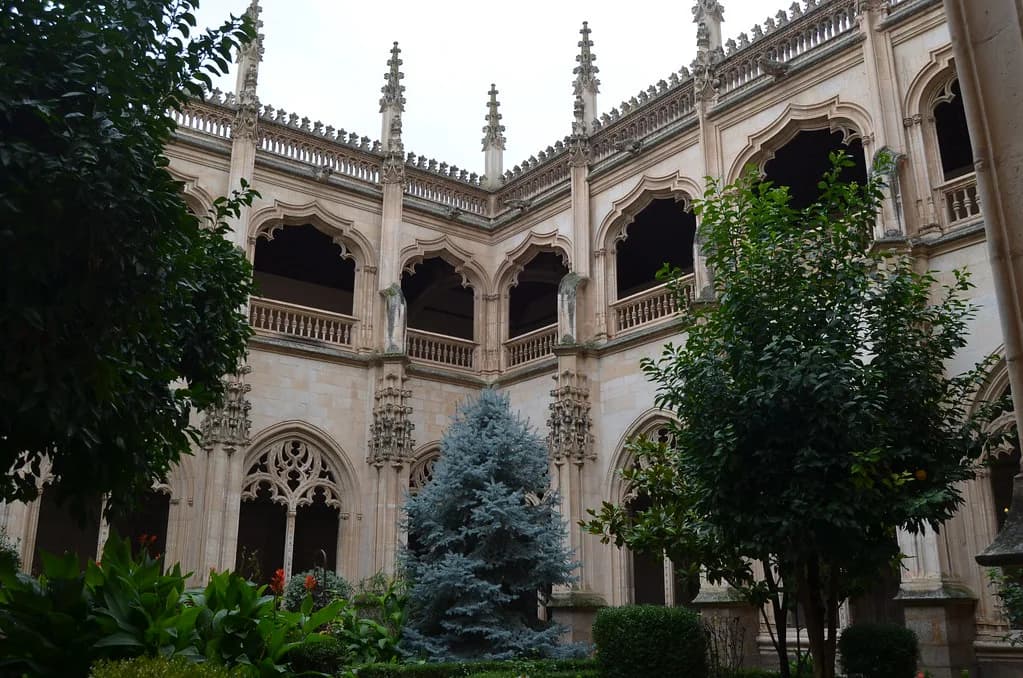
Two things justify the stop: the church, with its royal iconography and Isabelline decoration, and the cloister, which is the part most visitors remember. Walk the cloister slowly rather than photographing it from the doorway — the carved detail rewards a full circuit.
Time it at around 30 minutes. That covers the church and cloister comfortably without turning the visit into a museum session, and it leaves room for Santa María la Blanca and El Tránsito on the same street.
Photography is the honest draw here: the cloister's carved stonework and the church interior give you something genuinely different from the cathedral's grand Gothic nave. If you are cathedral-fatigued by this point in the day, this is the stop that resets you.
The Isabelline Style Explained
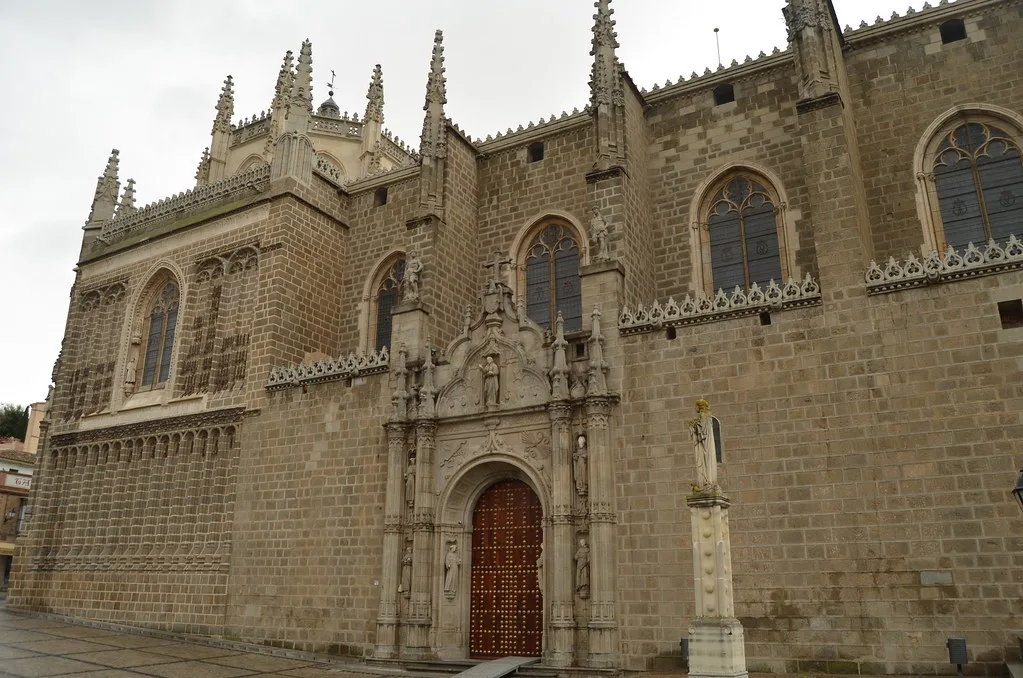
Isabelline architecture blends late Gothic structure with dense, fantastical surface decoration — heraldic motifs, interlaced stonework and elaborate tracery. It reads as Spanish and royal, and it is the reason this building looks nothing like the Mudéjar synagogues down the street or the Gothic cathedral uphill. Even if you build your day around the things to do in Toledo beyond this quarter, the contrast is worth knowing before you walk in.
Seen in sequence, the three buildings tell the story of the Jewish quarter in one afternoon: Islamic-influenced synagogue interiors at Santa María la Blanca and El Tránsito, then this explicitly Catholic, monarchical statement a few doors away. Doing them in that order makes the contrast legible. If you would rather build the day around the synagogues and El Greco instead, see these things to do in Toledo for a mosque-and-painting itinerary.
The Tourist Bracelet and What It Covers
San Juan de los Reyes is one of the seven monuments on Toledo's combined monument ticket, and in 2026 that wristband was priced at €14, covering sites including the Church of Santo Tomé and this monastery. It does not include the cathedral or the Alcázar, which are ticketed separately.
Buy it online in advance or at the first monument you enter, and count how many of the seven you will realistically reach. Five is a sensible target on a day trip; chasing all seven eats the time you need for lunch and the viewpoints.
If you plan to add the fortress as well, budget separately for the Alcázar and check its own ticketing and free-entry days before you set out.
Where It Fits in a One-Day Toledo Route
A workable order runs from the Alcázar and Plaza de Zocodover in the morning, through the cathedral around midday, then downhill to the Jewish quarter in the early afternoon. San Juan de los Reyes lands naturally at the end of that sequence, alongside the two synagogues. If you would rather shape the whole day around the mosques and El Greco instead, a guide to things to do in Toledo is the better starting point.
Late afternoon suits this corner of the city: the crowds thin after the day-trippers leave, and you finish close to San Martín's Bridge for the walk back towards the station. Build in a proper lunch stop before the quarter, since Toledo's restaurant kitchens keep Spanish hours and quieten down between services.
For a wider spread of what else deserves your hours, from El Greco's Toledo to the mosque of Cristo de la Luz, keep the rest of the city's sights in view while you plan; our guide to the best things to do in Toledo lays out a full day of mosques and El Greco.
Nearby: the Synagogues and the Sephardic Museum
The Synagogue of Santa María la Blanca is on the same street and takes minutes to reach; its carved capitals and Moorish interior are the reason many people rate it above the cathedral. The Synagogue of El Tránsito, which houses the Sephardic Museum, is a short walk away via Calle San Juan de Dios.
The Museo del Greco is also within the quarter, and the Church of Santo Tomé holds El Greco's Burial of the Count of Orgaz a few minutes uphill. Pairing two of these with the monastery gives you a coherent half-day without crossing the city twice.
The Church of Santo Tomé visit itself is quick — roughly ten minutes — so it slots in easily between the monastery and the synagogues.
Nearby: the Mosque of Cristo de la Luz and Puerta del Sol
North of the centre, the Mosque of Cristo de la Luz and the Puerta del Sol sit together near the old walls, and the walk there passes the Church of Santiago del Arrabal. It is a longer leg from the monastery and worth it mainly if you have a full day rather than a rushed one.
The convent district around Paseo de la Virgen de Gracia is quieter still, with several convents selling sweets made by the nuns. It is a good decompression walk after the monument-heavy middle of the day.
Souvenirs and Food in the Surrounding Streets
This part of the old town is dense with craft and souvenir shops, some with workshops where you can watch damascene work, ceramics, leather and embroidery being made. Toledo's sword trade is visible everywhere, though much of what is on sale is machine-made rather than hand-forged.
For edible souvenirs, Pastelería Santo Tomé at Plaza de Zocodover has been making marzipan since 1856, and Toledo marzipan carries PGI status with almonds making up at least half its weight. Casa Cuartero on Calle Hombre de Palo is the deli stop for Manchego, olive oil, game pâtés and honey.
For a sit-down lunch near the monastery rather than a snack, Calle Alfileritos is lined with bars and restaurants in converted town houses, and local dishes include cocido, carcamusas and game in season. Book or arrive early for the 1:30–4pm lunch window.
Tickets, Hours and What to Check Before You Go
Ticket prices and opening times for the monastery change, so confirm both on the official monastery or Toledo tourist board page, and check whether your visit falls on a day when the monument is closed. One check before you travel settles everything.
If you are visiting in 2026 or 2027, note that the cathedral marks its 800th anniversary with special exhibitions and events that can affect regular sightseeing hours elsewhere in the city, so build slack into your day rather than a rigid timetable.
Plan Your Visit
Treat San Juan de los Reyes as the anchor of a Jewish-quarter afternoon: monastery, Santa María la Blanca, El Tránsito and the Sephardic Museum, then a late stroll to San Martín's Bridge. Keep the visit to around half an hour and use the saved time on the synagogues and a proper lunch.
Buy the monument wristband only if you will hit at least five of the seven sites, and remember it excludes the cathedral and the Alcázar. Check opening days and ticket prices on the official pages before you set out, and let the day flex around what is actually open.
Frequently Asked Questions
Why is the Monastery of San Juan de los Reyes famous?
It is a Franciscan foundation commissioned by the Catholic Monarchs, Ferdinand and Isabella, and built in the Isabelline style that takes its name from the queen. The foundation marked their victory at the Battle of Toro and the birth of their son, and the royal commemorative purpose shows in the heraldic decoration rather than in sheer size.
How long does it take to visit San Juan de los Reyes?
Allow around 30 minutes for the church and cloister. That is enough for a full circuit of the cloister and a proper look at the church interior, and it leaves time for the Synagogue of Santa María la Blanca on the same street and the Synagogue of El Tránsito a short walk away.
Is San Juan de los Reyes included in the Toledo tourist bracelet?
Yes. The monastery is one of seven monuments on Toledo's combined monument ticket, along with sites such as the Church of Santo Tomé. The cathedral and the Alcázar are ticketed separately and are not part of the wristband, so budget for those on top if you want to see them.
What style is the Monastery of San Juan de los Reyes?
It is Isabelline, a late-Gothic Spanish style that combines Gothic structure with dense surface decoration: heraldic motifs, interlaced stonework and elaborate tracery. The result looks markedly different from the Mudéjar interiors of the synagogues nearby and from the Gothic nave of Toledo Cathedral uphill.
What is there to see near San Juan de los Reyes?
The Jewish quarter supplies most of it. The Synagogue of Santa María la Blanca is on the same street, the Synagogue of El Tránsito houses the Sephardic Museum, and the Church of Santo Tomé holds El Greco's Burial of the Count of Orgaz. The Museo del Greco is also within the quarter, and San Martín's Bridge is a short downhill walk for river views.
How do you get to San Juan de los Reyes from Toledo station?
Trains from Madrid's Atocha station take around half an hour and run roughly hourly, and buses 5, 511, 61 and 62 connect the station area with Plaza de Zocodover. From Zocodover it is a 15- to 20-minute walk downhill through the old town, or you can use the Safont escalators at Plaza del Granadal to manage the climb in the other direction.