
Toledo Cathedral: What to See, Tickets and How Long to Allow
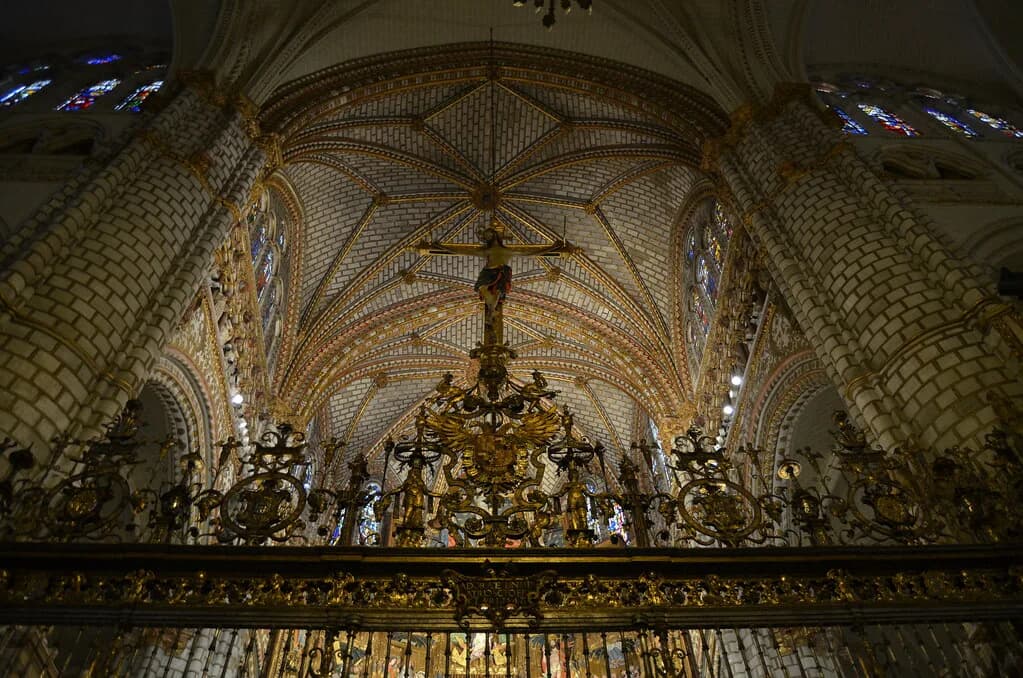
Toledo Cathedral, formally the Catedral Primada de Toledo, is the building to prioritise if you only see one monument in the city: a High Gothic giant begun in 1226 that holds El Greco, a gold monstrance and one of the most ornate choirs in Spain. Allow about an hour inside, two if you want the Sacristy paintings properly. It sits in the old town, five minutes' walk from the Alcázar, so it slots easily into a morning or a long lunch break.
What Toledo Cathedral Is and Why It Matters
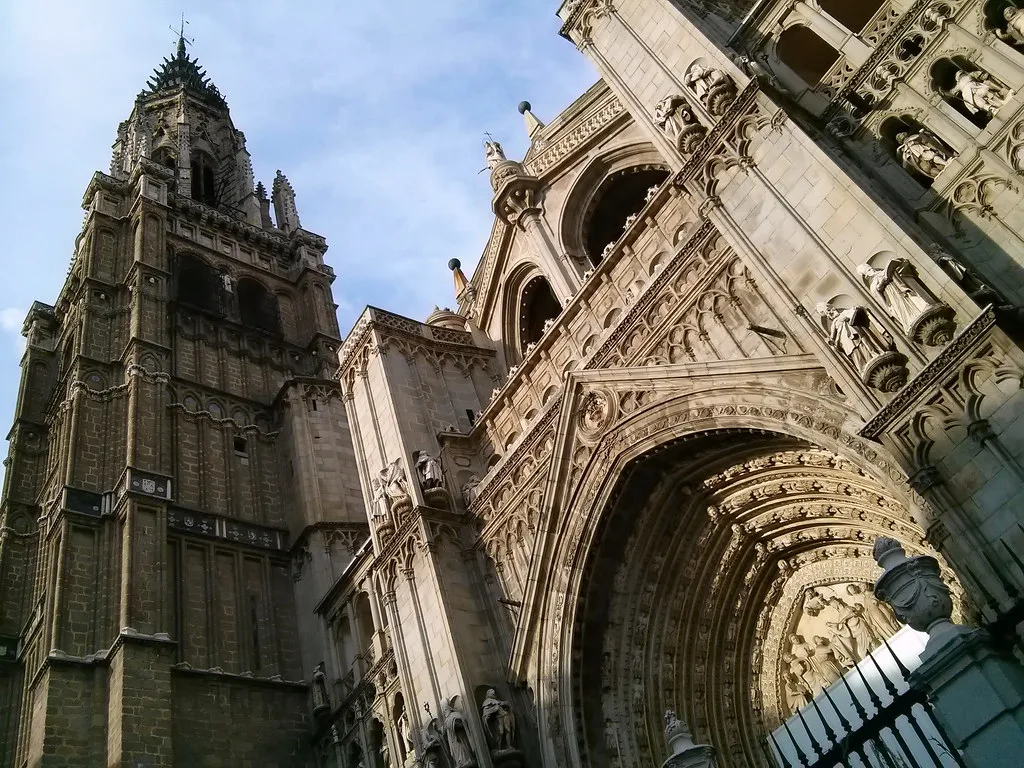
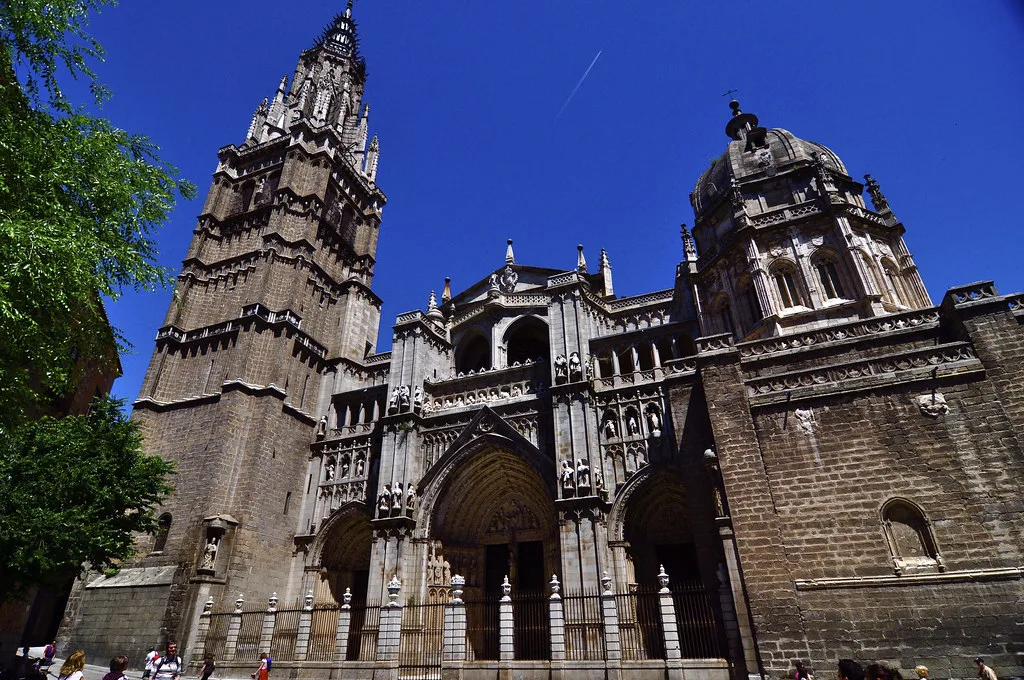
The cathedral is the seat of the Primate of Spain, which is why it outranks most Spanish cathedrals in scale, art and ceremony. Construction began in 1226 under Ferdinand III, and the building went up over the following centuries in a single Gothic scheme rather than as a patchwork of rebuilds. That continuity is what gives the interior its unusual coherence: five naves, a deep choir and chapels packed tight along the outer walls.
The result is a working cathedral rather than a museum, with daily mass including a Mozarabic Rite service in the Mozarabic Chapel, held each morning from 9am on working days and 9.45am at weekends and on public holidays. On Sundays during High Mass the cathedral organ is played, which is the best reason to time a visit to a Sunday rather than a weekday morning.
Where It Is in the Old Town
The cathedral faces Plaza del Ayuntamiento, where the Town Hall and the Episcopal Palace stand opposite, and you reach it from the Alcázar in barely five minutes along Calle Cardenal Cisneros. The tower and the long south flank dominate the surrounding lanes, so it is hard to miss once you are inside the old town. This is the densest part of the historic centre, a UNESCO World Heritage Site that keeps its medieval street plan.
For a view over the cathedral's rooftops, climb the Cuesta de la Ciudad from Plaza del Ayuntamiento to the Jesuit church in Plaza Padre Juan de Mariana, which stands at the highest point of the city and opens up a panorama across the packed roofs toward the Tagus. The climb costs you steps, not money.
Getting There from Madrid
Toledo sits about 70 kilometres from Madrid and is connected by high-speed train from Atocha in around half an hour, with departures about once an hour. From the Toledo station, city buses run to Plaza de Zocodover, where the tourist information office is, and the walk into the centre is uphill for 15 to 20 minutes. The Safont escalators in Plaza del Granadal take most of the sting out of the final climb.
If you arrive on foot from the station, you cross the Alcántara Bridge before the hill, which is a sight in itself and gives you the classic photograph of the Alcázar above the Tagus. Drivers should expect tricky parking near the centre and generally end up walking in from the station area anyway.
Tickets and Opening Hours
Buy tickets at the office opposite the Puerta Llana gate on Calle Cardenal Cisneros, or reserve online before you travel. Check the cathedral's own site for the current admission price and daily timetable, since Sunday opening starts later in the afternoon and compresses a day trip. The same site publishes any changes around feast days and major services.
The cathedral charges admission, so budget for a ticket rather than expecting to walk in free. Check the current price and any reduced rates on the official pages before you set out.
What to See First Inside
Start with a full circuit of the nave and side chapels, then settle into the choir, where the walnut stalls are carved with scenes from the Reconquista and rank among the most elaborate in Spain. The Chapel of the Kings and the golden Monstrance of Arfe are the other two stops most visitors remember. There is so much to see that an unstructured wander quickly eats an hour.
The Sacristy doubles as an art gallery, hung with El Greco's Christ on the Cross alongside works by Velázquez, Titian and Caravaggio. If paintings matter more to you than architecture, go here before the chapels and give it twenty minutes.
El Transparente, the Baroque altarpiece pierced by a skylight above the ambulatory, is the piece most people photograph without knowing its name. Look up as you pass behind the high altar, where the shaft of light is designed to fall onto the tabernacle.
The Cloister and the 15 August Tradition
The cloister is a calm, orange-tree courtyard off the nave, and it is worth ten quiet minutes after the crowds of the choir. On 15 August, the feast of Our Lady of the Tabernacle, it is customary to drink water drawn from the cloister well, served in earthenware jugs and glasses, which the city treats as miraculous.
How Long to Allow
An hour covers the nave, choir, Chapel of the Kings and a quick look at the Monstrance at a steady pace. Give it two hours if you want to read the Sacristy paintings, sit in the cloister and climb to the Jesuit church afterwards for the view. Most day-trippers underestimate the walking between monuments, so bank the cathedral time first and build the rest of the morning around it.
Sunday Visits and High Mass
Sunday opening is later, so a Sunday trip needs the cathedral pushed into the afternoon, with the morning spent on the Alcázar or the Jewish quarter instead. In exchange you can hear the organ at High Mass, which is a genuine reason to choose Sunday. Arrive for the start of visiting hours rather than mid-afternoon.
Practical Trade-offs
Toledo's streets are hilly and stepping between monuments adds up, so wear shoes you can climb in and carry water in summer. Crowds swell around Corpus Christi, when the cathedral walls are hung with tapestries, so book ahead if your dates overlap the feast.
Eating Nearby: Calle Alfileritos and Plaza de Zocodover
Calle Alfileritos, a few minutes from the cathedral, is lined with bars and restaurants in converted town houses, and the local menu runs to cocido, carcamusas, partridge and venison with wines from the Toledo designation of origin. Book lunch for after 1.30pm to eat with the city rather than ahead of it. Plaza de Zocodover, five minutes uphill, has the terrace cafes and the tourist office.
For a sweet to take home, Pastelería Santo Tomé on Plaza de Zocodover has been making marzipan since 1856, and Mazapán de Toledo carries PGI status requiring almonds to be at least half the total weight. Casa Cuartero on Calle Hombre de Palo sells cheese, olive oil, game pâtés and turrón if you want a gourmet picnic instead.
What Else Is Within Ten Minutes
The Church of Santo Tomé, a short walk down Calle de Santo Tomé, holds El Greco's Burial of the Count of Orgaz, and the visit takes about ten minutes. Continue to the Synagogue of El Tránsito, which houses the Sephardic Museum, then Santa María la Blanca and the Monastery of San Juan de los Reyes on Calle Reyes Católicos. Craft shops selling damascene ware, ceramics and swords fill the same streets.
The Museo del Greco sits in the Jewish quarter and reconstructs the painter's house and cellars, a natural companion to the Sacristy paintings you have just seen in the cathedral. The Alcázar de Toledo is five minutes the other way, at the top of the hill, and its military museum and library terrace make a good pairing with a cathedral morning.
Plan Your Visit
Build your Toledo day around the cathedral: buy your ticket at the Puerta Llana office or online, arrive at opening, give the nave and choir an hour and the Sacristy another, then walk five minutes to the Alcázar or down to Santo Tomé. Eat late on Calle Alfileritos, and take marzipan home from Zocodover. If you are weighing up the city's other monuments, start with our Toledo Attractions: 5 Visitor Guides. If you are comparing great Spanish cathedrals on the same trip, our guide to Málaga Cathedral covers tickets, opening hours and what to see there.
Explore more Toledo guides
Frequently Asked Questions
Is Toledo Cathedral worth visiting?
Yes, even for travellers who are tired of churches. It is the Primate Cathedral of Spain, holds El Greco's Christ on the Cross and works by Velázquez, Titian and Caravaggio in the Sacristy, and has one of the most ornate choirs in the country. An hour covers the highlights.
Is Toledo Cathedral free to enter?
No, you need a ticket. Buy it at the office opposite the Puerta Llana gate on Calle Cardenal Cisneros or reserve online, and check the official cathedral site for the current price and any reduced rates.
How old is Toledo Cathedral?
Construction began in 1226 under Ferdinand III, so the building has been in use for roughly eight centuries. The Gothic scheme was carried through over the following centuries, which is why the interior reads as one design rather than a series of rebuilds.
How long do you need at Toledo Cathedral?
About an hour for the nave, choir, Chapel of the Kings and the Monstrance, or two hours if you want to study the Sacristy paintings properly and sit in the cloister. Add time for the climb to the Jesuit church if you want the rooftop view.
Where do you buy tickets for Toledo Cathedral?
The ticket office is opposite the Puerta Llana gate on Calle Cardenal Cisneros, and tickets can also be booked online in advance. Check the official site for current opening hours, since Sunday visiting starts later in the afternoon.
Can you climb the tower at Toledo Cathedral?
No. The bell tower has been closed to visitors for several years, so the rooftop panorama has to come from elsewhere, most reliably the towers of the Jesuit church at the top of the city.
What should I see near Toledo Cathedral?
The Church of Santo Tomé with El Greco's Burial of the Count of Orgaz, the Synagogue of El Tránsito and its Sephardic Museum, the Monastery of San Juan de los Reyes and the Alcázar are all within about ten minutes on foot.
Sources
- Visit Toledo in a day. Tourism in inland Spain | spain.info
- What to Do in Toledo Spain: 10 Top Things to See in a Day | Next Level of Travel
- One Perfect Day in Toledo: Day Trip from Madrid
- Toledo – Casco Histórico – a spot of shopping – The Gannet
- the Cathedral of Toledo, Primate of Spain
- Toledo Cathedral: History, Art and Faith in Stone