Things to Do in Toledo, Spain: A Day of Mosques and El Greco
Plan your day with the best things to do in Toledo, Spain: the cathedral and its El Greco art, the Alcázar, the old synagogues and the Mirador del Valle.
On this page
Toledo is a walled medieval city on a hill above the Tagus, about 70 kilometres from Madrid and roughly half an hour away by high-speed train, with departures about once an hour from Atocha. Its old town has held UNESCO World Heritage status since 1986, and it is compact enough that a long day covers the cathedral, the Alcázar and the old Jewish quarter at a decent pace.
The catch is that the city rewards walking and looking up, not rushing between ticket desks. Mosques, synagogues, churches, fortifications and bridges sit within a few minutes of each other, and the best moments cost nothing: the Alcántara bridge, the gates and the Mirador del Valle. Build a realistic toledo itinerary around two or three paid interiors and leave the rest of the day to the streets.
Why Toledo Rewards a Full Day, Not a Rushed Half-Day from Madrid
A half-day trip just about covers the cathedral, a walk through the old town and a quick look from the river. Toledo's centre is larger than it looks on a map, and the climb from the station adds time before you have seen anything, so a day gives you room for the Alcázar and the synagogue quarter as well.
If you want the old town without the day-tripper crowds, stay the night. The city empties out in the early evening, and the monuments are beautifully lit after dark. That extra night doubles as the answer to how many days in toledo you need: one full day for the headline sights, a second for the Jewish quarter, the convents and the viewpoints.
Getting There from Madrid: Trains and the Walk Up to the Old Town
High-speed trains run from Madrid Atocha to Toledo in around 30 minutes, with roughly hourly departures. Toledo's station is a handsome building in its own right, but it sits below the old town, so budget 15 to 20 minutes of uphill walking to reach the centre.
Two ways of easing the climb matter. Bus lines 5, 511, 61 and 62 connect the station area with Plaza de Zocodover, the main square and home to a tourist information office. If you prefer to walk, the Safont escalators in Plaza del Granadal take the worst of the slope out of the approach, which leaves you fresh for the cathedral.
Organised day tours from Madrid bundle the transport with a guided walk, which suits anyone who would rather not plan the climb and the timings. The trade-off is less freedom over lunch and the viewpoints, which is where Toledo is at its best.
Start with the Cathedral: the Sacristy Paintings and What You Are Paying For
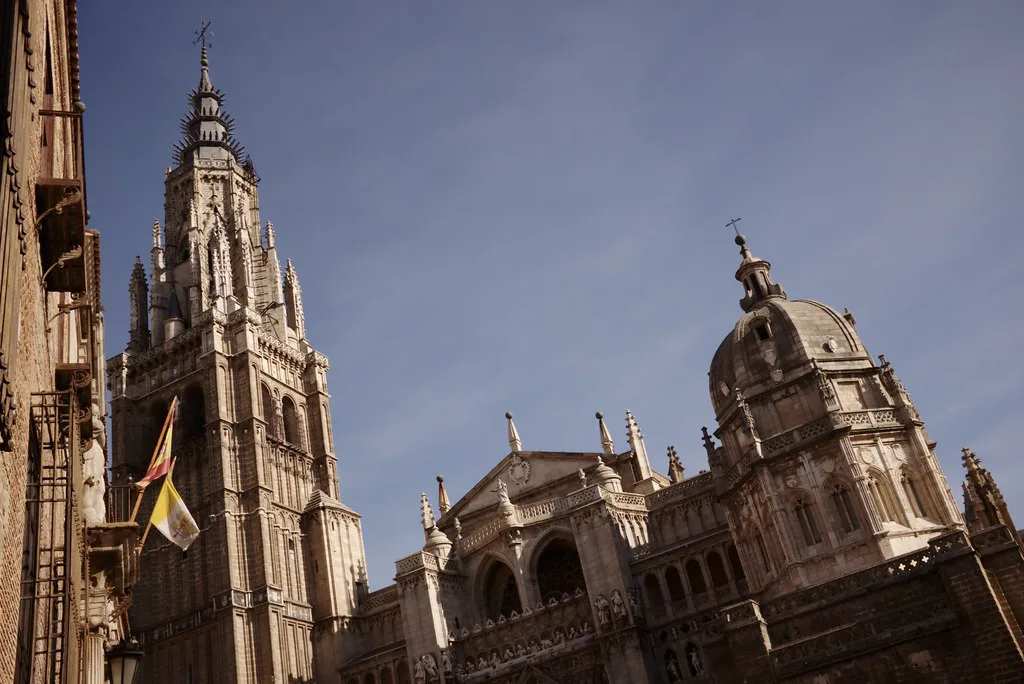
The Cathedral of Saint Mary is the city's defining monument, built from 1226 on the site of a former mosque and finished in the 15th century, which explains the Gothic and Mudéjar styles layered through it. The sacristy holds a serious picture collection, with works by El Greco, Titian, Velázquez and Goya, so the visit is not just another church interior.
Budget for the ticket rather than assuming it is free. Guides reported the entrance fee at around 12,50 euros, and the interior is big enough that an audio guide or a live guide earns its keep if you want to understand the sacristy paintings and the choir. Buy tickets at the office opposite the Puerta Llana on Calle Cardenal Cisneros or online before you travel.
Sunday visits work differently, with the cathedral opening in the afternoon, and High Mass brings the full weight of the organ. Every day there is also a Mass in the Mozarabic Rite in the Mozarabic Chapel, early in the morning, which is worth knowing if you want to see the rite rather than just the building.
The Alcázar: A Military Museum with the Best Free View in the City
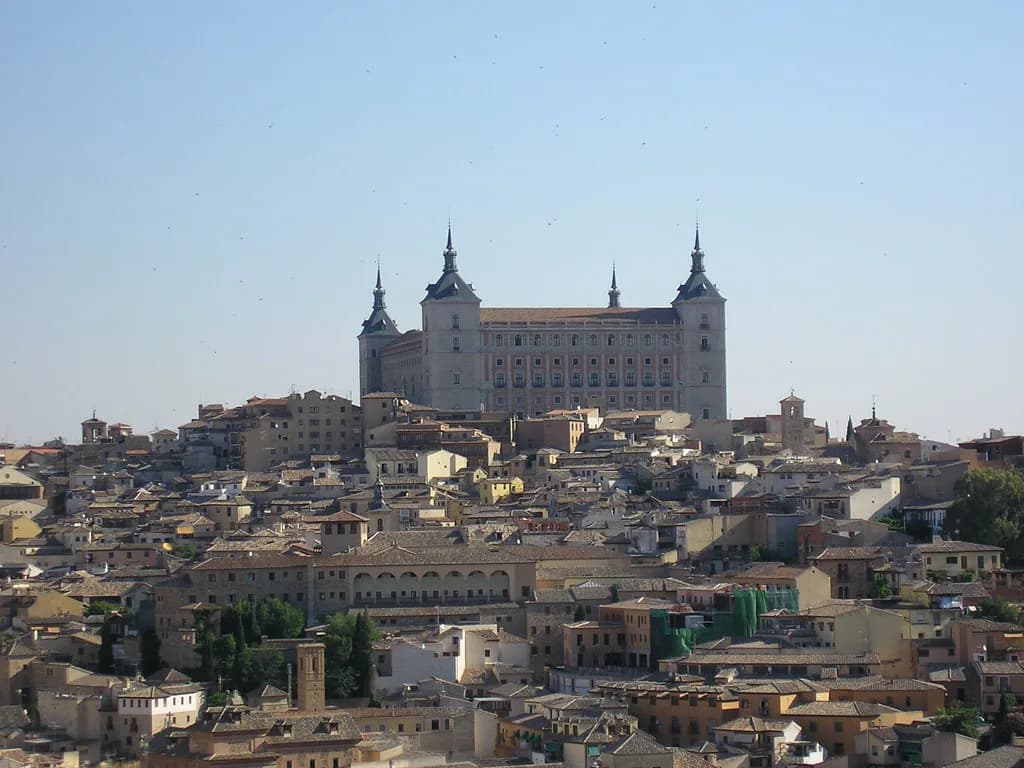
The Alcázar crowns the highest hill in Toledo and has been a fortress or palace since Roman times, later modernised by Visigoths, Arabs and Christians. Today it houses the Military Museum and the Library of Castilla-La Mancha, and its collections of weapons and uniforms are extensive, to the point that history-light visitors may find them overwhelming.
The museum is the paid part; the panorama is not. Walk into the library entrance opposite the museum door and take the lift to the fifth-floor terrace for a free view over the rooftops, which is the best-value stop in the city. Guides have reported museum admission at around 5 euros, with the museum closed on Mondays, so confirm the day before you go.
The City of Three Cultures Walk: Synagogues and San Juan de los Reyes
Toledo's nickname, the city of three cultures, comes from the centuries when Christian, Jewish and Muslim communities lived side by side. The afternoon walk through the old Jewish quarter is the clearest way to see it: head to Plaza del Salvador, then follow Calle de Santo Tomé towards the Church of Santo Tomé and the synagogues beyond.
The Synagogue of El Tránsito, which contains the Sephardic Museum, is the standout interior for many visitors: rich plasterwork, a carved wooden ceiling and a collection tracing Sephardic history on the peninsula up to the expulsion of 1492. A few minutes away, Santa María la Blanca is a Mudéjar synagogue whose capitals and arches repay a slow look.
Finish at the Monasterio de San Juan de los Reyes, a 15th-century foundation of the Catholic Monarchs and one of the finest examples of Isabelline Gothic in Spain. Its cloister and hanging chains are the reward for the walk, and the surrounding streets are full of craft workshops where damascene ware, ceramics and leather goods are made.
Mosque of Cristo de la Luz and the Gates and Walls
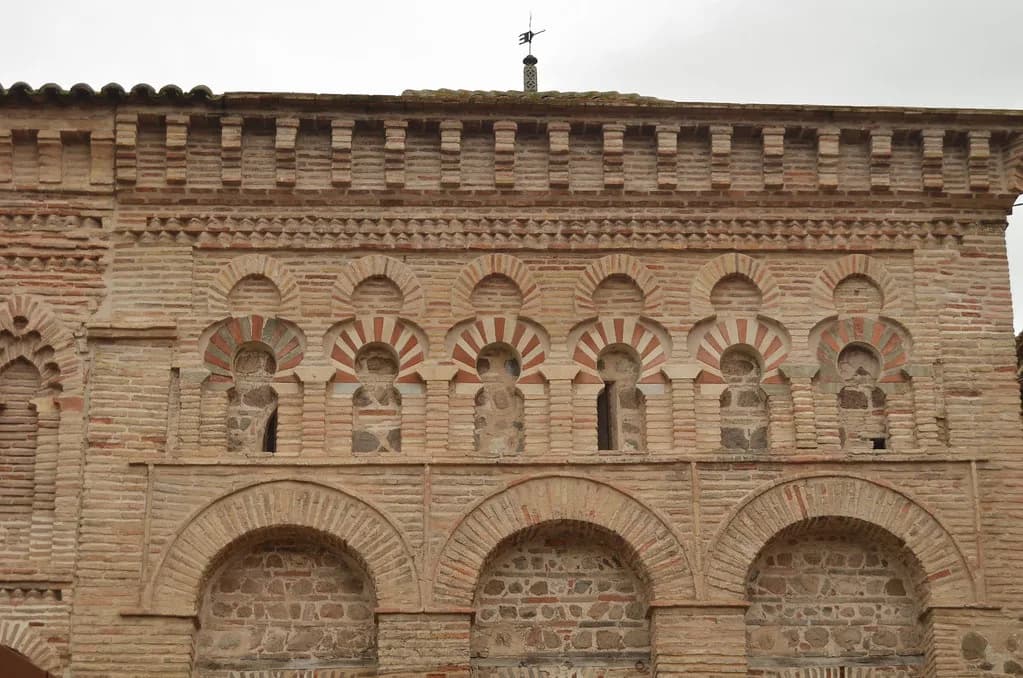
The Mosque of Cristo de la Luz began as a small mosque and became a church after the Reconquest, and the mix of Caliphate and Mudéjar work inside is one of the most unusual interiors in the city. It sits near the Puerta del Sol, whose name comes from the sun and moon once painted above the arch medallion, still visible today.
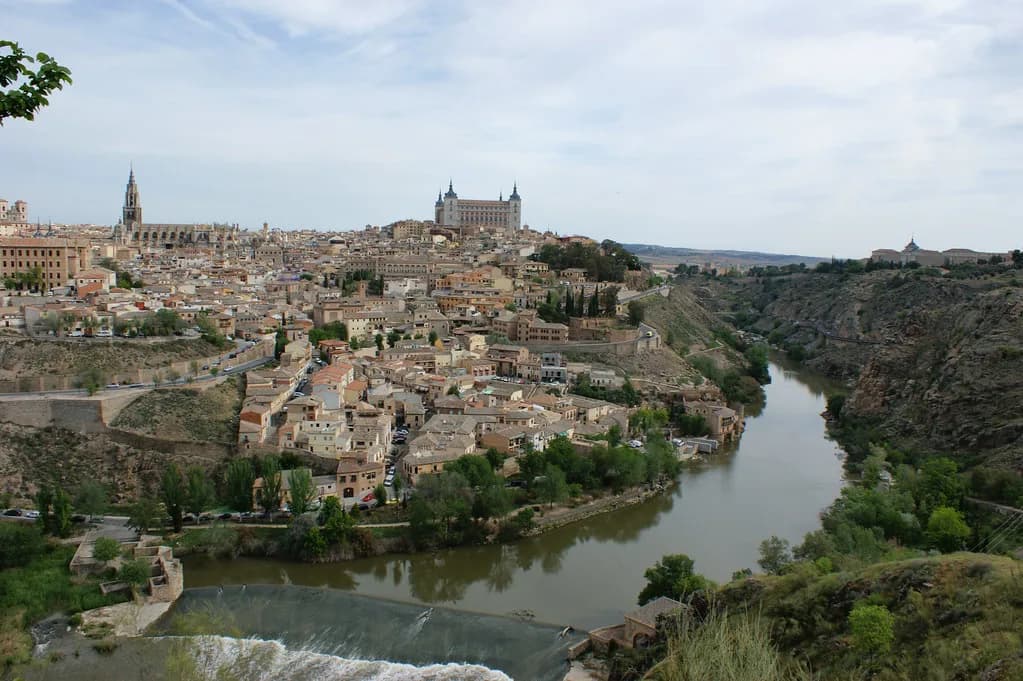
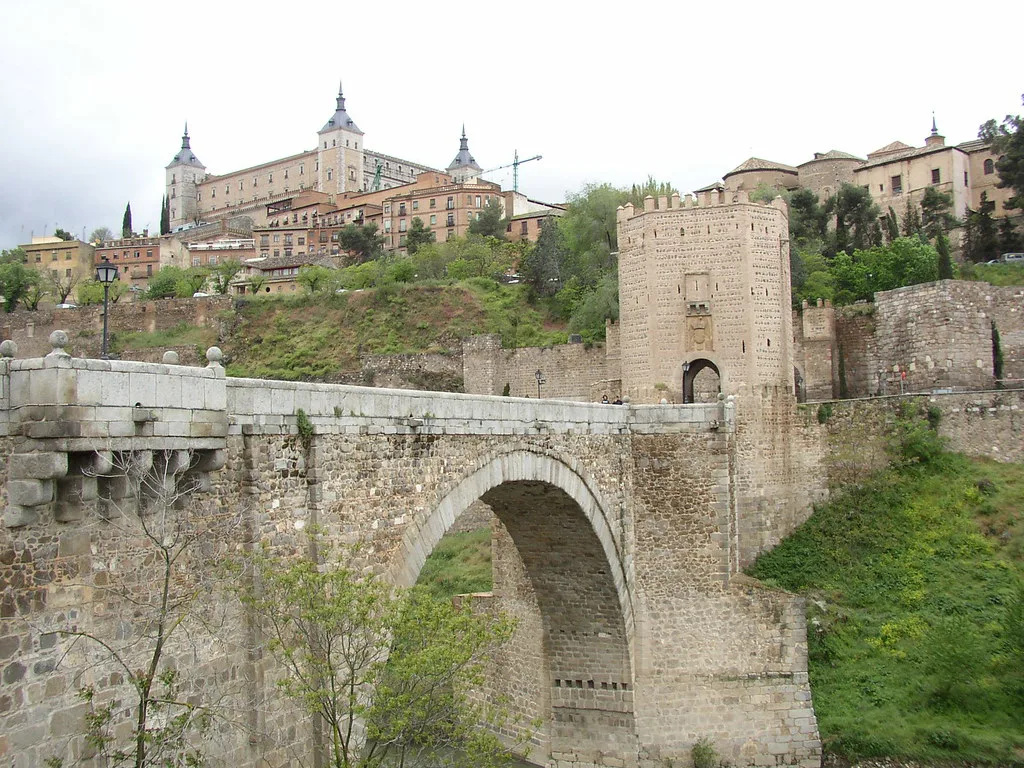
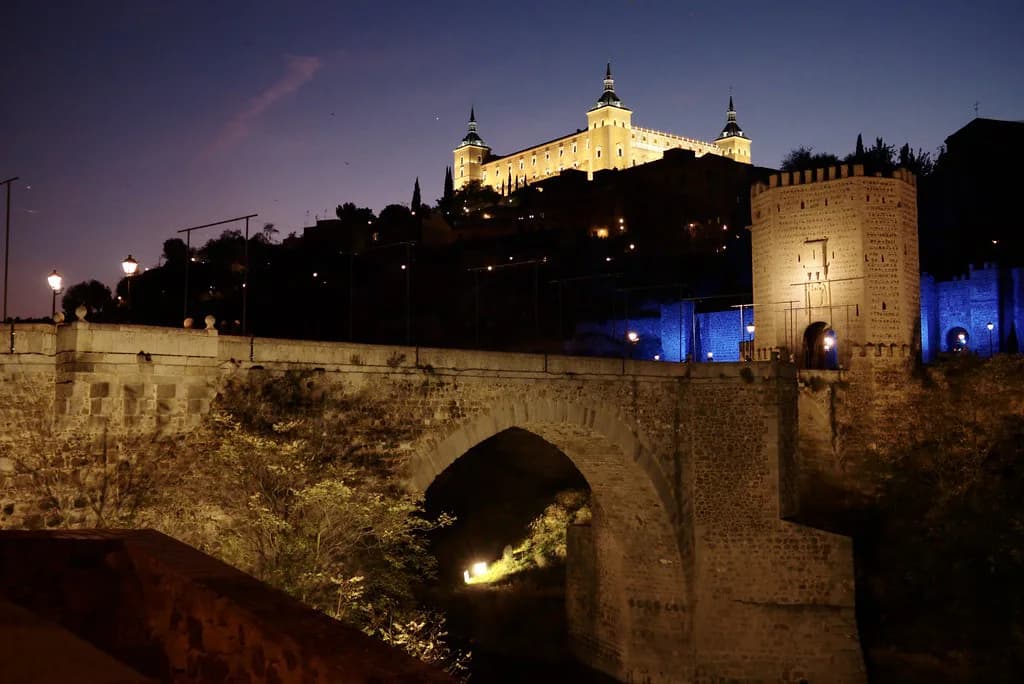
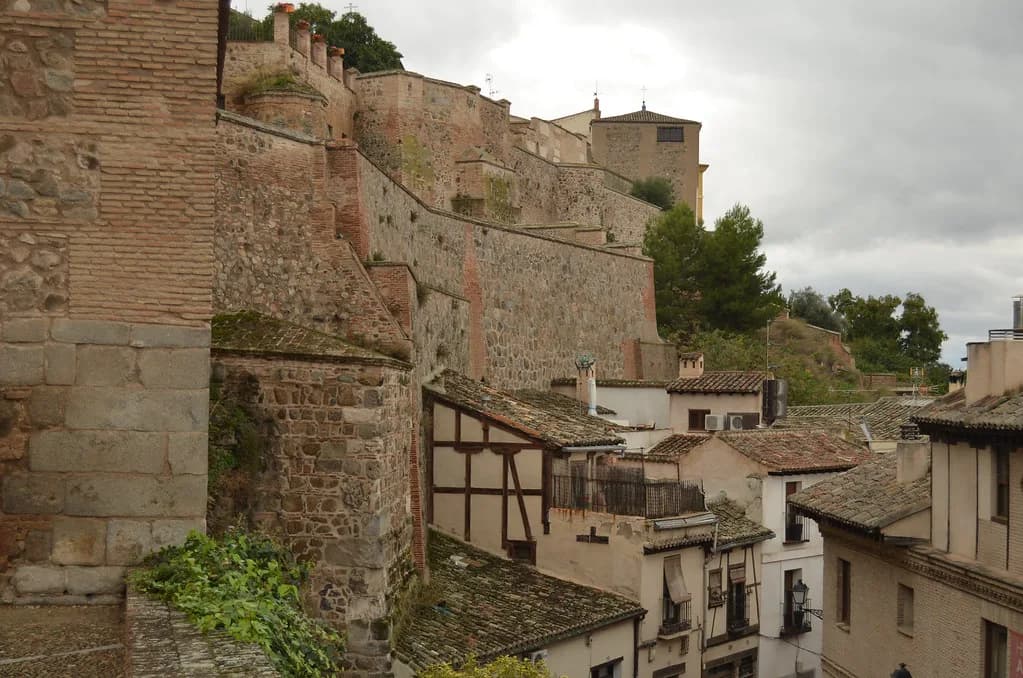
Toledo's walls and gates are largely intact, so you pass through them rather than around them. The Puerta de Bisagra is the most photographed, and the Alcántara bridge below the fortress gives you the classic shot of bridge and Alcázar together. All of this is free, which makes it a sensible filler between ticketed sights.
El Greco in Toledo: the Museo del Greco and the Burial of the Count of Orgaz
El Greco lived and worked in Toledo, and the city holds two essential stops for his work. The Museo del Greco occupies a recreated house with a collection of his paintings, and it is a quick, focused visit rather than a full afternoon; guides reported a small admission charge of around 3 euros, with free entry on Sundays and on Saturdays after 2pm.
The other is the Church of Santo Tomé, home to The Burial of the Count of Orgaz, one of his masterpieces. See both if you can, but if time is tight, choose Santo Tomé for the single painting and the Museo del Greco for context on the man and his house.
The Mirador del Valle and the Alcántara Bridge Viewpoints
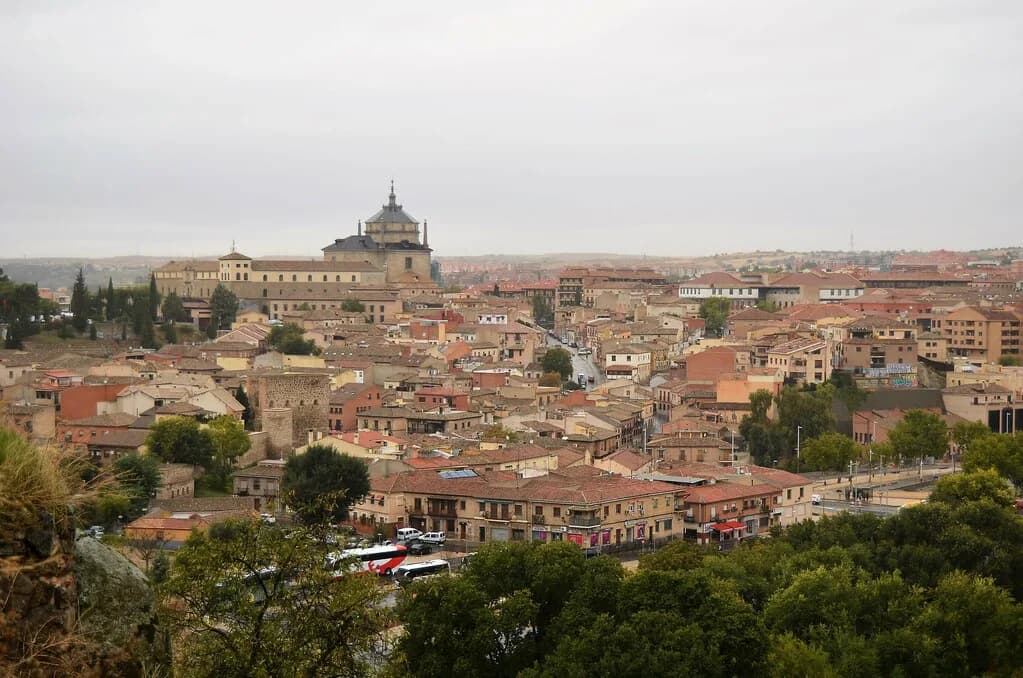
The Mirador del Valle is a string of viewpoints along the road on the far side of the Tagus, and it gives you the postcard silhouette of the city on its hill. Go in the afternoon when the sun lights the old town, and stay for dusk if you can, when the monuments are illuminated.
Closer in, the Alcántara bridge is a Roman crossing below the Alcázar with a view back up to the fortress, and the walk there takes minutes from the old town. For a sunset drink with a panorama, the Parador de Toledo on the hills outside the city has a terrace, reachable by taxi from Plaza de Zocodover.
Marzipan, Manchego and the Food of Castilla-La Mancha
Toledo eats like inland Castile: game, stews and cheese rather than seafood. Look for carcamusas, a stew of pork with tomatoes and peas, and partridge in various guises, from stew to terrine to tapas. Queso Manchego, the region's protected goat's cheese, turns up on most boards, and marzipan is the city's sweet signature, protected by its own designation.
Toledo's food is firmly Castilian, so the dishes to order are the stews, the game and the cheese rather than anything coastal; the city's sweet shops and cheese counters are part of the sightseeing. A small cheese museum near the cathedral sells local produce, and the pastry shops along the main streets are where the marzipan comes from.
El Trebol and the Restaurant Streets Around Calle Alfileritos
For a sit-down lunch, head to Calle Alfileritos, a street lined with bars and restaurants, many of them housed in old town houses with their original features intact. It is a short walk from the cathedral and the Plaza de Ayuntamiento, which makes it the natural lunch stop in the middle of a sightseeing day.
Tapas bar El Trebol is the pick for a casual lunch of tapas with local wines or craft beer, and its popularity means a queue at peak times. Eat properly at lunch, when the kitchen is at its best, and plan dinner for after 8.30pm, when Toledo's restaurants fill up.
For something more formal, the best restaurants in toledo cluster in the old town, and booking ahead helps at weekends. A plate of Manchego and a glass of local red is a fine fallback if you are eating between the Spanish meal hours.
A One-Day Plan with Timings That Fit Spanish Meal Hours
Arrive on a morning train from Atocha and walk up via the Safont escalators. Start at the cathedral as soon as it opens, then walk the ten minutes to the Alcázar for the military museum and the free library terrace. Both interiors deserve time, so pick your battles: the cathedral for art, the Alcázar for views and weapons.
Lunch on Calle Alfileritos between 1.30pm and 4pm, then spend the afternoon in the Jewish quarter with the Synagogue of El Tránsito and Santa María la Blanca. End with the Mosque of Cristo de la Luz and the gates, then take a taxi to the Mirador del Valle for sunset.
Two Days, an Overnight, and Whether to Add Barrancas de Burujón
With a second day, add the Museo del Greco, the Church of Santo Tomé and the convent district, where some convents sell sweets made by the nuns. Staying overnight lets you see the lit-up monuments and walk the old town after the day-trippers have gone, which is a different city entirely.
For a nature day, the Barrancas de Burujón, about 30 kilometres from Toledo, are orange cliffs cut by the Tagus into a meander, with a walk of around 10 kilometres along the rim. The Cabañeros national park, Spain's least visited national park, is another option for birdlife and easy riverside trails, but it needs a full day and a car.
Practical Trade-offs: Crowds, Church Fatigue and Ticket Bundling
Toledo's central streets are narrow and the main sights are close together, so crowds concentrate at the cathedral, the Alcázar and the Puerta de Bisagra. Go early or stay late, and use the free viewpoints and the river walk as breathing space. If churches start to blur, swap one for the Sephardic Museum or the Cromática Museum, with its painted instruments.
Ticket bundling is worth a look for the smaller sights. A combined wristband covering seven sites was reported at 14 euros, but it excludes the cathedral and the Alcázar, so it only pays off if you plan to visit several of the minor monuments. Otherwise, buy individual tickets for the two or three interiors you actually want.
Plan Your Visit
Toledo works best as a full day with an early start, or as an overnight that lets you see the old town after dark. Prioritise the cathedral, one synagogue and the Alcázar, then give the rest of the day to the walls, the bridge and the Mirador del Valle, which cost nothing and stay with you longest.
If Toledo is part of a wider Spanish trip, the same approach works in other cities: pick two or three headline sights, then let the streets and the meal times set the pace. The same logic applies to the things to do in Alicante, where a castle and a beach day compete for the same hours. Check museum opening days and cathedral ticket times before you travel, since these change through the year.
Explore more Toledo guides
Frequently Asked Questions
Is Toledo in Spain worth visiting?
Yes, if you care about layered history rather than a single headline sight. The old town has been a UNESCO World Heritage Site since 1986, and within a few minutes you can move between a Gothic cathedral with El Greco paintings, two medieval synagogues, a former mosque and a hilltop fortress. It is also about half an hour from Madrid by high-speed train, which makes it one of the easiest big days out in central Spain.
What should not be missed in Toledo?
The Cathedral of Saint Mary and its sacristy paintings, the Synagogue of El Tránsito with the Sephardic Museum, and the free view from the library terrace above the Alcázar. Add the Church of Santo Tomé for The Burial of the Count of Orgaz if El Greco is your reason for coming. Outside the walls, the Mirador del Valle gives you the classic view of the city.
How many days do you need to see Toledo?
One full day covers the cathedral, the Alcázar, the Jewish quarter and a viewpoint. Two days let you add the Museo del Greco, the convent district and a slower walk along the Tagus, and an overnight gives you the city after the day-trippers leave. Nature-lovers may want a third day for Barrancas de Burujón or Cabañeros.
Is Toledo walkable?
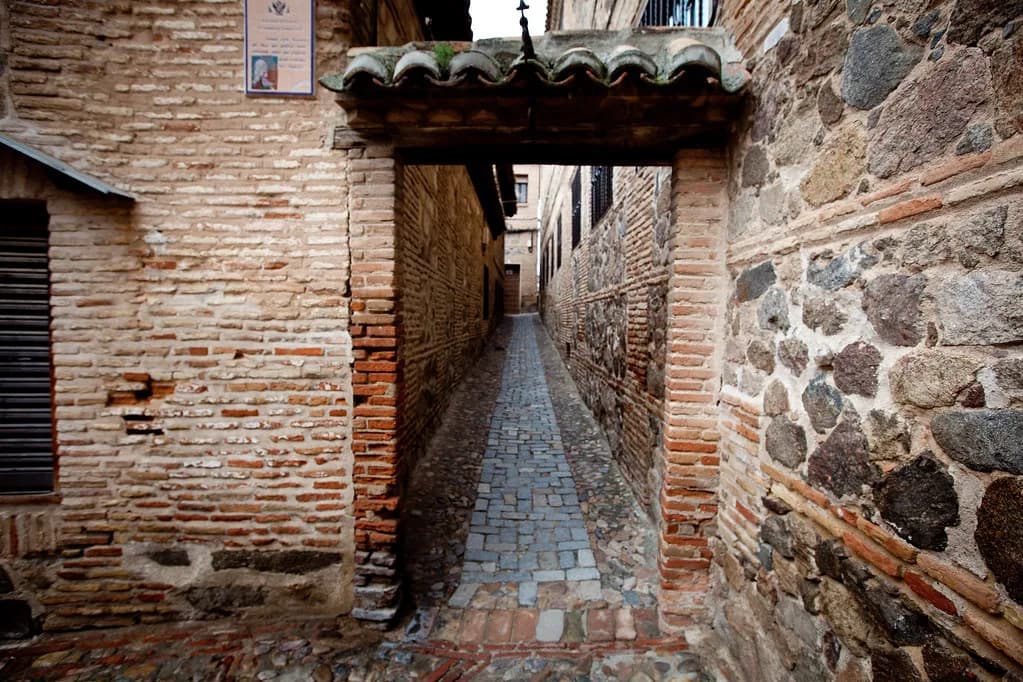
Yes, the old town is compact and best seen on foot, but it is built on a hill. The climb from the station takes 15 to 20 minutes, or you can take a bus to Plaza de Zocodover or use the Safont escalators in Plaza del Granadal. Inside the walls, the streets are narrow and cobbled, so wear shoes you can walk in all day.
What food is Toledo known for?
Carcamusas, a pork stew with tomatoes and peas, and partridge served in several ways, from stew to terrine. Queso Manchego, the region's protected cheese, appears on most menus, and marzipan is the city's signature sweet, also protected by a designation. Lunch is the main meal, served from about 1.30pm to 4pm, and dinner starts after 8.30pm.
Is Segovia or Toledo better?
They offer different days out. Toledo is larger and denser, with a cathedral, an Alcázar, two synagogues and a former mosque within a walled medieval centre; Segovia is smaller and known for its Roman aqueduct and castle. Toledo suits anyone who wants the city of three cultures and El Greco, while Segovia is quicker to cover on foot.
Sources
Notes for eating well in Spain
Optional updates to our guides.
You might also like
Continue reading
More guides you'll find useful