Menorca Markets: Market Days, Locations and What to Buy
Plan around Menorca's markets: morning street markets, evening artisan stalls and year-round food markets in Maó, Ciutadella, Es Mercadal and beyond.
On this page
Menorca's markets fall into three groups that travellers constantly mix up. Morning street markets are travelling stalls of clothes, sandals, leather bags and souvenirs that set up in a town square and pack away before lunch; summer evening markets are mostly artisan craft stalls with music, running from June into September; fresh food markets sell fish, produce and cheese all year. Decide which of the three you want, then match it to the day you are in that town. The same choice applies on other islands, so it helps to compare with the Alicante markets if your trip combines the two.
The practical consequence is that a market rarely fills a day on its own. A morning market in Maó or Ciutadella finishes around lunchtime, which suits a late Spanish lunch, while evening markets in Ciutadella or Es Castell start after 19:00 and work best after a proper dinner or as a pre-dinner wander. Build the rest of the day around beaches, the Camí de Cavalls or a harbour walk rather than expecting stalls to keep you occupied.
Morning street markets: the travelling stalls
These are the markets locals call a mercat ambulant, and the same stallholders rotate between towns through the week, so the stalls you miss in one square often reappear in another a day or two later. They sell seasonal clothing, leather goods, sandals, costume jewellery, ceramics and souvenirs, with beachwear and towels added in summer. Goods are basic rather than exceptional, so treat them as a browse and a way to see a town square rather than a shopping destination.
Maó's morning market fills Plaça Esplanada, roughly 50 metres from the main bus station, on Tuesdays and Saturdays year-round with an extra Sunday edition from 19 May to 15 September, running 08:30 to 14:00. Ciutadella's version takes over Plaça des Born, about 500 metres from the cathedral, on Mondays and Fridays year-round, from 09:30 to 13:30 in winter and 08:30 to 15:00 in summer. Both are easy to reach on foot from the centre, and both finish in time for lunch.
Smaller towns keep their own weekly rhythms. Es Castell holds its market on Plaça S'Esplanada on Tuesdays and Saturdays from 08:00 to 13:00, Alaior trades on Plaça des Ramal on Thursdays from 09:00 to 13:00, and Sant Lluís sets up on Pla de la Creu on Mondays and Wednesdays from 09:00 to 14:00. Es Mercadal's Sunday market runs from 09:00 to 14:00 between October and May. Check the day before you travel, because a wasted trip to an empty square is the most common market disappointment on the island.
One rule matters more than any other: counterfeit goods are illegal to buy or own in Spain, and fines for fake football shirts and similar items start at 100 euros. A bargain shirt on a stall can cost you far more than the shirt. Stick to locally made leather, ceramics and jewellery, where Menorca has a genuine craft tradition, and skip anything branded at a suspicious price.
Evening and night markets from June to September
Menorca's summer evening markets are the ones worth planning an evening around, running from early June into September in the main towns and a few resorts. They are mostly artisan: handmade jewellery, ceramics, leather bags, textiles and local food, often with live music and food stalls. Arrive after 20:00 for the best atmosphere, and bring cash because some stallholders do not take cards.
Ciutadella has the most concentrated choice, with nightly markets along the road down to the port and on Carrer de Pere Capllonch from 1 June to 30 September, roughly 19:00 to midnight on weekdays and until 01:00 on Fridays and Saturdays. Plaça des Born adds a market on Mondays and Fridays from 1 July to 14 September, plus Wednesdays in July and August. Pair one with a walk through the old town and a late dinner rather than treating it as a shopping trip.
In Maó, a market runs every Tuesday in July and August at Plaça del Calme and Plaça d'Espanya by the old fish market from 20:00 to 23:00, with music in the streets. A second set of stalls operates daily from 30 June to 15 September at the bottom of the Costa de ses Voltes steps, also 20:00 to 23:00. Elsewhere, Es Mercadal's night market spreads across Plaça Pare Camps, Carrer Nou and Carrer Major from June to September with more than 90 stalls, and Es Castell's Monday market above the Cales Fonts harbour in July and August combines craft stalls with the harbour's bars.
Evening markets run in high summer, and the beach-resort versions are smaller and more souvenir-heavy than the town markets. If your trip falls later in the year, the craft stalls thin out considerably once September ends, so plan a town rather than a resort if shopping is the point. Menorca in September still carries warm sea temperatures and a quieter feel, but the night-market calendar is contracting by then.
Fresh food markets: fish, produce and cheese
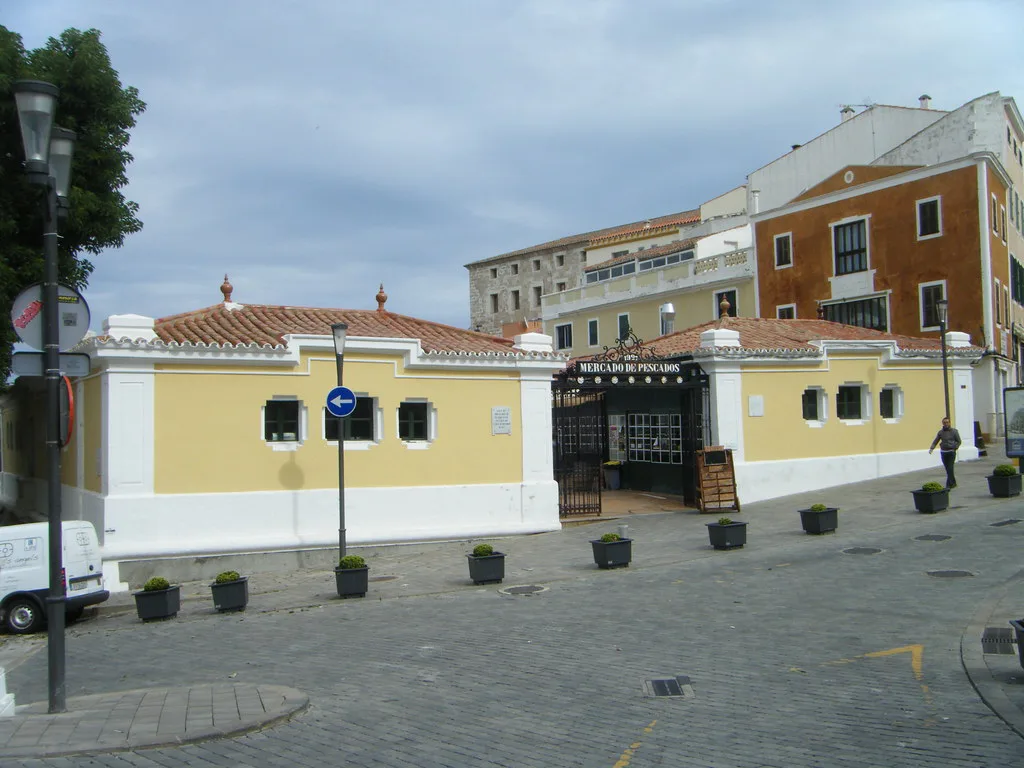
The island's food markets are the ones to visit if you care more about lunch than luggage. Maó's Mercat de Peix and Ciutadella's municipal market, known locally as Sa plaça des Peix, are known for fish and seafood landed around the island, alongside fresh produce, Mahón-Menorca cheese and cured sausages. Go in the morning, when the counters are fully stocked and the atmosphere is at its best.
Beyond the fish halls, weekly producers' markets fill specific squares. Maó's AgroMaó farmers' market runs along Carrer Nou and Carrer S'Arravaleta every Sunday from 09:00 to 14:00, while Ciutadella's mercat agrari sets up at Plaça de la Llibertat by the fish market on Wednesdays and Saturdays from 08:00 to 14:00. Ferreries holds its farmers' market on Plaça d'Espanya on Saturdays from 09:00 to 13:00, with music added between June and September. These are where you buy picnic supplies: cheese, sobrasada, tomatoes, bread and ensaimada.
A Sunday in Menorca is not a dead loss for markets. Maó's Plaça Esplanada market runs on Sundays from mid-May to mid-September, the AgroMaó farmers' market on Carrer Nou is a Sunday fixture, and Es Mercadal's Sunday morning market operates from October to May. If your visit falls on a Sunday outside those summer weeks, head to Maó for the farmers' market and build the rest of the day around the port and old town.
What to buy: avarcas, leather, cheese and ceramics
Menorca's genuine shopping strengths are leather and shoes. Avarcas, the traditional Menorcan sandal, are made locally, and the island has a long history of leather production that supplies French and German labels; you will find better quality and unfamiliar brands in small town shops than in resort stalls. Ferreries is known for shoe outlets where you can watch avarcas being made, which makes a useful wet-weather stop.
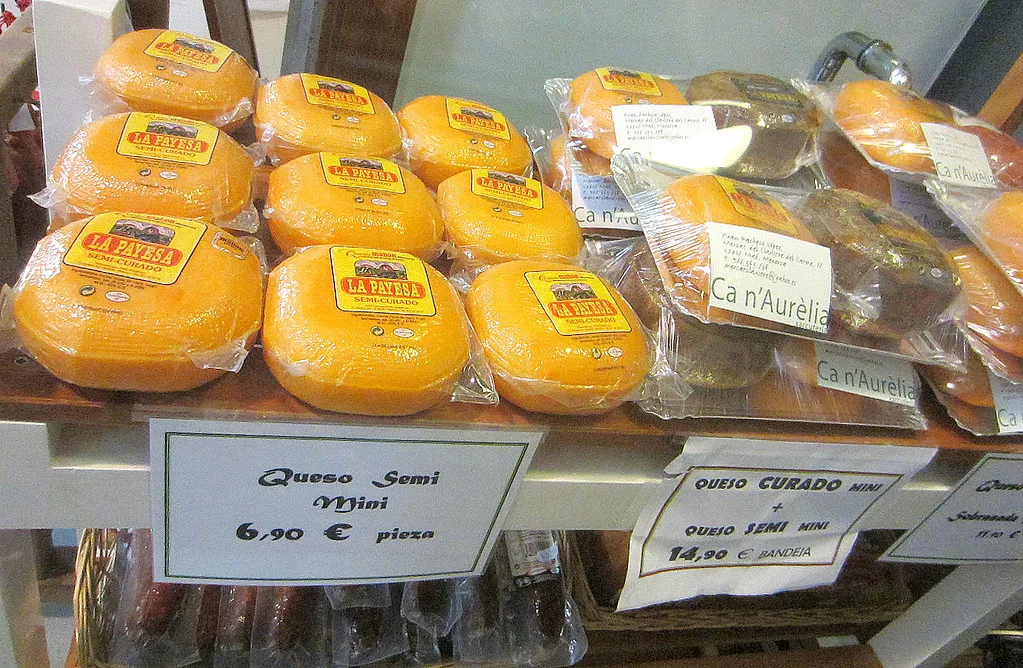
Food is the other reliable purchase. Mahón-Menorca cheese carries its own protected designation, and Alaior is the centre of the island's cheese making, with shops where you can taste and buy before committing to a wedge. Look also for sobrasada, the soft cured sausage, and ensaimada pastries, which are best bought in a bakery in Es Mercadal or Maó rather than from a souvenir stall.
If ceramics and handmade jewellery are your priority, the evening artisan markets beat the morning travelling stalls on quality and variety. The morning markets do carry ceramics, but much of it is generic; the craft markets in Ciutadella, Maó and Es Castell lean towards genuinely handmade pieces and small local producers. Budget accordingly, and remember that cash still matters at some stalls.
Fitting a market into a Spanish meal day
Spanish meal times shape the market day neatly. Morning markets run from roughly 08:30 to 14:00, which puts you in a town square just as restaurants start serving lunch from about 13:30; shop, then sit down as the stalls pack away. Evening markets usually open between 19:00 and 20:00, which is before most restaurants get going, so use them as a pre-dinner wander or visit after an early dinner around 20:30.
In practice, a morning market pairs well with a town breakfast, a look at the old quarter and a long lunch. Ciutadella's Plaça des Born market on a Monday or Friday morning leaves the afternoon free for the harbour and the cathedral, and Maó's Tuesday or Saturday market puts you next to the bus station for a cheap onward trip. Evening markets in Es Castell work in reverse: harbour bars first, then stalls, then a late drink.
If markets sit low on your list, be honest about that and use the time for the coast instead. Menorca's appeal is beaches and the Camí de Cavalls as much as shopping, and a day spent chasing stalls you do not really want is a day lost to a cala. Treat any market as a bonus on the way to somewhere else, not the main event of a short break.
Mistakes to avoid at Menorca markets
The biggest mistake is assuming the same market runs every day. Most morning markets operate one or two days a week, some only in summer, and the beach-resort markets are smaller, more souvenir-driven versions that vary by month. If a market is the reason for a trip to a town, confirm the day and hours with the town hall or the island's tourism site before setting out.
Second, do not treat counterfeit goods as a harmless bargain: buying fake branded clothing is illegal in Spain and fines start at 100 euros. Third, carry cash, since some artisan stalls do not accept cards. Fourth, remember that the same travelling traders turn up in different towns through the week, so missing a market in one place often means catching it elsewhere with a little planning.
Finally, check the day of your arrival. Arriving on a Saturday afternoon in October means the morning market has gone and the evening craft markets are finished for the season, leaving food markets and shops as your options. Menorca in October is quieter and cooler, which suits walking and the food halls far better than craft browsing.
One day, a rainy day or a family in tow
With one day on the island, choose the town rather than the market. On a Tuesday or Saturday morning you can walk Maó's Plaça Esplanada market, the fish market and the old town in one loop, then sit down to lunch. In the evening between June and September, Ciutadella's port markets plus a harbour dinner make the strongest single evening, and you can build the earlier part of the day around the old town and coast. One flexible day also rules out the beach resorts, where the summer stalls are thinner and more souvenir-driven.
Time your visit for the first half of July and you get the full evening calendar plus Menorca in July's long, warm nights, with the Ciutadella port stalls running nightly and Maó's Tuesday market in full swing. The island's summer fiestas add crowds in the towns, so book dinner ahead on fiesta evenings and treat the market as a pre-dinner wander rather than the whole evening.
For a rainy day, the food halls beat outdoor stalls: Maó's Mercat de Peix and the Claustro del Carmen market keep you under cover, and Ferreries' shoe outlets give you somewhere dry to try avarcas. Families do best with evening markets, where there is music, food and space for children to move, and Es Castell's harbour setting means you can retreat to a bar when patience runs out.
If you have a week, spread the markets out rather than cramming them: a Monday morning in Ciutadella, a Tuesday in Maó, a Wednesday in Sant Lluís and an evening in Es Mercadal or Alaior. That rhythm follows the island's actual timetable and leaves the best hours of each day for beaches, coves and the Camí de Cavalls.
Plan Your Visit
Build your market plans around the day of the week and the type of market you actually want. Morning markets: Maó on Tuesday or Saturday; Ciutadella on Monday and Friday; Alaior on Thursday; Sant Lluís on Monday and Wednesday; Es Mercadal on Sunday in winter. Evening artisan markets: Ciutadella and Maó from June to mid-September, with Es Castell and Es Mercadal adding music and harbour atmosphere.
Confirm the current day and hours with the town hall or the Balearic tourism site before you travel, since summer schedules shift year to year, and carry cash for the stalls that need it. With those two things in hand, a market becomes an easy anchor for a town morning or a harbour evening rather than a gamble on an empty square.
Explore more Menorca guides
Frequently Asked Questions
What days are markets in Menorca?
It depends on the town and the season. Maó's main square market runs on Tuesdays and Saturdays year-round, with Sundays added between mid-May and mid-September; Ciutadella trades on Mondays and Fridays; Alaior on Thursdays; Sant Lluís on Mondays and Wednesdays; and Es Castell on Tuesdays and Saturdays. Summer evening markets run on different days again, usually nightly or several nights a week between June and September.
Is there a market in Menorca on a Sunday?
Yes. Maó's Plaça Esplanada market runs on Sundays from mid-May to mid-September, and the AgroMaó farmers' market on Carrer Nou runs every Sunday morning. Es Mercadal holds a Sunday morning market between October and May. Outside those, many town markets are weekday or Saturday affairs.
What can you buy at Menorca markets?
Morning street markets sell clothing, leather bags, sandals, costume jewellery, ceramics and souvenirs, with beachwear added in summer. Evening artisan markets lean towards handmade jewellery, ceramics, textiles and local food. Fresh food markets and farmers' markets sell fish, seafood, produce, Mahón-Menorca cheese, sobrasada and pastries such as ensaimada.
Are Menorca night markets worth visiting?
Yes, if you are on the island between June and September. They combine artisan stalls, local food, live music and harbour or old-town settings, and they work well as a pre-dinner wander or after an early dinner. Outside that window they largely stop, so plan a town visit rather than a resort one if craft shopping matters to you.
Where are the markets in Menorca?
Most towns have one. The main concentrations are in Maó (Plaça Esplanada, Plaça del Calme), Ciutadella (Plaça des Born and the port streets), Es Castell (Plaça S'Esplanada and Cales Fonts), Es Mercadal (Plaça Pare Camps and Carrer Nou), Alaior (Plaça des Ramal), Sant Lluís (Pla de la Creu) and Ferreries (Plaça d'Espanya).
Is it safe to buy branded goods at Menorca markets?
Buying counterfeit goods is illegal in Spain, and fines for fake branded clothing such as football shirts are set out in the official penalty schedule. Stick to locally made leather, avarcas, ceramics and food, where the island has a genuine craft tradition, and avoid anything branded at an implausibly low price.
Sources
Notes for eating well in Spain
Optional updates to our guides.
You might also like
Continue reading
More guides you'll find useful