Alicante Markets: Market Days, Food Halls and Flea Finds
Plan around Alicante's market days: the Central Market food hall, Babel and Gran Vía flea stalls, plus Sunday and Santa Pola markets with opening times.
On this page
Alicante's markets are a morning business: most open around 8am and pack up by 2pm, so a late lunch means missing them entirely. Decide which day you are in the city, then match it to a market rather than the other way round. The Central Market is the food hall to build a morning around, while the street and flea markets reward anyone hunting second-hand goods, records or antiques.
If your trip is short, sort the city's markets by day and work backwards. Babel and Gran Vía–Teulada both trade on Thursdays and Saturdays, El Cisne adds Sundays, and the provincial markets at Santa Pola, Muchavista, El Campello and Altea each fall on a different morning. This guide is part of our wider planning on how many days in Alicante you actually need, which helps you see how many market mornings fit.
Why Alicante markets suit a morning, not an afternoon
Spanish lunch starts around 1:30pm and runs to 4pm, and Alicante's markets close before that window opens. Babel, Gran Vía–Teulada, Muchavista and Altea all finish at 2pm, El Campello at 1pm, and the Central Market shuts at 14:30 on weekdays. Treat a market as the first half of the day: shop, then eat a proper lunch nearby once the stalls are packed away.
That rhythm also decides your transport. Several out-of-town markets advertise free parking, which suits a hired car, while the city-centre markets sit on bus and tram routes and need no vehicle at all. Go early enough to browse before the heat builds, and keep the afternoon for the beach or a castle visit.
Alicante Central Market: the city's food hall in a 1922 building
The Central Market is the one market in Alicante that is worth a visit for the building alone. Inaugurated in 1922 and designed by Francisco Fajardo Guardiola and Juan Vidal Ramos, it is a Valencian Art Nouveau structure of rolled-steel pillars and trusses that flood the three basilica-style naves with natural light. Stalls inside sell fresh local produce, which makes it the city's gastronomic heart rather than a souvenir stop.
Plan around the opening hours: Monday to Friday 07:00–14:30, and Saturdays and public holiday eves 07:00–15:00. It sits at Avenida de Alfonso X El Sabio, 10, served by several city bus lines and the Mercado tram stop, so it slots easily into a morning in the centre. Come before 1pm to see the stalls at full tilt and still make a 1:30pm lunch.
The rear of the market opens onto Plaza 25 de Mayo, known as the Plaza de las Flores for its flower stalls. The square carries a plaque commemorating the more than 300 people killed when the market was bombed on 25 May 1938 during the Spanish Civil War. It is a two-minute pause that gives the building a weight most food halls lack.
Babel Street Market: second-hand and vintage on Thursdays and Saturdays
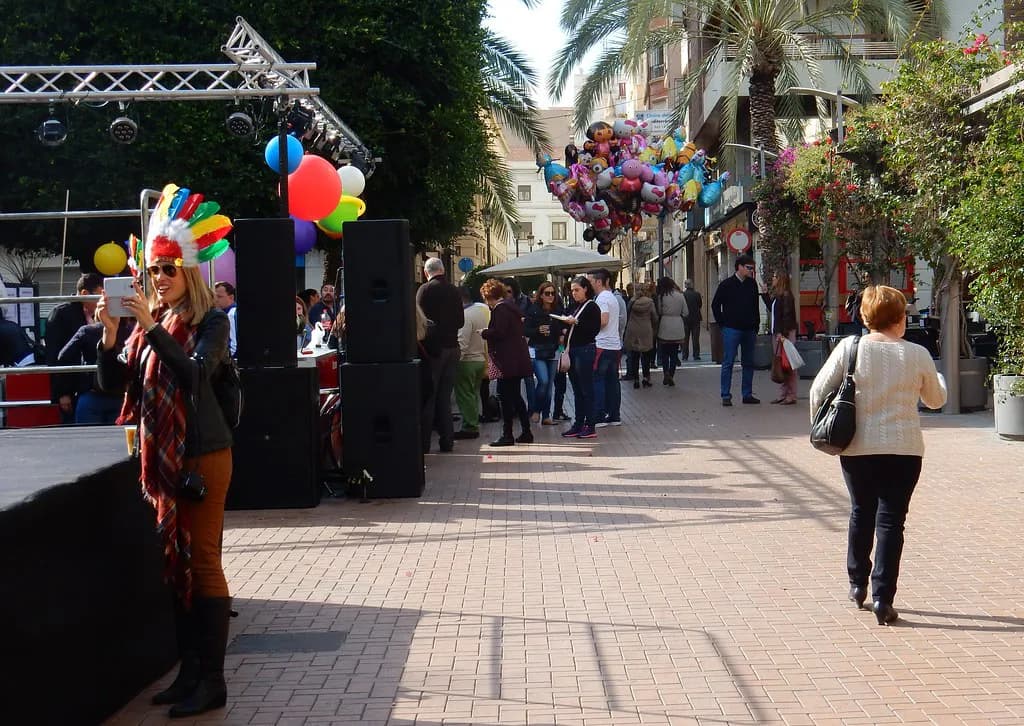
Babel is the best-known generalist street market in Alicante, with 538 stalls spread along the streets of Pardo Gimeno, Asilo and Guillén de Castro. Expect books, LPs, bicycles, teapots and handicrafts rather than produce: this is where you rummage for second-hand finds. It runs Thursdays and Saturdays from 8am to 2pm, except on public holidays, when it moves to the day before.
The public-holiday shift catches visitors out, because a Thursday or Saturday holiday pushes the market back a day and leaves the usual streets empty. Check the Spanish holiday calendar for your dates before you set an alarm. If you want a separate morning of shops and food rather than stalls, see our guide to shopping in Alicante for the centre's covered alternatives.
Gran Vía–Teulada Street Market: smaller, with parking and bars nearby
Gran Vía–Teulada is the smaller, easier sibling of Babel, with 65 stalls on Calle Teulada selling second-hand goods, antiques, fruit, vegetables and other food. It runs Thursdays and Saturdays from 8am to 2pm, except on public holidays, when it is held the day before. Ample parking is the draw here, along with bars and other dining options close by for a post-market lunch.
Pairing it with Babel makes a full Thursday or Saturday morning because both trade on the same days, though the two are in different parts of the city. Choose Gran Vía–Teulada if you have a car and want to be in and out quickly; choose Babel if you want the bigger selection and don't mind the crowds.
El Cisne Flea Market: antiques with a bar and restaurant area
El Cisne is one of Alicante's most popular flea markets, held beside the antique shop of the same name at Avenida de la Comunitat Valenciana number 67. It trades on Thursdays, Saturdays and Sundays from 9am to 2pm, which makes it the city market to know if you are in Alicante over a weekend. Antiques and relics fill the stalls, and a separate area of bars, cafés and restaurants serves Spanish and international food.
The Sunday opening is what sets it apart from Babel and Gran Vía–Teulada, so a weekend trip can include a market morning without sacrificing a weekday. Arrive near 9am for the pick of the antiques, then eat in the market's own restaurant area rather than hunting for a table elsewhere.
Sunday markets around the province: Polop, Elche and Alcoy
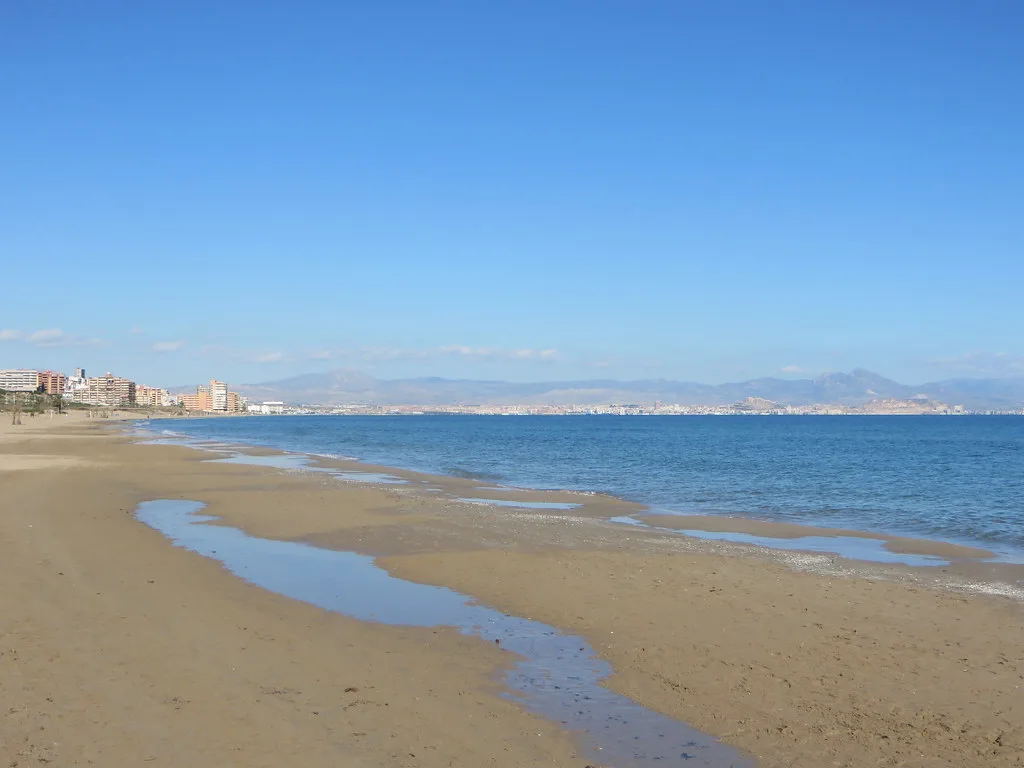
Sunday is the strongest market day outside the city. The Polop second-hand and antiques market fills more than 400 stalls at the Plá de Polop industrial estate from 8am to 2pm, while Elche's generalist flea market runs around 163 stalls at the Martínez Valero Stadium from 9am to 2pm, except when there is a match. Both reward a car and an early start.
Alcoy is the specialist's choice: a tiny market of barely 10 stalls at Plaça dels Dins on the first Sunday of every month from 9am to 2pm, where stamps, coins, old letters and postcards change hands. Small does not mean cheap or dull, since the items traded are sometimes of real value. It suits collectors more than casual browsers.
For something different, Villajoyosa holds a medieval market in its historic centre on the last weekend of April, from 11am to 10pm, specialising in costume jewellery and leather accessories alongside silver and gold jewellery, soaps and pottery. It is a seasonal event rather than a weekly market, so match it to your dates before planning a day around it.
Santa Pola: the Monday and Saturday food market
Santa Pola's generalist and food market is the biggest food-focused option on this stretch of coast, with around 440 stalls, most of them selling food, plus costume jewellery, clothing and accessories. It runs Mondays and Saturdays from 8am to 2pm, except on public holidays, on an outdoor site between the Albacete and Portus Ilicitanus avenues. Go for cured meats, cheese and produce, and bring a bag.
Santa Pola also hosts a TerraGran organic food market every Wednesday in summer until 31 August, selling local fruit, vegetables, olives, wine, bread, oils and cheeses. That Wednesday slot is seasonal, so it is not a year-round fallback if you miss the Monday or Saturday market.
Muchavista and El Campello: coastal markets worth a bus ride
Muchavista, on Avenida Elda in San Juan de Alicante, runs Fridays and Sundays from 8am to 2pm with free parking. The mix is unusually broad for a street market: jewellery, household textiles, footwear, nuts and dried fruits, cured meats, vegetables and antiques, with bars and takeaway food places nearby. It is the easiest coastal market to combine with a beach afternoon.
El Campello holds its market on Wednesdays from 8am to 1pm, except public holidays, in the Plaza Saint Christol Lez Ales, with about 180 stalls and free parking. The earlier finish is the trade-off: you need to be there by mid-morning to see it properly. Fruit, bags, clothing, jewellery, plants and household goods are the staples.
Altea: Tuesday markets in the old town
Altea's generalist market brings about 300 stalls to Calle Filarmónica every Tuesday from 8am to 2pm, all year round. Handicrafts, clothing, footwear, flowers and plants sit alongside local pickles and a large section of organic food. The same morning, between Calle Camino del Algar and the Plaza del Ayuntamiento, the Mercadillo del Algar specialises in clothes, shoes and leather goods, so one trip covers two markets.
Altea is a day out rather than a stop-off, so give it a full morning and stay for lunch in the old town afterwards. If your dates fall in high summer, the heat and crowds make an 8am start worthwhile, and our notes on Alicante in July explain what else the coast is like that month.
Seasonal and occasional markets: summer stalls, Naturalia and Ibi
Some markets exist only for part of the year, and mistaking them for weekly fixtures wastes a morning. Santa Pola's Naturalia, a mineral, fossil, insect and shell market of about 20 stalls, runs from 3 to 18 August next to the Castle, open daily from 6pm to 1am. Santa Pola's traditional summer street markets fill Plaza Castilla and the Plaza Maestro Moisés Davia by Playa Lisa daily from 10am to 2pm and 6pm to 1am, from the end of June to 1 September.
If you are in the region in August, these evening stalls work well after a beach day, since they open when the daytime markets have long closed. Our guide to Alicante in august covers how the month behaves on the Costa Blanca, and september is a calmer alternative if you want the markets without the peak-season crush.
Ibi's collectors' market is a different beast: a toy repair and collectors' market held in a town of toy factories including Famosa, running for more than 50 years, with toys and parts dating from before 1980. It takes place on the third weekend of October from 10am to 9pm. Time a visit to that weekend if vintage toys interest you, and use the rest of the day for the town's industrial heritage.
Practical trade-offs: early starts, holiday shifts and cash
The single most useful habit is to check the day before you go. Babel, Gran Vía–Teulada, El Campello and Santa Pola's general market all shift or skip on public holidays, and the rule differs between them: some move to the day before, others simply do not trade. Elche's market skips match days at the Martínez Valero Stadium. Confirm the current schedule with the market or the town's tourist office if your dates fall on a holiday.
Car-free visitors should favour the city markets and Santa Pola, which sit on regular bus and tram routes, while a hired car opens up Polop, Altea, El Campello and Muchavista without a long walk. Carry cash for the smaller stalls, since card readers are far from universal among casual traders. The trade-off is simple: a car buys you range, and the city buys you convenience.
If you are weighing how to spend a short break, a market morning pairs neatly with an afternoon at the beach or the castle. Our one day in alicante plan shows how to fit both, and the free things to do list covers the rest of a cheap day. Market browsing costs nothing beyond what you buy, which makes it a good anchor for a budget day.
What to eat around the markets
The Central Market is the place to assemble a picnic or a late breakfast from local produce: cured meats, cheese, olives, bread and fruit, bought before the 14:30 close on weekdays. Eat at a counter nearby rather than at the stalls, and keep lunch to Spanish hours, from 1:30pm. For a full restaurant meal after a market, look for the bars clustered near Gran Vía–Teulada, El Cisne and Muchavista.
If markets are a habit, our guides to girona markets and ibiza markets cover two more Spanish destinations where food and flea stalls anchor a morning. Both follow the same rule: go early, eat late, and check the day before you travel.
Plan Your Visit
Alicante's markets reward a little planning: the Central Market for produce and architecture, Babel and Gran Vía–Teulada for second-hand finds on Thursdays and Saturdays, El Cisne for a Sunday, and Santa Pola or Altea for a day out of the city. Pick the market that matches your dates rather than rearranging your whole trip around one.
Leave the afternoon free for the beach or a castle visit once the stalls have gone, and keep lunch to Spanish hours. Confirm current days and any holiday changes before you set out, and carry cash for the smaller traders.
Explore more Alicante guides
Frequently Asked Questions
What day is market day in Alicante?
There is no single market day: the Central Market is a daily food hall, Babel and Gran Vía–Teulada trade on Thursdays and Saturdays, El Cisne adds Sundays, and out-of-town markets such as Santa Pola and Altea fall on different mornings. Match your dates to the market that suits you.
Is there a market in Alicante on Sunday?
Yes. El Cisne flea market runs on Thursdays, Saturdays and Sundays from 9am to 2pm near the antique shop of the same name. Outside the city, Polop, Elche and Alcoy hold Sunday markets, with Alcoy limited to the first Sunday of each month.
What time do Alicante markets open and close?
Most run from 8am or 9am until 1pm or 2pm, so they are a morning activity. The Central Market follows its own hours, opening early and closing in the early afternoon on weekdays and slightly later on Saturdays and public holiday eves.
Where is Alicante Central Market and when is it open?
It stands at Avenida de Alfonso X El Sabio, 10, in the city centre, with bus and tram stops nearby. It opens Monday to Friday 07:00–14:30 and Saturdays and public holiday eves 07:00–15:00.
What are the markets in Santa Pola?
Santa Pola has a large generalist and food market on Mondays and Saturdays from 8am to 2pm, a summer organic market on Wednesdays until 31 August, evening summer stalls in Plaza Castilla and by Playa Lisa, and the Naturalia mineral and fossil market in August.
Which Alicante market is best for second-hand and antiques?
For the city, Babel and El Cisne are the strongest for second-hand goods and antiques. Further out, Polop has more than 400 stalls of second-hand goods and antiques, and Alcoy suits stamp and coin collectors on the first Sunday of the month.
Are Alicante markets open on public holidays?
Several are not. Babel, Gran Vía–Teulada, El Campello and Santa Pola's general market shift to the day before a public holiday or skip it altogether, so confirm the schedule with the market or the local tourist office if your dates fall on a holiday.
Sources
Notes for eating well in Spain
Optional updates to our guides.
You might also like
Continue reading
More guides you'll find useful