
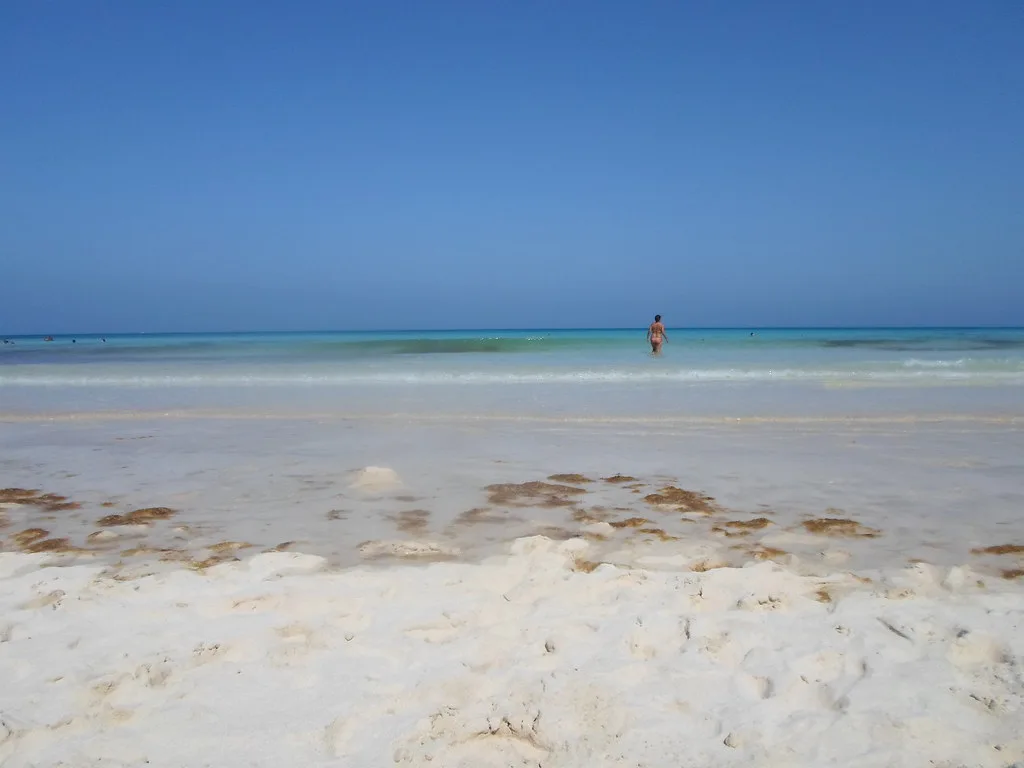
Caleta de Fuste: a resort built for easy days in Fuerteventura
Caleta de Fuste is the purpose-built resort on Fuerteventura's east coast, laid out with families in mind and stocked with shops, bars and restaurants rather than a historic centre. It is also known as El Castillo, so a map or booking site may use either name. Treat it as a base for easy beach days and island day trips, not as a place to go looking for old Canarian streets.
The trade-off is straightforward: you get a wide beach, watersports and everything within a short stroll, and in exchange you give up the whitewashed-town atmosphere of the north and the big dune scenery near Corralejo. Whether that bargain works depends on how much you plan to leave the resort, and our things to do in fuerteventura guide shows what those days out north and south actually look like.
Caleta de Fuste in a nutshell
Caleta de Fuste sits in the municipality of Antigua on Fuerteventura's eastern shore, and it was built as a resort rather than grown from a fishing village. That origin shows in the layout: a beachfront core, a dense band of shops, bars and restaurants, and holiday accommodation filling the streets behind. Come expecting convenience and a family rhythm, and the place makes sense.
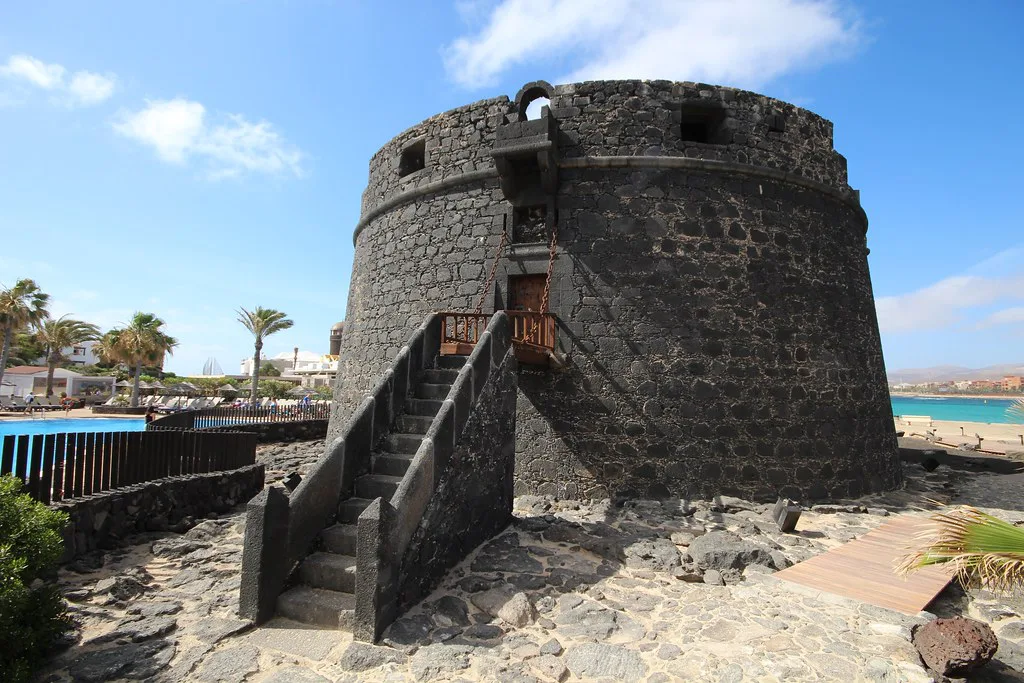
The resort's other name, El Castillo, comes up constantly in listings and on maps, so match the two before booking a transfer or hunting for your hotel. The eastern position also puts it roughly midway along the island, which is the practical argument for staying here: day trips can run north or south without committing to one end.
For the wider island picture, our guide to the Fuerteventura Neighborhoods sets out how the northern, central and southern bases compare.
Who the resort suits and who it does not
Caleta de Fuste fits families with young children, couples who want a pool-and-beach holiday with restaurants on the doorstep, and anyone who would rather not drive every evening. The beach is wide, the resort is compact, and sailing, diving and windsurfing are part of what the place is known for.
It does not suit travellers chasing authentic island life, big surf, or the volcanic drama of the south. If you want a traditional town with a working harbour, a northern base such as Corralejo, Fuerteventura is the better fit, and the Jandía peninsula around Morro Jable, Fuerteventura gives you long wild beaches instead. Choose between them before you book flights rather than after.
The beach and the water
The resort's beach is the centre of the day here: wide, sandy and built for swimming and lounging rather than spectacle. Sailing, diving and windsurfing all feature among the activities the resort is known for, so equipment and tuition are part of the local scene. For a change of scene, the protected dunes and the long Grandes Playas begin a short drive north around the Parque Natural de Corralejo.
Wind is the thing to plan around on this coast. Fuerteventura's steady breeze is what makes windsurfing and kitesurfing so good, and it is also what can make a beach day feel cool once you are out of the sun. Pack a light windbreaker for the evening and check the wind forecast before committing to a boat trip or a long beach day.
A short boat hop from Corralejo reaches the Islote de Lobos nature reserve, a small unspoiled island with valuable habitats and no accommodation, which the official tourism site says can be explored in a few hours on a same-day round trip. It makes a half-day contrast to the resort beach, and you return to your own bed the same evening.
Shops, bars, restaurants and the evening
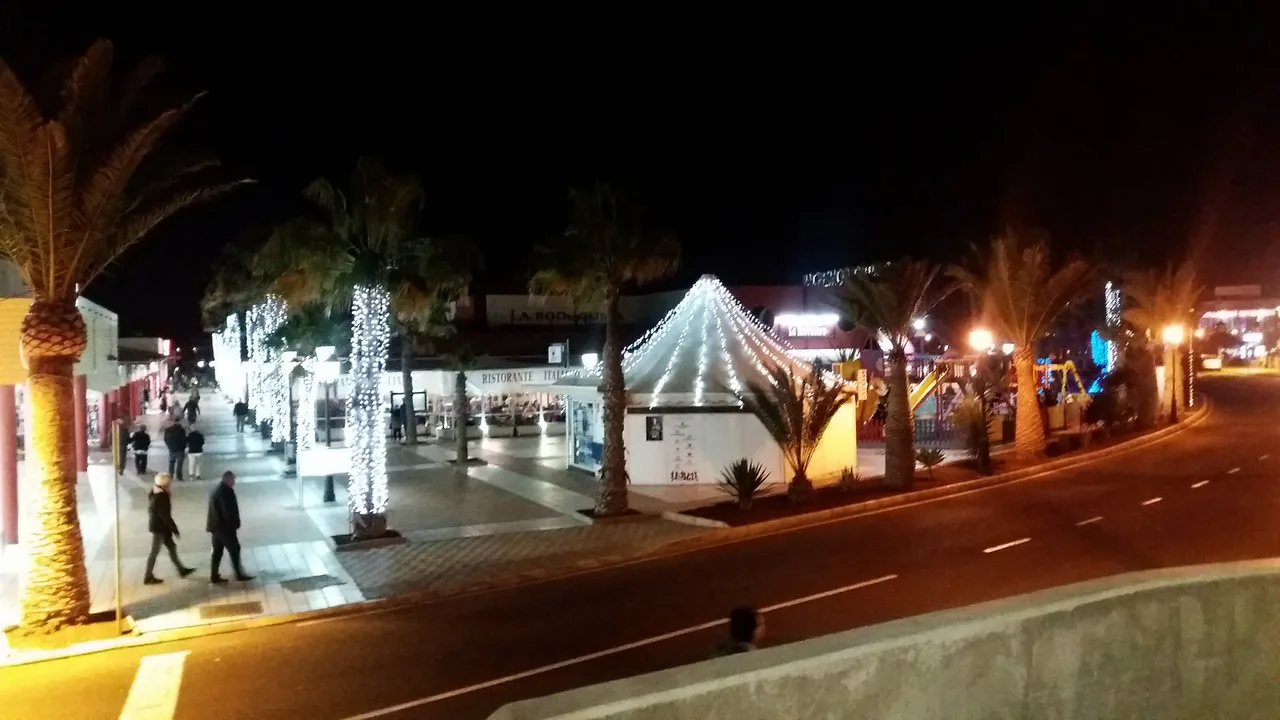
The resort is built around eating and shopping: the destination is described as having shops, bars and restaurants galore, so you will not struggle to find somewhere for dinner. Spanish meal times still apply if you want them — lunch from about 1:30pm and dinner from around 8:30pm — though resort kitchens often run earlier for families.
Book half board or self-catering according to how much you want to eat out, and walk the strip once before committing to a favourite. Menus are posted at the door, so compare before sitting down. For a more Spanish evening, the towns of the interior and the south are a drive away rather than a stroll.
Where to stay in Caleta de Fuste
Accommodation here is overwhelmingly holiday hotels and apartments aimed at families and package travellers, which is exactly what the resort was designed for. Book on the basis of distance to the beach and whether you want a pool, since the streets behind the front are dense and the walk to the sand varies. Package operators list the resort's hotels alongside flights and transfers if you want everything in one booking.
Staying centrally is the resort's real selling point: RandomTrip notes that the centre of the island, including Caleta de Fuste, is almost equidistant from the north and the south, which lets you decide each morning whether to drive up to the dunes or down to Jandía. If you would rather split the holiday, book a few nights in the north around Dunas de Corralejo and the rest in the south.
Getting there and getting around
Most visitors arrive through Fuerteventura's airport and transfer by road to the resort, and package bookings usually bundle the transfer. A car is the real decision: the island stretches almost 100 kilometres from north to south, and RandomTrip recommends renting a car as the best way to get around and suggests dividing a longer stay between north and south. Without one you are limited to the resort and organised excursions.
Public buses on the island are workable but thin compared with Gran Canaria or Tenerife, so build your plans around a hire car if you want the interior and the wild beaches. Ask the rental company before taking a car on a ferry to Lanzarote, and check that your insurance covers the crossing.
Day trips from the resort
The centre of the island holds the historic inland village of Betancuria and the fishing hamlet of Ajuy with its caves, both reachable as a loop by car. The drive itself is the point: arid plains, windmills between winding roads and small towns that feel nothing like the resort strip. If inland villages appeal more than resort streets, our things to do in fuerteventura guide rounds out the rest of the island's highlights.
Southwards, the Jandía peninsula delivers the big scenery. Playa de Cofete runs for 12 kilometres beneath mountains, reached by a rough dirt track, and the Degollada Agua Oveja viewpoint at 230 metres gives you the view over it. Drivers should be comfortable on unsurfaced roads before setting out, and our things to do in fuerteventura guide weighs this wild southern beach against the island's easier day trips.
North of the resort, the Corralejo dunes form the largest sand field in the Canary Islands, running for more than ten kilometres beside the coast road and covering over 2,600 hectares. Combine the dunes with lunch in Corralejo itself, where the main avenue carries the shops, restaurants and bars. If you are weighing whether to base yourself up here rather than in the resort, our things to do in fuerteventura guide covers the dunes and beaches in more detail.
If you want a full guide to the island's sights before you commit days to any of these, the Fuerteventura Attractions overview maps out the choices.
Honest trade-offs
Caleta de Fuste's convenience has a price in atmosphere. This is a purpose-built resort, not an old Canarian town, so the streets are designed for holidaymakers and the eating is resort-standard rather than the market-and-tapas circuit you find in bigger Spanish cities. If food is the reason for your trip, base elsewhere.
Wind is the other recurring theme: it draws windsurfers and kitesurfers and it can flatten a beach day for everyone else. September is usually the least windy month on the island according to RandomTrip, which also flags that summer water sits around 24 degrees while late-year water is closer to 20. Plan a mix of beach days and inland days so one windy spell does not define the holiday.
A practical checklist before you book
Decide first whether you want a resort or a town, then book accommodation by distance to the beach and arrange a hire car if you intend to see the interior. Check the wind forecast in the week before you travel and pack layers for the evening, whatever the month.
Finally, keep the northern and southern alternatives in view: a few nights in Corralejo or Morro Jable can be added to a Caleta de Fuste stay without much effort, and the island rewards the split.
Is Caleta de Fuste Right for You?
Caleta de Fuste delivers a simple bargain: a wide beach, watersports, shops and restaurants within walking distance, and a central position that makes both ends of Fuerteventura day-trip distance. It is the easy choice for families and for anyone who wants the holiday to run itself.
Choose it knowingly. If you want historic streets, serious food or wild scenery on your doorstep, stay in the north around Corralejo or in the south around Morro Jable and visit the resort's beach as a day out instead.
Frequently Asked Questions
What is Caleta de Fuste like?
It is a purpose-built resort on Fuerteventura's east coast, also known as El Castillo, laid out around a wide beach with shops, bars and restaurants close together. Expect a family holiday atmosphere rather than a historic Canarian town, and sailing, diving and windsurfing among the local activities.
Is Caleta de Fuste good for families?
Yes. The resort was designed with families in mind, the beach is wide and the front is compact, so restaurants and shops are a short walk from most accommodation. Spanish meal times are late, with dinner often starting around 8:30pm, though resort kitchens tend to serve earlier for children.
Which is better, Corralejo or Caleta de Fuste?
Corralejo in the north has a town atmosphere and the dunes on its doorstep; Caleta de Fuste is more centrally placed and more single-mindedly a resort. Pick Corralejo for a proper town base and Caleta de Fuste if you want a simple beach holiday with both ends of the island within day-trip range.
Do you need a car in Caleta de Fuste?
Not for the resort itself, but a car makes the interior, the wild beaches and the north-south day trips far easier. Public buses are workable but thin, so hire a car if you plan to explore beyond organised excursions. Confirm ferry and insurance rules with the rental company before taking a car to another island.