
Morro Jable: a local guide to Fuerteventura's southern resort
Morro Jable is the southernmost resort on Fuerteventura, sitting on the Jandía peninsula in the municipality of Pájara. It began as a small fishing port and grew from the 1970s into the island's second tourist centre after Corralejo in the north. The place works because it has two distinct halves: a compact old fishing quarter with restaurants around Plaza de los Pescadores, and a long beach-and-hotel strip running east along the coast.
It suits travellers who want white sand within walking distance, a working port to poke around and a handful of low-cost hours away from the sunbed. It does not suit anyone hunting a quiet, unspoilt village or a car-free base for the whole island: the resort is built up, the beach runs some four kilometres east of the old town, and the main road separates the hotels from the sand. Compare it with caleta de fuste if you want a smaller, calmer base closer to the airport.
Where Morro Jable sits and who it suits
The resort lies on the southern coast of the Jandía peninsula at the mouth of the Barranco de las Damas, with the old quarter wedged between two rocky hills. It is about 90 km from Puerto del Rosario, the island capital, and roughly 85 km from Fuerteventura airport, a drive of around an hour and a half on the FV-2 coast road. Until 1982 only a dirt track reached the village; the surfaced four-lane road is what opened the resort up.
Plan around a beach holiday with a real town attached rather than a rural escape. The old quarter gives you fish restaurants, a square and a church; the eastern strip gives you the widest sand and the resort hotels. Between them is the protected Saladar de Jandía, crossed by footbridges, so getting from hotel to beach is a short but deliberate walk rather than a step off the terrace. If you are weighing up the island's other beaches and dunes, see these things to do in fuerteventura.
The old town: Plaza de los Pescadores and the church
Start at Plaza de los Pescadores, the old central square and the village bus stop, where the bronze group Homenaje a los Pescadores by Rafael Gómez González stands as a reminder of the fishing trade. The figures, installed in 2007, represent three generations of fishermen. The square's terrace bar is a meeting point for locals, and there is a garden at the back of the plaza.
Above the western hill stands the parish church of Nuestra Señora del Carmen, a modern building whose bell tower holds a bell said to have drifted in on a buoy. The Virgen del Carmen is the fishermen's patron, and her image is carried by boat each 16 July with music and singing. The old fishing district around the mouth of the barranco is the most authentic part of the resort and where you still find good fish restaurants.
Playa de la Cebada and the seafront promenade
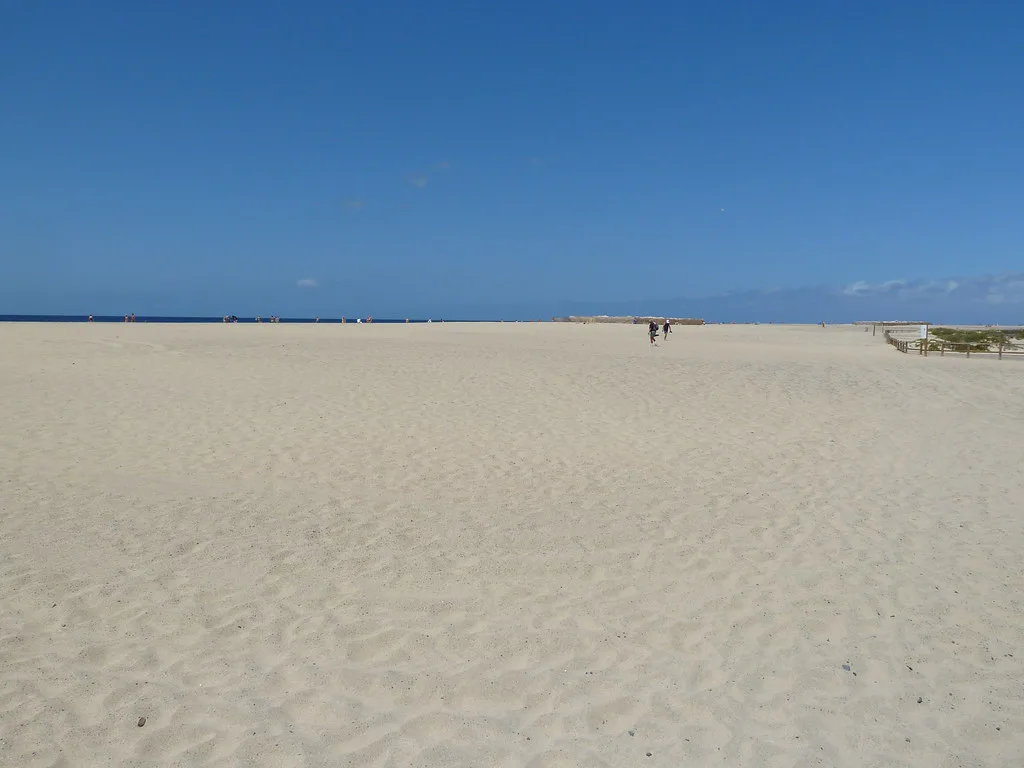
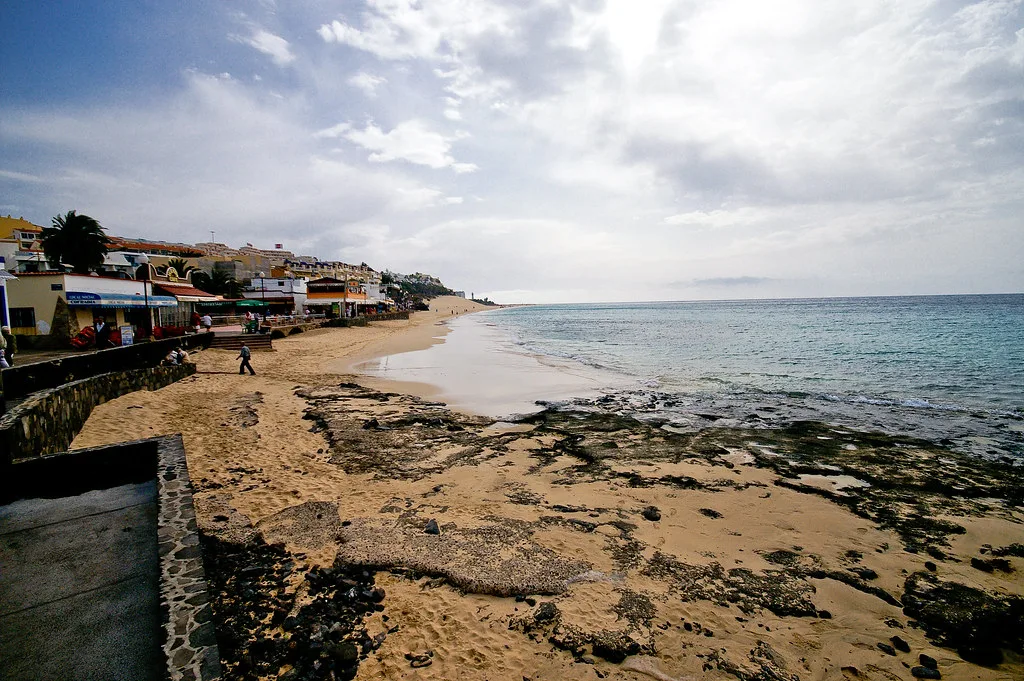
Playa de la Cebada is the artificial beach created at the mouth of the Barranco de las Damas, closest to the old town and the most family-oriented of the three. A pedestrian promenade, Avenida Tomás Grau Gurrea, runs behind it lined with cafés and restaurants and bougainvillea. A cultural week is held here each August.
This promenade is the pleasant way to move between the old quarter and the bigger beaches on foot, and it is where an evening walk before a late dinner makes sense. Bear in mind that the promenade covers only the first stretch; beyond it the beach route continues east and the road takes over as the main axis.
Playa del Matorral and the Saladar de Jandía wetlands
Playa del Matorral is the wide, well-equipped beach behind the Saladar, with sun loungers and umbrellas for hire, restaurants, bars, shops and water activities nearby. It is popular and busy, and part of it is a nudist beach. Beyond it lies Jandía Playa, where the resort's development continues east past the lighthouse.
The Saladar de Jandía is a protected saltmarsh of about 115 hectares, flooded by the sea during major spring tides and home to salt-tolerant plants such as Salicornia and sea grape, plus nesting birds including the Canary Islands houbara bustard. It was declared protected in 1994 because even pedestrian traffic damages it, so use the footbridges rather than cutting across. The long bridges are also the reason hotel guests walk a few minutes to reach the sand.
Eating and drinking: fish in the old quarter and the shape of the day
Concentrate your eating in the old fishing quarter, where the restaurants around the start of the promenade serve fish and seafood. Restaurant fish and seafood on Avenida Tomás Grau Gurrea is open daily from 12:00 to 22:30, with a fish dish and accompaniment for under 15 euros, and La Laja on Plaza Cirilo López serves Spanish cooking from 18:00 to 2:00 with dishes under 16 euros. Piccola Italia on Calle Nuestra Señora del Carmen, 39, serves Italian and Mediterranean food.
Eat on Spanish time. Lunch runs roughly 1:30 to 4pm and dinner starts from about 8:30 to 9pm, so a 6pm table is likely to be quiet and a 9:30pm one lively. A practical day is a late breakfast, beach until mid-afternoon, a proper lunch, a siesta, then a promenade walk and fish for dinner. Piccola Italia's split service, 13:00 to 16:00 and 19:00 to 24:00, fits that rhythm.
Where to stay: old town, Avenida del Saladar and Solana Matorral
Morro Jable holds a large stock of hotel and apartment beds, from modest to luxurious, so pick your zone by what you want on the doorstep. The first holiday club and hotels went up east of the old village on Avenida Tomás Grau Gurrea in the 1980s. Further east, behind the Saladar, the Solana Matorral zone climbs the first mountain slopes on steep streets, and development continues past the lighthouse into Jandía Playa, where the Aldiana Club sits. A more luxurious option is the Riu Palace on Playa de Jandía.
Choose the old town side for restaurants and character on foot, and the eastern strip for bigger sand and resort facilities. The trade-off is the Avenida del Saladar, the dual carriageway carrying the FV-2 through the resort, lined with shopping centres and tall holiday blocks. Some residents cross it and then the protected saltmarsh on long bridges to reach the beach, which is worth knowing before booking a room set back from the water. If you would rather weigh up the island's northern resort instead, compare these things to do in fuerteventura.
The port: landings, the fish counter and the turtle nursery
The new port was built in the 1980s on the western edge of the village, about 3 km from the centre by road, and the trip is worth it in the early afternoon when the boats land their catch around 14:00. At the Cofradía de Pescadores the fish is gutted and sold wholesale to hotels and restaurants, while individuals can buy fresh fish at the Pescadera, open Monday to Saturday from 8:00 to 13:00. The outer pier is reserved for ferries to Gran Canaria and Tenerife.
In the port area the Sodabe Turtle Reserve breeds loggerhead turtles, bringing eggs from Cape Verde and rearing the young in salt-water tanks before releasing them, microchipped, on beaches such as Cofete. The centre is free to visit Monday to Friday from 10:00 to 13:00. It is a good non-beach hour for families, though the timetable is limited enough that you should slot it into a weekday morning.
Day trips: Cofete, Puertito de la Cruz and the Punta de Jandía track
The coastal road ends at Morro Jable; beyond it a dirt track of about 15 km leads to the Punta de Jandía and its lighthouse, with only the first two kilometres paved. The surface is poor and punctures are common, so take an all-terrain vehicle or drive slowly and allow at least two hours for the round trip. About 7 km out, a right-hand junction leads to the village of Cofete and its huge, lonely beaches, a stretch of sand that ranks among the things to do in fuerteventura.
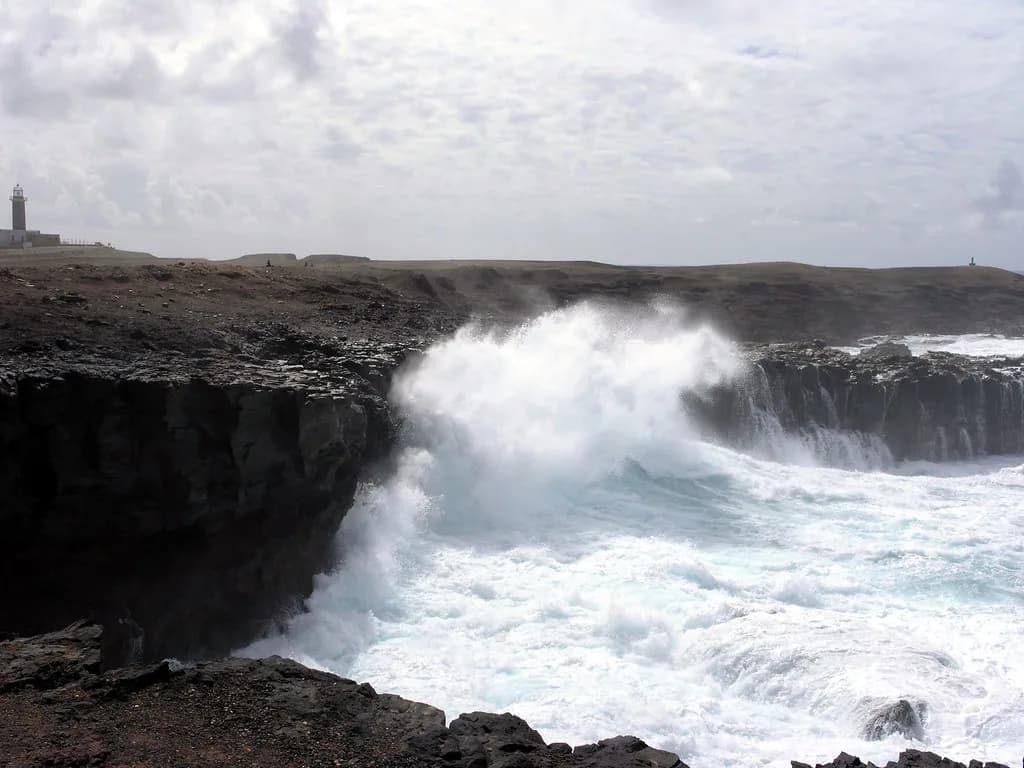
Two kilometres before the lighthouse you pass Puertito de la Cruz, a hamlet of old houses and caravans with a small beach and two taverns serving a local fish stew. At the tip, the Faro de Jandía looks over a rocky coastline, and on clear days you can see Gran Canaria and the Teide summit on Tenerife. Treat the drive as a decision about your vehicle and your patience, not a casual detour.
If you would rather keep the day simple, the wider island has other options, and the guide to things to do in Fuerteventura covers the alternatives.
Getting there and around: buses, taxis and ferries
Buses run by Tiadhe connect Morro Jable with the rest of the island. Line 1 links Puerto del Rosario with the resort, roughly two hours, and Line 10 runs from the capital via the airport. Line 5 connects Costa Calma, about 40 minutes away, and Line 4 runs from Pájara once daily; Tiadhe's own timetables and fare tables give the current schedules. A taxi from the airport takes around 45 minutes and cost about 75 euros in 2012, so ask locally for today's rate.
Ferries from the port run to Las Palmas de Gran Canaria with Fred Olsen, roughly two and a half hours, plus a weekly service to Santa Cruz de Tenerife of about six and a half hours. Parking next to the tourist office at the Centro Comercial Cosmo is free and ample, which makes the resort a sensible base if you hire a car for the island's beaches and inland villages. The tourist office itself sits in the basement of that centre, local 81b.
For the wider picture of where to base yourself on the island, the fuerteventura area guide sets Morro Jable against the northern and eastern resorts.
Trade-offs: mass tourism, the dual carriageway and what the resort is not
Tourism here is mass-market, and the resort has little traditional charm outside the old fishing quarter. The Avenida del Saladar is a wide dual carriageway lined with shopping centres and oversized holiday blocks; some residents cross it and then the saltmarsh on long footbridges to reach the beach. If you want a car-free, low-rise base, look elsewhere on the island.
What the resort is not: a wild, empty coast or a quiet village. For wilder sand you must head east or west of Morro Jable, such as the 300-metre white beach near Puertito de la Cruz, and for genuine wilderness the Cofete beaches. If that northern coast of dunes and sheltered coves appeals more, the things to do in fuerteventura guide covers it. Its strengths remain the long beach, the working port and easy access to the Jandía peninsula.
Plan Your Visit
Base yourself in the old quarter if you want fish restaurants and a square on your doorstep, or on the eastern strip for more sand and resort facilities. Build your day around a late lunch and an evening promenade walk, and save one weekday morning for the port and the turtle nursery.
Check current bus times, ferry schedules and restaurant hours before you commit, particularly if you are relying on public transport or travelling outside the main season. The Punta de Jandía track deserves a proper vehicle decision, and the Saladar should be crossed on its footbridges.
Explore more Fuerteventura guides
Frequently Asked Questions
Where is Morro Jable and how do you get there from Fuerteventura airport?
Morro Jable sits on the southern coast of the Jandía peninsula in the municipality of Pájara, about 85 km from Fuerteventura airport and 90 km from Puerto del Rosario. The FV-2 coast road covers the drive in roughly an hour and a half, and until 1982 only a dirt track reached the village. Tiadhe bus lines run from the capital and via the airport; check current timetables and fares before you travel.
Is Morro Jable good for a beach holiday?
Yes, if you want long sand with a working town attached. The beaches stretch about four kilometres east of the old town, from the family-oriented Playa de la Cebada through the busy, well-equipped Playa del Matorral to Jandía Playa beyond the lighthouse. Hotels sit behind the protected Saladar de Jandía, so expect a short walk on footbridges to reach the water rather than a step off the terrace.
What is there to see in Morro Jable old town?
The old fishing quarter is the most authentic part of the resort, built between two rocky hills around Plaza de los Pescadores, where the bronze Homenaje a los Pescadores group by Rafael Gómez González stands. Above the western hill is the modern parish church of Nuestra Señora del Carmen, whose bell tower holds a bell said to have drifted in on a buoy, and the Virgen del Carmen is carried by boat each 16 July. The seafront promenade, Avenida Tomás Grau Gurrea, runs behind Playa de la Cebada.
Which beaches are in and around Morro Jable?
Playa de la Cebada is the closest to the old town, Playa del Matorral is the widest and best equipped, and Jandía Playa continues east past the lighthouse; part of Matorral is a nudist beach. For wilder sand, head out of the resort, such as the 300-metre white beach near Puertito de la Cruz or the huge lonely beaches at Cofete. Crossing the Saladar de Jandía to reach the sand means using the footbridges, since the protected saltmarsh is easily damaged.
Where do you eat fish in Morro Jable?
The old fishing quarter around the mouth of the Barranco de las Damas and the start of the promenade is where the fish restaurants cluster. Piccola Italia on Calle Nuestra Señora del Carmen serves Italian and Mediterranean food with a split service at lunch and dinner, and La Laja on Plaza Cirilo López serves Spanish cooking from evening onwards. Eat late: lunch runs roughly 1:30 to 4pm and dinner from about 8:30 to 9pm; check current hours and prices before you go.
Is Morro Jable worth visiting compared with Costa Calma?
The two serve different holidays. Morro Jable has a fishing port, an old quarter with restaurants and a square, and a beach strip running some four kilometres east, which makes it the busier, more town-like base on the Jandía peninsula. Costa Calma is about 23 km northeast and is a smaller, quieter resort. Pick Morro Jable for port life and more eating options, and Costa Calma if you want a calmer base.
How do you reach Cofete and Punta de Jandía from Morro Jable?
Take the dirt track that begins where the coastal road ends, with only the first two kilometres paved. A right-hand junction about 7 km out leads to Cofete and its huge beaches, while the full 15 km route continues past Puertito de la Cruz to the Punta de Jandía lighthouse. The surface is poor and punctures are common, so take an all-terrain vehicle or drive slowly and allow at least two hours for the round trip.
Is Morro Jable lively at night?
Evening life follows Spanish hours rather than an early British schedule. Dinner starts from about 8:30 to 9pm, so a 6pm table is likely to be quiet and a 9:30pm one lively, and the promenade behind Playa de la Cebada is lined with cafés and restaurants for a walk before eating. The terrace bar on Plaza de los Pescadores is a meeting point for locals. Check individual venues' current hours, since resort restaurants set their own.