
Corralejo: A Neighbourhood Guide to Fuerteventura's Dune Town
Corralejo is the north-coast resort town of Fuerteventura, built around a working old town and a long run of beaches backed by the Dunas de Corralejo natural park. It suits travellers who want walkable evenings, easy wind-assisted beach days and a short boat hop to Isla de Lobos; it suits less well anyone hoping for a quiet, wind-free swimming holiday.
What Corralejo is like
Think of Corralejo as two places in one. The old town clusters around the harbour end, with narrow streets and a busy shopping avenue, Avenida Nuestra Señora del Carmen, lined with duty-free shops, bars and restaurants; the newer resort edge runs north past the dunes towards the big beaches. Between them sits the Parque Natural de Corralejo, a protected sand field of more than 2,600 hectares that separates town from open coast.
The dunes are not a small municipal park but the largest sand field in the Canary Islands, running for more than ten kilometres along the FV-1a coastal road. The sand is marine in origin, ground from shells and other hard-shelled sea creatures and pushed ashore by currents. That scale is why the walk from the old town to the far beaches feels like leaving one resort and arriving in another.
Fuerteventura as a whole is the second-largest island of the Canary archipelago and has been a UNESCO Biosphere Reserve since 2009. Corralejo sits at its northern tip, which puts Lanzarote clearly on the horizon and makes the town feel more like a ferry port with a beach habit than a pure package resort.
Distances on the island are longer than they look. The drive between the north and south can take close to two hours, so basing yourself in Corralejo commits you to the north for beach days and day trips, with Jandía and Cofete as a long excursion rather than a casual afternoon. If you want to plan that southern excursion properly, our guide to things to do in Fuerteventura covers Playa de Cofete and the villages inland.
Who Corralejo suits, and who it does not
Corralejo works best for people who want to be on foot in the evening. Staying in or near the old town puts restaurants, bars and the shopping avenue within a short stroll, and the harbour is close enough to walk to for an early boat. Families tend to gravitate to the northern end of the dune beaches, where some stretches sit beside hotels and come with beach bars and lifeguards.
The trade-off is wind. Fuerteventura is known for it, and on the grandes playas the water can be busier with surfers, windsurfers and kitesurfers than with bathers, especially in spring. If your idea of a holiday is a still, warm sea and an empty towel, the south of the island or a sheltered cove such as La Concha on Isla de Lobos is a better bet on a windy day.
If you want a quieter, more local base, El Cotillo and Lajares are the alternatives within easy reach of Corralejo. Corralejo itself is the busiest and most touristy of the northern settlements, with a large shopping street and a lively bar scene. That energy is the point for some visitors and the reason to stay elsewhere for others.
Corralejo old town: shopping, streets and evenings
The old town is compact and made for wandering rather than ticking off sights. Avenida Nuestra Señora del Carmen carries the bulk of the shops, including duty-free stores, alongside cafés and restaurants that fill up after dark. Independent shops sit between them, from surf-and-souvenir places to small design stores selling island-made clothing and prints.
Plan your evening on Spanish time rather than British time. Dinner in Corralejo, as across Spain, starts around 8:30–9pm and the streets are still quiet at seven; a late lunch pushes dinner back further. That rhythm leaves the late afternoon free for the beach, a shower and a slow drink before eating.
The harbour end is where the town meets the water and where boats leave for Isla de Lobos. It is also the obvious place to start a walk, since the old-town streets, the ferry departure point and the edge of the dunes all connect within a couple of kilometres.
The Dunas de Corralejo and the Grandes Playas
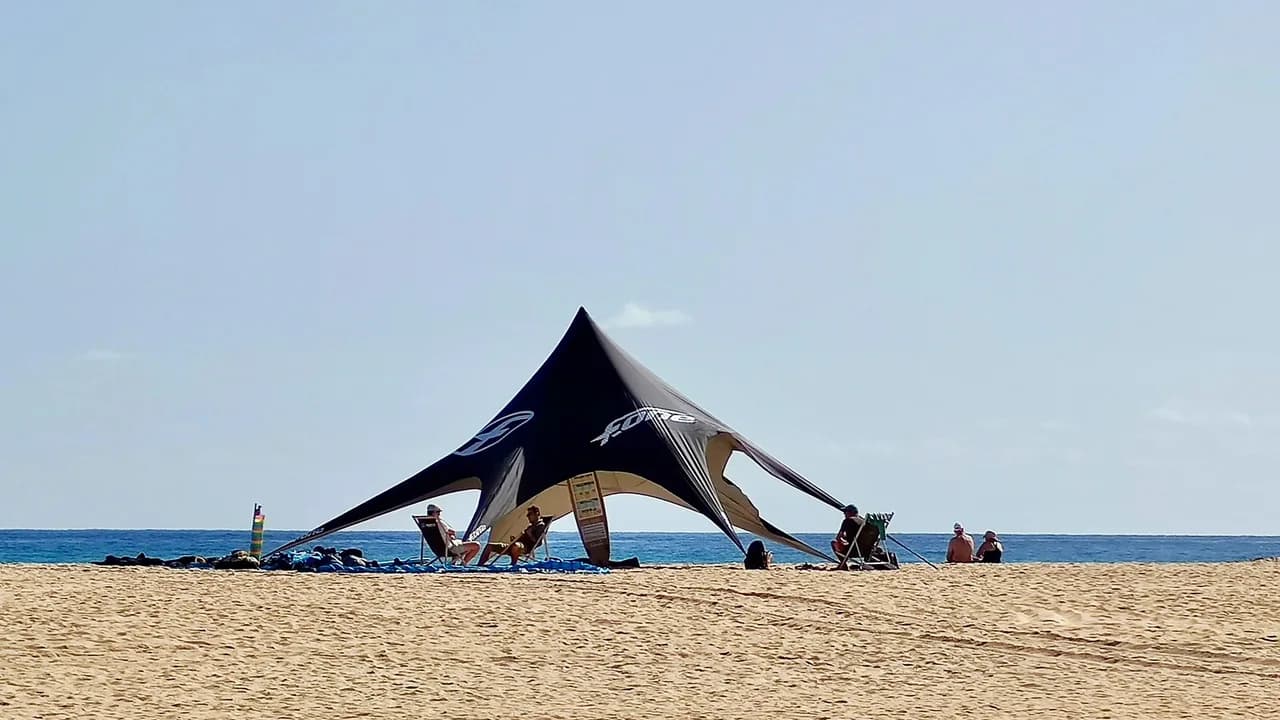
The Dunas de Corralejo natural park is the reason many people come. Golden sand runs on both sides of the road for kilometres, with the Atlantic beyond, and the best thing to do is simply walk into it, swim from one of the beaches and climb for the view. Montaña Roja, the red volcanic cone at the northern edge, gives a panorama over the dunes, Lanzarote and La Graciosa. If the dunes convince you to see more of the island, our guide to things to do in Fuerteventura picks up the beaches and villages further south.
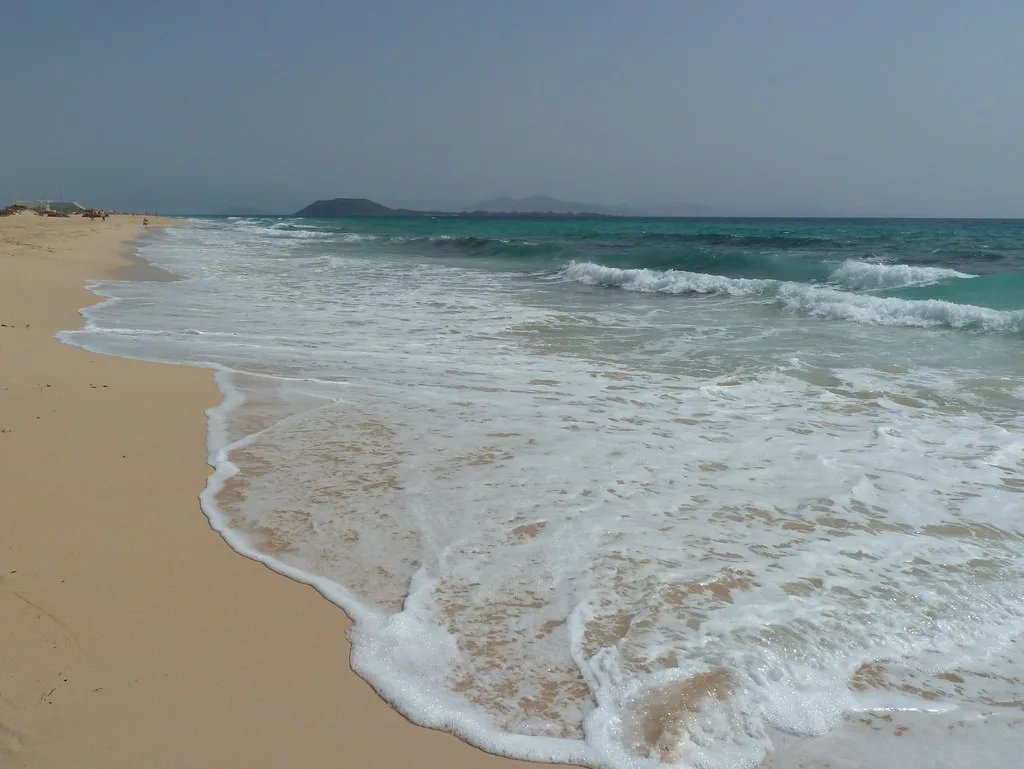
The Grandes Playas de Corralejo stretch for more than nine kilometres of fine sand and coves with Isla de Lobos offshore. The northern beaches, such as Playa de Bajo Negro and Playa del Burro, are the family-friendly end, with services and supervision; the southern end of the dunes is quieter, with small coves where nudism is common.
Wind is the variable that decides your day. Check the forecast the night before and pick a sheltered beach if it is blowing, or head for the dunes early before the sand starts moving. Kitesurfers and windsurfers are part of the scenery on the big beaches, so expect colour in the sky rather than solitude on the sand.
Beaches in and around town
Playa del Moro is the other north-end beach worth knowing, a short hop from the dunes and handy if you are staying at the resort edge rather than in the old town. Within the natural park, the grande playas give you the widest choice of sand, and the coves at the southern end are where to go when the prevailing wind makes the main beaches uncomfortable. Beyond this north coast, the things to do in Fuerteventura stretch further south, from Playa de Cofete to the villages inland.
For a change of scene, El Cotillo on the west coast is a short drive away, and La Concha beach there is calm, clear and good for snorkelling. The village itself is a fishing settlement of white and blue houses, with restaurants serving local fish. It makes a sensible half-day when the wind is up on the Corralejo side, and it is one of several stops in our guide to things to do in Fuerteventura.
Isla de Lobos: the boat, the quota and the paths
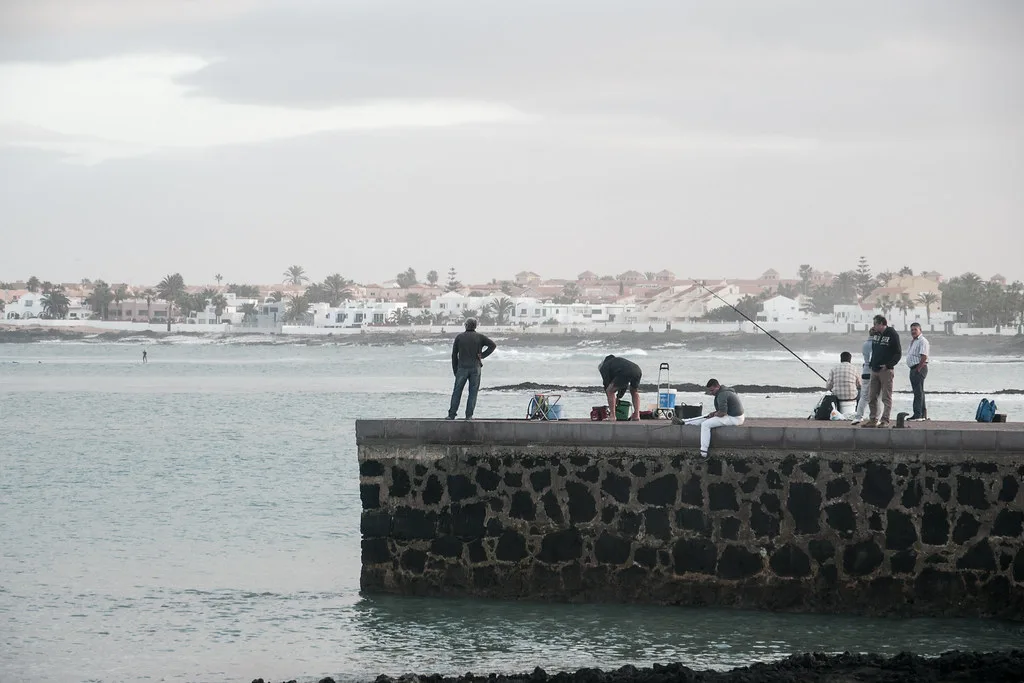
Isla de Lobos lies about two kilometres north of Fuerteventura and is reached by boat from Puerto de Corralejo, a crossing of roughly fifteen minutes. It is a protected natural park of 467 hectares belonging to the municipality of La Oliva, with no accommodation, so the boat runs as a same-day round trip and the island is easily covered in a few hours.
Access is controlled. There is a maximum daily quota, split between morning and afternoon slots, and independent visitors need a permission to land, which cannot be requested more than three days ahead. The simplest route is a licensed excursion or water taxi whose operator handles the paperwork; either way, book before you travel rather than turning up at the port.
On the island, the two beaches to aim for are La Concha, sheltered from the wind with calm turquoise water, and El Puertito, a natural pool of warm, clear water. A circular path of about twelve kilometres loops the islet in around three and a half hours with stops, and it is largely flat apart from the climb to the Caldera, a crater at 127 metres.
Allow time for the lighthouse. The Martiño Lighthouse sits at the northern end and opens up views across to the south coast of Lanzarote. The islet also has a small family restaurant and an information hut, so carry water anyway, and keep an eye on the return boat, which is the one fixed point in the day.
La Oliva and Villaverde: windmills inland
Inland from Corralejo, La Oliva is the old administrative heart of the north and one of the richest archaeological areas on Fuerteventura, with evidence of the island's earliest inhabitants. The town's church and the Casa de los Coroneles are the landmarks, and the surrounding lanes are worth an hour even if you are mainly here for the beach.
Villaverde, just south of La Oliva, is the windmill country of the north. Walking between the mills on the arid lanes is a gentle half-day, and Lajares between here and El Cotillo has become the small creative town of the area, with cafés and workshops. A car makes this loop easy; buses exist but run thinly.
Calderón Hondo and Montaña Roja: short walks with views
Calderón Hondo is the most rewarding short walk in the north. From Lajares a path of about 2.8 kilometres climbs roughly 278 metres to the rim of a well-preserved volcanic crater, with views over the Bayuyo chain, a line of twelve cones. It is a walk rather than a hike, but wear proper shoes because the surface is loose volcanic gravel.
Montaña Roja, closer to Corralejo, is the easier option and gives the classic view over the dunes to Lanzarote and La Graciosa. The climb to the rim takes around 300 metres of ascent, and the red cone is visible from most of the northern beaches. Do either walk in the morning, before the heat builds and the wind picks up.
Where to eat in Corralejo
Corralejo's eating is concentrated on the old-town streets and the shopping avenue, with a mix of Canarian cooking, Spanish tapas and international resort food. Look for local fish, papas arrugadas with mojo, and goat's cheese from the island's farms rather than a familiar international menu. The town's bakery culture is worth using too: Abuelos bakery is a good spot to pick up sandwiches before a boat or a beach day.
Structure your day around Spanish meal times. Lunch runs roughly 1:30–4pm and dinner from 8:30–9pm, so a late breakfast and a proper midday meal works better than grazing all afternoon. Many kitchens close between services, which makes a 4pm plate of tapas harder to find than a 2pm one.
Book dinner in the old town if you want atmosphere, or eat at the resort edge if you want convenience after a beach day. Portions are generous and the local wine list is short but good; ask for what is from Fuerteventura rather than what is cheapest. Prices vary widely by street, so check the menu board before sitting down.
Where to stay in Corralejo
The old town is the choice for walkers: small hotels and apartments within a few minutes of the harbour, the shopping avenue and the restaurants. The resort edge, closer to the dunes and the grandes playas, suits families and anyone who wants a pool and a short walk to the sand. Both are within the same town, but they feel like different holidays.
If you plan to explore the whole island rather than the north alone, consider splitting your stay. A central base such as Caleta de Fuste gives you a decision each morning about whether to head north or south depending on the wind; Caleta de Fuste itself has a wide range of accommodation and a calmer, more residential feel.
For a southern contrast, Morro Jable and the Jandía peninsula offer long white beaches and a very different, more developed resort scene. It is a long drive from Corralejo, so treat it as a separate stay rather than a day trip if you want to enjoy it properly.
Getting there and around
Fuerteventura is served by flights from across Europe, and the airport sits roughly halfway down the east coast, with a transfer north to Corralejo by road. Ferries link the port directly with Lanzarote, and the crossing is short enough to combine the two islands in one trip. Between the islands, Binter and Canaryfly operate flights, with Canaryfly usually the cheaper of the two.
A hire car is the most practical way to see the north properly, especially for El Cotillo, La Oliva and the Calderón Hondo walk. Buses on Fuerteventura are workable but thin compared with Tenerife or Gran Canaria, so check times before relying on them for a day out. In town, everything in the old town and the dune edge is walkable.
Practical trade-offs: wind, seasons and crowds
Wind defines Corralejo more than temperature. The island's climate is stable year-round, with daytime temperatures typically between 15 and 25 degrees, but the breeze that makes it a kitesurfing destination can ruin a beach day. June to August is prime windsurfing and kitesurfing season, and September is usually the least windy month.
For beach-focused trips, the window from September to November is often the best balance of warm sea and manageable wind. Winter days are mild, with rain on a handful of days a month, and the town stays open rather than closing down. Summer brings the biggest crowds and the strongest trade winds on the grandes playas.
Add the practical extras: cash for small bars and market stalls, a windproof layer for evenings, and reef-safe sun protection. The town is busy in high season, so book Lobos crossings and popular restaurants ahead rather than on the day.
Plan Your Corralejo Visit
Choose Corralejo if you want a walkable northern base with dunes, beaches and a short boat to Isla de Lobos, and accept the wind as part of the deal. Pair the old town for evenings with the resort edge for family beach days, and keep a car for the inland villages and the Calderón Hondo walk.
Check the current landing rules and boat times for Isla de Lobos before you book, and confirm restaurant opening days in the old town, as kitchens keep Spanish hours rather than all-day ones.
Frequently Asked Questions
What is Corralejo known for?
Corralejo is known for the Dunas de Corralejo natural park and the Grandes Playas beaches that run north of town, for its walkable old town and shopping avenue, and for the short boat crossing to Isla de Lobos. It is also a windsurfing and kitesurfing centre, so wind is part of the experience.
Is Corralejo worth visiting?
Yes, if you want a northern base with beaches, dunes and easy evenings on foot. It is less suited to travellers seeking calm, wind-free swimming, who may prefer the south of the island or sheltered coves such as La Concha on Isla de Lobos.
How do you get to Isla de Lobos from Corralejo?
Boats leave from Puerto de Corralejo and take roughly fifteen minutes. Access is limited by a daily quota split between morning and afternoon, and independent visitors need a landing permission that cannot be requested more than three days ahead, so booking through an operator is the simplest route.
Which beaches are best in Corralejo?
The Grandes Playas within the natural park offer the widest choice, with family-friendly northern beaches such as Playa de Bajo Negro and Playa del Burro and quieter southern coves. Playa del Moro is convenient for the resort edge, and El Cotillo's La Concha is a good alternative when the wind is up.
Is Corralejo windy?
Yes. Fuerteventura is known for its wind, which makes the big beaches popular with kitesurfers and windsurfers. June to August is prime windsurfing season and September is usually the least windy month, so check the forecast and pick a sheltered beach if you mainly want to swim.
Where should you eat in Corralejo?
The old town and Avenida Nuestra Señora del Carmen have the densest concentration of restaurants and bars, from Canarian cooking to tapas and international resort food. Eat on Spanish time, with lunch around 1:30–4pm and dinner from 8:30–9pm, and check menu boards before sitting down.