Shopping in Toledo: What to Buy and Where to Find It
Toledo shopping means mazapán, damascene steel and Manchego cheese. Here is what to buy, which shops and streets earn your time, and what to walk past.
On this page
Toledo shopping comes down to three things worth carrying home: mazapán, damascene steel and food from a proper deli. The rest of the Casco Histórico is largely souvenir stock, and much of what looks like Toledo craft is manufactured elsewhere.
The good news is that the best buys sit within a short walk of each other, around Plaza de Zocodover, Calle Hombre de Palo and Plaza San Vicente. Plan a morning of shops and finish with a proper lunch, because Toledo's restaurants get going around 1:30pm.
What to Buy in Toledo: the Short Answer
Buy mazapán, buy damascene steel and buy cheese, oil or game charcuterie from a deli. Add Manchego cheese and La Mancha saffron if you have room, and pick up mantecados, turrón or arrope from the same counter.
The distinction that matters is craft versus import. Toledo has an unusually dense set of working craft traditions, and it also has a thick layer of shops selling plastic swords and magnet sets, so decide before you go which of the two you are shopping for. If you want shopping as one strand of a wider visit, our guide to things to do in toledo sets the shops alongside the cathedral, the synagogues and the river views.
Mazapán de Toledo: the PGI Rule Worth Knowing
Mazapán de Toledo holds PGI status, and production is governed by a regulatory council that requires almonds to be at least half the total weight. That is the rule of thumb for what you are buying: an almond paste, not sugar with a hint of almond.
Toledo is one of the earliest places in Europe to have made marzipan, with origins usually traced to Arab introduction somewhere around 850–900 or, more plausibly, near 1150. The shape matters less than the paste, so favour producers who sell it plainly rather than in elaborate boxes padded with packaging.
Pastelería Santo Tomé on Plaza Zocodover
Pastelería Santo Tomé at 7 Plaza Zocodover has been making marzipan since 1856 and is among the most famous places in Spain to buy it. Buy a Delicia Mazapán to eat the same day and Pastas de Mazapán con Piñones, almond paste balls studded with pine nuts, to take home.
Demand peaks at Christmas, when people travel from across Spain specifically to buy their mazapán here. Outside that window the shop is a straightforward counter stop rather than an event, which makes it the easier moment to buy and carry a box.
Convent Sweets: Dulces Típicos de Toledo
Convento Gaitanas at 2 Travesía Gaitanas sells dulces típicos de Toledo, the nun-made cakes and pastries sold directly from convents. The transaction is simple and worth doing once: you approach the hatch, choose your box, and pay.
Take a small box rather than a large one. These sweets are best eaten fresh over a few days, and a mixed selection tells you more than a single large cake you may end up carrying around the city all afternoon.
Casa Cuartero on Calle Hombre de Palo
Casa Cuartero at 5 Calle Hombre de Palo has traded since 1920 and is the stop where you build a picnic or a suitcase of food. The range covers cheese, oil and wine alongside venison, wild boar sausage, game pâtés, gourmet preserves, mantecados, artisan turrón, arrope and honey.
This is where you make the real decisions: a wedge of Manchego and a jar of arrope for a picnic, or vacuum-packed charcuterie for the flight home. Pick cheese and oil you can carry in hand luggage, and leave the wine for a checked bag.
Damascene Steel: Simón Artesanía on Plaza San Vicente
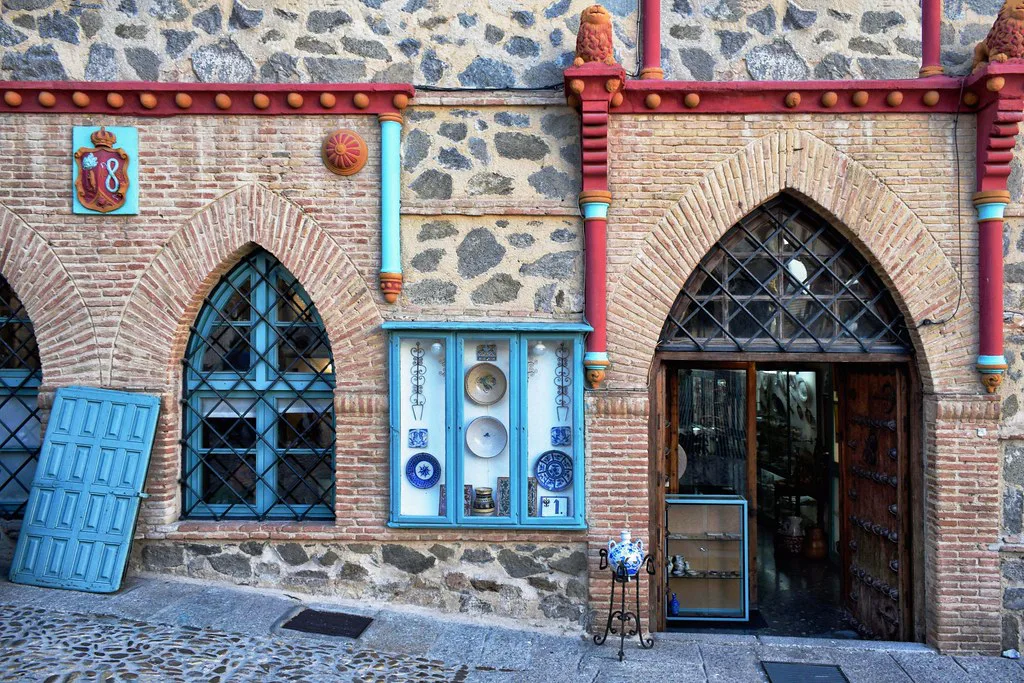
Damascening is the art of inlaying steel with gold and silver thread, and Simón Artesanía at 1 Plaza San Vicente has specialised in damasquinados since 1963. It is described as one of only a few places still selling genuine handmade pieces, so this is where your money buys the craft rather than a print of it.
Expect to pay properly for handwork; small pieces such as pendants, brooches or cufflinks are the practical entry point if a framed panel is beyond budget. Ask what you are looking at before you buy, and check the inlay under bright light.
Swords and Toledo Steel: Handmade or Machine-Made
Sword-making in Toledo is now close to a lost art, and Mariano Zamorano Swords Factory at 19 Calle Ciudad is working to keep the old skills alive. Treat it as a working sword factory rather than a theme attraction, and buy on the strength of what you can see being made.
Most swords on sale across the city are machine-made regardless of how they are displayed. If a blade is meant to be handmade, ask directly how it was inlaid or forged, and walk away from any shop that will not answer.
Pottery and Crafts: How to Tell Real from Imported
Toledo pottery is one of the city's genuine craft buys alongside damascene steel and mazapán. The problem is the volume of stock around the square that only looks like Toledo work, with much of what appears to be local craft manufactured elsewhere.
A useful test is weight and finish: hand-thrown pottery varies slightly piece to piece, and inlaid steel feels cool and solid. If every item on a shelf is identical, you are looking at a moulded import.
Where to Shop: Zocodover, Calle Comercio and Calle Alfonso X
Calle Comercio, running beside the cathedral, is the central shopping street, and Calle Alfonso X is where you find damascene workshops you can watch at work. Both sit inside the compact old town, so you can cover them in a single loop with Zocodover as the hinge.
Walk past the souvenir shops around Zocodover rather than through them. The magnet sets and plastic swords are the same stock available in any Spanish tourist city, and every minute spent there is a minute not spent at a real counter.
Mercado de Abastos on Calle Coliseo
Mercado de Abastos at 2 Calle Coliseo is on paper the obvious place for fresh produce, but a visitor found it largely taken over by a supermarket. Go if you need a supermarket or a quick coffee rather than a market experience.
For actual food shopping, put your time into Casa Cuartero instead and save the market for a rainy-day errand. This is the single most useful adjustment to make to a standard shopping circuit.
Prices and Bargaining: What to Expect
Prices in Toledo shops are generally fixed, and bargaining is not customary, so do not expect to negotiate a discount on mazapán or damascene work. Budget is better managed by choosing smaller pieces and by deciding what you can legally carry home.
Food is where costs add up quietly; set yourself a rough ceiling before you enter Casa Cuartero rather than after. Ask at the counter what a particular piece or box costs before it is wrapped.
Carrying Food Home to the UK, Ireland or the US
Mazapán, mantecados, turrón and honey travel well in hand luggage, and sealed cheese and vacuum-packed charcuterie are the practical way to bring food home. Fresh produce is the item to leave behind, as customs rules on meat and dairy differ by destination.
Pack sweets at the top of the bag so they are not crushed, and keep oil and arrope in checked luggage wrapped in clothing. If food shopping is the main reason for coming, keep it to a single morning rather than hauling bags around the cathedral all afternoon. A toledo itinerary built around one arrival train from Madrid Atocha keeps the shopping stop tight and the rest of the day free.
Shopping Around Spanish Meal Times
Shop in the morning and stop for lunch between 1:30pm and 4pm, when Toledo's restaurants actually serve. Dinner starts at 8:30–9pm, so an afternoon of browsing should end with a drink and a tapa rather than an early meal.
With a single day, do the shops early, eat properly at lunch and use the late afternoon for the cathedral and views. That sequence keeps your purchases in a cool bag rather than in your hand all day.
Plan Your Toledo Shopping
Three purchases justify the trip: a box of mazapán de Toledo, a handmade damascene piece and a food bag from Casa Cuartero. Everything else is optional, and the souvenir shops around Zocodover are the part to walk past. If you are weighing the same three-buy decision elsewhere on your trip, our guide to shopping in alicante shows how it plays out on the coast.
Separate the shopping morning from the sightseeing so neither gets rushed, and build the day around lunch at Spanish hours.
Explore more Toledo guides
Frequently Asked Questions
What should I buy in Toledo?
Mazapán de Toledo, handmade damascene steel, Toledo pottery and food from a deli such as Casa Cuartero. Manchego cheese, olive oil, saffron, mantecados, turrón and arrope are the practical food purchases.
Where can I buy mazapán in Toledo?
Pastelería Santo Tomé at 7 Plaza Zocodover has made marzipan since 1856 and sells Delicia Mazapán and Pastas de Mazapán con Piñones. Nun-made dulces típicos de Toledo are sold at Convento Gaitanas on Travesía Gaitanas.
Is Toledo damascene steel real or machine-made?
Genuine damascene is steel inlaid by hand with gold and silver thread, and Simón Artesanía on Plaza San Vicente is one of only a few places still selling handmade pieces. Most swords sold in the city are machine-made.
What is the most famous shopping street in Toledo?
Calle Comercio, beside the cathedral, is the main central shopping street, and Calle Alfonso X is known for damascene workshops. Both are within easy walking distance of Plaza de Zocodover.
Are prices fixed in Toledo shops?
Yes, prices are generally fixed and bargaining is not customary. Choose smaller pieces or a tighter food list if you want to control what you spend.
What should I skip in Toledo?
The souvenir shops around Plaza de Zocodover selling magnet sets and plastic swords, and the Mercado de Abastos on Calle Coliseo if you are expecting a produce market.
Is the Mercado de Abastos in Toledo worth visiting?
Not as a food market. A visitor found it largely taken over by a supermarket, so treat it as an errand stop rather than a shopping destination.
How does shopping fit around Spanish meal times in Toledo?
Shop in the morning, then eat lunch between 1:30pm and 4pm, and remember dinner starts around 8:30–9pm. That rhythm leaves the late afternoon free for sightseeing.
Sources
Notes for eating well in Spain
Optional updates to our guides.
You might also like

Continue reading
More guides you'll find useful