One Day in Toledo: A Realistic Walking Itinerary from Madrid
Plan one day in Toledo from Madrid: a walkable route through the cathedral, Jewish quarter and convents, with lunch stops and sunset viewpoints.
On this page
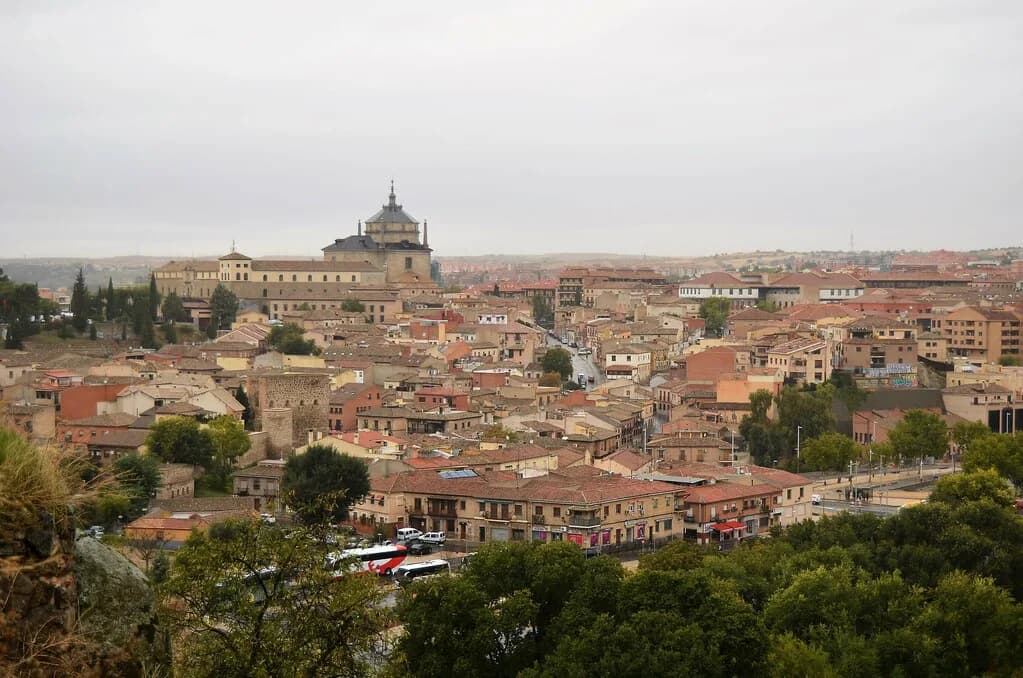
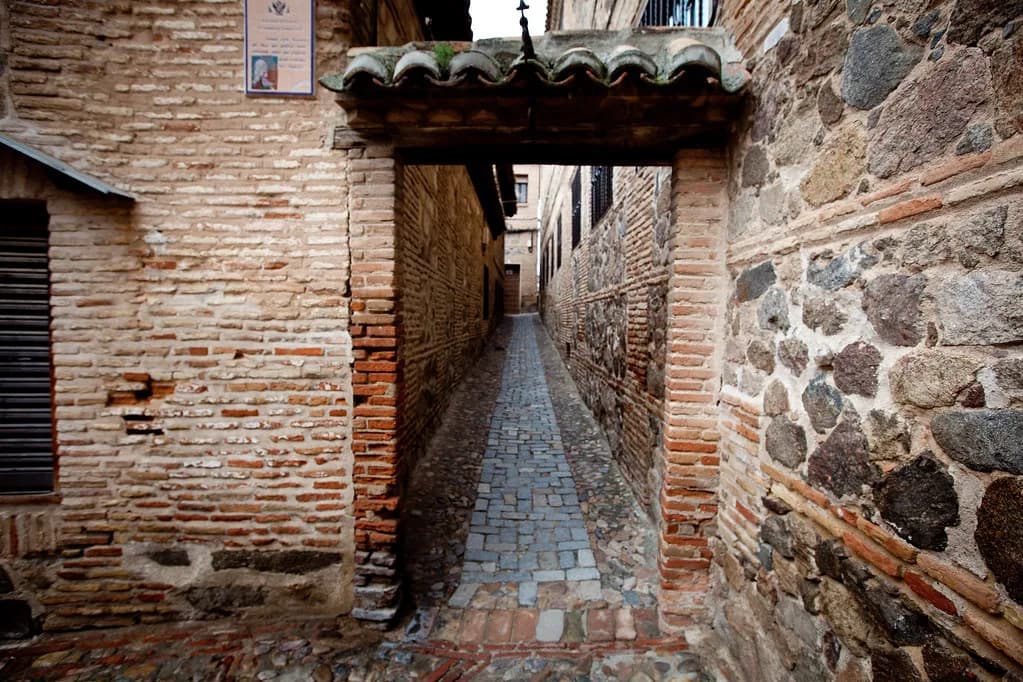
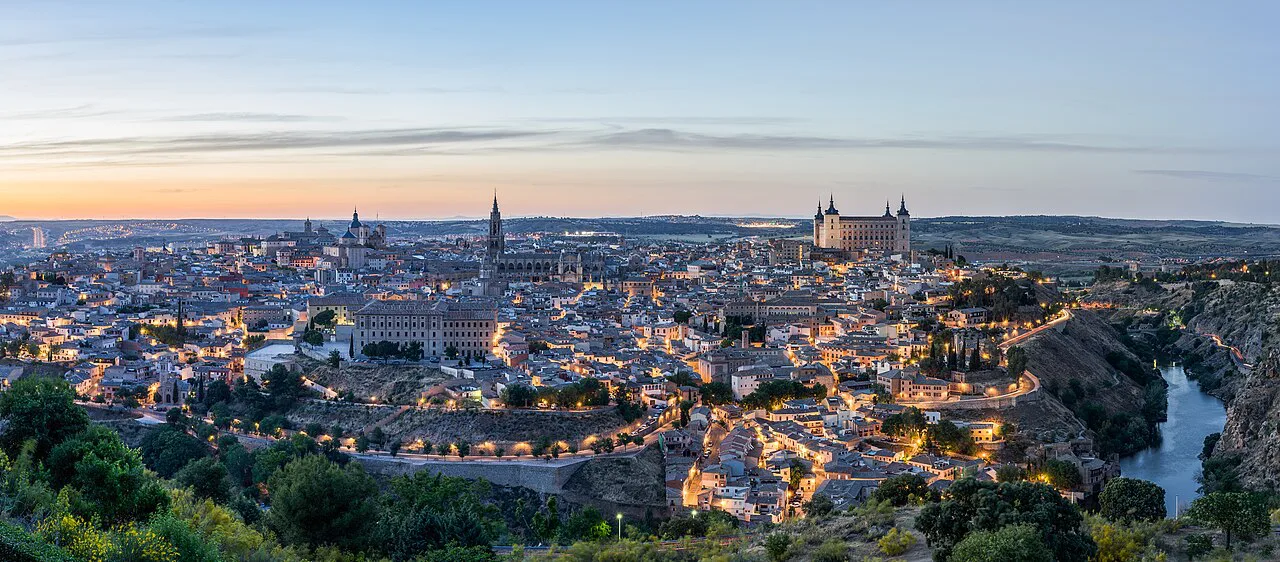
One day in Toledo works because the hard part is already solved: the high-speed train from Madrid takes around half an hour, running roughly hourly from Atocha, and the old town is compact enough to cross on foot. The trade-off is vertical — the station sits below the centre and the streets climb — so you trade a little effort for a UNESCO-listed medieval street plan that has barely changed shape since the Middle Ages.
Build the day around Spanish lunch rather than a noon sandwich. The cathedral and the Alcázar go in before the meal, the Jewish quarter and the convents after it, and the evening belongs to a terrace above the Tagus. If you want the full picture of what the city offers beyond this route, our guide to things to do in toledo covers the monuments and museums that do not fit here.
Getting There and Getting In
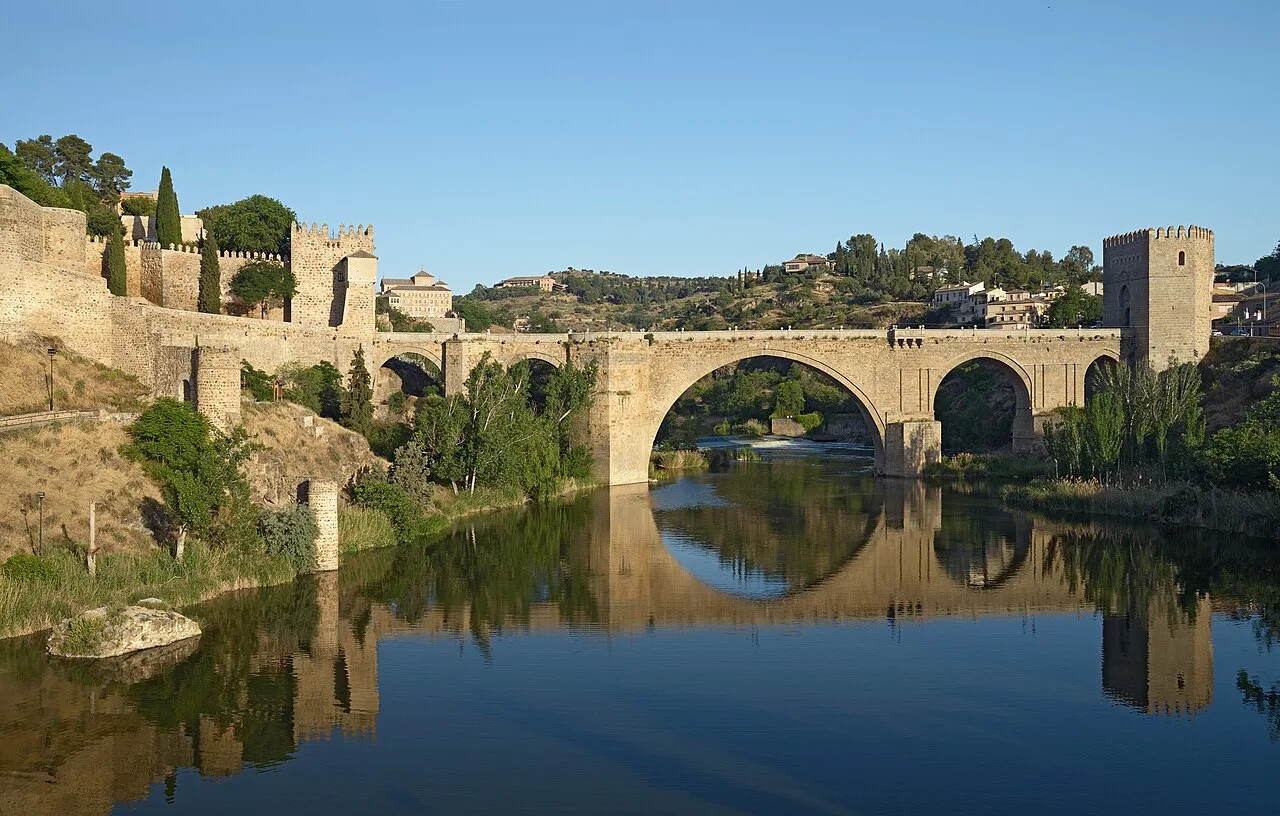
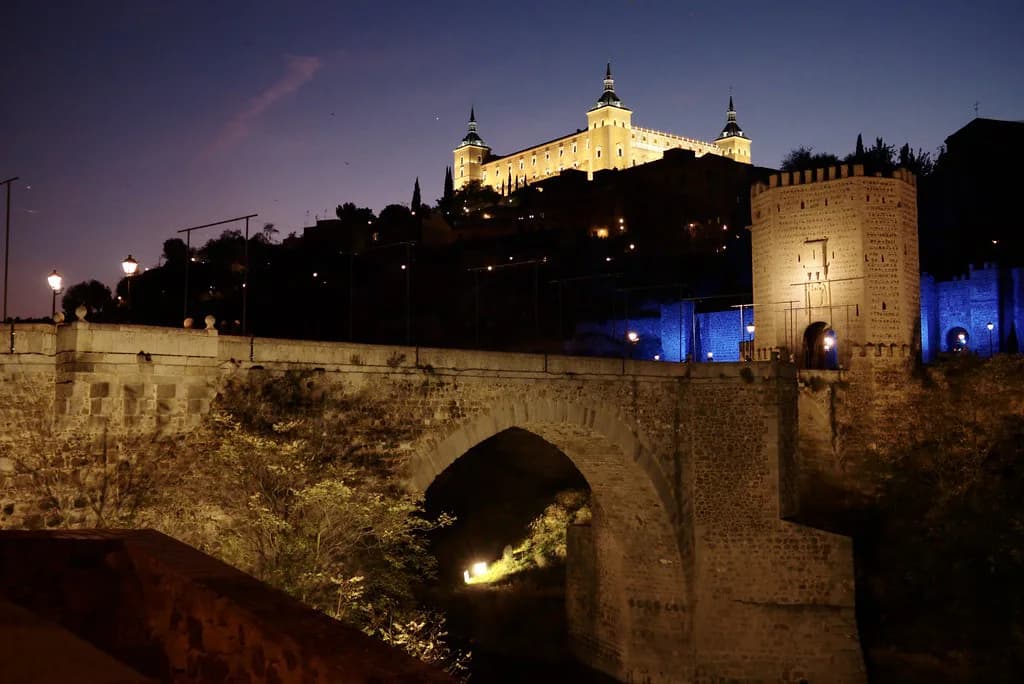
Avant trains leave Madrid Atocha roughly once an hour and reach Toledo in just under 40 minutes, so aim to arrive mid-morning rather than at opening time. It is the same logic that shapes one day in girona, where the walking route only works if you start early enough. From the station it is about 1.2 km into the centre, a 15 to 20 minute uphill walk that crosses the Alcántara Bridge.
Two shortcuts save your legs for the sights: local buses 5, 511, 61 and 62 run from near the station to Plaza de Zocodover, and the Safont escalators at Plaza del Granadal lift you up into the old town. Buses drop you at the square where the tourist information office sits, which makes Zocodover a sensible first orientation point.
If you are weighing up whether to sleep here or dash back to Madrid, our breakdown of how many days in toledo helps you decide whether one day is genuinely enough. Drivers should know that parking near the centre fills early; the paid garages at the Alcázar and Aparcamiento Miradero are the reliable fallback.
Start High: The Alcázar and the Library Tower
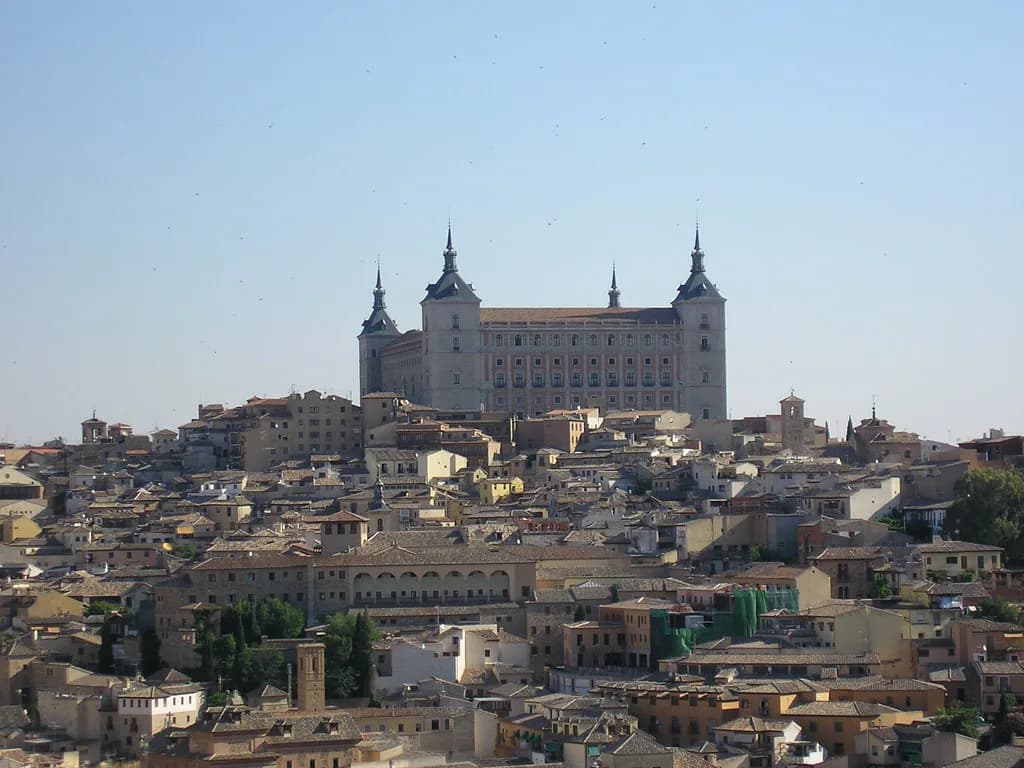
The Alcázar occupies the highest point in the city, and the reason to go up is the view: a cafeteria at the top of one tower and, a level below, a long glazed hallway in the Castilla-La Mancha Library with windows over the rooftops. Entry is through the Army Museum, which means the fortification and the museum visit run as one stop.
The library keeps its own hours, separate from the Army Museum, and closes on Sundays and public holidays. On a Sunday you can still tour the Alcázar but you lose the best free panorama in the city, so plan the order of your morning accordingly.
The Santa Cruz Museum, just off Plaza de Zocodover, is a quieter alternative if the Alcázar queue is long: the old Hospital de Santa Cruz and the Santa Fe convent now host temporary exhibitions, and it is worth stepping in for the courtyard, the marble staircase and the arches alone.
Plaza de Zocodover, Marzipan and the Cathedral
Plaza de Zocodover is the natural hinge of the day: buses end here, and the streets to the cathedral, the Alcázar and the Jewish quarter all radiate from the square. Pick up marzipan before you go further — Santo Tomé, the confectioner on the square, has been making the almond sweets since 1856.
Inside the cathedral, prioritise rather than wander: the Chapel of the Kings, the golden Monstrance, the paintings in the Sacristy and the choir are the pieces most visitors remember, and the Baroque altarpiece known as El Transparente rewards a slow look. Allow about an hour, which is enough if you arrive with a plan.
Tickets are sold at the office opposite the Puerta Llana on Calle Cardenal Cisneros, or online in advance. Note the Sunday exception: the cathedral does not open until 2pm, which flips the whole morning and pushes the Alcázar and the walk from the station ahead of it.
Lunch on Calle Alfileritos
Head for Calle Alfileritos, a street of bars and restaurants a few minutes from the cathedral, many of them set in renovated town houses and mansions that keep their original decorative features. Order from the Castilian repertoire: cocido, the chickpea stew; carcamusas, stewed pork with tomatoes and peas; partridge, venison or another game dish, with a local wine from the Castilla-La Mancha designation of origin.
Eat at the Spanish hour, from around 1:30pm, rather than at noon. A proper lunch is the pivot of the day here: you will have banked the cathedral and the Alcázar by then, and you still have the Jewish quarter, the convents and a sunset ahead of you. If you would rather eat with a view, Carlos's Roof pairs rooftop panoramas with a short, efficient menu, and it is a view-first choice rather than a serious food stop.
For a broader spread of options in the old town, from sit-down Castilian cooking to quick tapas counters, work through our shortlist of best restaurants in toledo before you commit to a street.
Afternoon in the Jewish Quarter
Walk to Plaza del Salvador, about 15 minutes from the centre, and follow Calle de Santo Tomé to the Church of Santo Tomé, where El Greco's Burial of the Count of Orgaz hangs. The visit is quick — around ten minutes is enough — but the painting is the reason the church is on every itinerary in the city.
Continue along Calle San Juan de Dios to the Synagogue of El Tránsito, which houses the Sephardic Museum, and give the decorative plasterwork time before you go inside. Then take Calle Reyes Católicos to Santa María la Blanca, the 12th-century synagogue whose capitals and carved detail are the highlight.
The Monastery of San Juan de los Reyes, built by the Catholic Monarchs, closes out the quarter with its church and a cloister that is worth lingering in. If you want a structured version of this afternoon with timings attached, our toledo itinerary sets the same sights in a sequence you can follow on your phone.
Shops, Convents and the North Side
Damascene ware, ceramics, leather, embroidery and the famous swords are what Toledo actually makes, and many workshops along the Reyes Católicos stretch let you watch the craft being done. Budget time for this rather than treating it as filler: it is the reason the city's shopping is different from any other Spanish old town.
Head up Paseo de la Virgen de Gracia into the convent district, where the streets are quiet, the elevated passageways overhead once let the religious orders move between buildings unseen, and several convents sell sweets made by the nuns. The Convent of San Antonio, the Convent of San Clemente and the Convent of the Agustinas Calzadas are the examples the city's own route points to.
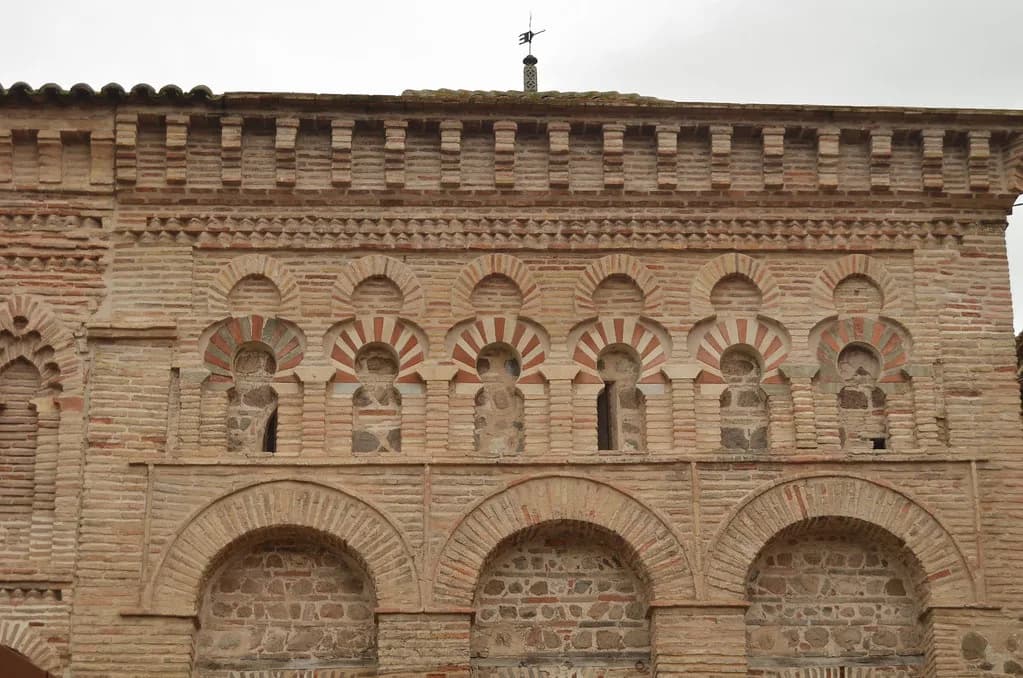
Finish the northern loop at the Mosque of Cristo de la Luz and the Puerta del Sol, from where you can see the Church of Santiago del Arrabal and the inner face of the Puerta de Bisagra. These sit at the far edge of the centre, so treat them as the end of the walk rather than a detour in the middle.
Sunset Over the Tagus
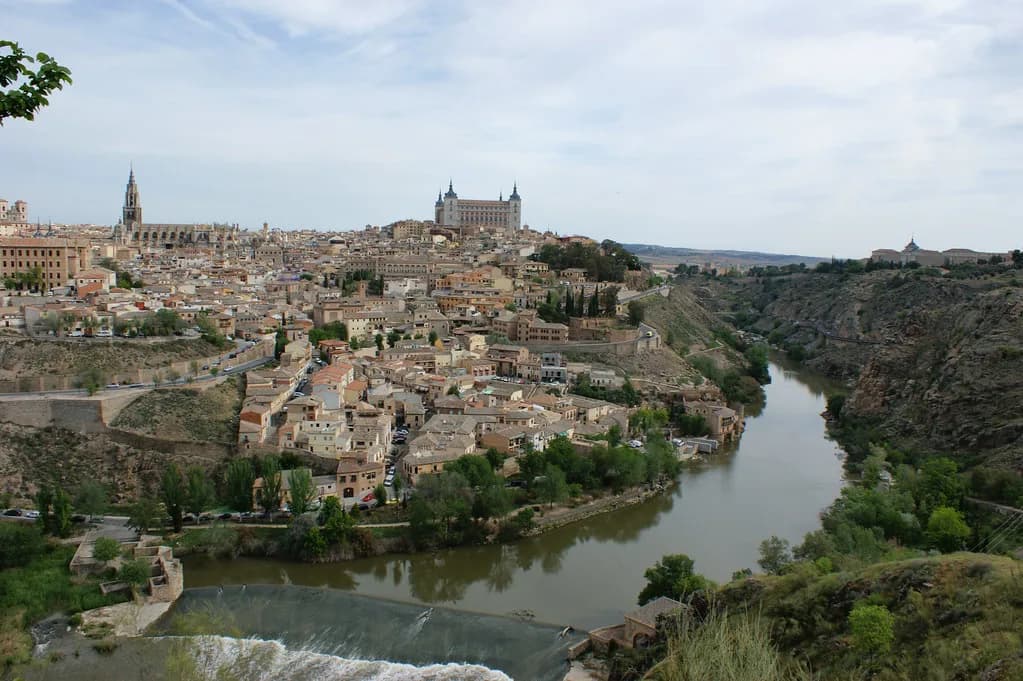
The best end to a day in Toledo is on the far side of the river. From Zocodover, a taxi to the Parador de Toledo puts you on a hillside terrace with a drink and a full view of the city as the light drops.
If you would rather walk, San Martín's Bridge gives you the classic river-level view of the city, and the Mirador del Valle along the Ctra Circunvalación is the postcard panorama. Both sit away from the station end of town, so plan your return: it is roughly 40 minutes on foot from San Martín's Bridge, or a short taxi, ride-share or hop-on hop-off bus ride.
The Jesuit church, also known as San Ildefonso, is the other big climb: 138 steps to the top of its twin towers for one of the widest views in the city. Do it after lunch if your legs allow, and skip it if you have already done the library tower and the Alcázar.
Tickets and the Tourist Bracelet
The Tourist Bracelet bundles seven monuments, including the Jesuit church, the Church of Our Savior, Santo Tomé, Santa María la Blanca and San Juan de los Reyes; the figure recorded in a 2026 itinerary was 14€. Buy it online or at the first site you visit, and check the current price at the ticket office before you commit.
The honest trade-off is seven monuments versus five. Seeing all seven in a day is possible but leaves no room for marzipan, a Manchego tasting or the shops, so most visitors do better with five and a slower afternoon.
If you want to understand which monuments are worth your ticket and which you can walk past, our Toledo Attractions: 5 Visitor Guides gives each one a proper assessment rather than a checklist entry.
Practical Trade-offs
The day is hilly and stepped, and the climb from the station is the first test. Use the Safont escalators or the bus to Zocodover if you are short on time, and wear shoes you can walk uphill in for an hour at a stretch.
Plan around the day of the week, not just the clock: several sites keep a weekly closing day, and the Alcázar library's Sunday closure and the cathedral's 2pm Sunday opening are the two that most often derail a fixed itinerary. Build the order of your morning around whichever of those applies, and check the official cathedral and library pages before you travel.
If food is the point of your trip rather than the scenery, read our toledo food guide before you set off; knowing what carcamusas and cocido actually are changes what you order at 1:30pm.
If You Stay Later or Come Back
An early evening of tapas around the centre of the old town is the reward for missing the 6pm train, and our pick of best tapas in toledo covers the bars worth building an evening around.
With a second day, Puy du Fou España sits about 12 kilometres from Toledo and runs historical shows and recreations for families. It is a full-day commitment and a completely different kind of outing, so do not try to bolt it onto a one-day visit.
Plan Your Visit
Toledo rewards a tight, deliberate plan: the Alcázar and the cathedral before lunch, the Jewish quarter and the convents after it, and a taxi to the Parador or a walk to San Martín's Bridge for the light. Catch a morning train from Madrid Atocha, eat at 1:30pm rather than noon, and leave the shops and the Jesuit tower as optional extras.
Before you go, confirm the cathedral's Sunday hours, the library's closing days and the current Tourist Bracelet price at the ticket office; those three facts decide the shape of your day more than anything else.
Explore more Toledo guides
Frequently Asked Questions
Is a day trip to Toledo worth it?
Yes, for a first visit with a plan. The high-speed train from Madrid Atocha takes around half an hour and runs roughly hourly, and the historic centre is compact enough to cover the Alcázar, the cathedral, the Jewish quarter and the convents in one day on foot. What you sacrifice is depth: the museums and the northern monuments get squeezed, and a second day would let you slow down.
How long does the train from Madrid to Toledo take?
Around half an hour on the Avant service from Madrid Atocha, with departures roughly once an hour; allow just under 40 minutes door to door on the slower end of the schedule. The station sits outside the old town, so add a 15 to 20 minute uphill walk, a local bus to Plaza de Zocodover, or the Safont escalators.
What can you realistically see in one day in Toledo?
The Alcázar and its library tower views, the cathedral, lunch on Calle Alfileritos, then the Church of Santo Tomé, the Synagogue of El Tránsito, Santa María la Blanca and the Monastery of San Juan de los Reyes. Add the convent district and a river viewpoint if you keep moving. Trying to fit all seven Tourist Bracelet monuments as well leaves no time for food or shops.
How much does the Toledo Tourist Bracelet cost?
The price is set by the monuments that sell the bracelet and is listed at the ticket office and on the official booking page, so confirm the current figure before you buy. Weigh that against whether you will genuinely use seven entries in a single day, since five monuments plus a real lunch makes a better day for most visitors.
What is closed in Toledo on a Sunday?
The Castilla-La Mancha Library inside the Alcázar tower closes on Sundays and public holidays, which removes one of the best viewpoints. The cathedral does not open until 2pm on Sundays, so reverse the morning order and do the Alcázar first.
What should you eat in Toledo?
Order Castilian dishes: cocido, the chickpea stew; carcamusas, stewed pork with tomatoes and peas; partridge, venison or other game, with a local Castilla-La Mancha wine. Calle Alfileritos is lined with bars and restaurants in converted town houses. Try marzipan from Santo Tomé on Plaza de Zocodover, made there since 1856.
Where should you watch the sunset in Toledo?
The terrace at the Parador de Toledo on the hillside outside the city, or San Martín's Bridge and the Mirador del Valle on the far side of the Tagus. All three sit away from the station, so plan a taxi, ride-share or the hop-on hop-off bus for the return.
Sources
Notes for eating well in Spain
Optional updates to our guides.
You might also like
Continue reading
More guides you'll find useful