Best Restaurants in Toledo: Where to Eat and What to Order
Eating in Toledo: game stews and cocido on Calle Alfileritos, marzipan at Pastelería Santo Tomé, a rooftop lunch, and how to time meals around sites.
On this page
Toledo is a game-and-stew city with an almond habit. The dishes to build a meal around are cocido (chickpea stew), carcamusas (pork stewed with tomatoes and peas), partridge, venison and other game, all listed as typical menu suggestions in the bar-and-restaurant cluster on Calle Alfileritos.
Plan lunch on Spanish time, roughly 1:30–4pm, and treat dinner as a late, lighter affair from about 8:30pm. Toledo fills with day trippers from Madrid, so the midday hours around Plaza de Zocodover are the busiest and quietest respectively for sit-down meals and for monument queues.
How Eating in Toledo Works
Toledo sits about 70 kilometres from Madrid and is roughly half an hour away by high-speed train, which is why the city's restaurants run on a day-trip rhythm. Tables fill sharply after late morning arrivals and empty again by mid-afternoon, so a 1:30pm lunch booking beats a 2:30pm walk-in.
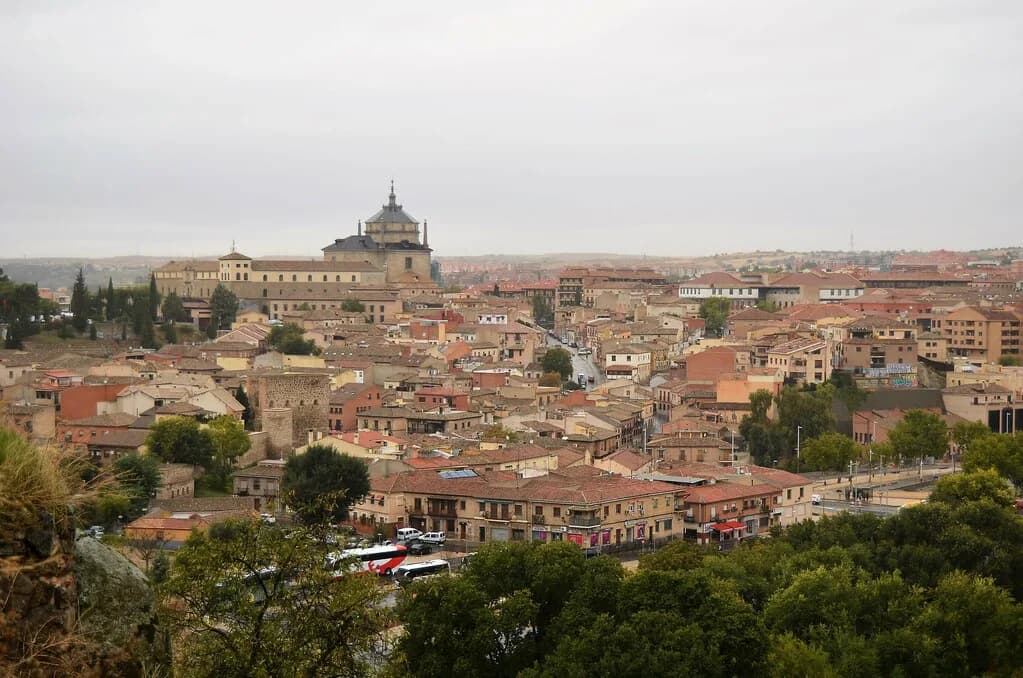
The city centre is compact but hilly, and every meal stop doubles as a walking decision. Bar-lined Calle Alfileritos sits a short walk from the cathedral and the Plaza de Zocodover, making it the obvious lunch zone if you are chaining monuments.
If you want a calmer table, sleep in Toledo rather than day-tripping: the streets empty when the coaches leave, and evening meals are easier to book. Use the itinerary to structure the day around meal slots rather than the other way round.
What to Eat: Carcamusas, Cocido and Game
Start with the everyday plates before the splurge. Carcamusas is a tomato-and-pea pork stew served in bars, and cocido is the chickpea pot that appears on Toledan menus at lunch; both are filling enough to carry you through an afternoon of sightseeing. If you are weighing a second Castilian stop, the best restaurants in girona make a useful comparison for how a compact old-town eating scene is laid out.
Game is the special-occasion order: partridge and venison appear as menu suggestions in the restaurants around Calle Alfileritos, often in old town houses with tiled interiors. Local wines with designation of origin are the natural pairing.
For a wider sweep of Toledan cooking, from market produce to Castilla-La Mancha classics, our Toledo food guide breaks down the dishes worth ordering and what they contain.
Around Plaza de Zocodover and Calle Alfileritos
Plaza de Zocodover is the practical lunch base: bars and restaurants line Calle Alfileritos nearby, and several sit in renovated town houses that keep their original decorative features. Order at the bar for speed, or take a table if you want a slower cocido lunch.
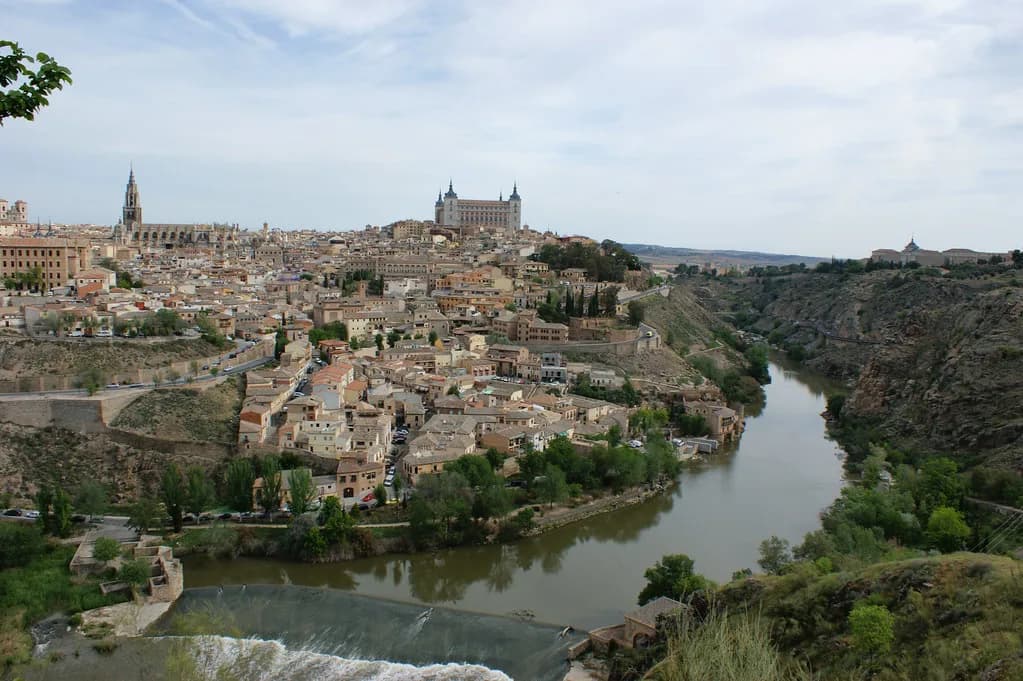
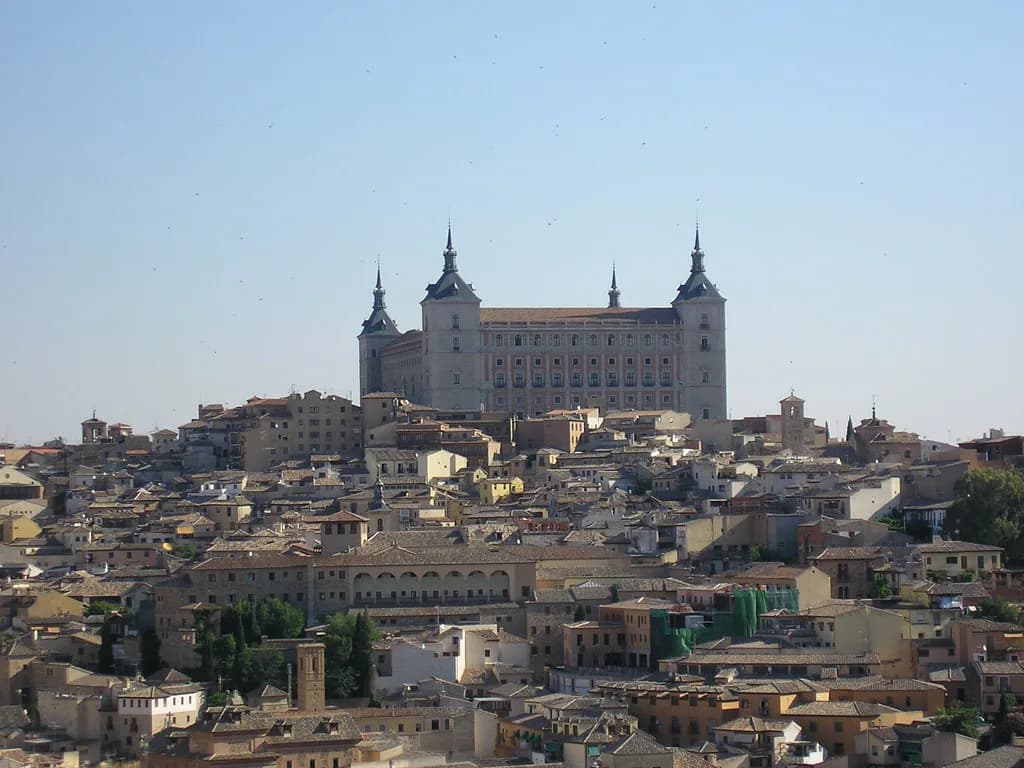
For a drink between sights, climb to the café at the top of the Alcázar's fortified tower, home to the Castilla-La Mancha Library. The views over the rooftops are the draw, and the café works as a coffee-and-snack stop rather than a full meal.
If your trip overlaps with a major festival, book tables as well as monuments. The cathedral draws big crowds during Corpus Christi, when the interior is hung with tapestries, and the square and nearby bars get uncomfortably full.
Pastelería Santo Tomé: Marzipan as a Buying Decision
Marzipan is Toledo's signature sweet, made from ground almonds, sugar and sometimes eggs, honey or almond oil. Pastelería Santo Tomé on Plaza de Zocodover has been making it since 1856 and is the best-known counter in the city, so expect a queue at peak times rather than a quiet browse.
Mazapán de Toledo holds PGI status, which means production is governed by a regulatory council requiring almonds to make up at least half the total weight. Look for the marzipan balls studded with pine nuts, or pastas de mazapán con piñones, as the classic box to take home.
Treat the shop as a mid-morning stop: buy a couple of pieces with a coffee before the cathedral visit rather than carrying a box around all afternoon. It also works as the sweet course after lunch on the square.
The Jewish Quarter and Calle Reyes Católicos
The old Jewish quarter, reached by a relaxed walk from the centre, puts you within range of a lighter lunch between monuments. Around Calle Reyes Católicos you pass the Synagogue of El Tránsito and its Sephardic Museum, then the Synagogue of Santa María la Blanca, then the Monasterio de San Juan de los Reyes.
This is the best area if you want to fit a proper meal around a cluster of sights instead of walking back to the square. Eat before or after the synagogue stretch, since the walking route between them takes in craft and souvenir shops that easily absorb an hour.
Convent Sweets and Dulces Típicos
In the convent district, several convents sell sweets handmade by the nuns, including the Convent of San Antonio, the Convent of San Clemente and the Convent of the Agustinas Calzadas. These are enclosed-order convents outside Easter, so buy through the hatch rather than expecting a visit, and bring cash for a small purchase.
Convento Gaytanas on Travesía Gaitanas is a known address for dulces típicos de Toledo, alongside shops selling nun-made cakes and pastries. It is a quick stop that gives you something to eat later on the train.
Shopping to Take Home: Casa Cuartero and the Market
Casa Cuartero on Calle Hombre de Palo has been in business since 1920 and sells cheese, oil, wine, venison and wild boar sausage, game pâtés, preserves, mantecados, turrón, arrope and honey. This is the efficient single stop for a food hamper before heading back to Madrid Atocha.
Mercado de Abastos on Calle Coliseo is mostly given over to a supermarket, so do not plan your lunch around the market hall itself. For the fuller picture of where to buy and browse, see our guide to shopping in the Casco Histórico.
The Rooftop Lunch Trade-off: Carlos's Roof
Carlos's Roof is a terrace restaurant whose appeal is the sweep of rooftops across the old city. Food is solid rather than fine dining, and service is quick, so book it for atmosphere rather than as the culinary highlight of the trip.
Reserve ahead and ask for a high table facing the view; without that, you pay terrace prices for a lunch you could have at street level. Skip it if your priority is the cooking, and take the view free from the hilltop miradors outside the walls instead.
If you stay for supper rather than lunch, the panoramic café terrace at the Parador de Turismo on the edge of the city is positioned for sunset, reached by taxi from the rank near Zocodover. It is a drink-with-a-view stop, not a restaurant recommendation.
Vegetarian and Non-Game Options
A game-heavy menu is not a vegetarian menu, but the tapas circuit exists for exactly this problem. Our guide to the best tapas in Toledo flags bars where you can assemble a lighter meal from small plates rather than committing to a stew or roast.
Cheese is the reliable fallback: Manchego tastings with olive oil and Iberian ham are offered at the small Museo del Queso Manchego, which works as a snack or early dinner rather than a full meal. It is one of the few places visitors describe as a cheese stop rather than a restaurant.
What Lunch and Treats Cost
Entrance tickets give the clearest cost anchor for budgeting. The cathedral costs 12 euros, the Alcázar 5 euros, and the Synagogue of El Tránsito with the Sephardic Museum 3 euros, with the Alcázar free on Sundays.
A combined wristband covering seven sites including the Iglesia de Santo Tomé and San Juan de los Reyes costs 14 euros, which leaves more of the budget for lunch. It excludes the cathedral and the Alcázar, so those tickets are bought separately.
Marzipan and deli goods are sold by weight, so set your own ceiling rather than guessing. Casa Cuartero and Pastelería Santo Tomé both sell packaged sweets and preserves that travel well.
Sunday and Monday in Toledo
Monument opening days shape where and when you eat. The cathedral holds off until 2pm on Sundays and the Alcázar closes on Mondays, so a Sunday lunch needs to follow a late-morning walk rather than a cathedral visit.
Several museums close on Mondays too: the Sephardic Museum and the Museo del Greco both shut that day, which concentrates visitors in the streets and bars instead. Build a Monday around the market, the sweets shops and a long lunch.
Delivery of your plans depends on how much time you have, and How Many Days in Toledo Do You Actually Need? sets out the trade-offs. With two days you can eat lunch on Spanish time without rushing the monuments. For the practical details, see the Toledo guide.
Which Toledo Meal for Which Day
For a classic day, lunch on Calle Alfileritos after the cathedral, then buy marzipan at Pastelería Santo Tomé on Zocodover before the synagogues. If the view matters more than the cooking, book Carlos's Roof and accept the trade-off.
If you are staying overnight, spend the evening on a convent sweet run and a late dinner rather than queueing with the day-trippers. Check restaurant hours and holiday closures directly before travelling, as they change through the year.
Explore more Toledo guides
Frequently Asked Questions
What is Toledo, Spain known for food?
Toledo is known for game dishes such as partridge and venison, for cocido and carcamusas, and for marzipan. Mazapán de Toledo has PGI status with a minimum almond content of half the total weight, and Pastelería Santo Tomé on Plaza de Zocodover has made it since 1856.
Where should I have lunch in Toledo old town?
Calle Alfileritos, a short walk from Plaza de Zocodover and the cathedral, is lined with bars and restaurants, several in renovated town houses. That makes it the practical lunch base before or after monument visits.
What are carcamusas?
Carcamusas is a Toledan pork stew with tomatoes and peas, served in bars and restaurants around Calle Alfileritos. It appears alongside cocido, partridge and venison as a typical menu suggestion.
Is Carlos's Roof worth it for the view?
The terrace view over the old city is the reason to book, and the food is solid rather than gourmet. Ask for a high table facing the view when reserving, or take a free panorama from the miradors outside the city walls instead.
Where do I buy marzipan in Toledo?
Pastelería Santo Tomé on Plaza de Zocodover is the best-known counter and has made marzipan since 1856. Convent shops and delicatessens also sell sweets, including marzipan balls with pine nuts.
Where can I buy cheese and game produce to take home?
Casa Cuartero on Calle Hombre de Palo, trading since 1920, stocks cheese, oil, wine, game pâtés, venison and wild boar sausage plus sweets such as turrón and mantecados. It is a single stop for a food hamper.
How do Sunday and Monday closures affect eating in Toledo?
The cathedral does not open until 2pm on Sundays, which pushes lunch later, while several museums including the Sephardic Museum and the Alcázar close on Mondays. Plan meals around the sights you can actually visit that day.
Sources
Notes for eating well in Spain
Optional updates to our guides.
You might also like
Continue reading
More guides you'll find useful