
Castillo de Gibralfaro: A Visitor's Guide to Málaga's Hilltop Castle

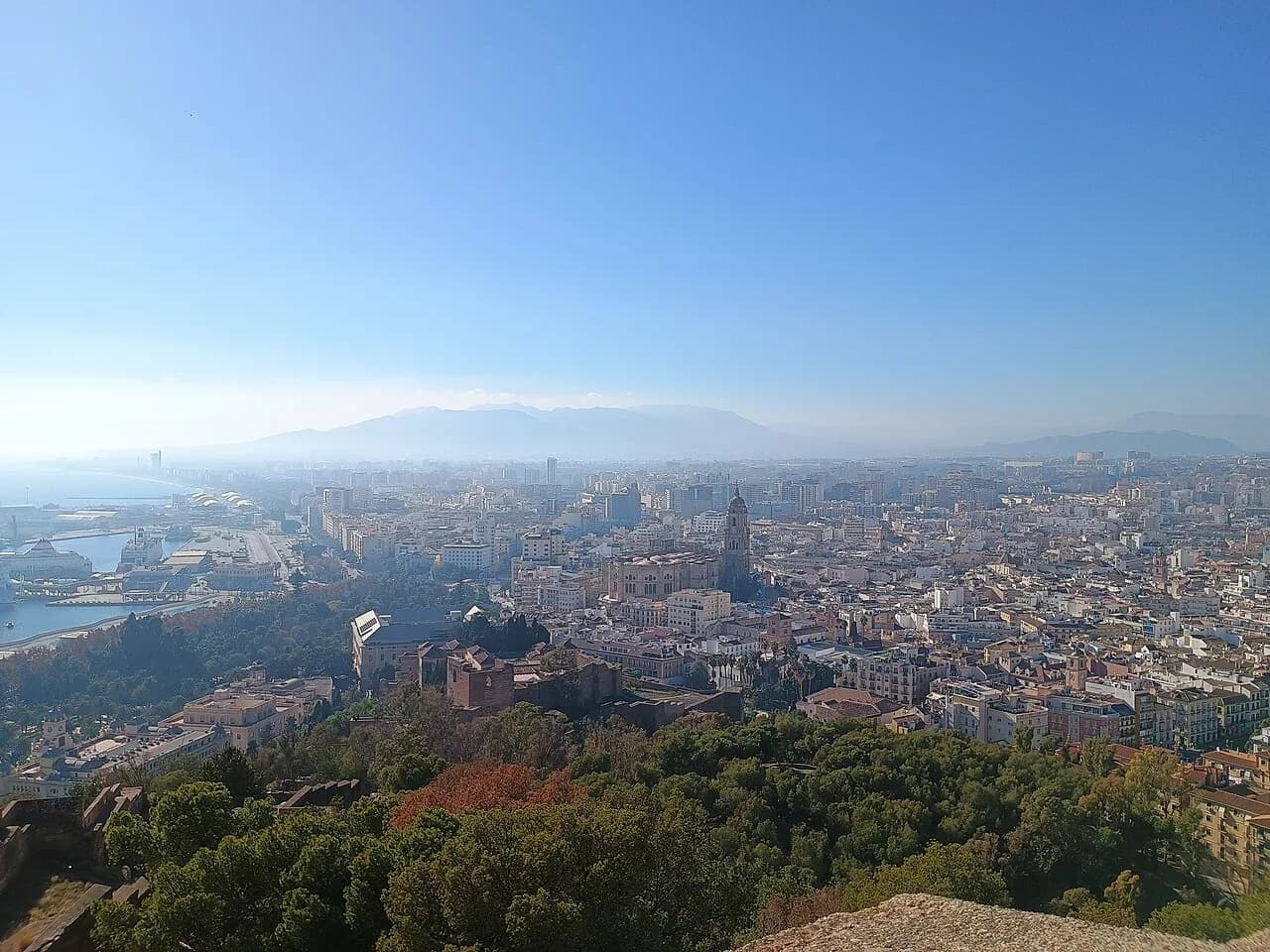
Castillo de Gibralfaro is worth the climb for the walls, the walkway along the battlements and the view down over Málaga's rooftops to the harbour and the sea. The fortress sits on the crest of a long hill 132 metres above sea level, which is exactly why it was built there and exactly why the ascent is the main planning decision of the visit.
Allow half a day rather than squeezing it into an hour, and treat the climb as part of the visit. Standard admission is €3.50, a combined Alcazaba and Gibralfaro ticket is €5.50, and entry is free on Sundays from 14:00.
What Gibralfaro Castle is and why it is worth the climb
Gibralfaro was built in the 14th century to house troops and protect the Alcazaba below, under Yusuf I between 1344 and 1354, and finished under his son Muhammad V. It was designed as the last defensive stronghold of Al-Ándalus, reached only by the walled path called the Coracha.
What you pay for is the enclosure itself: 1,310 metres of wall around the whole site, including the Coracha and barbican, with an inner circuit of 733 metres divided into 30 wall sections and eight towers. The hilltop position means the fortress dominates the city and the bay, and the walls give you a continuous vantage point over both.
This is a military site rather than a palace, so expect bare stone, exposed walkways and open ground. The reward is scale and outlook, not furnished rooms or gardens.
Where it is: the hilltop above Málaga and how it relates to the Alcazaba
The castle occupies the top of the hill directly above the Alcazaba, the lower fortress in the heart of Málaga's old town. The two were physically linked by the Coracha, a walled path that was Gibralfaro's only original access point, so the pair read as one defensive system rather than two separate sights.
That relationship shapes how you visit. The alcazaba sits at street level near the Roman Theatre and the Picasso Museum, while Gibralfaro requires the extra ascent, which is why the combined ticket suits anyone planning to see both.
How to get there: walking up from the centre and other approaches
Walking up from the centre is the straightforward approach and the one that makes the climb part of the day. Go early, take water and wear shoes with grip, because the last stretch is steep and the site itself is uneven underfoot.
The castle's only historical entrance was through a monumental gate off the Coracha, and today access is through openings made in the barbican on the east side and in the south wall next to the Centro de Interpretación.
If you are working out how the hill fits with the rest of the city, the area guides in Malaga Neighborhoods help you place the old town, the port and the climb in relation to each other. If you are deciding whether to give the castle a morning or a full day, see how many days in malaga fits around the climb. Check current transport options and any seasonal timetable on the official site before setting out, since these change.
Tickets and prices: standard admission, the combined ticket and free Sunday afternoons
Standard admission is €3.50, and the combined visit covering the Alcazaba and Gibralfaro Castle costs €5.50. Entry is free on Sundays from 14:00, which is the clearest way to cut the cost of the day.
The combined ticket is the sensible choice if you intend to see the Alcazaba as well, because it costs less than buying the two separately. If the castle is your only fortress stop, the single ticket is enough, and a Sunday afternoon visit costs nothing at all beyond the walk up.
Buy on arrival or check the official Alcazaba y Castillo de Gibralfaro pages for current ticketing before you travel. Prices and free-entry terms are the details most likely to change between seasons.
Opening hours and when to go for cooler air and clearer views
The official site publishes opening hours and tariffs for the Alcazaba and Gibralfaro Castle, and that is the page to check for the day you plan to visit. Hours vary through the year, so confirm the current timetable and last entry before you commit to a late afternoon slot.
The site is high, open and largely without shade along the walls, so the heat is a real constraint rather than a minor inconvenience. Morning is the better bet in summer; a Sunday afternoon gets you in free but puts you on exposed ground at the hottest part of the day.
The walkway along the top of the walls is the reason to come, and clear light is what makes it. If the view matters more than the price, pick a morning when the air over the bay is at its clearest.
What to see inside: the walls, towers and the adarve walkway
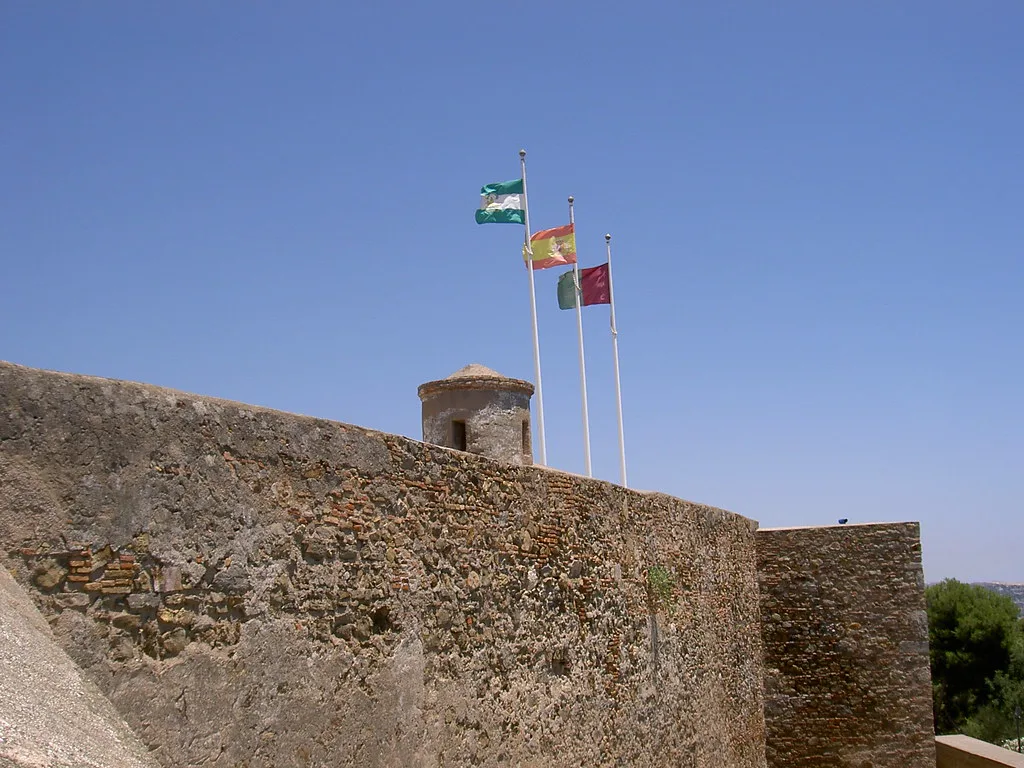
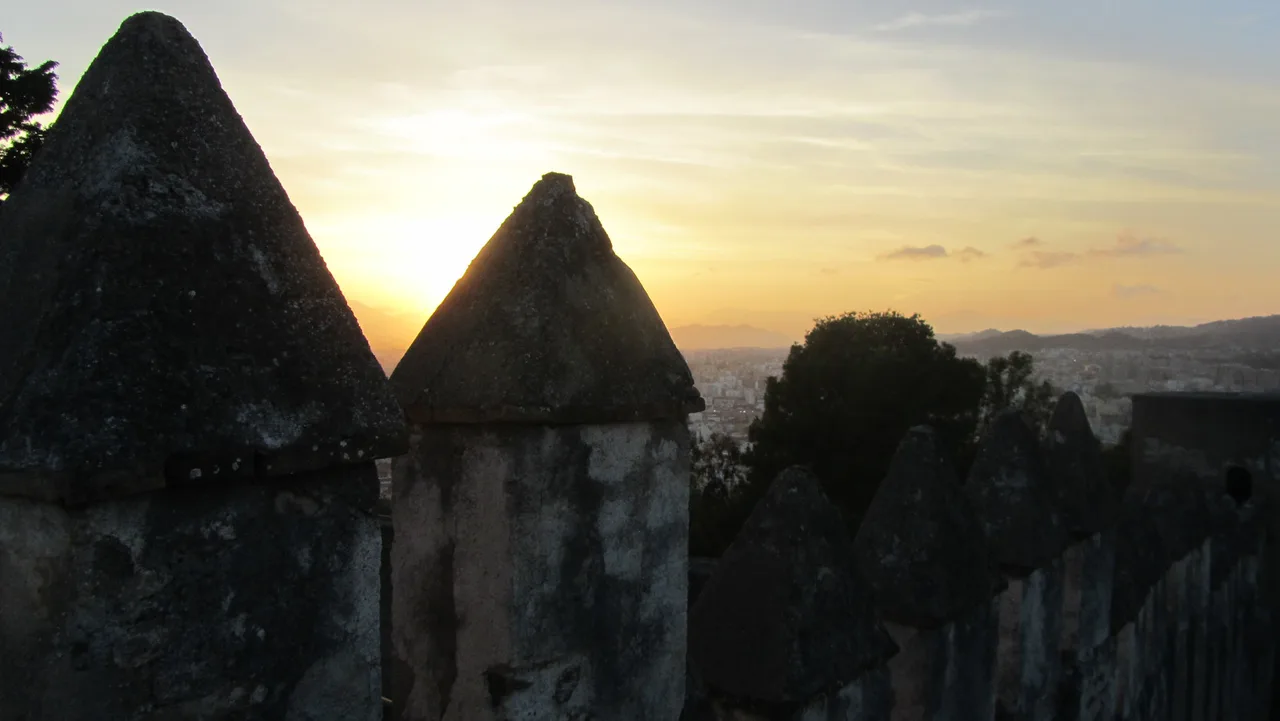
The top of the walls forms the adarve, the walkway used by the garrison, topped for most of its length by a line of merlons. Walking it is the main experience of the castle, and it gives you a sense of the perimeter that photos from below never convey.
Look at how the walls are built: rubble and slate bonded with lime and sand at the base, rammed earth above, finished with a lime mortar that waterproofed the surface. Some sections still show painted decoration imitating large stone blocks, and the arches, vaults and door surrounds are mostly brick from repeated repairs over the centuries.
The gate itself is worth a pause. It is set in a bend so attackers had to turn, with a double door cutting the barbican wall and a small courtyard inside for the guard, and its vault keeps a fine brick interlaced pattern with glazed blue, white and black details.
The Pozo Airón and the rainwater cisterns
Inside the enclosure, the Pozo Airón is a well cut 40 metres into the living rock that still reaches a spring. Alongside it is a rainwater system that channels water through built channels into underground cisterns covered with brick vaults, the largest of them octagonal and rising in the middle of the fortress.
These are the details that explain how a garrison held a dry hilltop, and they are easy to walk past if you are only chasing the view. Slow down in the centre of the enclosure, where the water infrastructure sits.
The Centro de Interpretación in the old powder magazine
The old powder magazine now houses the Centro de Interpretación, which opened in 1998 and presents the castle's life as a military garrison and coastal watch post between 1487 and 1925. It is the place to get the chronology straight if the bare walls have left you guessing.
After the Christian conquest the fortress served as barracks and prison until it was handed to the city council in 1925 and opened to public use. Restoration of walls, towers and interior paths followed in three phases between 1989 and 1999, which is why the circuit is walkable today.
The views over the city, the bay and towards the coast
From the hill the whole city and the bay fall away below, and on a clear day the outlook stretches across the Alboran Sea. The position was chosen for watching the land and sea approaches to Málaga, and the same vantage point is what visitors come for now.
Bring the view into your timing: the walls face different directions, so walk the full circuit rather than stopping at the first terrace. The sea side and the city side give you quite different pictures of Málaga.
How long to allow and whether to pair it with the Alcazaba
Give Gibralfaro a couple of hours including the climb, the wall walk and a stop in the interpretation centre. The site is large enough that a rushed twenty minutes mostly buys you the view and none of the context.
Pairing it with the Alcazaba makes a full half day or more, and the combined €5.50 ticket rewards doing both. If you only have time for one fortress, choose Gibralfaro for the position and the Alcazaba for the rooms and courtyards closer to street level.
For more ways to fill the rest of the day, Malaga Attractions: 6 Visitor Guides sets out the city's main sights and how they group together.
Nearby: the Alcazaba and the walk back down into the centre
The Alcazaba is the obvious next stop, reached on the way down and covered by the same combined ticket. At the foot of the hill, the roman theatre sits beside the Alcazaba entrance and is a free pause on the walk back into the centre.
The old town below puts you within easy reach of the Museo Picasso Málaga and the Málaga Cathedral, so the descent can end with an afternoon indoors. Keep the castle first, while you are fresh and the light is good.
Practical points: steep ground, sun exposure and footwear
Wear shoes with tread. The approach is steep and the interior surfaces are old stone, gravel and uneven ground, which is not terrain for sandals or smooth soles.
Carry more water than you think you need and protect yourself from the sun, because shade is scarce on the walls and in the enclosure. The hilltop catches the wind as well as the heat, so a light layer is useful outside midsummer.
There are toilets and parking on site, installed during the restoration works, but do not count on finding refreshments at the top. Eat before you go up or wait until you are back in the centre.
Plan Your Visit
Castillo de Gibralfaro rewards a half day and a proper climb: the adarve walk, the Pozo Airón, the cisterns and the interpretation centre all sit inside one continuous walled circuit above the city. Go in the morning for cooler air and clearer views, and take the combined ticket if the Alcazaba is also on your list.
Check the official Alcazaba y Castillo de Gibralfaro pages for current opening hours before you set out, and remember that Sunday afternoons from 14:00 are free if your dates are flexible.
Explore more Malaga guides
Frequently Asked Questions
Is Gibralfaro Castle worth it?
Yes, if you want the view and the sense of scale. The castle is a 14th-century military fortress with 1,310 metres of wall, a walkway along the battlements, a 40-metre well and a small interpretation centre. It is bare stone rather than furnished rooms, so go for the position and the walls.
How long does it take to visit Gibralfaro Castle?
Allow a couple of hours, including the climb up, the circuit of the walls and a stop in the Centro de Interpretación. Add more if you are pairing it with the Alcazaba, which makes a longer half day.
How much is entry to Castillo de Gibralfaro?
Entry is charged, with a lower combined rate for the Alcazaba and Gibralfaro together, and free admission on Sunday afternoons. The official Alcazaba y Castillo de Gibralfaro site publishes the current tariff, so check it there before you travel.
When is Gibralfaro Castle free?
Entry is free on Sundays from 14:00. That window falls in the hottest part of the day, so take water and sun protection if you use it in summer.
Can you visit Gibralfaro and the Alcazaba on one ticket?
Yes. A combined ticket covers both fortresses and works out cheaper than buying each separately. The two were originally linked by the walled Coracha path, so they work naturally as one visit.
How do you walk up to Gibralfaro Castle from Málaga centre?
Walk up from the old town, starting early and carrying water, and wear shoes with grip for the steep final stretch. Entry is through openings in the barbican on the east side and in the south wall next to the Centro de Interpretación. Check current options on the official site if you would rather not walk.